

TL;DR:
- Flexibility for tutors includes control over schedules, lesson formats, and engagement methods.
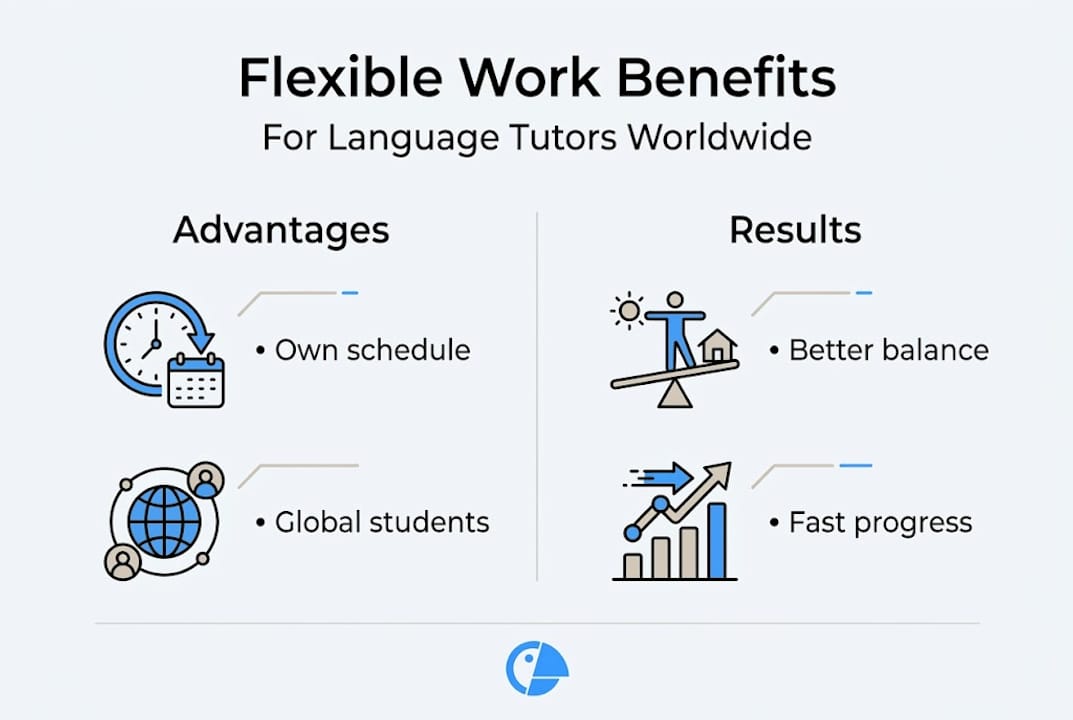
- Benefits encompass better work-life balance, diverse student reach, and faster learner progress.
- Challenges involve potential isolation, income variability, and the need for deliberate routines and community building.
Flexible work arrangements are often framed as a gift to students, giving learners the power to choose their lesson times and pace. But this framing misses something important. For language tutors, flexibility is not simply a scheduling convenience offered to attract students. It is a professional strategy that reshapes how tutors build their careers, manage their wellbeing, and connect with learners across the world. This article unpacks the full picture: the real benefits, the genuine risks, the best practices that top tutors follow, and how the right platform features can make flexible work genuinely sustainable.
Table of Contents
- What flexible work means for language tutors
- Key benefits of flexible arrangements for tutors
- Risks and challenges: what you need to know
- Best practices for thriving as a flexible language tutor
- A fresh perspective: why the best tutors blend flexibility with structure
- Connect with global students through flexible language tutoring
- Frequently asked questions
Key Takeaways
| Point | Details |
|---|---|
| Flexible work redefined | Modern flexibility means tutors set their own schedules and leverage digital tools for global reach. |
| Balance brings success | Combining flexible hours with structured routines leads to greater retention and satisfaction. |
| Be mindful of risks | Watch for challenges like isolation and income swings, and use best practices to stay resilient. |
| Platform features matter | Choosing a platform with strong scheduling and customisation tools makes flexible work sustainable. |
What flexible work means for language tutors
Now that we've reframed flexibility as a win-win, let's clarify what "flexible work" means in modern language tutoring. The term covers far more than simply choosing your own hours. True flexibility for a language tutor means having meaningful control over your schedule, your lesson formats, and the way you engage with each individual student.
In practice, flexible work for tutors includes a range of tools and approaches:
- Self-set availability calendars that allow tutors to open and close booking windows based on their personal rhythms and commitments
- Instant booking across time zones, which opens the door to students from Tokyo, Toronto, or Tunis without requiring a dedicated admin process
- Remote lesson tools including video platforms, interactive whiteboards, and shared document spaces that replicate the richness of face-to-face instruction
- Lesson customisation options that let tutors tailor content, pacing, and feedback to each learner's specific goals
- Zero-commission models on some platforms, meaning tutors keep more of what they earn while retaining full autonomy over their pricing
Key mechanics include self-set availability calendars, instant booking across time zones, zero-commission models in some platforms, and tools for lesson customisation and feedback. These are not minor conveniences. They are the building blocks of a genuinely independent tutoring practice.
Setting your own tutoring schedule is one of the most powerful levers a language tutor has. It allows you to teach during your peak energy hours, avoid burnout, and match your availability to the global demand for language instruction. When combined with strong online fluency-building techniques, flexible work stops being a lifestyle perk and becomes a genuine driver of tutor satisfaction and global impact.
Key benefits of flexible arrangements for tutors
With a clear definition in mind, we can see how flexibility brings concrete benefits for tutors. These advantages are not abstract. They show up in daily routines, in the diversity of a tutor's student base, and in the quality of the learning experience on both sides of the lesson.
Work-life balance and reduced burnout are among the most cited reasons tutors choose flexible arrangements. Teaching is emotionally and cognitively demanding work. When tutors can structure their days around personal commitments, family responsibilities, or simply their own energy levels, they sustain their enthusiasm and effectiveness for far longer. Flexibility aids tutor retention and work-life balance, especially for parents, which is a finding that resonates strongly across the tutoring community.
Global reach and a more diverse student base are equally significant. A tutor based in Melbourne can work with a student in Madrid at 7am, then teach a beginner in Bangkok at midday. This geographic diversity enriches the tutor's experience, sharpens their cultural awareness, and creates a more resilient income stream.

Faster student progress is another benefit that flows directly from flexible scheduling. When both tutor and student are operating at their best, the quality of instruction improves. Flexible tutoring supports faster progress and greater confidence in learners, which in turn makes the tutor's work more rewarding and their reputation stronger.
| Benefit | Possible trade-off |
|---|---|
| Full schedule autonomy | Income can be unpredictable |
| Global student access | Time-zone fatigue with late or early sessions |
| Reduced commute and overhead | Potential professional isolation |
| Personalised lesson design | Requires strong self-discipline |
| Higher earning potential | No guaranteed minimum hours |
The personalised tutoring model sits at the heart of what makes flexible work valuable. When tutors can adapt their approach to each student's level, goals, and learning style, the outcomes speak for themselves.
Pro Tip: Top tutors often block "deep work" hours in the morning for lesson preparation and reserve student-facing sessions for mid-morning and early evening. This rhythm protects creative energy while maximising availability for students across multiple time zones.
Risks and challenges: what you need to know
No approach is perfect, so it is vital to prepare for the challenges flexible tutors can face. The benefits are real, but so are the pressures that come with full autonomy. Understanding these risks honestly is what separates tutors who thrive from those who quietly burn out.
Flexibility aids retention and work-life balance but carries risks including isolation, income inconsistency, and less personal connection compared to in-class settings. Hybrid models are widely recommended as a way to balance these competing demands.
"The freedom to work from anywhere sounds ideal until you realise that without structure and community, the isolation can quietly erode your motivation and professional identity." — Experienced online language tutor
Let's compare the three main working models side by side:
| Model | Strengths | Weaknesses |
|---|---|---|
| Fully flexible (online only) | Maximum autonomy, global reach, low overhead | Isolation risk, income variability, reduced personal connection |
| Hybrid (online and in-person) | Balance of flexibility and community, stronger relationships | Requires more logistical planning, higher overhead |
| Traditional classroom | Strong community, predictable income, structured progression | Limited reach, fixed schedule, less autonomy |
Exploring the self-employment and flexible tutoring landscape reveals that many tutors underestimate the administrative side of running their own practice. Invoicing, tax obligations, student communication, and lesson planning all fall on the tutor's shoulders. This is manageable, but it requires intentional systems.
The decision between local and online tutoring models is not simply a matter of preference. It involves weighing your personal circumstances, your target student base, and your long-term professional goals.
Here are the top three ways to protect your wellbeing as a flexible tutor:
- Set firm boundaries around your availability. Opening your calendar to every time zone without limits leads to fragmented days and exhaustion. Decide on your core teaching hours and communicate them clearly to students from the outset.
- Build a peer network actively. Join tutor communities, attend online professional development events, and connect with colleagues who understand the unique pressures of independent language instruction. Community is not automatic in flexible work. You have to build it deliberately.
- Create a dedicated workspace. Working from the kitchen table or sofa blurs the line between professional and personal life. A consistent, dedicated space signals to your brain that it is time to teach, and signals to your household that you are at work.
Best practices for thriving as a flexible language tutor
Knowing the benefits and risks, here is how leading tutors are navigating flexible work to maximise success. The tutors who genuinely flourish in flexible arrangements share a common trait: they treat flexibility as a framework to be designed, not a default state to drift into.
Balancing asynchronous and synchronous lessons is one of the most effective strategies available. Synchronous lessons (live video sessions) build rapport, allow real-time correction, and create the conversational energy that language learning demands. Asynchronous elements (recorded feedback, written exercises, vocabulary tasks) extend the learning between sessions and respect both parties' time. Synchronous elements preserve collaboration that is often lost in fully asynchronous or remote setups, which is why the most effective flexible tutors use both deliberately.
Using platform features to their full potential is equally important. Availability calendars, instant booking tools, and lesson customisation options exist precisely to reduce the administrative friction of flexible work. Tutors who use these tools well spend less time managing logistics and more time teaching. For tutors focused on exam preparation and flexible scheduling, these features are particularly valuable in managing intensive study periods around student deadlines.
- Use availability calendars to block out preparation time, not just teaching time
- Enable instant booking only for lesson types you are fully prepared to deliver at short notice
- Review and update your lesson customisation settings regularly as your teaching style evolves
- Use feedback tools after every session to reinforce learning and maintain engagement between lessons
Maintaining structured routines is the quiet discipline that underpins every successful flexible tutor. Structure does not contradict flexibility. It enables it. A tutor who starts each day with a clear plan, reviews student progress consistently, and ends the working day at a defined time is far more sustainable than one who simply reacts to bookings as they arrive.
A step-by-step approach to online tutoring helps tutors build repeatable systems for onboarding students, structuring lessons, and tracking progress. Combined with innovative online teaching methods, these systems free up cognitive energy for what matters most: the quality of the teaching itself.
Pro Tip: Schedule a 15-minute "connection check" at the start of each new student relationship to understand their cultural background, learning history, and personal goals. This small investment creates a foundation for genuine personalised instruction and dramatically reduces dropout rates in the first four weeks.
A fresh perspective: why the best tutors blend flexibility with structure
To tie all these lessons together, here is an experience-backed view on what really works for flexible tutors. And it starts with an uncomfortable truth that most articles about flexible work are reluctant to state directly.
Total flexibility, without deliberate structure, does not produce freedom. It produces fatigue.
This is one of the most common mistakes we see from both new and experienced tutors who move into flexible arrangements. The initial excitement of setting your own hours and working from anywhere gradually gives way to a creeping sense of formlessness. Sessions bleed into evenings. Preparation happens in stolen moments. Student communication becomes reactive rather than intentional. The tutor who started out energised by autonomy ends up feeling more scattered than they ever did in a fixed schedule.
The tutors who avoid this trap are not the ones with the most flexible calendars. They are the ones who have built the most thoughtful routines within their flexibility. They decide in advance which hours are for teaching, which are for preparation, and which are genuinely off. They treat their own time with the same respect they extend to their students' time.
There is also a professional identity dimension that rarely gets discussed. When you work in a school or language centre, your identity as a tutor is partly shaped by the institution around you. When you work flexibly and independently, that identity has to come from within. The tutors who build strong professional identities in flexible settings tend to invest in peer networks, ongoing learning, and a clear articulation of what makes their teaching distinctive.
Exploring effective tutoring styles is part of this process. Knowing your own strengths as a teacher, whether you excel at conversation-led immersion, structured grammar instruction, or exam-focused coaching, allows you to market yourself with confidence and attract students who are genuinely well-matched to your approach.
The hybrid model, blending online flexibility with occasional in-person or synchronous sessions, is not a compromise. It is a genuinely superior approach for most language tutors. It preserves the warmth and connection that make language learning transformative while retaining the autonomy and reach that make flexible work so compelling. The best tutors we see are not choosing between structure and flexibility. They are designing both, intentionally and on their own terms.
Connect with global students through flexible language tutoring
Ready to put flexibility into practice? Here is how to build your impact as a language tutor with the support of a platform designed for exactly this kind of work.
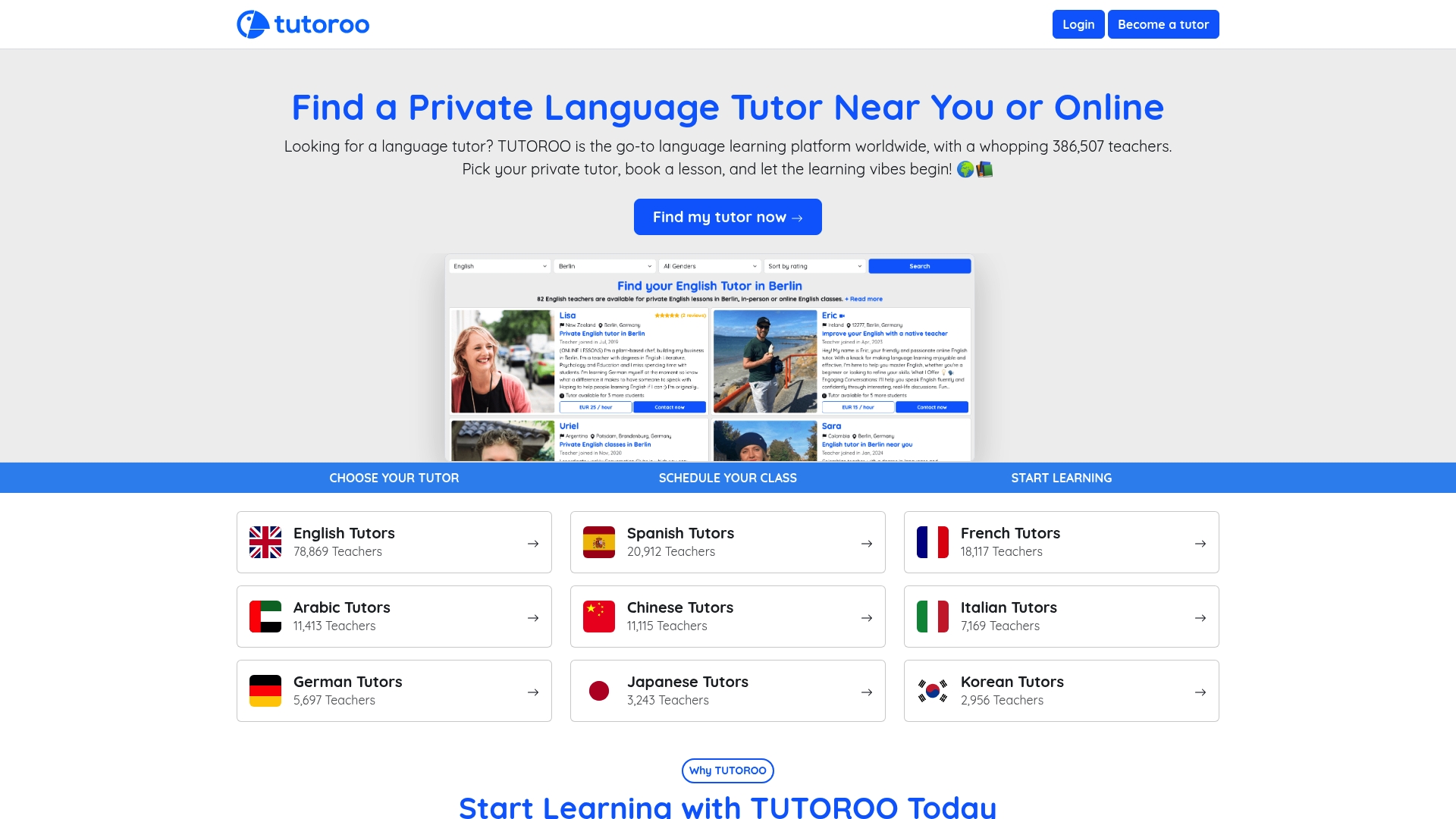
TUTOROO connects over 386,000 language tutors with students across the globe, offering genuine autonomy over scheduling, pricing, and lesson design. Whether you are looking to teach Malay to international learners, expand your reach as an English tutor online, or offer instruction in any of the many other languages on the platform, TUTOROO gives you the tools to build a flexible, rewarding tutoring practice. Join TUTOROO today and connect with students who are ready to learn, on your terms, at your pace, and in your own authentic teaching style.
Frequently asked questions
How does flexible tutoring improve student outcomes?
Flexible scheduling helps tutors match student peak learning times, which supports faster language progress. Flexible language tutoring can result in faster student progress and improved tutor satisfaction across a range of languages and levels.
What are the main risks for tutors with fully flexible work?
Fully flexible work can lead to inconsistent income, professional isolation, and challenges in building personal connections with students. Hybrid models are recommended as a way to retain flexibility while reducing these risks.
Which platform features help tutors manage flexible work?
Self-set availability calendars, instant booking, and lesson customisation tools are the key features that support tutor flexibility. These mechanics also include zero-commission models and cross-time-zone booking capabilities that make global tutoring genuinely practical.
Is hybrid tutoring better than fully online?
Hybrid tutoring combines the strengths of flexible scheduling with the personal connection of in-person or synchronous sessions, reducing isolation and improving engagement. Hybrid models are widely recommended for tutors who want sustainable, long-term flexible careers.