

TL;DR:
- Personalised tutoring enhances language skills at every CEFR level by adapting to progress and goals.
- Effective methods include TPR for beginners, TBLT and CLT for intermediates, and debates for advanced learners.
- Combining grammar and communicative approaches, tailored to goals, yields the best language learning results.
Many language learners assume tutoring is something you outgrow once you move past the basics. That belief quietly holds thousands of people back. The truth is, personalised tutoring becomes more powerful as your skills grow, not less. Whether you are preparing for an international exam, planning a trip abroad, or simply chasing confident conversation, a skilled tutor adapts to exactly where you are and where you want to go. This article unpacks how tutoring works across every skill level, which methods deliver the strongest results, and why a personalised approach consistently outperforms classroom study for learners at any stage.
Table of Contents
- What does beginner to advanced tutoring actually mean?
- Core tutoring methods for each stage
- Research-backed tutoring techniques: What actually works?
- Nuances, comparisons, and hybrid approaches
- Why personalised tutoring works when conventional approaches fail
- Find the right tutor for your language journey
- Frequently asked questions
Key Takeaways
| Point | Details |
|---|---|
| CEFR stages explained | Personalised tutoring adapts across A1 to C2 levels, fitting your goals from travel to exams. |
| Best method is hybrid | Combining communicative and grammar-based techniques delivers maximum progress. |
| Scientific evidence boosts results | Applying research-backed tutoring strategies accelerates learning and retention. |
| Practical application matters most | Real-world practice and tailored feedback build confidence and fluency faster. |
What does beginner to advanced tutoring actually mean?
The phrase "beginner to advanced" is not just marketing language. It maps directly onto the Common European Framework of Reference for Languages, better known as CEFR, which is an internationally recognised scale used by educators, employers, and exam boards worldwide. CEFR runs from A1 (absolute beginner) through to C2 (mastery level), and beginner to advanced tutoring progresses learners through each of these stages, adapting to travel, exams, or conversation goals along the way.
Understanding where you sit on this scale is genuinely useful. It removes the vague feeling of "I'm sort of intermediate" and replaces it with a clear, actionable picture of your strengths and gaps. A tutor uses this framework to design lessons that match your current level while stretching you toward the next one.

Here is a practical overview of what each CEFR stage looks like in terms of time investment:
| CEFR level | Descriptor | Approximate study hours | Typical timeframe |
|---|---|---|---|
| A1 | Beginner | 60 to 100 hours | 0 to 3 months |
| A2 | Elementary | 100 to 200 hours | 3 to 6 months |
| B1 | Intermediate | 150 to 300 hours | 6 to 12 months |
| B2 | Upper intermediate | 250 to 400 hours | 12 to 24 months |
| C1 | Advanced | 300 to 500 hours | 2 to 4 years |
| C2 | Mastery | 500 to 600+ hours | 4 to 5+ years |
These figures are estimates, and CEFR proficiency stages vary depending on your native language, learning environment, and how consistently you practise. A Spanish speaker learning Portuguese will move far faster than an English speaker learning Mandarin.
Personalised tutoring accelerates this timeline in ways group classes simply cannot match. Key benefits include:
- Targeted feedback on your specific errors rather than general corrections
- Flexible pacing that moves faster through areas you already grasp
- Goal alignment so lessons serve your actual purpose, whether that is travel, exams, or conversation
- Accountability that keeps you consistent between sessions
For fast personalised language tips that complement your tutoring sessions, small daily habits make a significant difference. The one-on-one tutoring benefits are well documented, and flexible tutoring progress means you can adjust your goals as your life changes.
Core tutoring methods for each stage
Not every teaching method suits every learner or every level. The most effective tutors match their approach to where you are right now, then shift as you grow. Understanding which methods work best at each stage helps you recognise quality teaching when you experience it.
For beginners (A1 to A2): Total Physical Response (TPR) is one of the most effective tools at this stage. It connects language to physical actions, which builds memory through movement rather than rote memorisation. Visuals, repetition, and high-frequency vocabulary lists also anchor new words quickly. The goal is to build a functional base without overwhelming you.
For intermediate learners (B1 to B2): Task-Based Language Teaching (TBLT) and Communicative Language Teaching (CLT) come into their own here. Role-plays, problem-solving activities, and real-world simulations push you to use the language actively rather than just recognise it. Fluency practice, where you speak without stopping to self-correct, builds the automaticity that separates intermediate from advanced speakers.
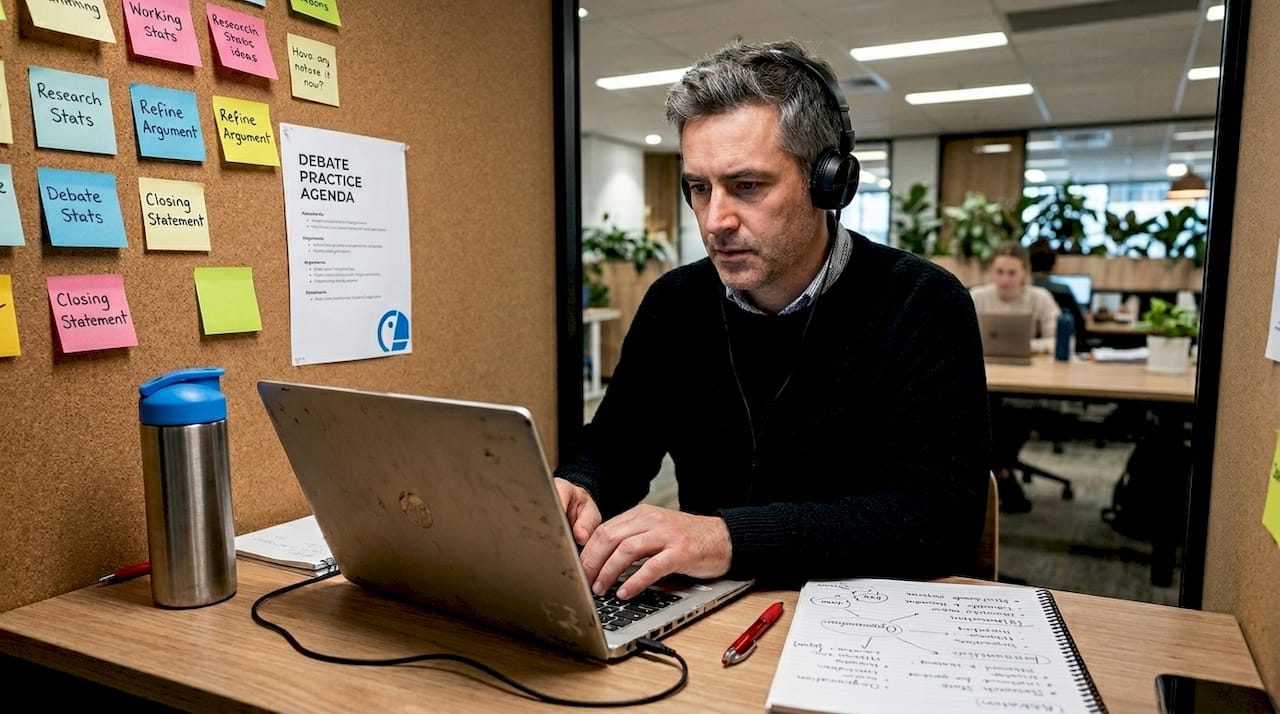
For advanced learners (C1 to C2): Debates, academic writing, and full immersion activities sharpen nuance and register. At this level, the gap between knowing a language and truly owning it comes down to subtle choices: tone, idiom, cultural reference. A skilled tutor creates space to explore these layers.
Here is a quick comparison of core methods by level:
| Stage | Primary methods | Focus |
|---|---|---|
| Beginner | TPR, visuals, repetition | Vocabulary, basic grammar |
| Intermediate | TBLT, CLT, role-play | Fluency, communication |
| Advanced | Debates, immersion, writing | Nuance, register, accuracy |
Research consistently shows that grammar vs communicative approaches each have distinct strengths, and the most effective tutors blend both rather than committing to one ideology.
- Start with structured input at your current level
- Introduce communicative tasks as confidence grows
- Add complexity through authentic materials (news, podcasts, films)
- Practise output through speaking and writing with corrective feedback
- Review and recycle vocabulary in new contexts
Pro Tip: Ask your tutor to record a short voice note of key phrases from each session. Listening back between lessons reinforces memory far more effectively than re-reading written notes.
For real-world online tutoring fluency examples and a breakdown of private lessons types, you will find practical guidance on structuring your learning.
Research-backed tutoring techniques: What actually works?
Beyond broad methods, specific instructional techniques have strong research support. Knowing what these are helps you ask better questions and get more from every session.
A meta-analysis of 96 randomised controlled trials found that tutoring produces an effect size of 0.37 standard deviations on achievement outcomes. That is a meaningful and consistent gain across diverse learner populations and languages. In practical terms, it means tutored learners reliably outperform their peers in classroom settings.
The techniques driving these results include:
- Spaced retrieval: Reviewing material at increasing intervals rather than cramming. This is one of the most replicated findings in cognitive science.
- Input flood: Surrounding learners with high volumes of comprehensible input at or just above their current level.
- Pushed output: Requiring learners to produce language that stretches their current ability, not just what feels comfortable.
- Task repetition: Performing the same communicative task multiple times to build fluency and reduce cognitive load.
- Corrective feedback: Targeted correction that draws attention to errors without derailing communication.
These techniques can be tailored to any goal. Exam preparation benefits most from spaced retrieval and corrective feedback. Travel-focused learners gain most from input flood and task repetition in realistic scenarios. Conversation learners thrive with pushed output and role-play.
It is also worth noting that differentiated tutoring approaches matter for specific groups. Mixed-level learners benefit from tiered tasks. Young beginners respond best to TPR and natural acquisition approaches. Exam candidates often need a blend of Grammar-Translation and CLT to cover both accuracy and communication.
Pro Tip: At the start of each tutoring block, share your specific goal with your tutor. "I want to pass IELTS 7.0 in four months" gives a tutor far more to work with than "I want to improve my English."
For a deeper look at how tutors unlock language potential and what private tutoring best practices look like in action, these resources offer practical frameworks you can apply immediately.
Nuances, comparisons, and hybrid approaches
Two teaching philosophies have long shaped language education, and understanding both helps you choose the right tutor and the right approach for your goals.
Grammar-Translation Method (GTM) focuses on accuracy, reading, and writing. It builds strong metalinguistic awareness, meaning you understand why grammar rules work, not just what they are. This makes it particularly effective for exam preparation, where precision matters enormously.
Communicative Language Teaching (CLT) prioritises interaction, fluency, and real-world use. It builds confidence quickly because you are using the language from the very first lesson, even imperfectly. This suits travel and conversation goals where getting your meaning across matters more than perfect grammar.
The research is clear that both approaches serve different but complementary purposes: grammar builds the metalinguistic foundation, while CLT builds the fluency to use it. Hybrids are recommended for most learners because real communication requires both accuracy and spontaneity.
"The best language teaching needs both grammar and communicative approaches, whether we like it or not. One without the other leaves learners either fluent but inaccurate, or accurate but silent."
A personalised tutor can shift the balance depending on your immediate priorities. Preparing for an IELTS exam next month? Your sessions will lean toward GTM and structured writing. Planning a holiday in France in six weeks? CLT and role-play scenarios take centre stage.
- Identify your primary goal (exam, travel, or conversation)
- Discuss your preferred learning style with your tutor
- Request a blend of accuracy-focused and fluency-focused activities
- Review progress every four to six weeks and adjust the balance
For learners weighing up options, understanding how tutors and exam prep intersect and comparing local vs online tutoring will help you make an informed decision.
Why personalised tutoring works when conventional approaches fail
Classroom learning is built for the average student. It moves at a pace that suits the middle of the group, covers content that serves the broadest possible audience, and rarely has time to address what you specifically need. This is not a criticism of teachers. It is simply the structural reality of group instruction.
Personalised tutoring inverts this entirely. Your tutor responds to your habits, your goals, your confusion, and your progress in real time. If you are preparing for travel, your lessons can simulate airport check-ins, restaurant orders, and local conversations. If you are sitting an exam, every session can target your weakest skill. Flexible tutoring means the programme evolves as you do.
Blended methodologies, combining grammar instruction, communicative tasks, spaced retrieval, and authentic materials, consistently outperform single-method approaches. The learners who progress fastest are not necessarily the most talented. They are the ones with a tutor who knows them well enough to push them in exactly the right direction.
Find the right tutor for your language journey
Understanding the research is one thing. Putting it into practice is where the real progress happens.
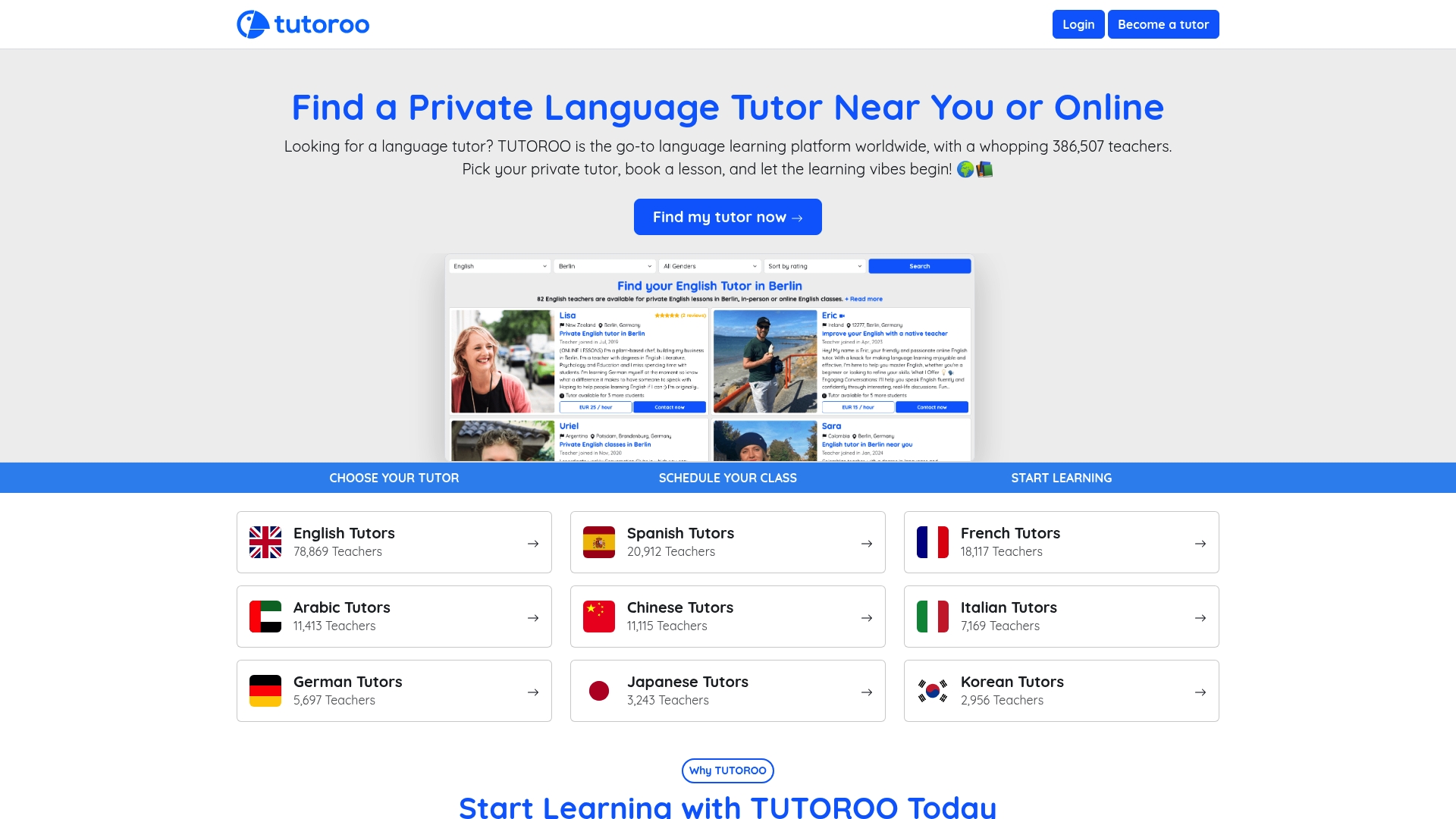
TUTOROO connects learners of all levels with experienced private language tutors who specialise in personalised, one-on-one instruction. Whether you are starting from scratch or refining advanced skills, you can find tutors for in-person or online lessons across a wide range of languages. Looking to build English confidence? Explore English tutors online and get matched with a teacher who fits your schedule and goals. Interested in Arabic dialects? Browse Lebanese tutors online for authentic, culturally rich instruction. Your language journey is unique, and TUTOROO helps you find the tutor who understands that.
Frequently asked questions
How long does it take to progress from beginner to advanced in a new language?
Progression rates vary depending on your native language and study consistency, but A1 to B2 typically requires 60 to 400 study hours over 6 to 24 months, while reaching C2 can take 500 to 600 or more hours across 4 to 5 years.
What is the difference between Grammar-Translation and Communicative Language Teaching?
Grammar-Translation builds accuracy and suits exam preparation, while Communicative Language Teaching prioritises fluency and interaction. A hybrid approach is recommended for most learners because real communication requires both precision and spontaneity.
Are AI tutors effective for language learning?
Recent research shows that AI tutors can deliver up to twice the learning gains compared to active learning in traditional classroom settings, making them a compelling supplement to human-led personalised tutoring.
What proven tutoring techniques help most language learners?
Spaced retrieval, input flood, pushed output, task repetition, and corrective feedback are all research-backed techniques with consistent, measurable effects on language learning outcomes across diverse learner groups.