

Choosing the right online tutoring platform can feel overwhelming when you're trying to improve your language skills. With hundreds of options promising fluency, exam success, or professional advancement, how do you know which approach actually works? This article walks you through a practical framework to evaluate online tutoring platforms, explores concrete examples of effective tutoring styles, and helps you match your specific learning goals with the right platform features and tutor expertise.
Table of Contents
- How to evaluate online tutoring options for language learners
- Examples of popular online tutoring platforms and their unique offerings
- Comparison of online tutoring platforms based on key features and learner goals
- Situational recommendations: picking the right online tutor for your language goals
- Find your ideal online language tutor with TUTOROO
Key takeaways
| Point | Details |
|---|---|
| AI and interactive tools boost results | Platforms with AI-driven feedback show 25% higher engagement and 20% better grammar accuracy than traditional methods. |
| Unlimited practice accelerates fluency | Services like Baselang offer on-demand 1:1 tutoring with native speakers for serious learners seeking daily conversation practice. |
| Match platform to your goals | Different platforms excel at travel prep, exam success, or professional vocabulary, so align features with your specific needs. |
| Technical quality matters | Poor internet connectivity and inadequate platform support are common pitfalls that disrupt learning momentum. |
| Personalised instruction drives progress | Tailored lessons addressing your unique challenges deliver faster results than generic curriculum approaches. |
How to evaluate online tutoring options for language learners
Before committing to any platform, you need a clear framework to assess whether it genuinely fits your learning style and goals. The most effective online tutoring combines three core elements: advanced technology, personalised instruction, and qualified tutors who understand your cultural context.
Platforms utilising AI-driven personalised feedback show 25% higher engagement and 20% improvement in grammar accuracy compared to those without these features. This data reveals why interactive exercises, speech recognition, and automated corrections matter for your progress. When evaluating platforms, check whether they offer real-time pronunciation feedback, adaptive lesson difficulty, and progress tracking dashboards that show your improvement over time.
Personalisation goes beyond technology. Your tutor should tailor lessons to your specific objectives, whether you're preparing for travel conversations, professional presentations, or standardised exams. Generic curriculum materials rarely address the vocabulary and scenarios you'll actually encounter. Ask potential platforms how they customise content and whether tutors receive training in goal-specific instruction methods.
Tutor qualifications deserve careful scrutiny. Native speakers bring authentic pronunciation and cultural insights, but teaching ability matters more than birthplace. Look for tutors with recognised teaching certifications, experience with your target proficiency level, and familiarity with your learning goals. Cultural sensitivity becomes crucial when discussing business etiquette or regional expressions that textbooks often miss.
Technical requirements can make or break your experience. You need stable internet with minimum speeds of 10 Mbps for video calls, a platform interface that works smoothly on your devices, and responsive customer support when technical issues arise. Test the platform during a trial lesson to verify audio quality, video clarity, and whether the interactive tools actually function reliably.
Pro Tip: Schedule trial lessons with multiple platforms during the same week to compare teaching styles, platform responsiveness, and how well tutors adapt to your learning pace. This direct comparison reveals which environment feels most natural for your learning style.
Consider how the platform handles scheduling flexibility. Can you book lessons spontaneously when you have free time, or must you commit to fixed weekly slots? Your lifestyle and motivation patterns should guide this choice. Some learners thrive with structured schedules, whilst others need the freedom to learn languages online with private tutors whenever inspiration strikes.
Examples of popular online tutoring platforms and their unique offerings
Real-world platforms demonstrate vastly different approaches to online language instruction, each optimised for specific learner profiles and goals. Understanding these concrete examples helps you identify which model aligns with your needs.
Baselang offers unlimited 1:1 tutoring for a flat monthly fee, making it ideal for serious Spanish learners who want daily conversation practice without worrying about per-lesson costs. This model suits learners who can dedicate 30-60 minutes daily to speaking practice and value quantity of interaction. The platform connects you with native speakers from Latin America, providing exposure to diverse accents and regional vocabulary. One reviewer noted they improved significantly with Baselang by combining intensive platform use with complementary study resources.
Platforms focused on exam preparation typically structure lessons around test formats, providing practice questions, timing strategies, and feedback on common mistakes. These services work best for learners with specific test dates who need targeted preparation rather than general fluency development. Tutors on these platforms often specialise in particular exams and understand exactly which skills examiners assess.

Travel-focused platforms prioritise practical phrases, cultural etiquette, and survival vocabulary over grammatical perfection. Lessons simulate real scenarios like ordering food, asking directions, or handling emergencies. This approach delivers fast results for upcoming trips but may leave gaps in your foundational grammar knowledge.
Professional language platforms cater to career advancement by teaching industry-specific vocabulary, email writing conventions, presentation skills, and meeting participation strategies. These services often employ tutors with business backgrounds who understand workplace communication dynamics. You'll practise scenarios like negotiating contracts, leading team discussions, or delivering client presentations.
Several platforms now offer hybrid models combining live tutoring with self-paced interactive exercises. This structure provides human feedback on speaking and writing whilst allowing you to drill vocabulary and grammar independently. The combination works well for learners who want comprehensive skill development but have irregular schedules.
Flat monthly fees versus per-lesson pricing creates different incentive structures. Unlimited models encourage frequent practice and remove the psychological barrier of "wasting" an expensive lesson on a bad day. Per-lesson pricing offers more flexibility for occasional learners but can become expensive with regular use. Calculate your likely lesson frequency to determine which pricing model delivers better value.
Many platforms now provide on-demand availability, letting you book lessons with just a few hours' notice. This flexibility suits busy professionals and parents who struggle with fixed schedules. However, you may sacrifice tutor consistency, as you'll work with different instructors rather than building a relationship with one dedicated teacher. Consider whether continuity or flexibility matters more for your learning style.
Feedback quality varies dramatically between platforms. The best services provide detailed written feedback after each lesson, highlighting specific pronunciation errors, grammatical patterns to review, and vocabulary to practise. This documentation transforms each lesson into a personalised study guide. Lower-quality platforms offer only verbal corrections during the session, which you may forget before your next lesson.
Comparison of online tutoring platforms based on key features and learner goals
A direct comparison reveals how platform features align with different learner priorities and objectives. This table summarises key differences to guide your selection.
| Platform Type | Tutoring Style | AI/Tech Features | Pricing Model | Ideal Learner Goals | Key Strengths | Notable Limitations |
|---|---|---|---|---|---|---|
| Unlimited conversation | Daily 1:1 sessions | Basic scheduling, video calls | Flat monthly fee | Fluency, daily practice | High interaction volume, cost-effective for frequent use | Limited structured curriculum, requires self-direction |
| Exam preparation | Test-focused lessons | Practice tests, progress tracking | Per-lesson or packages | Exam success, certification | Targeted preparation, score improvement strategies | Narrow focus, less useful for general fluency |
| AI-enhanced platforms | Interactive exercises + tutoring | Speech recognition, automated feedback | Subscription tiers | Autonomous learners, grammar accuracy | Immediate corrections, 24/7 practice availability | Technology limitations, less cultural context |
| Professional language | Industry-specific scenarios | Business tools, presentation practice | Premium per-lesson | Career advancement, workplace skills | Relevant vocabulary, professional context | Higher cost, requires clear career objectives |
| Travel-focused | Practical phrases, cultural tips | Scenario simulations, phrasebooks | Budget-friendly packages | Travel preparation, survival skills | Fast results, situational confidence | Surface-level learning, grammar gaps |
Systems incorporating speech recognition and automated feedback prove most effective when aligned with communicative or task-based teaching approaches. This research confirms that technology alone doesn't guarantee results; the pedagogical method matters equally. Platforms combining AI tools with skilled human instruction deliver superior outcomes compared to purely automated or purely traditional approaches.
Pro Tip: Match platform features to your learning style, not just your goals. Visual learners benefit from platforms with robust screen-sharing and interactive whiteboards, whilst auditory learners thrive with conversation-heavy formats that minimise written exercises.
When evaluating platforms, test their responsiveness during peak hours. Some services experience lag or connection issues when many users access simultaneously, disrupting your lesson flow. Schedule a trial during your preferred learning time to verify technical performance matches promotional claims.
Internet dependence remains a critical consideration. Download any platform apps and test offline functionality before committing. Some services allow you to download lesson materials for review without connectivity, whilst others require constant internet access. Your travel patterns and internet reliability should influence this decision.
Consider how platforms handle tutor matching. Algorithm-based matching uses your stated preferences and learning history to suggest compatible tutors. Manual selection lets you browse profiles and choose based on tutor videos, student reviews, and specialisations. Each approach offers advantages; algorithms save time, whilst manual selection provides more control over your learning relationship.
Platform support quality becomes crucial when technical issues arise. Check whether support operates in your time zone, offers live chat or only email, and actually resolves problems quickly. Read recent reviews specifically mentioning support experiences to gauge responsiveness. Poor support can leave you unable to access lessons you've already paid for, wasting both money and motivation.
Situational recommendations: picking the right online tutor for your language goals
Your specific situation should drive your platform choice more than general popularity or marketing claims. Different goals require fundamentally different tutoring approaches.
For travel preparation, prioritise platforms offering situational practice and cultural coaching over grammatical perfection. You need confidence ordering meals, booking accommodation, and handling emergencies more than you need to conjugate irregular verbs. Look for tutors who've lived in your destination country and can teach regional expressions and etiquette. Book intensive sessions in the month before departure to maximise retention.
Exam preparation demands tutors trained in your specific test format. Generic language instruction won't prepare you for the particular question types, timing pressures, and scoring rubrics of standardised exams. Verify that potential tutors have recent experience with your exam and can provide practice materials that mirror actual test content. Schedule regular mock exams to track progress and identify weak areas requiring focused attention.
Professional advancement requires tutors with business experience who understand workplace communication dynamics in your industry. Technical vocabulary, email conventions, and presentation skills vary dramatically between fields like finance, healthcare, and technology. Seek tutors who've worked in your sector or specialise in professional language instruction. Bring actual work materials like emails, reports, or presentations to lessons for practical feedback.
Common pitfalls include poor internet connectivity, lack of tutor training, and inadequate platform support. Test your internet speed before committing to video-based lessons. Verify tutor qualifications beyond platform claims by asking about certifications, teaching experience, and student success stories. Contact platform support with a pre-purchase question to assess their responsiveness and helpfulness.
During trial lessons, ask these critical questions to evaluate fit:
- How do you customise lessons for my specific goal versus following a standard curriculum?
- What homework or practice do you assign between sessions to reinforce learning?
- How do you track my progress and adjust teaching methods when I struggle with concepts?
- What happens if technical issues disrupt our lesson?
- Can you provide examples of students with similar goals who succeeded using your approach?
Your learning personality matters as much as your goals. Introverted learners often prefer one-on-one video sessions over group classes, whilst extroverts may thrive in conversation clubs or group lessons that some platforms offer. Analytical learners want explicit grammar explanations and rules, whilst intuitive learners prefer immersive conversation that builds implicit understanding. Choose platforms and tutors whose teaching style matches how you naturally absorb information.
Time zone differences affect scheduling convenience and tutor availability. Platforms with global tutor networks offer more flexibility but may require early morning or late evening lessons. Regional platforms provide convenient scheduling but fewer tutor options. Calculate whether convenient timing or tutor variety matters more for your consistency.
Budget constraints require honest assessment of lesson frequency you can sustain long-term. Sporadic expensive lessons often deliver less progress than consistent budget-friendly sessions. Calculate monthly costs at your realistic lesson frequency, not your aspirational schedule. Many learners overestimate their available time and end up wasting subscription fees.
Find your ideal online language tutor with TUTOROO
Now that you understand how to evaluate platforms and match features to your goals, finding the right tutor becomes straightforward. TUTOROO connects you with private online tutors offering personalised lessons tailored to your specific objectives, whether you're preparing for travel, advancing your career, or simply building conversational confidence.
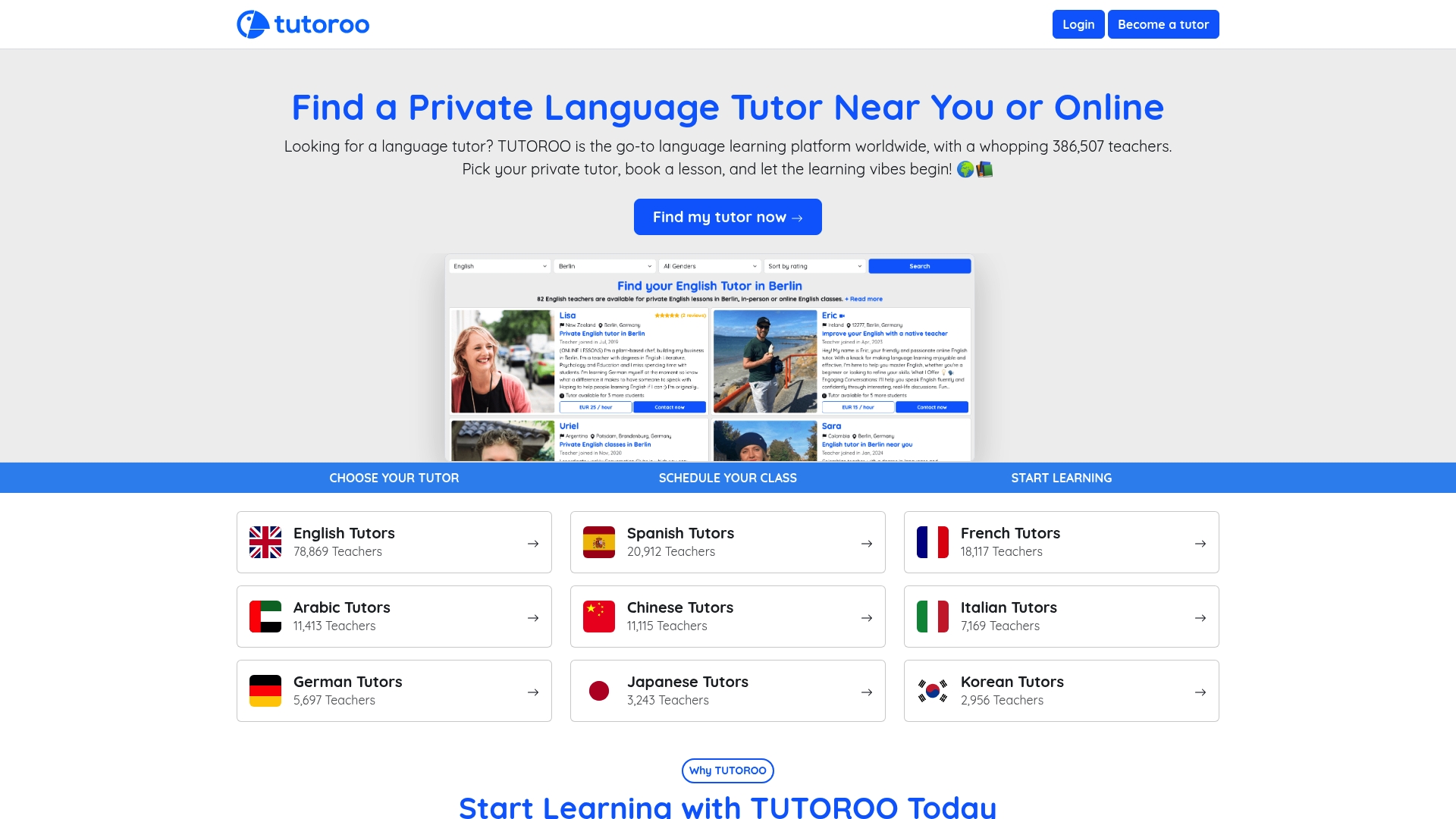
With over 386,000 experienced tutors teaching languages including Spanish, English, Japanese, French, Arabic, and Chinese, you'll find instructors who understand your learning goals and cultural context. Flexible scheduling lets you book lessons that fit your lifestyle, whilst the platform's messaging system enables easy communication with tutors between sessions. Whether you need daily conversation practice or weekly structured lessons, TUTOROO's community of qualified teachers provides the personalised instruction that drives real fluency progress.
FAQ
What is the best online tutoring approach for language fluency?
Real-time conversation with native speakers combined with AI-driven feedback delivers the fastest fluency gains. Interactive sessions tailored to your interests and goals yield better retention than generic curriculum materials. Consistent practice matters more than lesson length, so daily 20-minute sessions often outperform weekly hour-long classes.
How can online tutors help prepare for language exams?
Tutors offer customised sessions focused on your specific exam format, key vocabulary, and practice tests that mirror actual questions. Regular feedback on strengths and weaknesses helps you target study time efficiently rather than reviewing material you've already mastered. Mock exams with timing pressure build the confidence and stamina needed for test day performance.
Are AI features in tutoring platforms reliable?
AI improves personalised feedback and enables 24/7 practice, but current limitations in speech recognition accuracy and system responsiveness remain. Human tutors provide essential nuanced teaching, cultural insights, and motivation that technology cannot replicate. The most effective platforms combine AI tools for drill practice with human instruction for complex skills like conversation and cultural understanding.
What should I consider when choosing an online tutor for professional advancement?
Choose tutors with business experience relevant to your industry who understand workplace communication dynamics and technical vocabulary. Look for flexible scheduling that accommodates your professional commitments and customised lesson plans aligned to your career objectives. Verify the tutor can provide feedback on actual work materials like emails, presentations, or reports rather than only using generic business scenarios.
Recommended
- TUTOROO Blog - Boost Your Language Skills Through Cultural Immersion | TUTOROO Tutors Share How
- TUTOROO Blog - Language and Culture: How They Shape Each Other | Learn a Language with TUTOROO
- TUTOROO Blog - Teach Kids a Second Language with Fun TUTOROO Tutor Activities
- TUTOROO Blog - How to Stay Motivated Learning a Language Alone | TUTOROO