

TL;DR:
- Effective online language learning requires personalized content that covers all four skills with measurable impact.
- AI-adaptive platforms like Duolingo and Babbel improve skills significantly but should be complemented by human interaction.
- Combining digital tools with live tutoring through blended learning yields better speaking and engagement outcomes.
Scroll through any app store or language learning forum and you will find dozens of platforms all promising fluency in record time. The challenge is not finding options. It is knowing which ones actually work. With so many online teaching methods competing for your attention, choosing without evidence is a genuine risk. You could spend months on a platform that feels productive but delivers little real progress. This article cuts through the noise by examining what the research actually says, comparing the most innovative methods available today, and helping you make smart, personalised choices for your language learning journey.
Table of Contents
- Setting criteria: What makes a teaching method effective online?
- Adaptive AI-powered platforms: Examples and science
- Research-backed techniques: Spaced repetition, input flood, task repetition
- Immersive and interactive options: VR, network-based teaching, CMC
- When to choose blended or hybrid teaching for best results
- The uncomfortable truth: Personalised online methods work, if you stay engaged
- Next steps: Find the right personalised language tutor for you
- Frequently asked questions
Key Takeaways
| Point | Details |
|---|---|
| Personalisation drives progress | Adaptive AI methods target your strengths and weaknesses in real time for faster skill acquisition. |
| Empirical methods outperform hype | Research-backed techniques like spaced repetition and input flood work better than unproven recipes. |
| Immersive tech amplifies results | VR and network-based learning deliver up to 30% improvement in speaking and vocabulary. |
| Blended learning maximises outcomes | Combining online tools and live tutors achieves the best results for engagement and fluency. |
Setting criteria: What makes a teaching method effective online?
With expectations set, let's pinpoint the criteria that truly define an effective online teaching method. Not every platform that claims to personalise your learning actually does so in a meaningful way. Before investing time or money, it pays to know what to look for.
An effective online teaching method should meet these core criteria:
- Personalisation: The method adapts to your current level, learning pace, and specific skill gaps rather than delivering the same content to every user.
- Skill coverage: Strong methods address all four skills: reading, writing, listening, and speaking. Platforms that focus only on vocabulary or grammar leave significant gaps.
- Research-backed impact: There should be measurable evidence, such as controlled studies or effect size data, showing the method improves outcomes for real learners.
- Progress tracking: You need visibility into what you have learned and what still needs work, so you can direct your effort efficiently.
Understanding how online language learning works is a useful starting point before comparing specific platforms. Adaptive systems that track and adjust difficulty for personalised results are among the most promising developments in online education today.
One important caution: algorithmic tools can develop biases over time, reinforcing what you already know rather than pushing you into productive discomfort. Over-reliance on any single platform, no matter how sophisticated, tends to plateau progress. Balancing digital tools with human interaction remains essential, as explored in depth through proven teaching methods backed by tutor experience.
Pro Tip: Before committing to any platform or tutor, ask for specific data on learning outcomes. Reputable platforms and experienced tutors will readily share results or direct you to independent studies.
Adaptive AI-powered platforms: Examples and science
Now, let's move from criteria to specific examples, starting with the frontrunners in AI-driven adaptive platforms. Tools like Duolingo and Babbel have become household names, but their real value lies in how they use data to personalise your experience.
Both platforms adjust content based on your performance, serving harder material when you succeed and revisiting weak areas when you struggle. This adaptive loop is not just a marketing claim. AI-powered platforms personalise learning and demonstrably improve outcomes across vocabulary, grammar, and reading comprehension. Independent research confirms that Duolingo and Babbel improve skills with large effect sizes, often exceeding 0.8, which is considered a strong result in educational research.
| Feature | Duolingo | Babbel | Mango Languages |
|---|---|---|---|
| Adaptive difficulty | Yes | Yes | Partial |
| Progress tracking | Detailed | Detailed | Basic |
| Speaking practice | Limited | Structured | Structured |
| Skill focus | Broad | Grammar-heavy | Conversation |
| Human tutor option | No | No | No |
For learners seeking tutoring examples for fluency, these platforms work best as supplements rather than standalone solutions. If you want to explore platforms for faster learning, comparing features like those above will help you match a tool to your specific goals.
Key pros and cons of AI-powered adaptive platforms:
- Pro: Highly personalised content delivery based on real-time performance data
- Pro: Gamified structure keeps motivation high, especially for beginners
- Con: Limited speaking and listening practice compared to live interaction
- Con: Risk of over-reliance on algorithmic feedback without genuine human correction
Research-backed techniques: Spaced repetition, input flood, task repetition
Choosing an adaptive platform is a good start, but the real power comes from research-backed techniques you can use anywhere online. These methods have decades of empirical support and can be layered on top of any platform or tutoring arrangement.
Spaced repetition is the practice of reviewing material at increasing intervals, timed to catch information just before you forget it. This approach exploits how memory consolidates over time, making each review session more efficient than simply re-reading notes.
Input flood involves surrounding yourself with targeted vocabulary or grammar structures in context, through reading, listening, and viewing authentic content. Rather than drilling isolated words, you encounter the same language naturally across multiple sources, which deepens understanding and retention.
Task repetition means practising the same communicative task multiple times with increasing complexity. For example, describing a photo, then discussing a related topic, then debating a connected issue. Each repetition builds fluency and confidence without the monotony of pure drilling.
Here is how to apply these techniques online:
- Use spaced repetition apps such as Anki or the built-in review systems in Duolingo to schedule vocabulary reviews at optimal intervals.
- Subscribe to podcasts, YouTube channels, or news feeds in your target language to create a natural input flood around topics you care about.
- Work with a tutor to design task repetition sequences that gradually raise the communicative stakes each session.
"The top research-backed techniques for language teaching, including spaced retrieval practice and input flooding, consistently outperform rote memorisation and passive exposure across all proficiency levels."
Pro Tip: For spaced repetition, consistency matters more than session length. Ten minutes daily outperforms a two-hour session once a week. Build the habit before increasing intensity. Explore tips for fast personalised learning to design a routine that fits your schedule.
Immersive and interactive options: VR, network-based teaching, CMC
Alongside proven micro-techniques, immersive technologies have started to redefine the landscape. Let's examine their impact on language acquisition and where you can access them today.

Virtual reality (VR) combined with machine learning creates environments where learners practise language in simulated real-world contexts, from ordering at a café to navigating an airport. A VR and machine learning system tested for Kazakh language learning produced remarkable gains: vocabulary improved by 25%, grammar by 20%, listening by 18%, and speaking by 30% compared to control groups. These are not marginal improvements.
Network-Based Language Teaching (NBLT) connects learners through digital networks for collaborative tasks. Research shows NBLT significantly improved scores versus traditional classroom instruction, particularly for writing and interactive communication. Computer-Mediated Communication (CMC), which includes video calls, chat, and discussion forums, adds authentic conversational context that purely algorithmic tools cannot replicate.
| Method | Vocabulary gain | Grammar gain | Listening gain | Speaking gain |
|---|---|---|---|---|
| VR + ML system | +25% | +20% | +18% | +30% |
| NBLT | Moderate | Moderate | Moderate | High |
| CMC (video/chat) | Moderate | Low | Moderate | High |
For learners weighing up online vs traditional tutoring, immersive technologies offer a compelling middle ground: the convenience of digital access with the contextual richness of real interaction.
Where to find immersive options:
- VR language apps such as Immerse or MondlyVR for simulated environments
- Language exchange platforms like Tandem or HelloTalk for CMC practice
- Structured NBLT programmes offered through universities and some private language schools
- Live online tutoring sessions that incorporate collaborative tasks and real-time feedback
When to choose blended or hybrid teaching for best results
Finally, let's consider situations where the smartest approach is not purely online, but a hybrid solution that taps into both technological and human strengths.
Blended learning combines AI-powered or self-directed digital tools with live instruction from a human tutor. The evidence is compelling. Blended methods offer superior outcomes for speaking and social engagement compared to fully online approaches. This makes intuitive sense: algorithms can adapt content, but they cannot respond to the emotional nuance of a conversation, correct subtle pronunciation errors in real time, or provide the cultural context that a native-speaking tutor brings naturally.
Who should consider a blended approach:
- Learners whose primary goal is conversational fluency rather than reading or writing
- Those preparing for speaking-heavy assessments such as IELTS or DELF
- Beginners who need structured encouragement alongside self-paced digital practice
- Advanced learners who have plateaued on apps and need genuine human challenge
Tips for maximising blended results:
- Use adaptive apps for daily vocabulary and grammar reinforcement between tutor sessions
- Bring specific questions or challenges from your app practice into live sessions
- Ask your tutor to design task repetition sequences that build on your digital progress
- Review session recordings or notes to reinforce what was covered with a tutor
Exploring flexible tutoring benefits can help you understand how to structure a blended routine that fits your lifestyle and learning goals.
The uncomfortable truth: Personalised online methods work, if you stay engaged
Now that we have surveyed the methods, here is a perspective most articles miss: it is not the method, but how you use it, that transforms your language learning results.
Every platform and technique discussed here has genuine evidence behind it. Yet research also shows that online vs traditional outcomes only differ meaningfully when engagement is high. Online methods excel for retention and flexibility. Traditional or live instruction wins for hands-on, social, and pronunciation skills. Neither approach works if you are passively going through the motions.
The uncomfortable truth is that learners who treat adaptive apps as a complete solution often stall. Algorithms are excellent at serving content, but they cannot hold you accountable, inspire you through a difficult plateau, or share the cultural stories that make a language feel alive. That is why tutor availability matters so much in a genuinely personalised learning plan. The most successful language learners we see combine structured digital practice with regular human interaction, treating each as complementary rather than competing. Do not outsource your progress to an algorithm. Stay curious, stay engaged, and bring a real person into your learning whenever you can.
Next steps: Find the right personalised language tutor for you
Ready to apply these insights? Discover how TUTOROO connects you with skilled tutors to put innovative methods into practice.
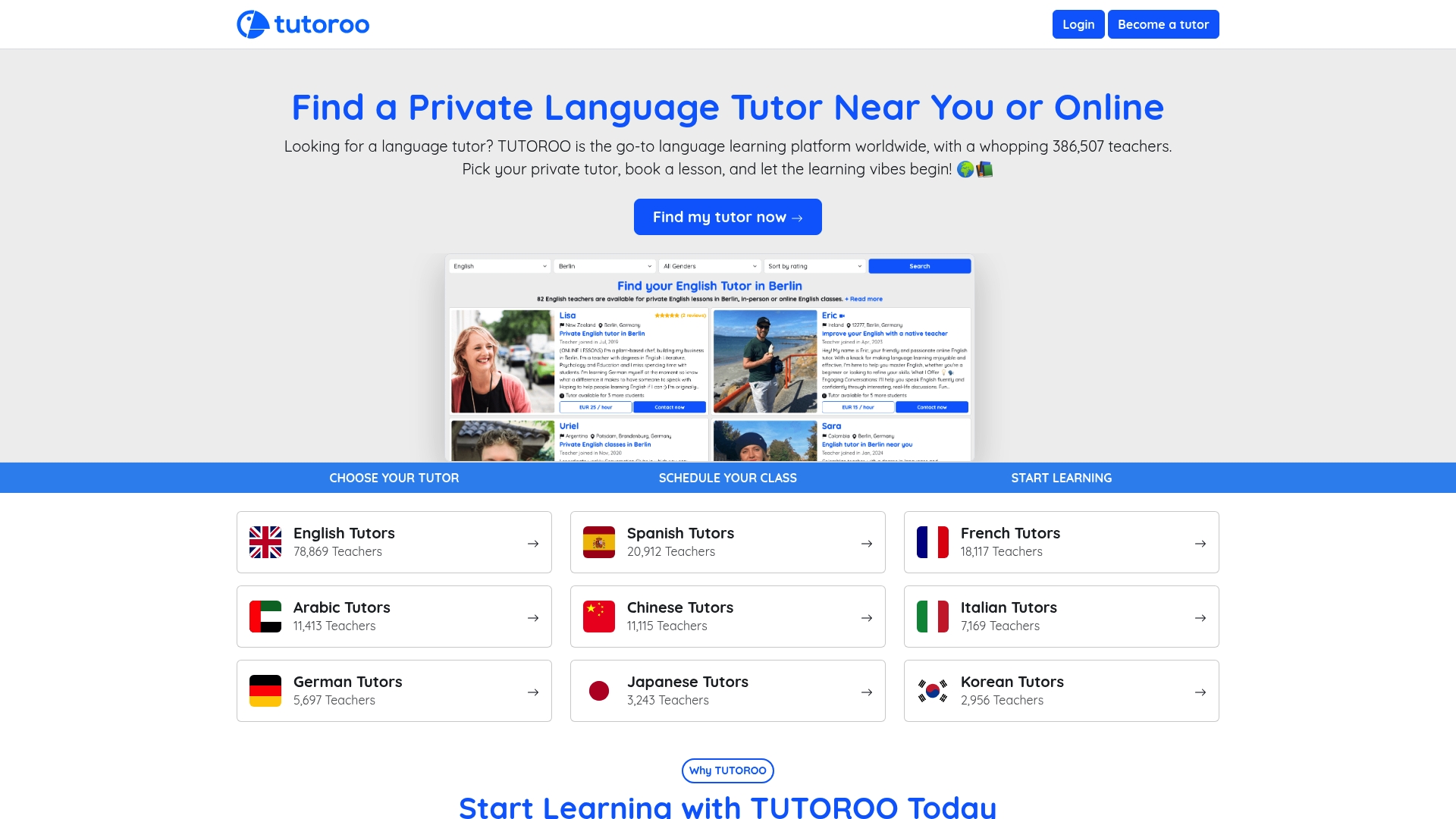
With over 386,000 language teachers on the platform, TUTOROO makes it straightforward to find a tutor who matches your goals, schedule, and preferred learning style. Whether you want to practise conversational fluency, prepare for an exam, or explore a new language entirely, personalised one-on-one sessions open doors to genuine progress. Browse English tutors online for one of the world's most in-demand languages, or connect with Lebanese tutors online for a rich and culturally immersive experience. The right tutor, paired with the evidence-backed techniques in this article, is the most powerful combination available to any language learner today.
Frequently asked questions
What is the most effective online teaching method for language learning?
AI-powered adaptive platforms combined with spaced repetition techniques have the strongest evidence base. Duolingo and Babbel show large effect sizes for skill improvement, while spaced retrieval practice consistently improves vocabulary retention across proficiency levels.
How does VR improve language learning online?
VR creates immersive, context-rich environments that simulate real-world communication. A Kazakh VR and ML pilot recorded gains of up to 25% in vocabulary and 30% in speaking fluency compared to control groups.
Can blended learning outperform fully online methods?
Yes, particularly for speaking and social engagement. Blended approaches produce superior outcomes by combining the adaptability of digital tools with the accountability and nuance of live human instruction.
Are online methods as effective as traditional classroom teaching?
Studies are mixed. Online vs traditional outcomes depend heavily on engagement levels; online excels for retention and flexibility, while in-person instruction tends to produce better results for hands-on and social language skills.