

TL;DR:
- Online cross-border tutoring offers flexible, affordable, and personalized language learning globally.
- Learners progress faster and gain cultural insights by engaging with native speakers worldwide.
- Challenges include variable tutor quality and missing non-verbal cues, but these can be managed with reviews and video.
Most people assume that learning a language properly means finding a local tutor, sitting across a table, and working through textbooks together. That assumption is costing learners time, money, and real progress. Online cross-border tutoring offers flexibility, cost savings, and personalisation that traditional setups simply cannot match. Whether you are preparing for an exam, planning to travel, or chasing a meaningful cultural exchange, the right tutor could be anywhere in the world. This guide explains what cross-border tutoring actually means, why it works so well, and how to make it work for you.
Table of Contents
- What does 'tutoring across borders' actually mean?
- Major benefits of tutoring across borders for language learners
- Cultural connection and real-world communication advantages
- What to watch out for: Potential downsides and how to overcome them
- A better approach to language learning: Our take
- Find your ideal cross-border language tutor today
- Frequently asked questions
Key Takeaways
| Point | Details |
|---|---|
| Accelerated results | Personalised cross-border tutoring helps you advance faster—up to 3 times quicker according to studies. |
| Cultural immersion | Learning with native speakers boosts real-world conversation skills and global understanding. |
| Flexibility and affordability | Scheduling is simpler and costs are often lower than local options—pay only for lessons you use. |
| Potential pitfalls | Quality and fit can vary, but checking reviews and prioritising human tutors improve your experience. |
What does 'tutoring across borders' actually mean?
Now that you know why traditional expectations are ripe for a rethink, let us define exactly what cross-border tutoring involves.
Cross-border tutoring means learning a language online with a tutor who lives in a different country. Your Spanish tutor might be in Mexico City. Your Mandarin instructor could be based in Chengdu. Geography stops being a barrier, and your options open up dramatically. This is fundamentally different from local or in-person tutoring, where you are limited to whoever happens to live nearby and is available at times that suit you.
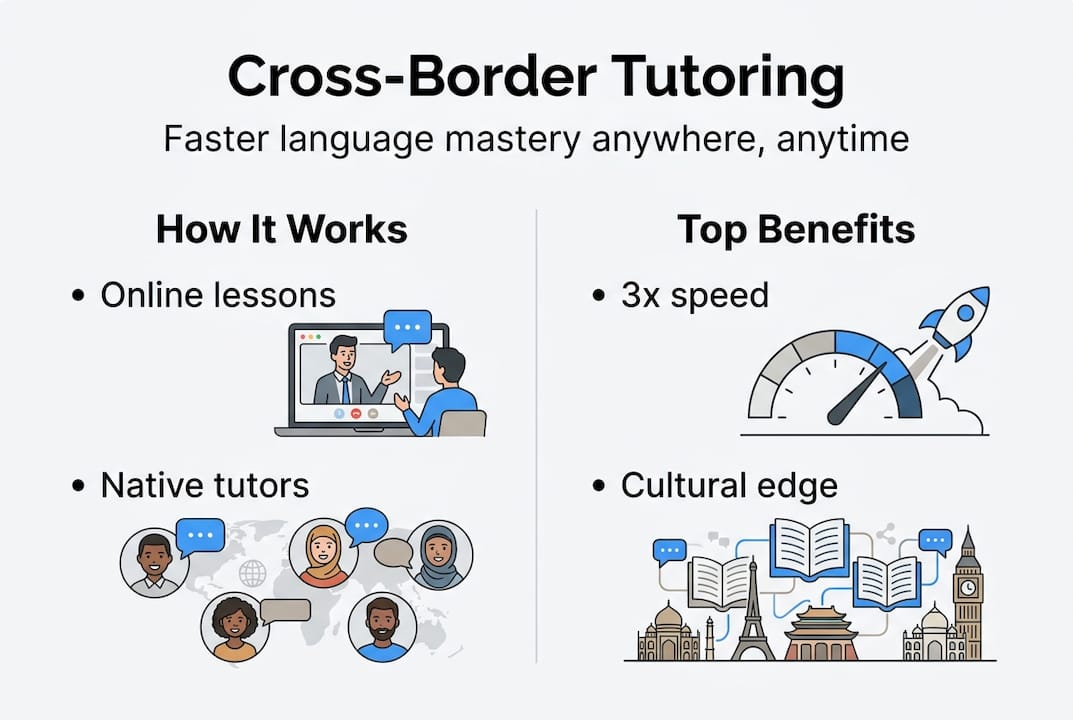
Traditional local tutoring has real strengths, but it comes with constraints. Scheduling is rigid, travel takes time, and your pool of tutors is small. Local vs online tutoring each have their place, but for most learners today, the online model simply offers more. With cross-border tutoring, you can book a lesson at 6am before work with a tutor in a completely different time zone, or squeeze in a session on a Sunday afternoon.
Cross-border tutoring typically comes in a few formats:
- One-to-one lessons: Fully personalised, focused entirely on your goals and pace
- Small group sessions: More affordable, with the added benefit of hearing others speak
- Language exchange: You teach your native language while your partner teaches theirs
- Structured courses: A set curriculum delivered by an expert tutor over several weeks
Global online tutoring removes scheduling and geographical limits, and the pay-per-lesson model means you only commit to what you need. Rates typically range from $4 to $40 per hour depending on the language, tutor experience, and platform. There are no lock-in contracts or subscription fees on most platforms.
"The best tutor for your goals might not live in your city. With cross-border tutoring, that is no longer a problem."
The real impact is this: you can learn anytime, from anyone, anywhere. That kind of access was unimaginable even fifteen years ago, and it is now one of the most powerful tools available to language learners worldwide.
Major benefits of tutoring across borders for language learners
With the basics covered, let us break down why learners benefit so much from choosing tutors beyond their own borders.
The advantages of cross-border tutoring go well beyond convenience. They touch on speed, quality, cost, and the kind of confidence that only comes from real human connection.
| Benefit | Traditional local tutoring | Cross-border online tutoring |
|---|---|---|
| Tutor availability | Limited to your area | Global pool of thousands |
| Scheduling flexibility | Fixed, in-person times | Any time zone, any day |
| Cost per hour | Often $50 to $100+ | $4 to $40 depending on tutor |
| Native speaker access | Depends on location | Consistently available |
| Lesson personalisation | Moderate | High, tailored to your goals |
Here are the five biggest reasons learners are making the switch:
- Flexibility: You choose when and how often you learn, fitting lessons around work, study, or family commitments across any time zone.
- Personalisation: Lessons are built around your specific goals, whether that is passing the IELTS, ordering food confidently in Tokyo, or chatting with a partner's family.
- Native speaker access: Working with a native-speaking tutor sharpens your accent, builds real-world vocabulary, and gives you the kind of conversational confidence that textbooks cannot teach.
- Faster progress: Learners progress up to 3x faster with personalised online tutoring, with measurable gains in as little as 12 weeks.
- Cost savings: No travel costs, no rigid packages, and a wide price range means you can find quality tuition that fits your budget.
Studies back this up. Research with Preply shows that tutoring with native-speaking instructors online accelerates learning significantly, with learners gaining up to a full CEFR level in 12 weeks. That is the kind of progress that changes travel plans, exam outcomes, and career opportunities.
Pro Tip: Set a clear goal before your first lesson. Tell your tutor exactly why you are learning, whether it is for a trip, a job interview, or a family connection. This shapes every lesson from day one and dramatically speeds up your results. You can also explore real-world tutoring fluency examples to see how others have structured their learning journeys.
Cultural connection and real-world communication advantages
Beyond personalisation and speed, the biggest edge may be in the cultural experience and confidence you gain from cross-border tutors.

Language is not just grammar and vocabulary. It is rhythm, humour, context, and the unspoken rules of how people actually communicate. A native-speaking tutor from Paris does not just teach French. They teach you how Parisians actually speak, what phrases land well, and what might accidentally offend. That kind of cultural competence is something no app can replicate.
Cultural exchange via borderless tutoring boosts speaking skills and intercultural competence in ways that structured classroom learning rarely achieves. When you regularly converse with someone from another country, you naturally absorb their expressions, their pacing, and their cultural references.
Here is how cross-border tutoring compares to a generic language app for cultural learning:
| Feature | Language app | Native-speaking cross-border tutor |
|---|---|---|
| Authentic slang and expressions | Rarely included | Naturally woven into every lesson |
| Cultural context and nuance | Minimal | Central to the conversation |
| Real-time feedback on tone | Not available | Immediate and personalised |
| Speaking confidence | Moderate improvement | Significant, measurable gains |
The benefits for travellers and cultural exchange participants are especially strong:
- You learn to understand fast, natural speech rather than slow, textbook-paced audio
- You pick up the expressions locals actually use, not just the ones that appear in phrasebooks
- You build the confidence to speak without freezing up when someone responds unexpectedly
- You develop a genuine feel for the culture, which makes every interaction richer
"Speaking a language is one thing. Understanding the culture behind it is what makes you truly fluent."
For learners preparing for exams like the DELF, HSK, or JLPT, this cultural fluency also translates into better performance on speaking and listening components. Tutors who unlock language potential faster do so precisely because they bring this lived cultural knowledge into every session.
What to watch out for: Potential downsides and how to overcome them
Still, online and cross-border tutoring is not perfect. Here is what you need to know to avoid common pitfalls and maximise your experience.
Like any learning method, cross-border tutoring has its challenges. Being aware of them upfront means you can plan around them rather than be caught off guard.
- Variable tutor quality: Not every tutor on every platform is equally skilled. Some are experienced educators; others are enthusiastic but untrained. Always check reviews, ask about teaching experience, and request a trial lesson before committing.
- Learner bias: Some learners unconsciously prefer tutors who share their background or gender, which can limit their exposure to diverse accents and teaching styles. An open-minded approach leads to better outcomes.
- Missing non-verbal cues: Online tutoring lacks some non-verbal cues that in-person sessions provide, such as body language and physical gestures. You can compensate by using video rather than audio-only, and by asking tutors to be explicit about tone and expression.
- Inconsistency: Sporadic lessons produce slow results. Consistency is the single biggest factor in language progress. Commit to a regular schedule, even if it is just two sessions per week.
- Over-reliance on AI or apps: Human tutors still outperform AI and language apps for developing real fluency and cultural understanding. Apps are useful supplements, but they should not replace live conversation practice.
Pro Tip: Combine your cross-border tutoring sessions with a structured vocabulary app like Anki or Duolingo for daily reinforcement. Use the app to memorise; use your tutor to actually speak. This combination accelerates progress faster than either method alone. For a clear roadmap, follow step-by-step online tutoring guidance to build a routine that sticks.
A better approach to language learning: Our take
With the highlights and cautions in mind, here is an honest opinion from people who have seen hundreds of learners thrive and struggle with global tutoring.
Native speakers are wonderful tutors, but they are not a magic solution on their own. The learners who make the most progress are not necessarily those with the most qualified tutors. They are the ones who show up consistently, ask questions freely, and are willing to sound awkward while they figure things out. Curiosity and persistence matter more than perfection.
The best results we see come from combining a native-speaking online tutor with a structured app for daily vocabulary practice. Neither alone is as effective as both together. But above all, the learners who succeed are those who connect their language goals to something real: a trip they are genuinely excited about, a friendship they want to deepen, or a career door they are ready to open.
Focus on the journey, not just the test score. When you are genuinely curious about the culture and the people behind the language, the results follow naturally. You can find inspiration in real learner success stories that show just how transformative this approach can be.
Find your ideal cross-border language tutor today
Ready to put cross-border learning into action? Here is how you can start your journey.
Finding the right tutor used to mean searching locally and hoping for the best. With TUTOROO, you have access to over 386,000 language teachers worldwide, ready to teach you on your schedule, in your target language, at a pace that suits your goals.
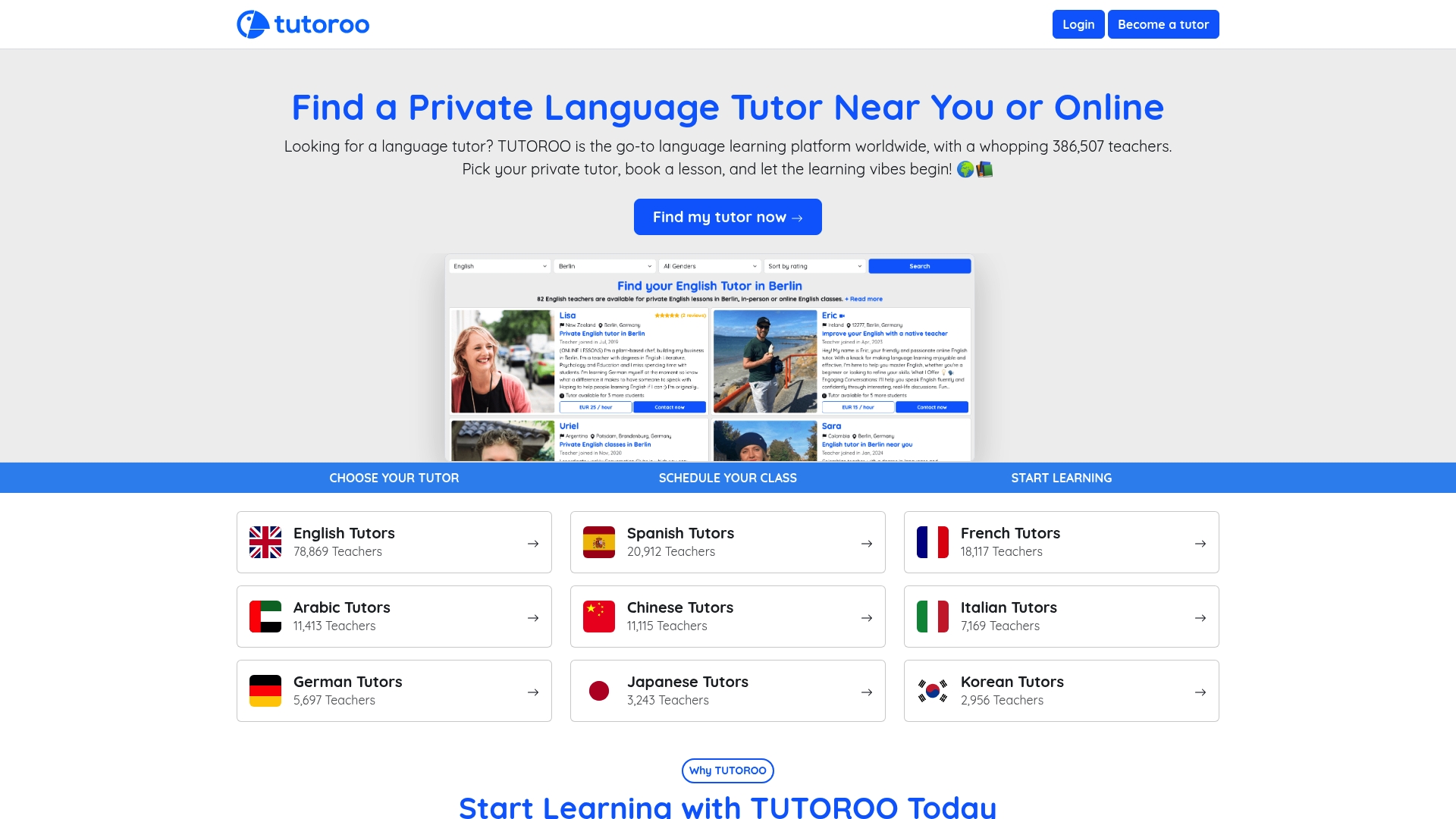
Whether you are preparing for an exam, planning an overseas adventure, or simply wanting to connect more deeply with another culture, a personalised tutor makes all the difference. You can find a private language tutor matched to your needs in minutes, or if you are specifically working on Malay, browse Malay tutors to get started today. Your next conversation in another language is closer than you think.
Frequently asked questions
How much does cross-border tutoring typically cost?
Rates range from $4 to $40 per hour, with most platforms using a pay-per-lesson model so you only pay for the help you need, with no subscriptions required.
Is progress really faster with a native-speaking tutor online?
Yes, studies show learners progress up to 3x faster with personalised tutoring compared to standard benchmarks, with measurable gains in as little as 12 weeks.
What are the main challenges of cross-border tutoring?
Variable tutor quality, learner biases, and missing non-verbal cues are the most common challenges, but checking reviews carefully and prioritising real human tutors over AI tools helps you overcome them.
Will tutoring with a native speaker help me with travel or cultural exchange?
Absolutely. Borderless tutoring fosters intercultural competence and real-world conversation confidence, making you far better prepared for travel, cultural exchange, and authentic daily interactions.