

You're committed to learning a new language, but now you face a critical choice: should you meet a tutor face-to-face or connect online? Many learners assume that in-person lessons are always more effective, yet thousands of students worldwide achieve fluency through online tutoring. The truth is, both methods work brilliantly when matched to your learning style, schedule, and goals. This guide cuts through the confusion by comparing local and online language tutoring across key factors like flexibility, cost, personal connection, and effectiveness. You'll discover which option suits your circumstances best and how to maximise results regardless of your choice.
Table of Contents
- Key Takeaways
- Understanding local language tutoring
- Exploring online language tutoring
- Comparing local and online tutoring: benefits and trade-offs
- Applying your choice: tips for effective tutoring whichever option you pick
- Find your ideal tutor with Tutoroo
- Frequently asked questions
Key Takeaways
| Point | Details |
|---|---|
| In person immersion | Local tutoring provides direct in person interaction and cultural immersion that supports pronunciation and real world practice. |
| Global tutor access | Online tutoring offers scheduling flexibility and access to tutors worldwide, with potential cost differences depending on platform. |
| Learning style match | Effectiveness depends on aligning the method with your learning style and goals. |
| Tech readiness matters | Online success hinges on your technology literacy and reliable internet and devices. |
Understanding local language tutoring
Local tutoring offers direct personal interaction and cultural immersion opportunities. This traditional approach involves meeting your language tutor in person, typically at your home, the tutor's location, a library, or a café. The physical presence creates a learning environment rich with non-verbal communication cues like gestures, facial expressions, and body language that enhance understanding, especially when tackling pronunciation or cultural nuances.
One significant advantage of local tutoring is the immediate, tangible connection between student and tutor. You can practise conversations naturally, receive instant corrections, and engage in activities that benefit from physical materials like flashcards, books, or cultural artefacts. This format particularly suits learners who thrive on personal accountability and the structure of scheduled, in-person appointments.
However, local tutoring comes with practical constraints. Scheduling requires coordinating availability and accounting for travel time, which reduces flexibility compared to online alternatives. Your tutor pool is limited to people within reasonable commuting distance, potentially restricting access to specialists in less common languages or specific teaching methodologies. Weather, transport disruptions, or illness can also interrupt lesson continuity.
Key benefits of local language tutoring include:
- Enhanced cultural immersion through face-to-face interaction and real-world context
- Immediate feedback on pronunciation with clear observation of mouth movements
- Stronger personal accountability from physical appointments
- No technical barriers or equipment requirements
- Opportunities for spontaneous conversation and cultural exchanges
Pro Tip: Choose a local tutor who matches your learning style and cultural interests for optimal engagement. Ask potential tutors about their teaching methods and cultural background during initial consultations to ensure compatibility.
For learners exploring various language tutoring insights, local options work especially well if you value routine, prefer minimal technology, and have consistent availability. Many students find that meeting an english tutor locally accelerates their confidence in real-world conversations through repeated face-to-face practice.
Exploring online language tutoring
Online tutoring expands access to tutors beyond geographical limits and allows flexible scheduling. This modern approach connects students and tutors via video conferencing platforms from any location with internet access. You can learn from a native speaker in Tokyo while sitting in your Sydney apartment, accessing expertise that might not exist in your local area.
The flexibility of online tutoring transforms language learning logistics. You can schedule lessons during lunch breaks, early mornings, or late evenings without commuting time. This convenience particularly benefits busy professionals, parents, or students juggling multiple commitments. The global tutor marketplace means you can find specialists in business language, exam preparation, or regional dialects that local options rarely provide.

Technology enables innovative teaching methods through screen sharing, digital whiteboards, and instant access to online resources during lessons. Tutors can share documents, play audio clips, and use interactive tools that enhance learning beyond what's possible with traditional materials. Recording sessions for later review adds another dimension to reinforcement and self-study.
Yet online tutoring requires certain conditions for success. You need reliable internet connectivity, a functioning webcam and microphone, and basic technical literacy to navigate video platforms. Some learners find that the screen barrier reduces the spontaneity and warmth of in-person interaction, though skilled tutors compensate through engaging teaching techniques and consistent communication.
Key advantages of online language tutoring include:
- Unmatched scheduling flexibility across different time zones
- Access to thousands of tutors worldwide in any language
- Lower costs due to eliminated travel and venue expenses
- Comfortable learning environment in your own space
- Easy integration of digital learning resources and tools
- Recorded lessons available for review and reinforcement
Pro Tip: Test your equipment and environment beforehand to minimise distractions. Run a trial video call, check your audio quality, and ensure your background is quiet and well-lit before your first lesson.
Exploring various online tutoring methods reveals diverse approaches from conversation practice to structured curriculum delivery. Whether you're seeking korean tutors online or other language specialists, the digital format opens doors to expertise that geography once limited.
Comparing local and online tutoring: benefits and trade-offs
Both local and online tutoring can be effective, but choice depends on individual preferences and circumstances. Understanding the specific trade-offs helps you make an informed decision aligned with your learning goals, lifestyle, and resources.
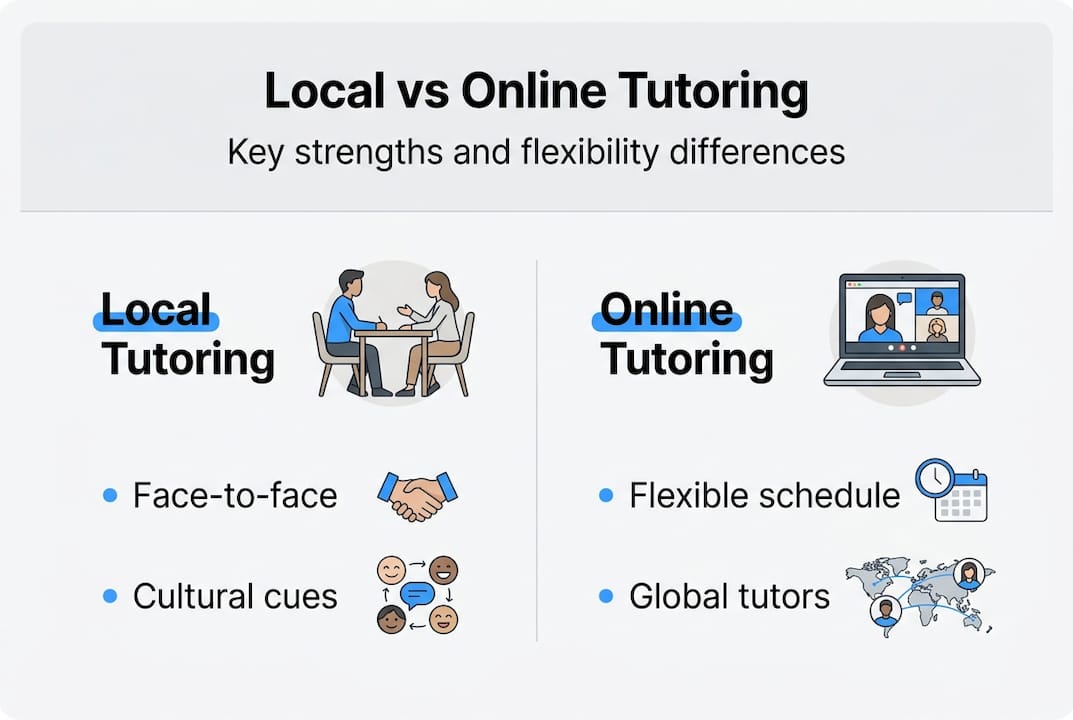
Local tutoring excels in creating strong personal connections and cultural immersion. The physical presence of your tutor facilitates richer non-verbal communication, making it easier to pick up subtle pronunciation nuances, body language, and cultural context. You're more likely to engage in spontaneous conversations and receive immediate, tactile feedback. However, this comes at the cost of reduced flexibility, as you must coordinate schedules and factor in travel time, which can be challenging for busy learners.
Online tutoring delivers unmatched convenience and access to a global tutor marketplace. You can connect with native speakers and specialists regardless of location, often at more competitive rates due to lower overhead costs. Scheduling becomes infinitely more flexible, allowing lessons to fit around your life rather than the reverse. The trade-off involves potential technical difficulties, reduced spontaneity in interaction, and the need for self-discipline in a home environment with potential distractions.
Here's a detailed comparison of key factors:
| Consideration | Local tutoring | Online tutoring |
|---|---|---|
| Personal connection | Strong face-to-face rapport | Good but mediated by screens |
| Cultural immersion | Excellent real-world context | Authentic but less tangible |
| Scheduling flexibility | Limited by location and travel | Highly flexible across time zones |
| Tutor selection | Restricted to local area | Global access to specialists |
| Cost | Often higher with travel costs | Generally more affordable |
| Technical requirements | Minimal | Internet, webcam, microphone essential |
| Learning environment | Structured external location | Comfortable but potential distractions |
| Lesson continuity | Vulnerable to weather, illness | More resilient to external factors |
Cost considerations vary significantly between formats. Local tutors often charge premium rates reflecting their travel time and local market conditions, whilst online tutors can offer competitive pricing due to lower operational costs and global competition. However, local tutoring eliminates technology investments beyond basic materials.
Many successful language learners adopt a blended approach, combining occasional in-person sessions for cultural immersion and pronunciation work with regular online lessons for flexibility and cost-effectiveness. This hybrid strategy maximises the benefits of both formats whilst minimising their respective limitations.
Key decision factors to consider:
- Your schedule consistency and need for flexibility
- Technology comfort level and equipment availability
- Budget constraints and cost priorities
- Preferred learning style and motivation sources
- Specific language goals and required specialisation
- Access to quality local tutors in your target language
For learners exploring language exchange options, understanding these trade-offs clarifies which format aligns with your priorities. Some students thrive with the accountability of in-person appointments, whilst others flourish with the autonomy and convenience of online learning.
Applying your choice: tips for effective tutoring whichever option you pick
Successful language tutoring depends on clear goals, communication, and commitment. Regardless of whether you choose local or online tutoring, certain principles maximise your learning outcomes and ensure you get excellent value from your investment.
-
Establish clear learning objectives from the start. During your first session, communicate specific goals like conversational fluency, exam preparation, business language, or travel basics. Work with your tutor to create a structured plan with measurable milestones that keep you motivated and focused.
-
Maintain consistent scheduling to build momentum. Language acquisition thrives on regular exposure and practice. Commit to a realistic schedule you can sustain, whether that's twice weekly or once every fortnight. Consistency matters more than intensity, as your brain needs time to consolidate new vocabulary and grammar patterns between sessions.
-
Engage actively during sessions and practise between meetings. Don't treat tutoring as passive instruction. Ask questions, make mistakes freely, and push yourself to speak even when uncomfortable. Between lessons, dedicate time to homework, vocabulary review, and consuming content in your target language through podcasts, films, or reading.
-
Provide honest feedback to your tutor about what works. If certain teaching methods don't resonate with your learning style, speak up. Effective tutors adapt their approach based on student feedback, whether that means more conversation practice, additional grammar exercises, or different pacing.
-
Use supplementary resources appropriate to your tutoring format. For online learners, leverage digital tools like language apps, online dictionaries, and video content. Local learners might benefit from physical textbooks, flashcards, and attending local language meetups to complement tutoring sessions.
-
Track your progress through regular self-assessment. Keep a learning journal noting new vocabulary, grammar concepts mastered, and areas needing improvement. Periodic self-recording of speaking exercises helps you hear your own progress, which builds confidence and motivation.
-
Create an optimal learning environment. Online learners should designate a quiet, well-lit space free from distractions. Local learners should choose meeting venues conducive to concentration and conversation, avoiding overly noisy cafés or public spaces when possible.
Pro Tip: Use language tutoring options that allow trial lessons before committing long-term. Testing compatibility with a tutor through an introductory session prevents mismatches and ensures you invest time and money wisely.
Whether you're working with specialised tutors or general language instructors, these principles apply universally. The format matters less than your commitment, communication, and consistent effort in applying what you learn.
Find your ideal tutor with Tutoroo
Now that you understand the differences between local and online language tutoring, it's time to find the perfect match for your learning journey. Tutoroo connects you with experienced language tutors who offer both local and online lessons across dozens of languages, from common choices like English and Spanish to specialised options including Arabic, Mandarin, and regional dialects.
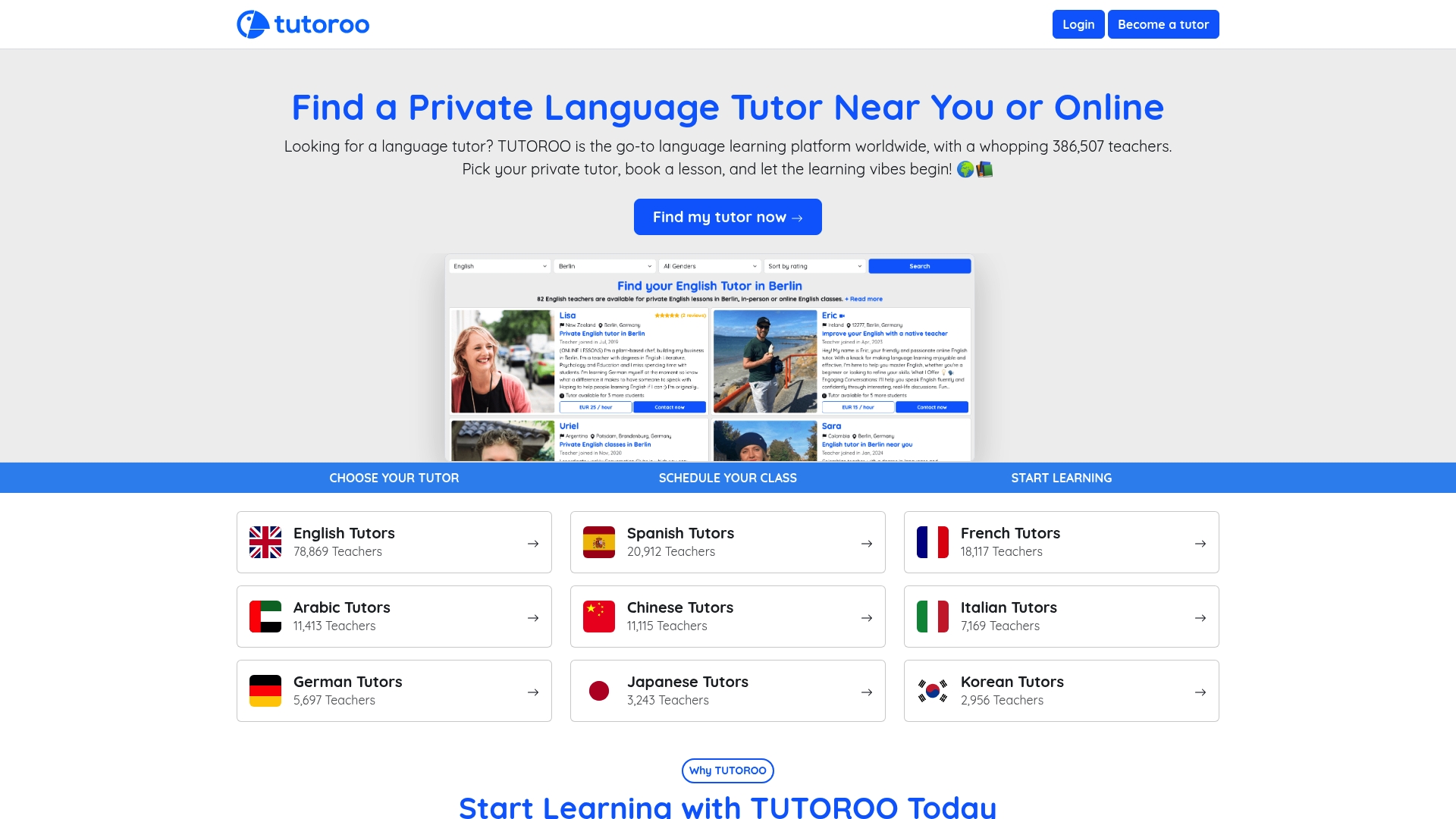
Our platform simplifies tutor selection with detailed profiles, student reviews, and flexible search filters based on location, language, teaching style, and availability. Whether you prefer the personal connection of face-to-face lessons or the convenience of online sessions, Tutoroo's community of over 386,000 tutors ensures you'll find someone who matches your goals, schedule, and budget. Many students report faster progress with Tutoroo's private tutoring compared to traditional classroom settings, thanks to personalised attention and customised lesson plans.
Pro Tip: Use Tutoroo's search filters to find the perfect tutor quickly. Specify your preferred lesson format, availability windows, and specific learning objectives to narrow down options efficiently.
Explore comprehensive language tutoring options that adapt to your lifestyle. From lebanese tutors to english tutors, our platform offers transparent pricing, direct messaging with potential tutors, and the flexibility to switch approaches if your needs change. Start your language learning journey today with a tutor who understands your unique goals and learning style.
Frequently asked questions
What are the main differences between local and online language tutoring?
Local tutoring involves face-to-face lessons with physical presence, creating opportunities for rich cultural immersion and full non-verbal communication. Online tutoring connects you with tutors remotely via video platforms, offering greater scheduling flexibility and access to specialists worldwide. Both formats can be equally effective when matched to your learning style, technology access, and commitment level, though they suit different lifestyle needs and preferences.
For more details on effective approaches, explore various online tutoring examples that demonstrate successful learning strategies.
How do I know which tutoring method suits me best?
Consider your schedule flexibility, comfort with technology, preferred learning style, and what motivates you most. If you thrive on personal accountability and value cultural immersion through face-to-face interaction, local tutoring likely suits you better. If convenience, cost-effectiveness, and access to specialised tutors matter more, online tutoring offers significant advantages. Trying a trial lesson in each format helps you experience the differences firsthand before committing long-term.
Can online tutoring match the effectiveness of in-person tutoring?
Yes, online tutoring can be as effective as in-person with reliable technology and learner engagement. Research and student outcomes demonstrate that when supported by stable internet, quality video equipment, and active participation, online lessons deliver comparable results to traditional face-to-face instruction. Online tutoring offers unique benefits like flexible scheduling, access to native speakers regardless of location, and the ability to record sessions for review. Success depends more on tutor quality, lesson structure, and your commitment than the delivery format itself.
What equipment do I need for effective online language tutoring?
Reliable internet, webcam, microphone, and quiet environment are essential for online tutoring. You'll need a stable broadband connection with sufficient bandwidth for video calls, a computer or tablet with a functioning camera, and either built-in or external microphone for clear audio. Headphones improve sound quality and reduce echo during conversations. Equally important is a quiet, well-lit space where you can focus without interruptions. Testing your setup before lessons prevents technical disruptions and ensures you maximise learning time rather than troubleshooting technology issues.