

TL;DR:
- Flexible language tutoring personalizes learning by adapting the schedule, content, and pace to individual needs.
- It significantly improves test scores, boosts confidence, and offers greater convenience than traditional classroom models.
- A hybrid approach combining human expertise with digital tools yields the best language learning outcomes.
Personalised, flexible tutoring lifts test scores by 12% and improves grades in eight out of ten students — yet most people still assume language learning must follow a rigid, classroom-based structure. That belief holds countless learners back. Whether you are preparing for an overseas trip, sitting an important language exam, or simply chasing the joy of speaking something new, the way you learn matters as much as what you learn. Flexible language tutoring challenges the old model by placing your goals, your schedule, and your learning style at the centre of every session. This article explores what that really means in practice.
Table of Contents
- What is flexible language tutoring?
- Key benefits: Personalisation, convenience, and skill improvement
- How flexible tutoring works: Strategies and learning methodologies
- Who benefits most — and what are the drawbacks?
- Why hybrid approaches and structured flexibility win
- Find your ideal flexible language tutor
- Frequently asked questions
Key Takeaways
| Point | Details |
|---|---|
| Personalised learning | Flexible tutoring adapts lessons to your unique goals, pace, and learning style for maximum progress. |
| Evidence-backed improvements | Research shows a 12% boost in test scores and reduced anxiety for students using flexible, one-on-one tutoring. |
| Practical methodologies | Strategies like formative assessment, scaffolding, and spaced repetition power effective skill gains. |
| Hybrid advantage | Combining human and AI tutoring delivers fluency, motivation, and cultural depth while managing drawbacks. |
What is flexible language tutoring?
Flexible language tutoring is not simply tutoring that happens at odd hours. It is a learner-centred approach that adapts the schedule, pace, content, and format of instruction to suit individual needs. Unlike traditional classroom models, where every student follows the same syllabus at the same speed, flexible tutoring responds to where you are right now and where you want to go.
Flexibility in education covers scheduling adaptability, self-paced learning, and personalised instruction — three pillars that make this model genuinely different. A student cramming vocabulary for a holiday in Tokyo has entirely different needs from a professional preparing for a business negotiation in French. Flexible tutoring recognises that distinction and builds sessions around it.
The format can vary widely. Sessions may be:
- Live and online via video call, fitting around work or family commitments
- In-person, offering face-to-face connection and real-time body language cues
- Hybrid, blending digital tools with occasional in-person meetings
- Asynchronous, using recorded feedback or written exchanges for learners in different time zones
Understanding online vs in-person tutoring helps learners choose the format that suits their lifestyle and learning preferences. Both carry genuine strengths, and the best tutors can move between them fluidly.
Flexible tutoring also spans a wide range of goals. Exam preparation, conversational confidence, travel readiness, and personal enrichment are all valid reasons to seek one-on-one instruction. The range of personalised lesson types available today reflects just how diverse learner needs have become.
Accessibility is another defining feature. Flexible tutoring supports learners from different cultural backgrounds, age groups, and ability levels. A shy beginner who freezes in group settings can thrive in a private, judgement-free session. A heritage speaker polishing grammar for professional use can focus precisely on that gap, without sitting through content they already know. This adaptability is what separates flexible tutoring from every other model on the market.
Key benefits: Personalisation, convenience, and skill improvement
Once you understand what flexible tutoring is, the next question is simple: does it actually work? The evidence says yes, and quite convincingly.
Tutoring boosts test scores by 12% and improves grades in eight out of ten students, while AI-enhanced personalised learning also increases enjoyment and reduces anxiety. These are not minor gains. For a language learner sitting an IELTS or DELF exam, a 12% improvement can be the difference between a pass and a distinction.

| Benefit | Traditional class | Flexible tutoring |
|---|---|---|
| Schedule control | Fixed | Fully adaptable |
| Lesson focus | Syllabus-driven | Goal-driven |
| Feedback speed | Delayed | Real-time |
| Anxiety levels | Often higher | Typically lower |
| Progress pace | Group average | Individual pace |
Personalisation is the engine behind these results. When a tutor knows your specific weaknesses, they can target them directly rather than covering ground you have already mastered. This focus lifts motivation because every session feels relevant. Research on academic tutoring outcomes confirms that personalised instruction increases self-efficacy, meaning learners start to believe they can succeed.
Convenience matters too. Balancing language study with a full-time job, family responsibilities, or irregular hours is genuinely hard. Flexible tutoring removes the friction by meeting you where you are, literally and figuratively.
Pro Tip: Book your sessions at the same time each week, even if the day varies. Consistent scheduling builds a study habit without sacrificing flexibility.
The private tutoring benefits extend beyond test scores. Learners report stronger speaking confidence, better retention, and a genuine enjoyment of the language they are studying. For those preparing for specific milestones, exam preparation tutoring can be structured around past papers, timed practice, and targeted vocabulary, all within a flexible framework.
- Reduced anxiety in one-on-one settings
- Faster vocabulary retention through personalised repetition
- Higher motivation when lessons match personal goals
- Better speaking confidence from regular, low-pressure practice
How flexible tutoring works: Strategies and learning methodologies
Knowing that flexible tutoring delivers results is useful. Understanding how it delivers them is even better.
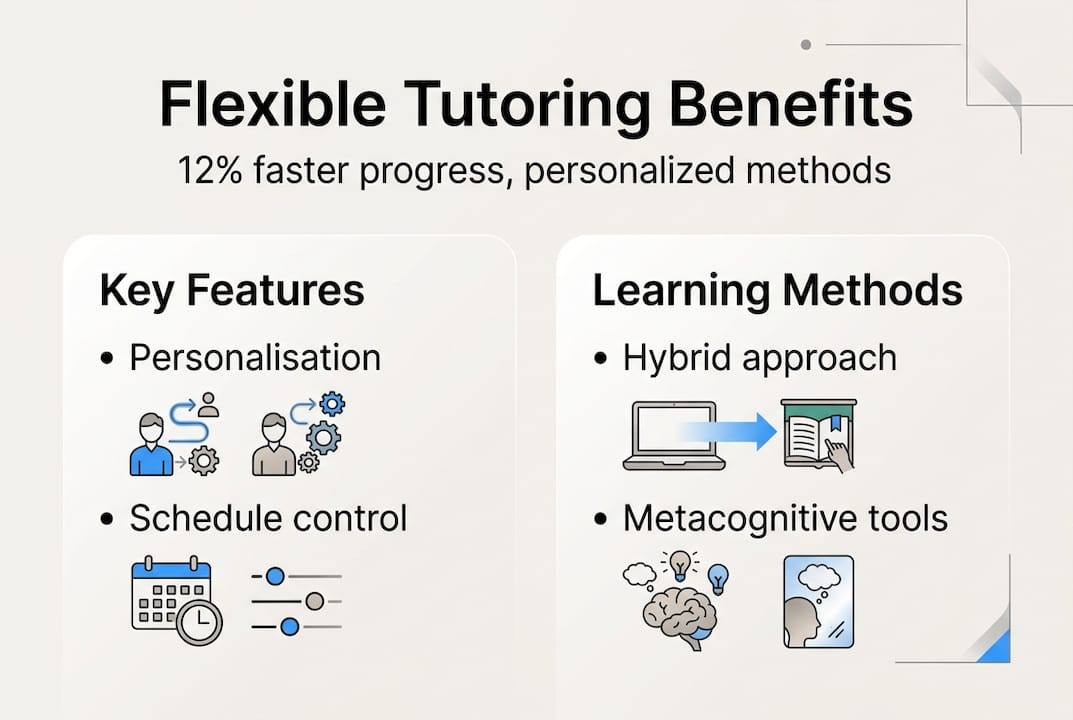
At the core of effective flexible tutoring is formative assessment: the ongoing process of checking understanding during a lesson rather than only at the end. Skilled tutors ask targeted questions, listen for errors, and adjust their approach mid-session. This is fundamentally different from a pre-recorded lesson or a static textbook exercise.
Tutoring strategies and techniques from the National Tutoring Authority highlight real-time formative assessment, scaffolding, retrieval practice, and iterative feedback as the methodologies that drive genuine learning gains. Here is how each one works in practice:
- Formative assessment: The tutor identifies gaps in real time, then adjusts the lesson focus immediately. Explore formative assessment examples to see this in action.
- Scaffolding: Complex grammar or vocabulary is broken into manageable steps, with support gradually removed as confidence grows.
- Retrieval practice: Instead of re-reading notes, learners are asked to recall information from memory, which strengthens long-term retention significantly.
- Spaced repetition: Key content is revisited at increasing intervals, preventing the forgetting curve from erasing hard-won progress.
- Iterative feedback: Corrections are woven naturally into conversation rather than delivered as a list at the end, keeping the learning experience fluid.
"The best tutors do not just teach the language. They teach learners how to learn it."
Human tutors excel at reading emotional cues, adapting tone, and providing cultural context that no algorithm can replicate. The one-on-one teaching benefits are particularly strong for prosody (the rhythm and intonation of natural speech) and nuanced conversation. AI tools can support phonetic drilling and vocabulary repetition effectively, but the deeper work of fluency belongs to skilled human instruction.
Pro Tip: Ask your tutor to use spaced repetition for new vocabulary. Reviewing a word at day one, day three, and day seven dramatically improves long-term recall.
Who benefits most — and what are the drawbacks?
Flexible tutoring is genuinely powerful, but it is not a perfect solution for every learner in every situation. Understanding who gains most, and where the limitations lie, helps you make a clear-eyed decision.
Who benefits most:
- Anxious or introverted learners who feel exposed in group settings thrive in private, non-judgmental practice environments
- Rare language learners studying languages with few local speakers gain access to qualified human tutors online
- Busy professionals who need to fit study into unpredictable schedules
- Exam candidates who need targeted, syllabus-specific preparation
- Heritage speakers refining formal or written skills in their family language
Exploring online tutoring examples shows just how varied and effective these arrangements can be across different languages and goals.
What to watch out for:
Flexible tutoring does carry real drawbacks including isolation, motivation loss, reduced structure, and occasional AI errors in grammar and vocabulary. Learners who rely heavily on social accountability may find it harder to stay consistent without the rhythm of a regular class group. Technical issues, platform commission structures, and varying tutor quality are also genuine concerns.
"The single-speaker trap is real: learning exclusively from one accent or variety limits your ability to understand native speakers in the wild."
The AI tutor risks are worth noting too. AI tools reach roughly 95% accuracy on grammar and vocabulary, but that remaining 5% can reinforce bad habits if left unchecked. Comparing local vs online tutoring and reviewing international language platforms can help you find the right balance for your specific situation.
Why hybrid approaches and structured flexibility win
Here is a perspective worth sitting with: pure flexibility, without any structure, is not actually freedom. It is drift. Learners who jump between topics, skip difficult areas, or rely entirely on AI tools often plateau quickly because there is no one holding the map.
Flexible tutoring excels for personalisation and convenience, but it requires structure to avoid gaps and works best as a hybrid model with human oversight. That means pairing the adaptability of flexible scheduling with a clear learning progression designed by a qualified tutor.
Empirical gains are strongest when personalised tutoring is combined with metacognitive training, teaching learners not just what to study, but how to study effectively. This is the piece most platforms overlook. A tutor who helps you understand your own learning patterns is worth far more than one who simply delivers content.
The most effective approach combines human expertise for fluency, cultural nuance, and emotional intelligence with digital tools for repetition and scheduling convenience. Platforms that support this hybrid model, and tutors who actively build metacognitive skills into their sessions, consistently produce the strongest outcomes. Explore tutoring success strategies to see what this looks like in real learning journeys.
Find your ideal flexible language tutor
The evidence is clear: flexible, personalised tutoring opens doors to faster progress, stronger confidence, and a more enjoyable learning experience.
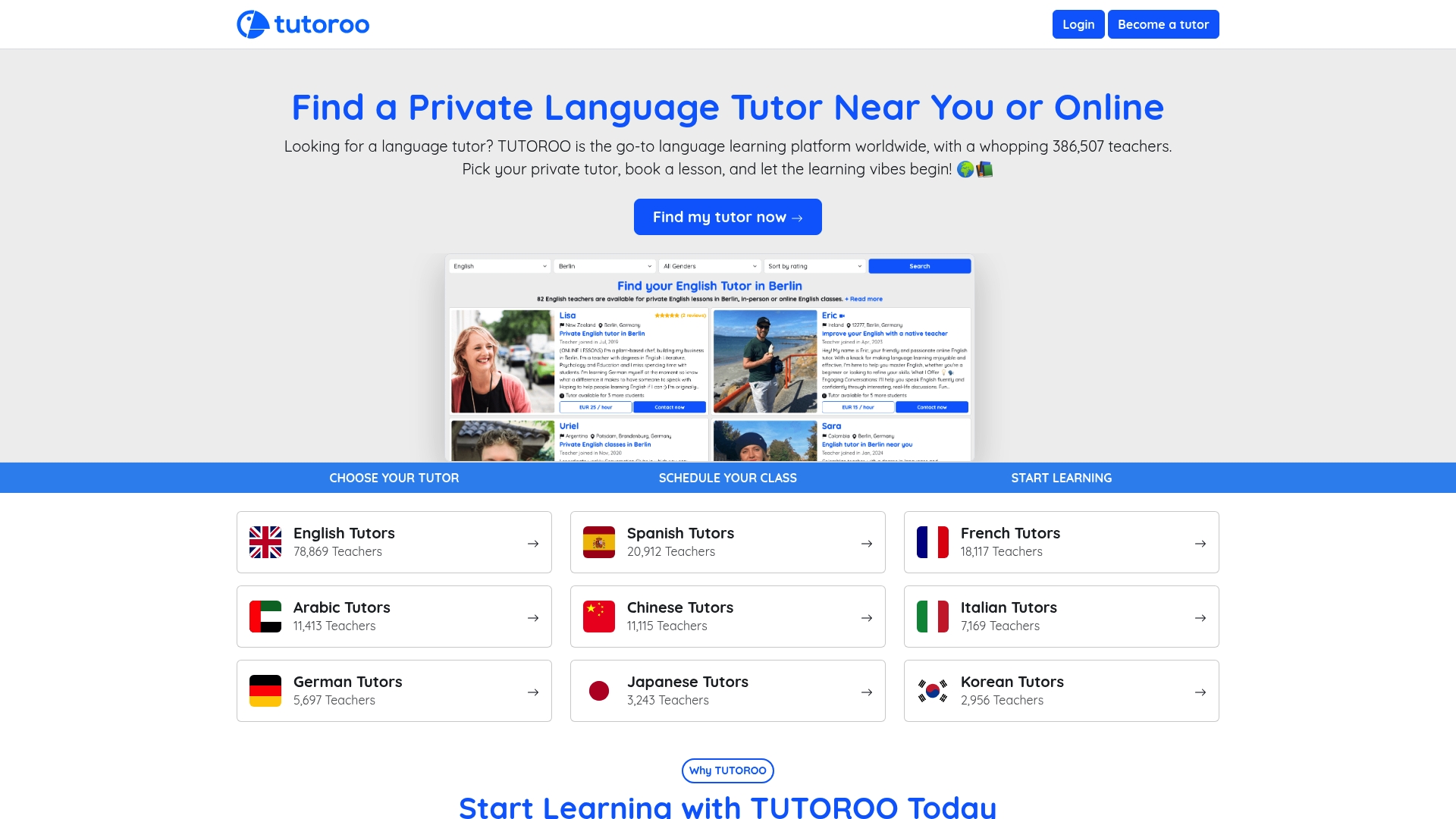
TUTOROO connects you with over 386,000 qualified language tutors worldwide, making it straightforward to find flexible tutors who match your language, location, and learning style. Whether you are searching for an English tutor to sharpen your professional communication or a Japanese tutor to prepare for an upcoming trip, TUTOROO makes the match simple and direct. Search by language, browse tutor profiles, and message your preferred tutor to arrange a session that fits your life. Your next language breakthrough is closer than you think.
Frequently asked questions
How does flexible tutoring improve language learning outcomes?
Flexible tutoring boosts test scores by 12% and improves grades in eight out of ten students by adapting instruction to individual needs and delivering real-time feedback that keeps learning on track.
What are the main disadvantages of flexible language tutoring?
Drawbacks include isolation, reduced structure, and occasional AI errors, but combining human tutors with digital tools in a hybrid approach addresses most of these challenges effectively.
Who should choose flexible tutoring over traditional classes?
Anxious beginners and rare language learners benefit most, along with busy professionals and exam candidates who need personalised, goal-focused instruction that fits around an unpredictable schedule.
How do AI tutors differ from human tutors in flexible settings?
AI tutors excel at phonetics and repetitive vocabulary drilling, while human tutors are essential for fluency, prosody, cultural nuance, and the kind of adaptive conversation that builds genuine confidence.