

Most people assume that tutoring means working for a school, agency, or tutoring company. But self-employed tutoring involves individuals operating independently as private tutors, providing personalised instruction outside traditional settings. This model is growing rapidly, and for good reason. Both tutors and students gain something genuinely valuable: flexibility, customisation, and a direct human connection that institutional settings rarely offer. Whether you are considering teaching languages on your own terms or searching for a tutor who truly fits your goals, understanding how self-employed tutoring works opens doors to culture, connection, and opportunity.
Table of Contents
- What is self-employed tutoring?
- How self-employed tutoring works
- Key methods and tools in language tutoring
- Pros and challenges of being a self-employed tutor
- Who succeeds as a self-employed language tutor?
- Ready to start tutoring or learning?
- Frequently asked questions
Key Takeaways
| Point | Details |
|---|---|
| Independence and flexibility | Self-employed tutoring lets you set your schedule, rates, and teaching style for a fully personalised approach. |
| Clear business responsibilities | Registering, managing taxes, and compliance are essential steps for self-employed language tutors. |
| Customised, effective lessons | Focusing on conversation and student goals leads to better outcomes than traditional methods. |
| Business mindset boosts success | Niche specialisation, testimonials, and value-driven packages increase earnings and reliability. |
| Choose the right support | Using the right platform streamlines client matching and provides support for both tutors and students. |
What is self-employed tutoring?
Self-employed tutoring means you work for yourself, not for a company or school. You find your own clients, set your own rates, design your own lessons, and manage your own schedule. This is fundamentally different from agency-based tutoring, where the agency controls pricing, client allocation, and often lesson structure.
Self-employed tutors operate independently, set their own rates, and personalise lessons to suit each student's goals. That independence is both the greatest appeal and the biggest responsibility of this model. You carry the risk, but you also keep the reward.
Language tutoring is one of the most popular areas for self-employed tutors. Demand for personalised language lessons in English, Spanish, French, Mandarin, and Arabic continues to grow globally. Students increasingly seek the private tutoring benefits that come from one-on-one attention rather than crowded classrooms.
Here is a quick comparison of the two models:
| Feature | Self-employed tutor | Agency-based tutor |
|---|---|---|
| Rate setting | You decide | Agency decides |
| Client acquisition | Your responsibility | Agency provides |
| Lesson design | Fully customised | Often standardised |
| Income potential | Higher ceiling | Capped by agency |
| Admin workload | Higher | Lower |
| Flexibility | Maximum | Limited |
Key advantages of self-employed tutoring include:
- Full control over your teaching style and materials
- Ability to specialise in niche areas such as business language or exam preparation
- Direct relationships with students, which builds loyalty
- Access to personalised language lessons that adapt to individual learning pace
- Freedom to work locally, online, or both
How self-employed tutoring works
Getting started as a self-employed tutor involves more than simply advertising your services. There are practical, legal, and financial steps that every independent tutor needs to address from the outset.

Tutors must register with tax authorities, track income, claim allowable expenses, and handle compliance needs specific to their country or region. In Australia, this means registering as a sole trader with the Australian Business Register and obtaining an ABN. In the UK, it means registering with HMRC. Wherever you are based, reporting all income, including cash payments, is mandatory.
Here are the core steps to set up as a self-employed tutor:
- Register as self-employed with your relevant tax authority and obtain any required business registration numbers.
- Open a dedicated bank account to separate personal and business finances.
- Set your hourly rate based on your qualifications, experience, and local market research.
- Obtain professional indemnity insurance to protect yourself in case of disputes.
- If you plan to tutor children, background checks are generally required and are a legal obligation in most jurisdictions.
- Create a simple contract or booking agreement to protect both you and your students.
- Track all income and expenses using accounting software or a spreadsheet from day one.
Irregular income is one of the most common challenges for new self-employed tutors. Students cancel, take holidays, or pause lessons unexpectedly. Building a buffer of savings equivalent to two to three months of expenses helps manage these gaps.
Understanding how to pay language tutors and how payment structures work is equally useful for students who want to support their tutor's business while getting consistent value.
Pro Tip: Offer lesson packages of five or ten sessions at a slight discount. This reduces cancellations, improves your cash flow, and gives students a commitment that accelerates their progress.
Key methods and tools in language tutoring
The best self-employed language tutors do not simply translate grammar rules. They create immersive, conversation-rich environments where students practise real language in real contexts. This approach yields faster results than traditional rote learning.
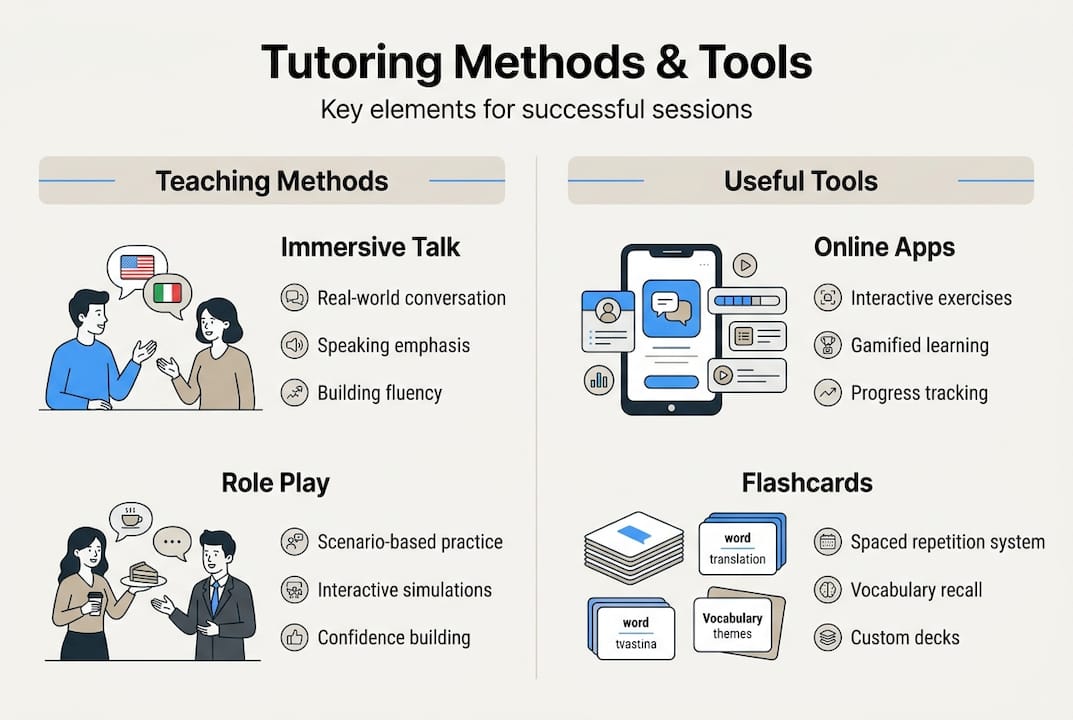
Personalised lessons focus on conversation, real-time feedback, and student goals, often using digital whiteboards and interactive tools to keep sessions dynamic. Platforms like Zoom, Google Meet, and dedicated tutoring tools such as Lessonspace or Miro allow tutors to share screens, annotate text, and track vocabulary progress in real time.
Successful language tutoring sessions typically include:
- A clear lesson goal tied to the student's specific objective (travel, business, exam, or conversation)
- Warm-up conversation to activate prior knowledge
- Targeted input on grammar or vocabulary in context
- Immediate, constructive correction rather than delayed written feedback
- A short review or homework task to reinforce the session
Specialising opens significant earning potential. A tutor who focuses on teaching languages online for business professionals or exam candidates can charge premium rates compared to a generalist tutor.
"Tutors who specialise in niche markets, such as business English, IELTS preparation, or heritage language learners, consistently attract higher-paying, more committed students. Specialisation is not limiting, it is a growth strategy."
Online language tutors typically charge between $45 and $70 per hour, with experienced specialists earning considerably more. Exploring online tutoring examples and understanding effective tutoring styles can help both tutors and students identify what works best for their goals.
Pros and challenges of being a self-employed tutor
Self-employed tutoring is genuinely rewarding, but it is not without its difficulties. A clear-eyed view of both sides helps you make an informed decision.
| Factor | Reality for self-employed tutors |
|---|---|
| Earning potential | $45 to $70 per hour online; up to $6,000 per month full-time |
| Flexibility | Set your own hours and location |
| Income stability | Variable, especially in early months |
| Client management | Entirely your responsibility |
| Career growth | Scales with reputation and specialisation |
According to the US Bureau of Labour Statistics, tutoring is a growing occupation with strong demand, particularly in language instruction. However, irregular income, client no-shows, and burnout from one-on-one scaling limits are real challenges that many tutors face.
Advantages of self-employed tutoring:
- Complete flexibility over your schedule and teaching location
- Global reach when teaching online, with students across multiple time zones
- Full independence to design lessons that reflect your teaching philosophy
- Higher earning ceiling compared to agency employment
Common challenges:
- No guaranteed income or paid leave
- Client cancellations and no-shows affect revenue directly
- Business administration, marketing, and tax compliance fall entirely on you
- Scaling income requires moving beyond hourly rates
Success hinges on niche, testimonials, and packages over hourly rates, combined with hybrid online and in-person delivery. Tutors who treat their practice as a business rather than a side activity consistently earn more and retain clients longer. Comparing local versus online language tutoring options is a smart early step in deciding how to structure your services.
Who succeeds as a self-employed language tutor?
Not everyone who loves languages will thrive as a self-employed tutor. The tutors who build sustainable, fulfilling practices share a specific combination of skills and mindset.
Subject expertise, proven results, tech-savviness, and a business mindset are the core traits that help tutors succeed. Beyond language ability, the most effective tutors are empathetic listeners who adapt their approach to each student's learning style, pace, and motivation.
Here are practical steps to build credibility and attract consistent clients:
- Obtain a relevant qualification such as a TEFL, CELTA, or language degree to signal expertise.
- Gather testimonials from your first students, even if you offer initial sessions at a reduced rate.
- Choose a clear niche, whether that is conversational Spanish, business Mandarin, or French for beginners.
- Build a simple online presence with a profile on a tutoring platform or a basic website.
- Ask satisfied students for referrals, as word of mouth remains one of the most powerful marketing tools available.
No formal qualifications are required, but credibility sells. A TEFL certificate, a university degree in a relevant language, or a portfolio of student success stories all contribute to higher rates and faster client acquisition.
Students benefit enormously from tutors who invest in their own professional development. When a tutor understands how to design personalised lessons for learning, the results are measurable and motivating for both parties.
Pro Tip: Combine private one-on-one sessions with small group lessons or monthly subscription packages. This creates more predictable income and reduces the pressure of filling every hour with individual bookings.
Ready to start tutoring or learning?
Whether you are ready to launch your own tutoring practice or searching for the right language tutor to support your goals, the next step is simpler than you might think. Platforms designed specifically for language learning make it easy to connect, communicate, and get started without the friction of traditional agency models.
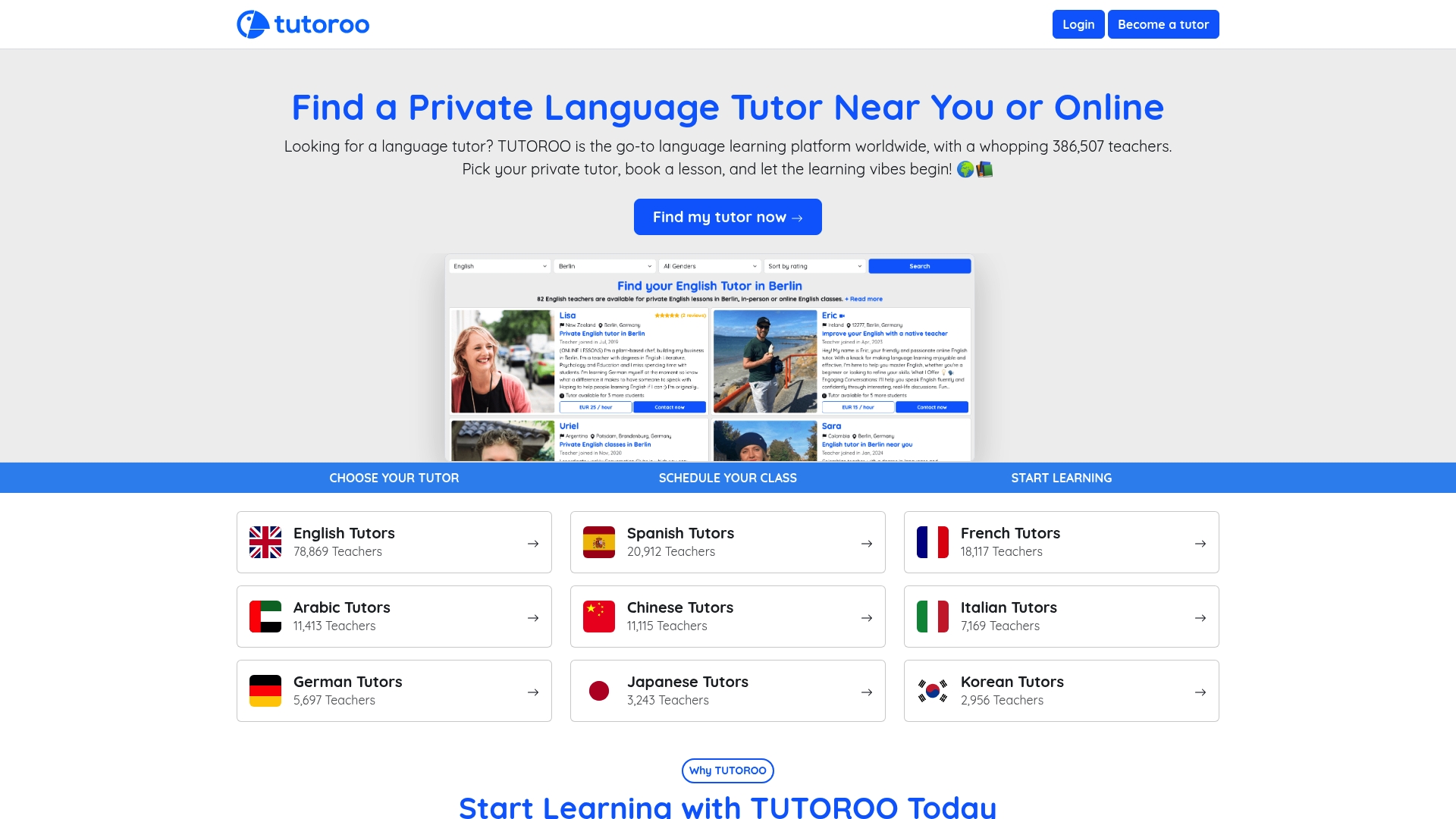
TUTOROO connects students with over 386,000 language teachers worldwide, covering languages from English and Spanish to Arabic, French, and Mandarin. If you are a tutor, you can register, set your own schedule, and receive direct payments from students. If you are a learner, you can find your language tutor based on your location, language, and availability in minutes. Looking for something specific? Browse English tutors online or explore options like Lebanese tutors online to find the authentic, personalised experience that opens doors to real cultural connection.
Frequently asked questions
Do I need teaching qualifications to become a self-employed language tutor?
No formal qualifications are required, but holding a relevant degree or TEFL certificate significantly boosts your credibility and allows you to charge higher rates from the start.
How much can a self-employed language tutor earn?
Language tutors typically earn between $45 and $70 per hour online, with experienced tutors who work full-time and specialise in high-demand niches earning between $4,000 and $6,000 per month.
What legal steps must I take as a self-employed tutor?
You need to register with tax authorities, report all income including cash payments, claim allowable expenses, and obtain relevant background checks if you plan to tutor children.
Are online or in-person lessons better for self-employed tutors?
Both formats have genuine advantages. Online sessions enable global reach and scheduling flexibility, while in-person lessons can strengthen local community ties and provide a more immersive, face-to-face learning environment.