

For many learners, yes, but not for everyone and not at every stage. A private tutor pays off most when you need speaking and writing feedback, a fixed exam date is approaching, or self-study has stalled. If your English is already close to A2 and you are comfortable working alone, free official materials and a group class may be all you need. This guide helps you work out which situation is yours, what you should expect for your money and time, and how to tell whether the lessons are working.
A quick note on the name. The exam many people still call KET is now called A2 Key, and it is run by Cambridge English. If you searched for KET tutoring, this is the exam we mean, not the Kentucky public television network that shares the abbreviation.
TL;DR
- A2 Key tutoring is most worthwhile when you need live correction in speaking and writing, have an exam date, or keep stalling when studying alone.
- Self-study with official sample papers, or a group class, can be enough if you are already near A2 and disciplined.
- Cambridge estimates roughly 180 to 200 guided learning hours to reach A2 from a true beginner, so a tutor is a way to make those hours count, not a shortcut around them.
- Judge value by progress on timed practice papers, not by the number of lessons you book.
- Choose a tutor who works from the real exam format and gives you specific feedback after every session.
Table of Contents
- What the A2 Key exam actually tests
- What a private tutor can do that a book or app cannot
- Who gets the most from A2 Key tutoring
- When self-study or a group class is enough
- What decides whether it is worth the time and money
- A sample plan: eight weeks to exam day
- How to tell your tutoring is working
- How to choose and vet a tutor
- A word on AI tools
- Our perspective
- Find an A2 Key tutor with TUTOROO
- FAQ
- Sources
What the A2 Key exam actually tests
Before you pay for help, be clear about the target. A2 Key is aimed at learners who need to show they can communicate in simple situations and interact at a basic level. It is set at Level A2 of the CEFR, the framework Europe-wide bodies use to describe language ability, and there are versions for school-age learners and for adults.
The exam covers four skills: reading, writing, listening and speaking. They are tested across three papers, so you are not only being asked what you know. You are being asked to perform: read a notice, write a short message, follow a conversation and answer an examiner face to face.
That last point matters for the tutoring question. Vocabulary lists and grammar exercises are easy to do on your own. Speaking to a real person and having a short written answer corrected are much harder to do alone.

What a private tutor can do that a book or app cannot
The case for a tutor rests on three things.
Real-time correction. An app can mark a multiple-choice answer. It struggles to tell you that you keep dropping the "s" on third-person verbs, or that your answer to a speaking prompt was too short to show your level. Journalist and language teacher Rosie Driffill makes this point in a Guardian piece on private language lessons: lessons are expensive, but they bring accountability and live correction that automated tools may lack.
Accountability. A booked hour with another person is harder to skip than a streak on your phone. Learners who plan to study "a bit every day" often find that a weekly lesson with homework is what keeps the plan alive.
Exam technique. A good tutor knows what each part of the paper asks and teaches you to meet it. They can show you how much to write in a short message, how to extend a speaking answer from one sentence to three, and where learners at A2 typically lose marks. We cover how this works in more depth in our piece on how tutors transform language exam preparation.

Who gets the most from A2 Key tutoring
We see the strongest case for one-to-one lessons in these situations.
Learners with a deadline
If your exam is booked, or a school, visa or job plan depends on the certificate, time is your scarcest resource. A tutor builds a study plan around your test date and your weakest paper, so you do not spend three weeks on grammar you already know.
Students who are strong on paper but nervous speaking
Many learners read and write better than they speak. The speaking test is short, but it is live. Practising with a patient person who plays the examiner role, and who then tells you exactly what to change, is the quickest way to gain confidence.
Parents of school-age candidates
The exam has a version for school-age learners, and younger students often need structure and encouragement more than extra content. A tutor who is comfortable with the age group can keep sessions short, varied and tied to the paper, and give parents a clear view of progress.
Adults returning to English after a long gap
Adult learners often have a busy schedule and limited study time. One-to-one lessons can be scheduled around work and focus entirely on what you need, rather than on a class syllabus that moves at the group's pace.
Learners who have plateaued
If you have been using apps for months and your practice-test scores are not moving, you probably have a specific gap that you cannot see yourself. A short block of diagnostic lessons can find it.
When self-study or a group class is enough
We would rather you spend your money well than spend it on everything. A tutor may not be necessary if:
- You are already close to A2 and your practice scores are steady.
- You are disciplined and happy to study alone on a schedule.
- Your main need is more exposure to listening and vocabulary, which apps, videos and graded reading can supply.
- The budget is tight and a group setting is acceptable.
The tools are there. Cambridge English publishes free preparation materials, including sample papers and exam tips, on its own site. The Guardian piece also notes that self-study with apps and YouTube is a cheaper route for learners who learn well through listening, repetition and visual vocabulary.
Group classes sit between the two. They give you a teacher, a schedule and classmates to speak with, at a lower cost per person. If you are unsure which suits you, our guide to group versus private language lessons walks through the trade-offs.
A sensible middle path is also common: study alone with official papers, then book a handful of private lessons just before the exam for speaking practice and a writing check.
What decides whether it is worth the time and money
There is no single answer to "is it worth it" because value depends on a few variables you can actually measure.
Your starting point
Cambridge estimates that around 180 to 200 hours of guided learning are needed to reach A2 from a beginner starting point. That is a useful reality check. If you are close to a true beginner, no tutor can compress that into a few weeks, and you will need a longer plan that mixes lessons with independent practice. If you already have a solid base, you may need far fewer hours.
How much you practise between lessons
A one-hour lesson cannot carry the whole load. Learners who do the set homework, review corrections and listen to English daily get more from each session. If you cannot commit time outside lessons, a tutor will help less than you hope.
The tutor's fit
A friendly native speaker is not automatically a good exam coach. Look for someone who is familiar with the A2 Key format, who explains why an answer is wrong, and who gives you short, specific tasks after each session. The quality of the match matters more than the price per hour.
Cost compared with the alternative
Prices vary widely by tutor, experience and platform, so compare quotes rather than relying on a headline rate. For a feel for typical budgets, our guides to online language tutor costs and US English tutoring benchmarks show how monthly spending builds up, and our look at TOEIC tutor costs against course fees shows how a tutor compares with a fixed-price course for another exam. Agencies and platforms may also add their own fees, as the Guardian piece notes in its UK example, so ask what is included before you commit.
A simple way to judge value: divide what you would spend by the number of exam points or practice-test marks you expect to gain. If a few targeted lessons close a specific gap, they are often better value than months of unfocused study.
A sample plan: eight weeks to exam day
Here is an illustration of how a learner with a basic foundation might use a tutor without overspending. Adjust it to your level and your timeline.
- Week 1: diagnostic. Take a full timed practice paper from the official materials. Bring the results to your first lesson so the tutor can see where marks were lost.
- Weeks 2 to 4: weakest skill first. Use lessons for the paper that scored lowest, usually writing or speaking. Handle vocabulary and reading practice on your own.
- Weeks 5 to 6: exam format. Practise each part of the paper under timed conditions. Ask your tutor to run a mock speaking test and give you written feedback afterward.
- Week 7: full mock. Complete a full practice test, review every wrong answer and compare your writing with sample answers.
- Week 8: polish. Focus on nerves, timing and the two or three errors that keep recurring. Rest before the exam.
A plan like this keeps the tutor on the parts that need a human and leaves the rest to free materials.
How to tell your tutoring is working
Hours booked are not progress. These signs are.
- Timed practice scores rise. Cambridge suggests assessing yourself with timed practice tests, reviewing wrong answers and comparing your writing with sample answers. Do this every one to two weeks and note the trend.
- Your mistakes change. If you are making new, more advanced errors instead of the same basic ones, you are moving.
- You speak for longer. In practice speaking tasks, you can extend answers without freezing.
- Feedback is specific. After each session you should know what to fix before the next. If you leave with only "good job", ask for more.
If, after four to six lessons, your practice scores are flat and the feedback is vague, change the approach or the tutor. A good tutor will welcome that conversation.
Speaking is often the quickest gain from outside practice too. Alongside lessons, a relaxed English conversation practice setting gives you extra low-pressure airtime with other speakers, which carries over into the speaking paper.
How to choose and vet a tutor
When you hire privately, check before you pay. The Guardian article recommends verifying credentials through references or, where applicable, background checks. In the US, that is especially worth doing when the learner is a child: ask for references, speak with the tutor first, and keep lessons somewhere visible to a parent or on a platform where you can see the conversation.
A short checklist:
- Ask how they prepare learners for A2 Key specifically.
- Request a short trial lesson so you can judge their teaching style.
- Ask how they give feedback and track progress.
- Confirm availability for the weeks leading up to your exam.
- Agree the cancellation terms and what the fee covers.
- Check that they are comfortable with your age group and level.
A word on AI tools
More learners now use AI chat and practice apps. They can be handy for vocabulary drills and for generating practice questions. Cambridge University Press & Assessment's research paper on AI in language learning says learners should look at how these tools handle their data and weigh their value against the cost. Used that way, they can sit alongside a tutor, who can check what the tool gets wrong and hold you to a plan.
Our perspective
We built TUTOROO around a simple belief: language learning goes further when a real person is on the other side of the conversation. For a first exam like A2 Key, that person matters most in the moments a book cannot reach: the pause before a speaking answer, the sentence you wrote that almost works, the nerves on the morning of the test.
That is why we focus on matching learners with private tutors, either locally or online, and on keeping communication between student and tutor direct. You can message tutors, compare profiles, and arrange a schedule that fits your week. For an exam candidate, that flexibility is the difference between a plan you can keep and one you abandon.
Our advice is practical. Use free official materials to build your base, and bring in a tutor where human feedback changes the result: speaking, writing and exam technique. A few well-aimed lessons with the right tutor can make independent study far more effective, and a longer series can give a beginner the structure to reach A2 with confidence.
Tutors on our platform set their own availability, so you can often find someone who fits an early-morning, evening or weekend routine. We think that is what makes tutoring accessible: not a single fixed package, but a choice of people, languages and schedules.
TUTOROO
Find an A2 Key tutor with TUTOROO
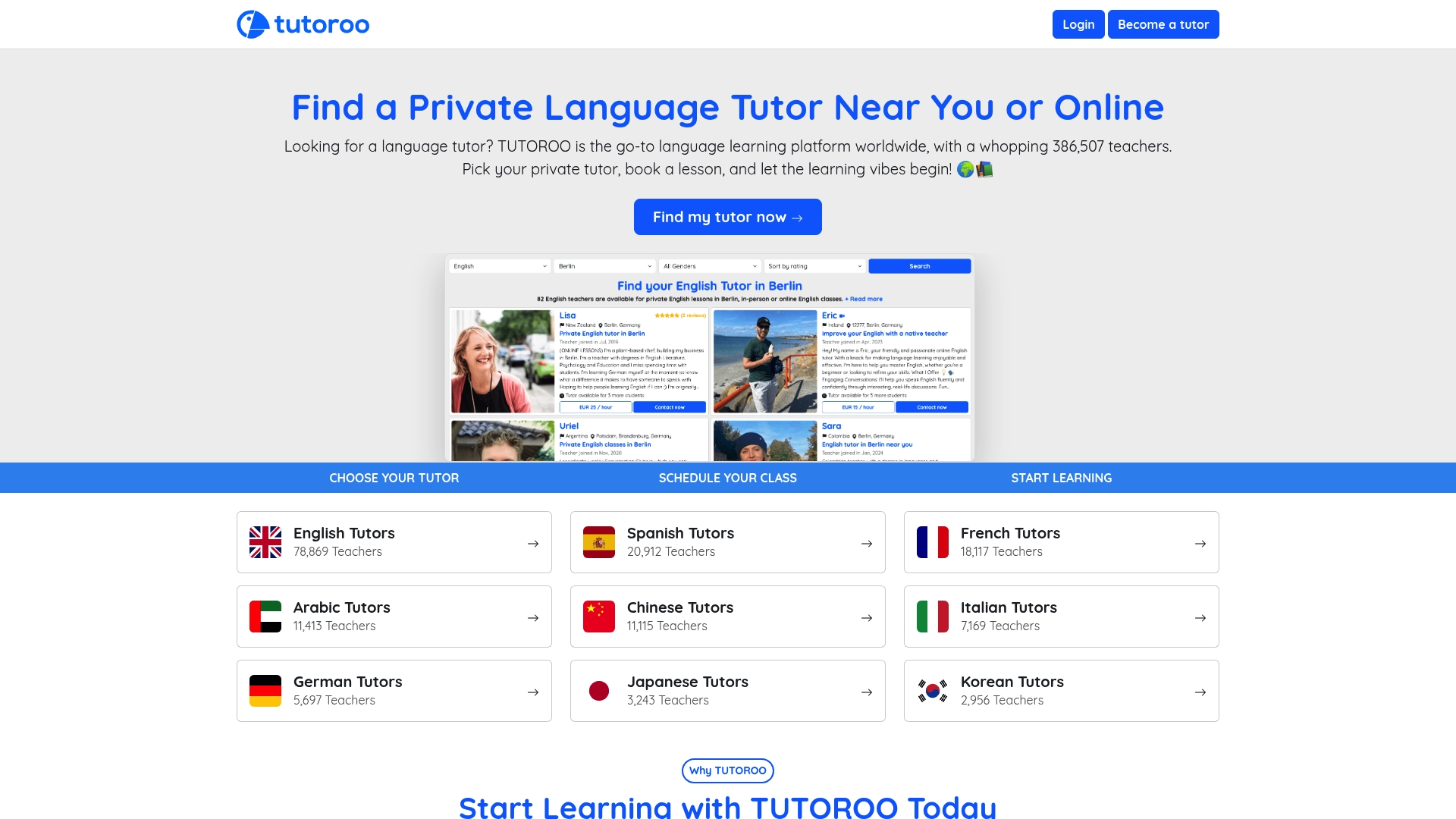
If you have decided that one-to-one help is right for you, you can browse English tutors on TUTOROO, compare profiles and message tutors directly to ask about exam preparation, availability and approach. Students pay a one-off introduction fee when they connect with a tutor, and ongoing lessons are then arranged and paid for directly with the tutor.
Working toward other exams as well? Our guides on TOEFL tutoring and on the best tools for language exam preparation can help you plan the next step.
FAQ
Is tutoring really worth it for A2 Key?
It is worth it when it targets what you cannot fix alone: speaking, writing and exam technique. It is less valuable if you are already near the level and disciplined with practice papers. Start with a diagnostic practice test and book lessons only for the weak areas.
How many hours of tutoring do I need?
There is no fixed number, because it depends on your starting level and how much you practise alone. Cambridge estimates around 180 to 200 guided learning hours from a beginner starting point to A2. Learners with a stronger base need fewer, and many use a short block of lessons close to the exam.
Can I pass A2 Key with self-study alone?
Many learners can, particularly if they are close to the level and use the free sample papers and tips Cambridge English offers. The hardest parts to self-assess are speaking and writing. A few sessions with a tutor or a language partner can cover that gap.
How do I know if my tutor is any good?
Look for specific feedback after every lesson, rising scores on timed practice papers and errors that change over time. Ask for a trial lesson, check references, and make sure the tutor knows the A2 Key format. If progress stays flat after several lessons, discuss a change of approach or tutor.
Sources
- A2 Key for Schools and A2 Key, Cambridge English
- A2 Key information for candidates, Cambridge English
- A2 Key exam format, Cambridge English
- Information for candidates (preparation materials), Cambridge English
- Guided learning hours, Cambridge English Support
- Private language lessons: how to get your money's worth, The Guardian
- The Role of AI in Language Learning: Research Evidence and Strategies, Cambridge University Press & Assessment