

Online language tutors typically charge within a broad range from entry-level to premium rates, with most learners paying a moderate amount for general lessons with an experienced tutor. The gap between those numbers comes down to one thing above all else: tutor experience and specialism, followed closely by the platform fees layered on top of the advertised rate. Understanding both before you book is the difference between budgeting well and being surprised by your first invoice.
TL;DR:
- Tutors with formal credentials, exam coaching experience, or specialized skills typically charge at the premium end of the $30 to $60 hourly range, especially for less common languages or advanced instruction.
- Platform and payment processing fees can add 15% to 30% to the overall lesson cost, making it important to clarify whether rates include these charges before booking.
- Buying lessons in packages or committing to longer-term schedules lowers the effective price, but requires testing the tutor's teaching style first to avoid poor value from inexperienced or inconsistent providers.
- One-on-one virtual tutoring produces significantly larger learning gains than group or shared formats, justifying higher costs for personalized, adaptive instruction.
- Cost-effective alternatives include group lessons, language exchanges, and apps, but they typically offer less structure and may be less suitable for achieving specific goals like exam success or rapid fluency.
Table of Contents
- Typical hourly rate bands explained
- What drives price beyond the headline rate
- How to budget for weekly, monthly and intensive study
- Lower cost alternatives and how they compare
- Why one-on-one tutoring can justify the higher price
- Cancellation, rescheduling and refund policies affecting cost
- Our take on paying for a language tutor
- Find and budget for the right tutor with Tutoroo
- Sources
- FAQ
Typical hourly rate bands explained
Rates for online language tutoring fall into three broad bands, and knowing which one fits your goals helps you avoid overpaying or underinvesting.

At the entry level, community tutors and newer online teachers typically charge rates considered affordable for beginners, suitable for casual or introductory lessons. These are often native speakers without formal teaching credentials, ideal for conversation practice or beginners who want relaxed, low-pressure exposure to a language. The mid range, roughly US$30 to US$60 an hour, is where most experienced tutors with structured lesson plans and a track record sit, according to platform reports and tutor community data compiled in SideGigLab's 2026 tutoring earnings report. Premium rates are charged for specialised work such as exam preparation, business language coaching, and by highly experienced native tutors with advanced credentials.
A few concrete examples make this easier to picture:
- General ESL conversation: usually entry to mid range, around US$15 to US$40 an hour.
- IELTS or TOEFL preparation: often double the typical general rate, reflecting the scoring expertise and familiar test formats a tutor must bring, per SideGigLab.
- Mandarin lessons: frequently mid to premium, given fewer available specialist tutors relative to demand.
- Spanish, French or German: commonly mid range, with premium pricing reserved for business-focused or highly credentialed tutors.
Institutional pricing tells a similar story. Northwestern University's language programmes list private instruction fees ranging from roughly US$25 to US$80 an hour depending on the service level, with basic support at the lower end and specialised instruction pushing toward the top.
What drives price beyond the headline rate
Two tutors advertising the same hourly figure can deliver very different value, and the reasons usually come down to credentials, format, language and fees.
- Credentials and specialism: formal teaching certificates, classroom experience and exam-coaching track records all push rates higher.
- Lesson format: one-on-one sessions cost more per hour than small-group or two-on-one formats, because attention is concentrated on a single learner.
- Language demand: less commonly taught languages, or those with fewer available native tutors, tend to sit higher in their pricing band.
- Platform and service fees: matching fees, commissions and payment processing costs add to what you actually pay, on top of the tutor's quoted rate.
Platform fees and commission structures commonly add 15% to 30% to the effective cost of a lesson, according to tutor earnings and payout reporting. That gap matters when you're comparing two tutors who look identically priced at first glance, so it pays to ask what the advertised rate actually includes before you book.
How to budget for weekly, monthly and intensive study
Turning an hourly rate into a monthly figure is the most useful budgeting step you can take, and it is simpler than it sounds.
- Weekly one-hour lessons: at a mid-range rate of $45 an hour, expect around $180 a month for four sessions.
- Twice-weekly one-hour lessons: the same $45 rate doubles your monthly spend to roughly $360.
- Intensive three-hour weekly blocks: at a premium rate of $70 an hour, a single three-hour session costs $210, or about $840 a month if kept weekly.
Buying lesson packages or blocks in advance commonly lowers the per-lesson price and encourages more consistent practice, though it does mean committing before you have banked much experience with a particular tutor. That is exactly why trial lessons matter: a short initial session or small starter package lets you test teaching style and fit before locking in a bigger commitment. Be wary of prices that sit well below the entry-level band with no clear explanation. If a tutor's rate seems too good to be true, it usually reflects limited experience or inconsistent availability rather than genuine value.
Pro Tip: Ask a prospective tutor for a short sample lesson plan or a goals assessment in your first session. It tells you quickly whether they teach with structure or just show up to chat.
Lower cost alternatives and how they compare
Not every learner needs one-on-one tutoring at every stage, and it is worth weighing the alternatives against your actual goal.
- Group lessons cost less per student and suit learners who want steady progress without one-on-one pricing, though feedback is necessarily shared across the group. Our guide to group versus private language lessons breaks down when each format makes sense.
- Language exchanges and volunteer tutors are free or very cheap but offer little structure, and progress depends heavily on your own discipline.
- Apps and structured courses are cost-effective for building vocabulary and grammar habits, but they cannot replicate live speaking feedback or correction.
If your goal is exam success or business fluency on a deadline, one-on-one tuition earns its higher price. If you mainly want casual conversation practice, a language exchange or group class may get you most of the way there for a fraction of the cost.
Why one-on-one tutoring can justify the higher price
Recent research gives a clear reason why personalised lessons command a premium. A randomised controlled trial analysis published through EdWorkingPapers found that one-on-one virtual tutoring produced larger learning gains than two-on-one tutoring, in some cases nearly double the effect. The likely explanation is straightforward: a tutor working with a single learner can adapt pacing, correct errors immediately and hold a genuine back-and-forth dialogue, rather than splitting attention.
One-to-one virtual tutoring produced larger learning gains than two-on-one formats, with effects in some analyses approaching double. EdWorkingPapers, 2025
That pedagogical case is part of why TUTOROO's marketplace connects students directly with individual tutors, drawing on a global community of language teachers so learners can match with someone suited to their level and goals rather than settling for whoever is available. Cost-effectiveness still depends on session design, consistency and the tutor's own skill, so the rate you pay is only worthwhile if the lessons are structured to use that one-on-one time well. Our piece on personalised learning gains goes further into the mechanics behind this.
Cancellation, rescheduling and refund policies affecting cost
Pricing does not stop at the hourly rate. How a tutor or platform handles cancellations, rescheduling and refunds can quietly change your real cost of learning.
Most independent tutors set their own policies, so it pays to ask upfront: how much notice is needed to reschedule without losing the fee, and whether missed lessons within a package are refunded or forfeited. Some tutors offer flexible rebooking within a rolling window, while others charge the full rate for late cancellations regardless of reason. If you have paid for a block of lessons in advance, check whether unused sessions expire after a set period, since an expired package effectively raises your true per-lesson cost. Clear policies protect both sides: they give tutors reliable income and give students confidence that a change in plans will not mean wasted money. Before committing to a package, get the cancellation and refund terms in writing, even if it is just a message thread, so there is no ambiguity later.

Our take on paying for a language tutor
The conventional advice, "just find the cheapest tutor and see how it goes", undersells how much structure matters. Two tutors at the same price point can produce completely different results depending on whether they show up with a plan or simply chat for an hour. Our view: prioritise a tutor's teaching approach and responsiveness over shaving a few dollars off the hourly rate. The research on one-on-one tutoring backs this up: the gains come from focused, interactive dialogue, not from the price tag itself.
Where most learners go wrong is treating the hourly rate as the whole budget. It rarely is once platform fees and lesson frequency are factored in. Work out your real monthly cost before you commit, test fit with a trial lesson, and only then think about whether packages make sense. Price is a filter, not a guarantee. What decides whether you get value is how well the sessions are planned and how consistently you show up to them.
— TUTOROO
Find and budget for the right tutor with Tutoroo
Tutoroo connects you directly with private language tutors worldwide, so you can search by language, location and availability and compare options before you commit to anyone. Because you are matched directly with tutors, you can see how they structure lessons and ask about their rates before booking, which makes budgeting far more predictable than guessing at averages.
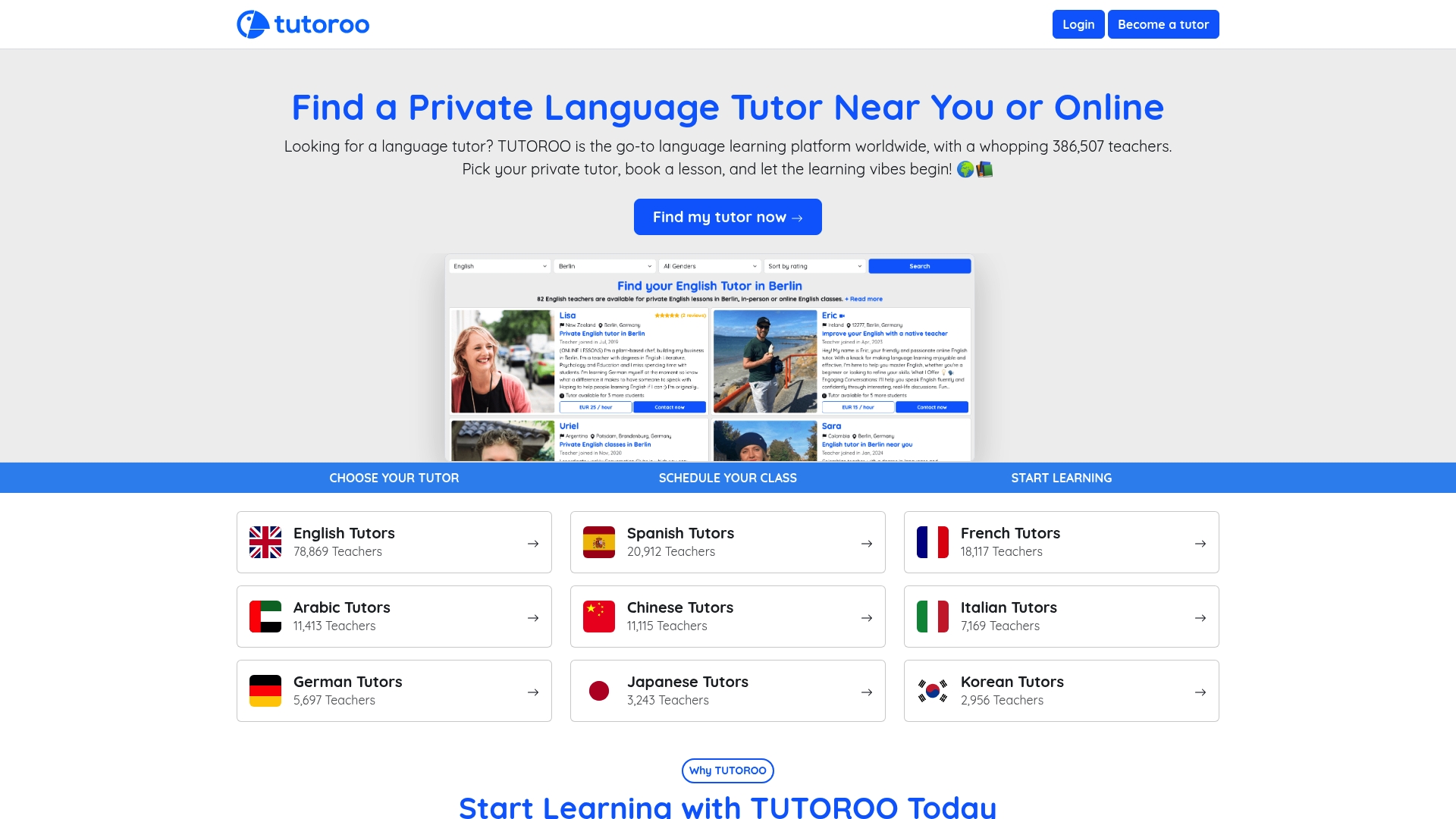
A few ways this helps in practice:
- Search tutors by language and see availability that fits your schedule.
- Message tutors directly to ask about lesson structure and pricing before committing.
- Choose from a community of teachers across various languages including English, Spanish, French, Japanese, Chinese/Mandarin, German, Italian and Portuguese.
If you are ready to see what is available, visit the Tutoroo homepage to search tutors in your language, or head straight to a language-specific page such as English tutors or Spanish tutors to start comparing options today.
Sources
- Online Tutoring in 2026: How Much Can You Earn? | SideGigLab
- The Power of Personalized Attention: Comparing Pedagogical Approaches in Small Group and One-on-One Early Literacy Tutoring | EdWorkingPapers
- Private Instruction - English Language Programs | Northwestern University
FAQ
Is hiring a language tutor worth it?
For casual, low-pressure practice, cheaper alternatives like group lessons or language exchanges may offer enough value instead.
Is $50 an hour too much for tutoring?
$50 an hour sits within the typical mid-range band for experienced online language tutors, according to platform rate reports. Whether it is worth it depends on the tutor's credentials, lesson structure and whether the language or specialism, such as exam prep, justifies that level.
Is two hours a day enough to learn a language?
Two hours of daily practice, combining tutored lessons with independent study, is generally considered a strong pace for faster progress, though outcomes depend heavily on consistency and lesson quality rather than hours alone. Structured one-on-one sessions tend to make that time more effective than unguided practice.
What is the best online language tutor?
There is no single best tutor for everyone, since the right fit depends on your language, goals and budget band. Comparing a few tutors directly through a marketplace like Tutoroo, using trial lessons to test teaching style, is the most reliable way to find one suited to you.