

Private English tutoring in the US typically runs $15 to $40 an hour online and $25 to $60 an hour in person, according to Premier TEFL's pricing analysis. Exam prep, business English, and highly experienced tutors sit at the top of both ranges. Platforms like Tutoroo let you compare tutor profiles side by side before committing to a rate.
TL;DR:
- Online general English tutoring costs between $15 and $40 per hour, while in-person lessons range from $25 to $60, with specialized exam or business classes often higher.
- Tutors holding formal qualifications like TEFL, CELTA, or relevant degrees typically charge more, especially if they demonstrate proven student outcomes or specialization.
- In high-cost cities like New York or San Francisco, local in-person rates tend to be above the national average, but online rates are more consistent worldwide due to global supply.
- Booking multiple lessons or shorter-term packages usually offers better rates than single sessions, with initial trial lessons being key to negotiating fair prices.
- Most learners should consider that scheduling frequency impacts total costs more than hourly rates, and blending online with in-person sessions can balance cost and learning effectiveness.
Table of Contents
- Typical English tutor hourly rate ranges by lesson type
- What affects an English tutor's price
- Online vs in-person English tutoring: which gives better value?
- How to choose an English tutor and negotiate a fair price
- US tax and recordkeeping basics for tutoring income
- Average monthly and yearly English tutoring costs
- How English tutoring costs compare across US regions
- Publisher perspective: how Tutoroo helps learners find fair rates
- Find your English tutor on Tutoroo
- Sources
Typical English tutor hourly rate ranges by lesson type
Once you start browsing tutor profiles, the spread in advertised prices can look confusing. Understanding what drives each bracket makes comparing offers far easier.
For general conversation and everyday English, online lessons typically cost $15 to $40 an hour, with newer tutors clustering near the bottom and tutors with several years of classroom or one-on-one experience commanding the top end. In-person general English tuition usually runs higher, at $25 to $60 an hour, because a tutor has to factor in travel time and local market demand rather than just screen time.
Exam-focused and business English tutoring changes the maths again. These lessons typically cost more per hour online, since the tutor is building a structured syllabus around a measurable outcome such as an IELTS band score or a TOEFL target, not just conversation practice.
A few benchmarks worth keeping in your back pocket:
- Online general English: $15 to $40/hr
- Online exam prep or business English: $25 to $60+/hr
- In-person general English: $25 to $60/hr
- In-person specialist tutoring (exam, business, technical English): often above $60/hr in major metro areas
Lesson length matters just as much as the hourly figure. Always ask a tutor to quote the actual session price, not just an hourly figure, so you're comparing apples with apples.
Where you live shapes the numbers too. Care shows a market like New York sitting comfortably above the national midpoint, and the same pattern shows up in most major US metro areas where cost of living and tutor demand both run high.
What affects an English tutor's price
Two tutors advertising the same subject can charge wildly different rates, and the gap almost always traces back to a handful of concrete factors.
Formal qualifications are the first lever. A tutor holding a TEFL or CELTA certificate, or a degree in English, linguistics, or education, typically prices above someone teaching casually as a native speaker with no formal training. The premium reflects structured lesson planning and assessment skill, not just fluency.
Experience and track record matter almost as much. A tutor with five years of exam-prep results or verifiable student outcomes will usually price higher than someone starting out, and that gap tends to widen further with strong references or repeat bookings. New tutors often price a little under the local average deliberately, building reviews before raising rates as demand grows.
Specialism pushes price up fastest of all. Tutoring aligned to Cambridge English exam frameworks, IELTS, TOEFL, or technical business English commands a premium because outcomes are measurable and high-stakes for the learner, a point Tutoroo's own guide on exam preparation tutoring explores in more detail.
Where you find your tutor changes the fine print too:
- Marketplace listings often include a matching or booking fee, paid once, separate from the ongoing lesson rate.
- Direct hires skip platform fees but leave you negotiating cancellation and refund terms yourself.
- Trial lessons are commonly discounted or free, worth confirming before you book a full package.
Pro Tip: Ask every prospective tutor to put their cancellation policy and trial-lesson terms in writing before your first paid session. It costs nothing to ask, and it saves arguments later.
Online vs in-person English tutoring: which gives better value?
The headline hourly numbers only tell part of the story; for more details on different online tutoring pricing models, visit Online Tutoring - Trinity Education. Real value depends on what you're paying for beyond the lesson itself.
- Raw cost. Online tutoring is cheaper on average because tutors skip travel time and can teach more students per week. That efficiency shows up directly in lower rates.
- Convenience cost. In-person lessons add a hidden cost most people forget to count: your own commute time. A $50 in-person lesson that eats 40 minutes of travel each way is more expensive per useful hour than the sticker price suggests.
- Learning outcomes. In-person sessions still edge ahead for accent coaching and spontaneous conversation drills, where a tutor can read body language and correct pronunciation in real time. Local versus online tutoring comes down to what skill you're chasing, not just what's cheaper.
Many learners land on a blended approach: two online sessions a week for grammar and vocabulary, topped up with one in-person session monthly for speaking practice. That mix usually keeps the average monthly bill closer to the online end of the range while still getting face-to-face feedback where it counts most.
How to choose an English tutor and negotiate a fair price
Booking a tutor without asking a few pointed questions first is how learners end up overpaying or mismatched. Run through this before you commit.
Ask every candidate:
- What's your experience with students at my level and with my specific goal?
- Can you share a sample lesson plan or outline for the first few sessions?
- What happens if I need to cancel or reschedule?
- Do you offer a discount for booking a package of lessons upfront?
Pricing models vary more than most learners expect. Some tutors charge strictly per lesson, others sell packages of 10 or 20 sessions at a discounted rate, and a growing number run subscription-style pricing with a flat monthly fee for a set number of weekly sessions. Sliding rates for multi-lesson commitments are common on marketplaces, so it's worth asking directly rather than assuming the advertised hourly figure is fixed.
Negotiation doesn't need to be awkward. Start with a single paid trial lesson tied to a clear objective, then agree on a short follow-up milestone, such as a review after four weeks, before locking in a package. This reduces your risk if the fit isn't right, and it gives a tutor a fair basis to justify package pricing once the trial goes well.
Pro Tip: Never pay for a large multi-lesson package before your first trial session. A four-week milestone review is enough to know if the tutor's teaching style actually works for you.
US tax and recordkeeping basics for tutoring income
Tutoring income earned in the US is generally treated as self-employment income, whether you're the tutor receiving payment or a parent hiring one. Tutors typically need to track hours, agreed rates, and payer details carefully, and net earnings above the relevant threshold usually mean filing a Schedule SE alongside a standard return. This isn't legal advice, and anyone earning meaningful tutoring income should confirm their specific filing obligations with a qualified tax adviser or the IRS directly.
For paying students, the paperwork burden is lighter but still worth doing:
- Ask for a simple receipt or invoice after each paid lesson, even informal ones.
- Keep a running log of dates, hours, and amounts paid across the year.
- Save any written agreement on rates or package terms in case a dispute arises later.
Good records protect both sides if a payment question ever comes up months down the track.
Average monthly and yearly English tutoring costs
Most learners don't book a single lesson and stop. Budgeting for tutoring works better when you think in monthly or yearly terms tied to how often you actually study.
A learner taking one 60-minute online lesson a week at a typical mid-range rate of $25 an hour spends roughly $100 a month, or around $1,200 a year. Bump that to twice weekly, a common pace for someone preparing for a work transition or an exam within a few months, and the monthly cost roughly doubles to around $200, landing near $2,400 annually.
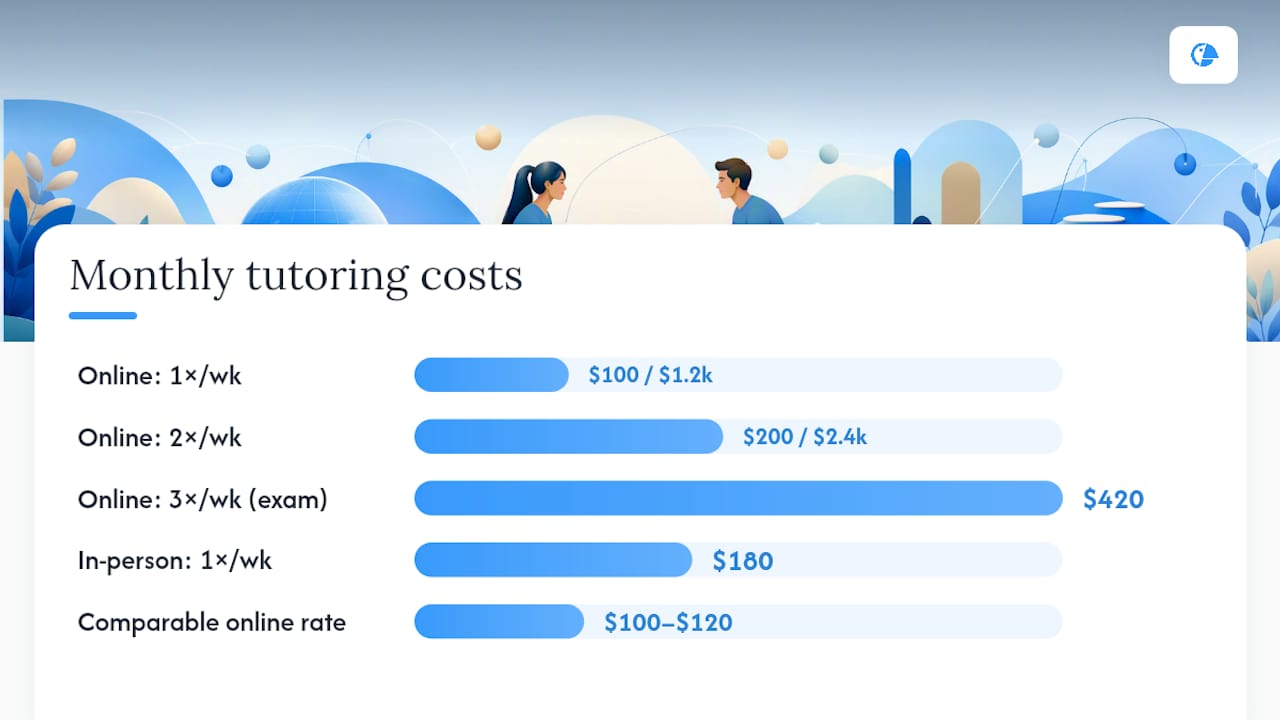
Exam-focused learners preparing intensively for IELTS or TOEFL often study three times weekly in the final stretch before a test date. At $35 an hour, that's roughly $420 a month for a two or three month sprint, a cost most learners treat as a short-term investment rather than an ongoing expense.
A weekly in-person lesson at $45 an hour comes to around $180 a month, compared with roughly $100 to $120 for a comparable online session.
The practical takeaway: frequency drives your total cost far more than the hourly rate does. Dropping from three sessions a week to two can cut your monthly bill by a third, often with only a modest slowdown in progress, which makes frequency the first thing to adjust if a budget gets tight.
How English tutoring costs compare across US regions
Location shifts English tutor pricing more than most learners expect, and it's worth checking local listings before assuming a national average applies to you.
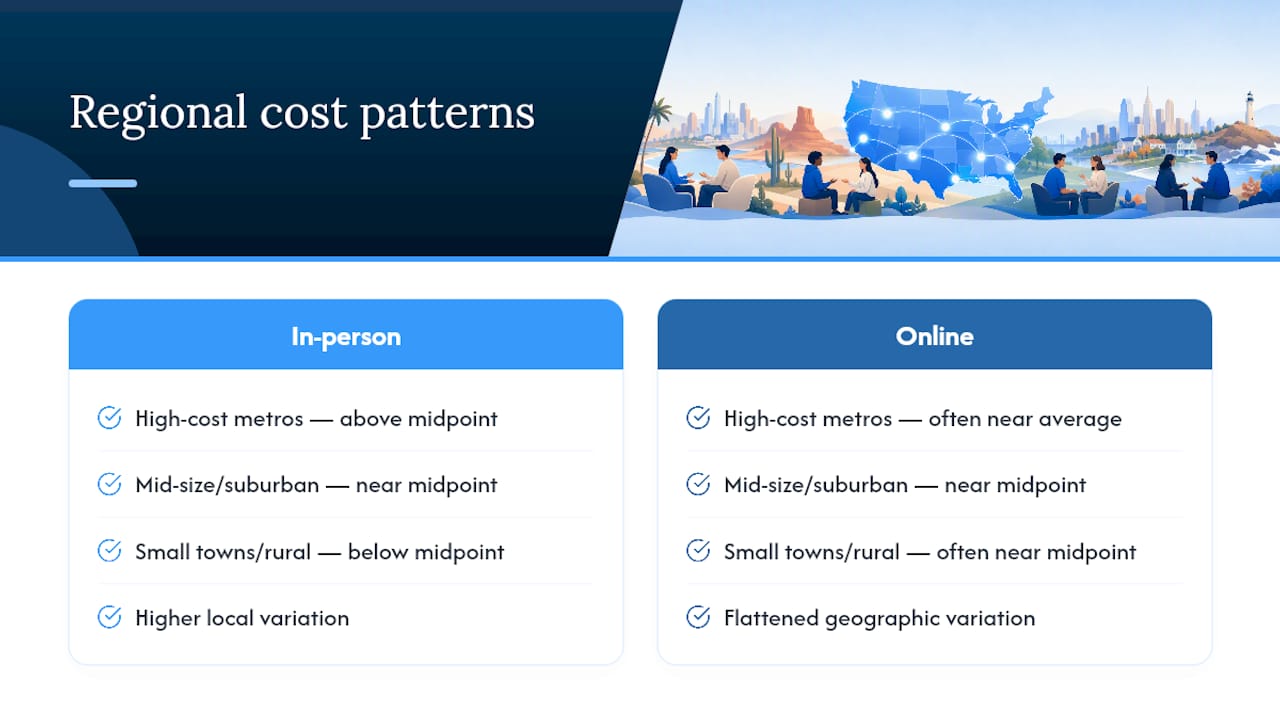
Major metro areas with high costs of living, like New York, San Francisco, or Boston, consistently sit above the national midpoint for both online and in-person tutoring, showing local in-person rates trending higher than typical national ranges, reflecting tutor demand and cost of living, according to Care.com.
Mid-sized cities and suburban areas tend to land closer to the middle of the national bracket, while smaller towns and rural regions often see lower in-person rates simply because there are fewer tutors competing for fewer students locally.
Online tutoring flattens a lot of this variation. Because an online tutor can be based anywhere, a learner in a high-cost city can often find the same quality of instruction at a rate closer to the national average, simply by widening the search beyond their immediate area. This is one of the clearest financial arguments for online lessons if you live somewhere pricing runs high locally.
Global supply also plays a quiet role here. English remains among the most spoken languages worldwide, which means there's no shortage of qualified tutors internationally willing to teach US-based learners online, a supply pressure that helps keep online rates more competitive than in-person ones almost everywhere.
Publisher perspective: how Tutoroo helps learners find fair rates
Price transparency is the biggest gap in tutoring right now. Most learners have no easy way to tell whether $35 an hour is a fair price or a markup, because listings rarely explain their own reasoning.
Tutoroo's community of over 386,000 language teachers exists partly to solve that problem: when you can browse dozens of English tutor profiles side by side, with rates, qualifications, and specialisms laid out together, patterns emerge fast. You start noticing that the tutor charging $45 has a CELTA certificate and five years of IELTS coaching, while the $20 tutor is newer and building a track record. That context turns a bare number into an informed decision.
Direct messaging and flexible scheduling also matter more than they seem to on paper. Being able to message a tutor directly about a trial lesson, without a call centre or a rigid package upsell, tends to keep the real cost of finding the right fit lower than it looks.
— Tutoroo
Find your English tutor on Tutoroo
Comparing hourly rates across scattered listings and freelance profiles eats hours you could spend actually learning. Tutoroo puts that comparison in one place: browse English tutor profiles by qualification, specialism, and price, message tutors directly, and book a trial lesson before committing to anything bigger.
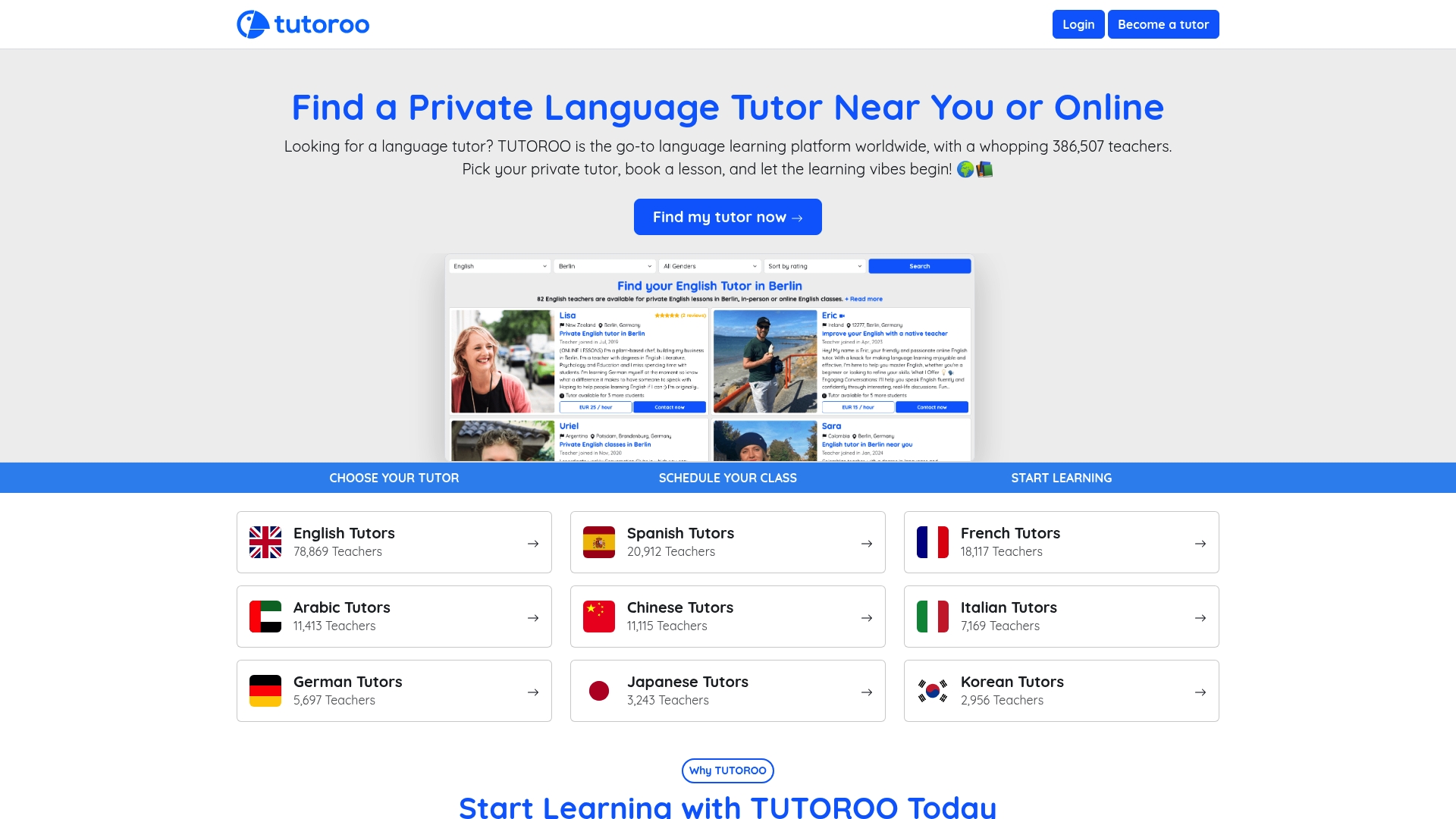
This suits you if you've read through the ranges above and still aren't sure whether $25 or $45 an hour is the right call for your goals. Tutoroo's English tutor listings let you filter by experience and specialism, so you're comparing tutors who actually teach what you need, not just whoever ranks highest in a generic search. If exam prep is the goal, Tutoroo's guide on exam preparation tutoring is worth a read before you book. Tutors set their own schedules and receive payment directly, which keeps pricing straightforward with no hidden subscription layer on top.
Start by browsing tutor profiles on Tutoroo and message a couple of candidates for a trial lesson this week.
Sources
- Private English Tutor Rates: A Complete Pricing Guide – Premier TEFL
- The most spoken languages worldwide — Statista
- Care
- Test your English — Cambridge English