
TL;DR:
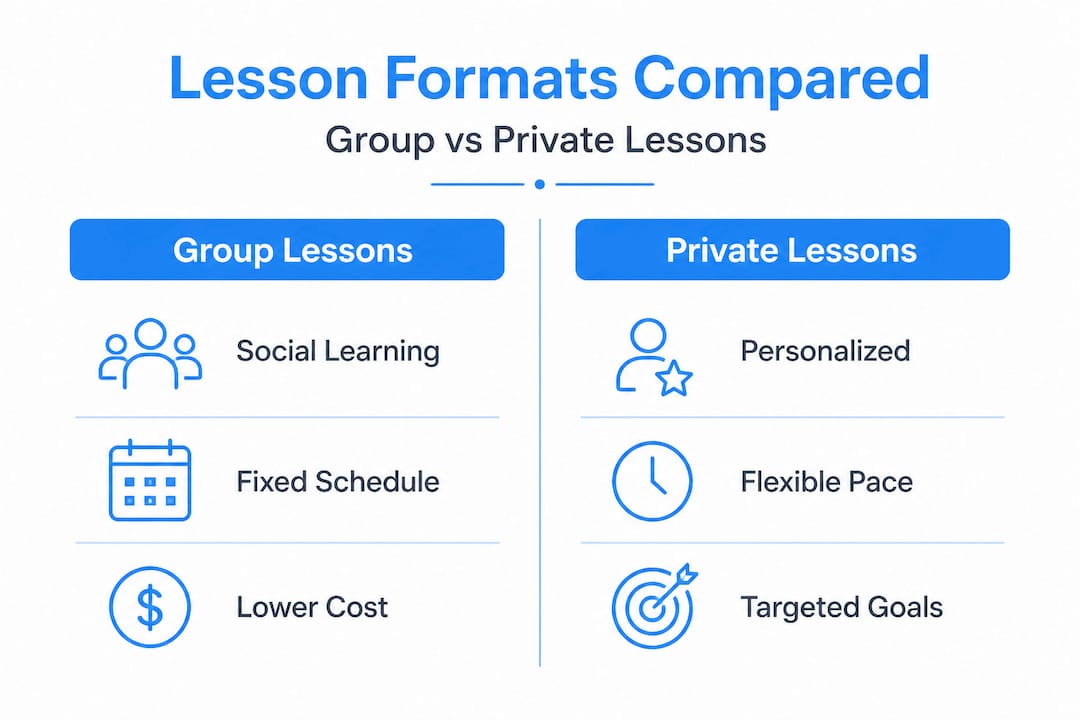
- Choosing between group and private language lessons depends on your goals, personality, schedule, and budget. Private lessons offer tailored, rapid progress with immediate feedback, ideal for targeted goals, while group classes provide social motivation and shared learning experiences. Flexibility and evolving needs suggest that mixing formats strategically can optimize your language learning journey.
Choosing between group and private language lessons is one of the first real decisions you face as a learner, and it shapes everything that follows. Many people assume that private tuition is automatically the gold standard, while others believe that the social energy of a classroom is irreplaceable. The truth is more nuanced than either camp admits. Your ideal format depends on your specific goals, personality, schedule, and budget, and getting this decision right from the start can open doors to faster, more enjoyable progress on your language learning journey.
Table of Contents
- What are group and private lessons?
- Comparing the benefits and drawbacks
- How to match lesson type to your goals
- Cost, flexibility, and practical considerations
- Why the 'best' lesson type depends on your real-world context
- Ready to customise your learning journey?
- Frequently asked questions
Key Takeaways
| Point | Details |
|---|---|
| No one-size-fits-all answer | The best lesson format depends on your goals, personality, and circumstances. |
| Private lessons target specific goals | One-on-one instruction accelerates improvement for focused needs like exams or fast progress. |
| Group lessons offer structure | Classes with others provide routine, peer motivation, and accountability for social learners. |
| Balance cost and flexibility | Consider your budget, schedule, and preferred learning style before making a decision. |
What are group and private lessons?
Now that you know this isn't a one-size-fits-all question, let's clarify what each lesson type really involves.
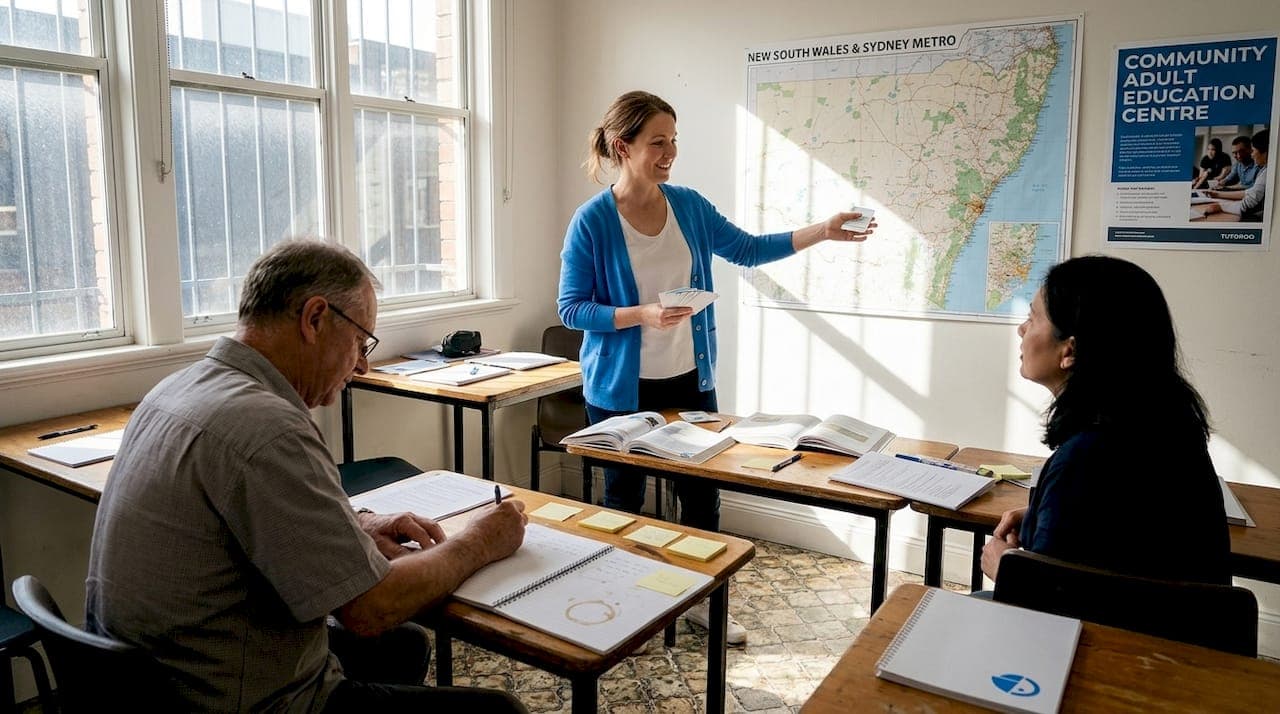
Group lessons place multiple learners together under the guidance of one tutor or teacher. They typically follow a set curriculum or structured programme, and the pacing must accommodate everyone in the class. Group sizes vary widely, from intimate sessions of three or four students to larger classes of fifteen or more. The social dimension is a defining feature. You practise conversation with peers, observe how others handle the same challenges, and benefit from shared energy and accountability.
Private lessons, on the other hand, are one-on-one sessions between a single learner and their tutor. The content, pacing, and focus are shaped entirely around your needs. If you struggle with pronunciation, an entire lesson can be devoted to it. If you want to practise business vocabulary before a conference call, that can happen immediately. You can explore the full range of private lesson types to understand just how customisable this format can be.
Here is a quick summary of what each format typically offers:
Group lessons:
- Structured curriculum shared across all students
- Opportunities for peer conversation and role-play
- Fixed scheduling that suits learners who value routine
- Social motivation from classmates
- Generally more affordable per session
Private lessons:
- Content tailored entirely to your goals and weaknesses
- Flexible scheduling and pacing
- Direct, ongoing feedback from your tutor
- No waiting for others to catch up or keep pace
- Ideal for focused, goal-driven progress
It is worth noting that rapid improvement for specific goals such as exam preparation, immigration interviews, or professional speaking almost always calls for private instruction to target your specific gaps. However, learners who thrive on routine or draw energy from peers may find groups more sustaining over time.
Comparing the benefits and drawbacks
With the basics established, it's time to weigh the strengths and weaknesses of each approach.
| Aspect | Group lessons | Private lessons |
|---|---|---|
| Lesson structure | Fixed, curriculum-driven | Fully customised |
| Cost per session | Lower | Higher |
| Scheduling flexibility | Limited | High |
| Social interaction | Strong, peer-based | Minimal, tutor-focused |
| Customisation | Low to moderate | Very high |
| Feedback speed | Shared and delayed | Immediate and personal |
| Pace of learning | Set by the group | Set by you |
The benefits of group lessons go beyond just saving money. Accountability is a genuine advantage. When you know your classmates will notice if you miss a session, you are more likely to show up consistently. Peer motivation creates a shared momentum that can carry you through plateaus, and practising real dialogue with other learners builds confidence in a supportive environment.
Private lessons shine in a different way. Private tutoring benefits are well-documented, particularly for learners who need to move quickly or who have unique learning challenges. Your tutor can adjust the lesson mid-session based on how you respond, something no group class can replicate. There is also an intimacy to private learning that encourages you to ask the questions you might feel embarrassed to raise in front of others.
When private instruction excels: Learners pursuing targeted goals such as professional certification, relocation abroad, or rapid conversational fluency consistently achieve strong outcomes through private lessons. The ability to focus exclusively on personal weak points, without the constraints of a shared curriculum, is a genuine accelerator.
A common misconception is that private lessons always guarantee faster progress. They certainly can, but only if you remain engaged and consistent. A motivated learner in a stimulating group setting can progress just as quickly. The format matters less than your commitment to practising between sessions, seeking authentic exposure to the language, and applying what you learn. Immersive learning strategies outside the classroom remain one of the most powerful drivers of long-term retention, regardless of which lesson format you choose.
Many successful language learners also build on the idea of language success with private tutors by using their one-on-one sessions to consolidate what they experience in real-world settings.

Pro Tip: Consider mixing formats strategically. Start with private lessons to build a solid foundation and address your specific weaknesses, then join a group class or conversation club to practise in a social context. Many learners find this combination accelerates both confidence and fluency far more than either format alone.
How to match lesson type to your goals
Comparisons are helpful, but your specific needs matter most. Here's how to connect the dots.
Follow these steps to identify the lesson type that aligns with your real situation:
-
Define your primary goal. Are you preparing for an exam, learning for travel, building professional fluency, or simply exploring a new language for enjoyment? Exam preparation and professional goals tend to benefit most from the focused attention of private sessions.
-
Assess your timeline. If you have six months before a language test or a move overseas, urgency changes the equation. A tight deadline almost always favours private instruction, where every session can be directed at your exact gaps.
-
Reflect on how you learn best. Do you absorb information more readily through structured repetition, or do you thrive when a lesson adapts to your curiosity in the moment? Structured learners often settle well into group formats, while those who prefer to explore and question may find private sessions more rewarding.
-
Consider your social comfort. Anxiety about speaking in front of others is one of the most common barriers in language learning. Learners who feel anxious in group settings consistently report greater comfort and willingness to experiment in private lessons, which translates to faster speaking improvement.
-
Evaluate your budget and schedule. Private lessons typically cost more per session. If your budget is limited but your schedule is consistent, a regular group class may deliver excellent value, especially at the beginner to intermediate levels where shared curriculum is highly relevant.
-
Think about accountability. Are you self-disciplined enough to maintain momentum in a private one-on-one setting, or do you need the rhythm of a regular class and the presence of peers to stay motivated?
Understanding these factors is at the heart of private tutoring best practices, which emphasise that the learner's mindset and goals shape results at least as much as the tutor's expertise. Similarly, the personalised learning gains of one-on-one study become most visible when learners enter sessions with clear intentions.
Pro Tip: If you are unsure which format suits you, start with two or three private sessions to identify your specific strengths and gaps. Use this as a diagnostic phase. You will learn a great deal about your learning style in a short time, and your tutor can recommend whether group work would complement your progress.
Cost, flexibility, and practical considerations
Cost and convenience often tip the scales. Let's put the options in practical terms.
| Factor | Group lessons | Private lessons |
|---|---|---|
| Typical cost per hour | $15 to $40 AUD | $40 to $100 AUD |
| Session frequency | Weekly or twice weekly | Fully flexible |
| Minimum commitment | Often term-based | Lesson by lesson |
| Online availability | Moderate | Very high |
| Cancellation flexibility | Low (fixed timetable) | Usually negotiable |
| Travel requirement | Sometimes required | Often none (online) |
Cost is often the deciding factor for learners on a fixed budget. Group lessons typically run between $15 and $40 AUD per hour, while private lessons range from $40 upwards depending on the tutor's experience and language. Online private tutoring has narrowed this gap considerably in recent years, making expert one-on-one instruction far more accessible than it once was.
Here are some practical tips to help you manage both budget and schedule:
- Book in advance. Many private tutors offer discounts when you purchase a block of sessions, which also keeps you committed.
- Use free resources between paid sessions. Apps, podcasts, and language exchange partners extend your learning without additional cost.
- Try group classes at community centres or language schools if budget is the primary constraint. Quality varies, but many offer excellent instruction at low cost.
- Consider hybrid online formats. Online lessons tend to be more affordable than in-person equivalents, and they remove the time cost of travel entirely.
- Mix formats based on your phase of learning. Beginners may extract more value per dollar from structured group classes, while intermediate to advanced learners often benefit most from focused private sessions targeting their remaining weaknesses.
For learners weighing up local vs online tutoring, the choice between face-to-face and online delivery adds another layer to the decision. Online lessons offer unmatched scheduling flexibility, which suits busy professionals and learners in remote areas. Face-to-face sessions can provide richer social interaction, which is especially valuable in group settings where body language and shared physical presence add texture to conversation practice.
Learners who benefit from structured schedules or peer interaction may find that an in-person group class delivers something that even the best online session cannot fully replicate. The energy in a room, the shared laughter over a mispronounced word, and the informal chats before and after class all contribute to motivation and belonging.
Why the 'best' lesson type depends on your real-world context
Here's what many guides won't tell you about making this decision.
Most comparisons between group and private lessons present the choice as binary, as though you pick one format and commit to it forever. That framing misses something important: your ideal lesson type is not fixed. It evolves as your proficiency grows, as your goals shift, and as life circumstances change. A learner who starts with group classes to build basic vocabulary might transition to private sessions when they hit an intermediate plateau. Another learner might do the reverse, using private lessons to establish foundations before joining a group to gain social confidence.
The most effective language learners we see tend to be flexible. They do not treat lesson format as a point of identity. They experiment, reflect on what is working, and adjust. Treating effective learning methods as a living toolkit, rather than a permanent prescription, leads to better long-term outcomes.
There is also a broader truth here. Fixed rules about how to learn a language often limit progress more than they accelerate it. The learner who insists that private lessons are the only serious path may miss the unexpected fluency burst that comes from weekly conversation in a group setting. The learner who believes group classes are the only authentic way to learn may struggle through years of slow, unfocused progress when a few targeted private sessions could break through their ceiling.
Our view at TUTOROO is that the real question is not which format is better in the abstract. It is which format, or which combination of formats, serves you best right now, given your goals, your budget, your personality, and your timeline. Revisit that question every few months. You may be surprised by how your answer changes as your skills and confidence grow.
Ready to customise your learning journey?
With clarity about your options, you can take the next step confidently.
Whether you are leaning towards the focused attention of private lessons or the social energy of a group setting, TUTOROO makes it straightforward to find the right match for your goals. Our platform connects learners with over 386,000 expert tutors across dozens of languages worldwide, including English, Spanish, French, Arabic, Chinese, and many more.
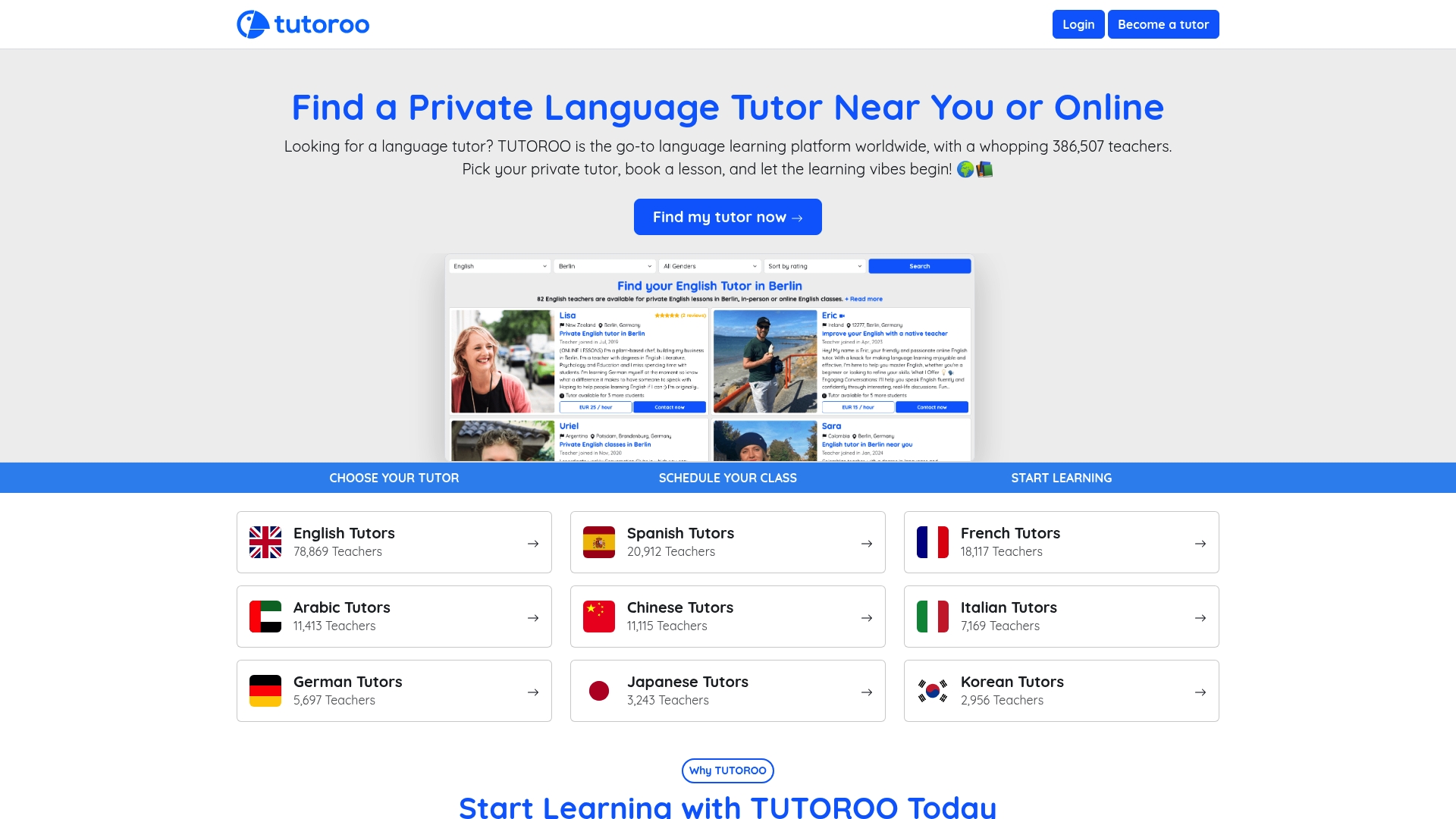
You can find language tutors suited to your schedule, language, and level, with the flexibility to start at your own pace. If you are learning a specific language, such as Malay, you can connect directly with experienced Malay tutors who tailor every session to your needs. Whether you prefer online or face-to-face sessions, TUTOROO is here to support every step of your language learning journey.
Frequently asked questions
Can I switch from group to private lessons partway through learning?
Yes, many learners move between formats as their needs or schedule changes. Combining both at different stages can enhance overall progress significantly.
Which lesson type is better for building speaking confidence?
Private lessons are often best if you feel self-conscious, as anxious learners benefit from the safety of one-on-one settings. However, group classes help develop confidence by practising with peers in a shared environment.
Do group lessons always cost less than private lessons?
Group lessons are typically more affordable per session, but the final cost depends on the provider, format, frequency, and whether you choose online or face-to-face delivery.
Are private lessons faster for exam preparation?
Private instruction is generally the recommended choice for rapid improvement, and targeted exam preparation benefits greatly from the focused, gap-targeting nature of one-on-one sessions.
Is online or face-to-face better for group or private lessons?
Both formats are effective and suit different preferences. Online delivers scheduling flexibility and removes travel, while face-to-face supports richer social interaction, which is particularly valuable in group settings.