

TL;DR:
- Personalized one-on-one tutoring improves exam scores more effectively than apps or group classes by targeting individual weaknesses.
- Choosing a qualified tutor requires verifying assessments, curriculum alignment, and recent student results before commitment.
For Australian students preparing for a language exam, the single most effective tool is a personalised one-on-one tutor. Not an app, not a practice-test generator. A real person who can diagnose your exact weaknesses, align every session to your state curriculum (VCE, QCE, or WACE), and coach you through the specific components that determine your final mark. Personalised one-on-one tutoring enables learners to advance CEFR levels in significantly fewer hours and produces higher fluency gains than group settings. Start by booking a diagnostic trial lesson and asking, in your very first message, for an initial assessment and a suggested six-week plan.
Table of Contents
- Why one-on-one tutoring outperforms other approaches for exam prep
- How to choose and vet an exam-focused language tutor in Australia
- What should a tutoring programme look like?
- What do language tutors in Australia typically cost?
- How to run a trial lesson and decide whether to continue
- How Tutoroo helps Australian families find exam-focused tutors
- Key takeaways
- Why personalised tutoring is the approach we stand behind
- Find your exam-focused language tutor on Tutoroo
- Useful sources
Why one-on-one tutoring outperforms other approaches for exam prep
Targeted, adaptive instruction accelerates CEFR-level progress and exam technique development in ways that classroom teaching simply cannot match. When a tutor works with one student, every minute is spent on that student's actual gaps, not the class average.
The practical benefits are substantial. A skilled tutor teaches exam-specific strategies alongside language skills: how to use extra reading time in a listening task, how to structure an argument for a written response, how to manage pacing across a speaking assessment. One-on-one sessions also provide a low-stakes environment for error correction, which accelerates spoken fluency by preventing entrenched mistakes that are far harder to fix once they become habit.
Students who gain the most from personalised one-on-one tutoring include:
- Shy or anxious learners who freeze in group speaking activities
- Neurodivergent students who need flexible pacing and clear structure
- Last-minute revisers who need rapid, targeted upskilling before an exam
- Students whose school class has moved past a topic they have not yet consolidated
Private tutors also act as strategists. Beyond teaching vocabulary and grammar, they analyse exam components to isolate the sub-skills that most affect final marks: argument structure, time management under pressure, listening for gist versus detail. That kind of surgical focus is what separates a good tutoring programme from a generic one.
How to choose and vet an exam-focused language tutor in Australia
Prioritise demonstrable assessment methods, curriculum alignment to VCE, QCE, or WACE, a valid Working With Children Check (WWCC), and transparent progress reporting, as outlined by ESA Approved Tutors in Arizona | ClassWallet-Eligible Tutoring. Those four criteria will filter out the majority of unsuitable candidates before you spend a dollar.
Because the Australian tutoring industry is largely unregulated, anyone can advertise as a tutor. A high ATAR score does not guarantee teaching ability. Before your first call, request:
- Proof of WWCC (or state equivalent)
- Evidence of recent student outcomes (results from the last two to three years, not vague success stories)
- A sample lesson plan aligned to the relevant state exam syllabus
- A business number and clear refund policy
On the first call, ask concrete questions: "How do you assess a new student's current level?" "Which components of the VCE/QCE/WACE exam do you focus on first?" "Can you share how a recent student's marks improved?" Good answers are specific. Vague answers ("I tailor lessons to the student") without any supporting detail are a warning sign. Outright refusal to offer a trial lesson is a red flag. So is the absence of a WWCC.
Tutors who align lessons with the relevant state curriculum and demonstrate diagnostic assessment are measurably more likely to produce exam gains. Ask for references from students who sat the same exam, not just general language learners.

Pro Tip: Commit to a six-week block from the outset, with a scheduled short review at the end of week six. This single practice prevents "tutoring drift," where sessions become pleasant but unfocused. At the review, ask for a written progress summary and updated targets.
What should a tutoring programme look like?
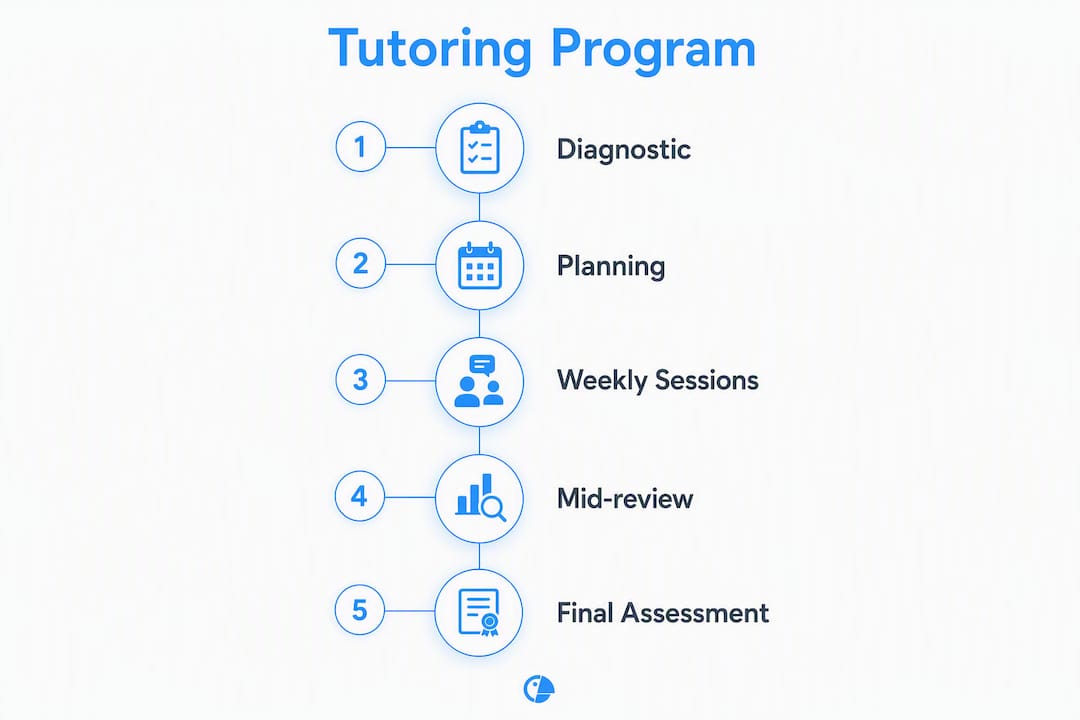
Expect a clear arc: diagnostic assessment, regular targeted sessions, mock tests, and milestone reviews. That structure is what separates a purposeful programme from ad hoc lessons.
A well-designed session typically runs 60 minutes and covers:
- Review of the previous session's homework and any errors
- Focused practice on one or two exam components (e.g., written expression or oral response)
- Exam technique work (timing, structure, marking criteria)
- Home practice set with specific instructions
For cadence, weekly sessions suit most students. Fortnightly works only for students who are already performing near their target band and need light maintenance. In the final six weeks before an exam, two sessions per week with mock tests between them produces the sharpest gains.
| Milestone | Timing | What to expect |
|---|---|---|
| Initial diagnostic | Week 1 | Baseline assessment across all four skills |
| Six-week review | — | Written progress summary, updated targets |
| Mock exam | 8–10 weeks out | Full timed practice under exam conditions |
| Pre-exam polish | Final 2 weeks | Targeted feedback on weak sub-skills only |
One-on-one tutoring works best alongside, not instead of, school classes. Use classroom time for curriculum coverage and group revision for broad practice. Reserve your tutor for mock orals, essay marking, and the specific sub-skills your school class does not have time to address individually.
What do language tutors in Australia typically cost?
Tutoring costs in Australia range from approximately $30 per hour for less experienced tutors to $200 per hour for highly specialised subject experts. The right price depends on what you are buying.
Junior or student tutors at the lower end of that range can be effective for foundational support. For exam-specific coaching aligned to VCE, QCE, or WACE, expect to pay more, and verify that the premium is justified by recent, documented student outcomes.
Before committing to any payment, confirm: a business number, a written refund and cancellation policy, and receipts for every session. For online tutoring, ask for active engagement checks: camera on, observable activity, and a session summary afterwards. Block bookings of six or more sessions often attract a small discount and signal that the tutor is confident in their results.
How to run a trial lesson and decide whether to continue
Use the trial to check diagnostic skill, teaching clarity, rapport, and follow-up communication. A 30–60-minute trial gives you enough information to make a confident decision.
- Before the session: send the tutor your exam type, current level, and one specific weakness to address.
- Opening (first 10 minutes): does the tutor ask diagnostic questions or launch straight into generic content?
- Focused practice (middle 30 minutes): is the teaching targeted to your stated weakness, or is it a standard lesson?
- Feedback quality (final 10 minutes): does the tutor explain why you made an error, not just correct it?
- After the session: request a short written summary (two paragraphs) covering what was covered and suggested next steps.
A tutor who passes all five points is worth continuing with. One who skips the diagnostic, delivers generic content, or cannot produce a written follow-up is not. After the trial, also request a suggested six-week plan: a tutor who cannot sketch one has not thought seriously about your exam.
How Tutoroo helps Australian families find exam-focused tutors
Tutoroo connects students with private language tutors for flexible one-on-one lessons, delivered online or in person, across a wide range of languages. For exam preparation, the platform's search features let you filter by language, location, and availability, so you can shortlist tutors who fit your schedule and state curriculum.
Tutor profiles on Tutoroo include teaching background, languages offered, and availability. Use the platform's messaging system to contact shortlisted tutors directly before committing, and request a trial lesson through that same channel.
When sending your first message, include:
- The exam you are preparing for (e.g., VCE French, QCE Japanese, WACE Italian)
- Your current level and target outcome
- Your availability for weekly sessions
- A request to confirm WWCC and refund policy
Pro Tip: Ask in your first message whether the tutor has prepared students for your specific exam in the last two years. A tutor with recent, relevant experience will know the current marking criteria and common student errors, which is worth more than general language expertise.
Tutoroo's community of over 386,000 language teachers means you are not limited to whoever happens to be local. For less common languages or highly specific exam formats, searching online tutors on the platform opens up a much wider pool of qualified candidates.
Key takeaways
Personalised one-on-one tutoring is the most effective language exam prep tool for Australian students because it delivers targeted, curriculum-aligned coaching that no app or group class can replicate.
| Point | Details |
|---|---|
| Verify trust signals first | Confirm WWCC, business number, and refund policy before paying anything. |
| Book a diagnostic trial | Use a 30–60-minute trial to assess diagnostic skill, teaching clarity, and follow-up communication. |
| Set a six-week review | Schedule a formal progress review at week six with a written summary and updated targets. |
| Budget realistically | Hourly tutoring rates vary widely; pay more for proven exam expertise, and verify it with recent student results. |
| Start with Tutoroo | Search Tutoroo's tutor profiles by language and location to find exam-focused tutors available online or in person. |
Why personalised tutoring is the approach we stand behind
The conventional wisdom is that exam preparation is about resources: past papers, study guides, vocabulary lists. Those things matter, but they are not what moves the needle for most students. What actually shifts exam performance is targeted feedback on the specific errors a student keeps making, delivered at the moment they make them.
Group classes cannot do that. A tutor working with one student can stop mid-sentence, identify the exact source of a grammatical error, and correct it before it becomes automatic. That kind of real-time intervention is what accelerates fluency and exam technique simultaneously. The students who make the biggest gains are not necessarily the most diligent self-studiers. They are the ones who get honest, specific feedback early enough to act on it.
At Tutoroo, the platform is built around that principle: connect students with tutors who know their exam, know their curriculum, and can demonstrate measurable outcomes. Measurable is the word that matters. Vague progress is not progress.
Find your exam-focused language tutor on Tutoroo
Tutoroo gives Australian families direct access to private language tutors who specialise in exam preparation, whether that is VCE, QCE, WACE, or another recognised assessment. Unlike a tutoring agency with fixed packages, Tutoroo lets you message tutors directly, review their profiles, and arrange a trial lesson before committing to a block.
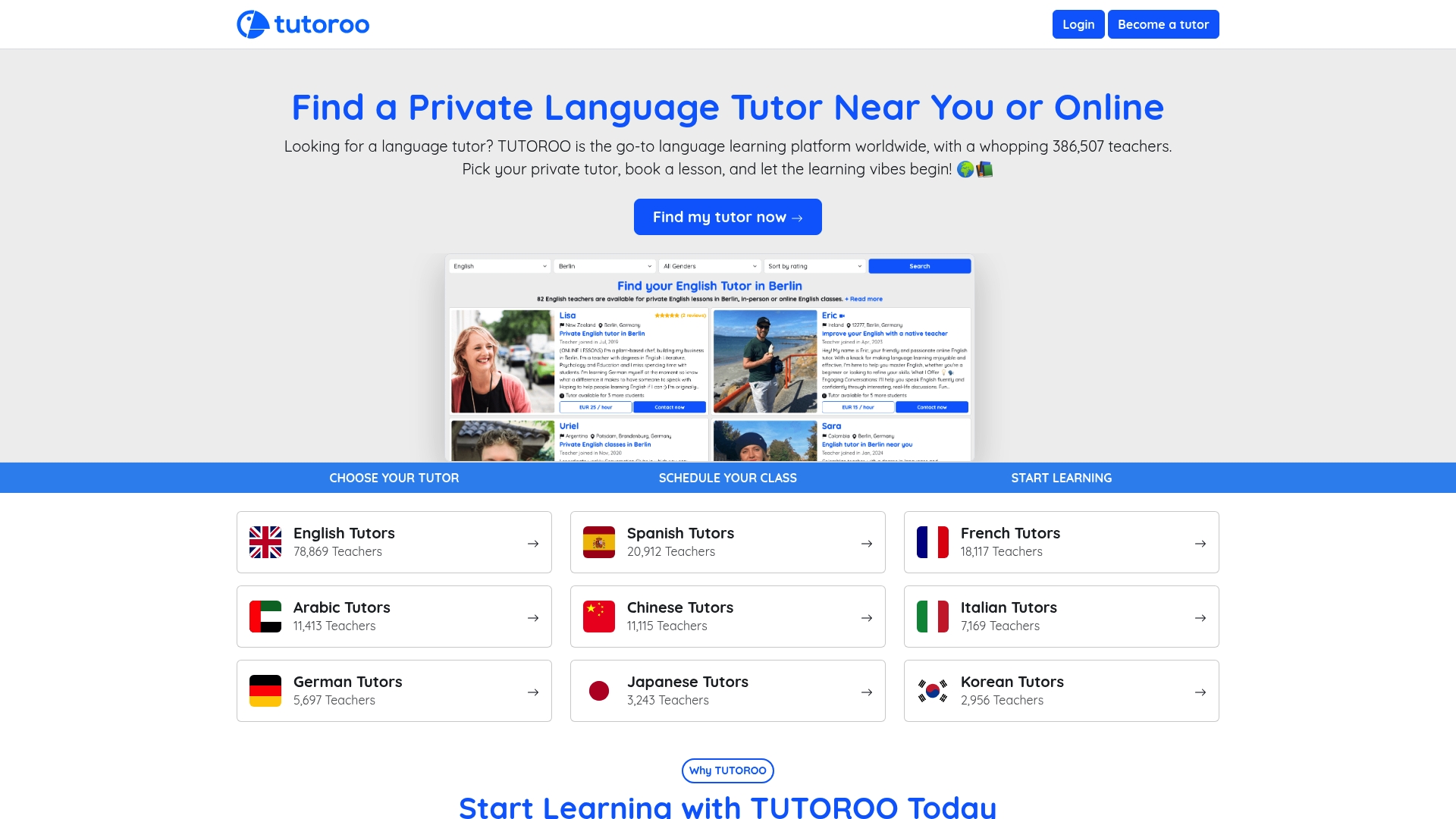
To get matched, visit Tutoroo and search by your target language and location. For students preparing for English language exams, the English tutor listings are a strong starting point. In your first message, include your exam type, current level, target outcome, and a request for WWCC confirmation and a trial lesson. From there, use the six-week review practice to keep progress measurable and your tutor accountable.
Useful sources
- What is one-on-one language teaching: benefits explained — evidence on CEFR gains and fluency in private tutoring
- One-on-one tutoring: personalised learning gains explained — which student profiles benefit most
- How tutors transform language exam preparation in 2026 — curriculum alignment and measurable milestones
- How to choose the right tutor for your child — SBS guidance on receipts, business numbers, and online engagement checks
- Exam readiness for language learners: a real guide — timelines, mock tests, and measuring readiness
- Step-by-step guide to hiring the right language tutor — practical hiring checklist and interview questions
This article provides general information about selecting private language tutors in Australia. It is not professional educational or legal advice. Always verify a tutor's WWCC and qualifications directly, and confirm current exam requirements with your state curriculum authority.