

HSK tutoring is worth it if you're facing a real deadline: university admission, a job application, or a specific HSK level within months. Paired with disciplined self-study, a tutor typically shaves weeks off your prep time and catches errors apps can't. If you're a casual learner with no test date in mind, save your money and stick with structured self-study instead.
TL;DR:
- Tutoring is most valuable for learners aiming to pass HSK 4 or 5 within three to six months and facing concrete exam or application deadlines.
- Real-time correction of tone, pronunciation, and exam-specific feedback are the primary advantages that apps cannot provide effectively.
- Self-paced courses and apps can sufficiently prepare beginners for HSK 1 to 3, but live tutors become essential for higher levels testing composition and listening skills.
- Costs vary widely from entry-level tutors to exam specialists, and a cost-benefit analysis should be based on your target level and urgency.
- Filtering for exam experience and requesting trial lessons help ensure the selected tutor can deliver measurable progress towards your specific HSK goal.
Table of Contents
- Is HSK tutoring worth it? What tutors provide that apps can't
- Who benefits most: match tutoring to your goal
- What the research actually says about tutoring effectiveness
- What HSK tutoring costs and how to work out your return
- How to choose an effective HSK tutor
- When apps and online courses are enough
- What TUTOROO's platform data shows about tutoring gains
- Our honest view on paying for HSK tutoring
- Finding the right HSK tutor without the guesswork
- Sources
Is HSK tutoring worth it? What tutors provide that apps can't
The honest answer to "is HSK tutoring worth it" depends on what you're stuck on. Apps and flashcard decks are excellent at drilling vocabulary and running spaced repetition, but they can't hear that your third tone is landing flat, and they can't tell you why your HSK 5 essay lost points on structure rather than grammar.
That gap is where a tutor earns their fee. Real-time correction is the single biggest advantage: a tutor hears the difference between a rising second tone and a falling fourth tone in your own speech, in the moment, and fixes it before it becomes a habit. Apps give you a red X. A tutor tells you exactly what your tongue and pitch did wrong.
Beyond pronunciation, tutors bring exam-specific scaffolding that self-study rarely replicates well:
- Timed mock exams that mirror actual HSK conditions, including the listening-section pacing that trips up most first-time candidates
- Marking guidance for the writing sections (HSK 4 through 6), where structure and character accuracy matter as much as vocabulary range
- A syllabus that adjusts week to week based on where you're actually losing points, rather than a fixed course outline
- Feedback on composition and essay logic, which the official HSK format tests heavily from level 4 onward
Where tutors add little value is basic vocabulary drilling and rote spaced-repetition practice. Paying someone to quiz you on flashcards is a poor use of a lesson slot. A tutor's time is best spent on the things a screen can't judge, tone, essay coherence, spoken fluency under pressure, and leaving the repetition work for you to do between sessions using one-on-one learning gains as the backbone rather than the whole plan.
Who benefits most: match tutoring to your goal
Not every learner needs a tutor, and the value of HSK tutoring shifts sharply depending on why you're studying. Sort yourself into one of these three tiers before you spend a cent.
- High value. University applicants needing HSK 4 or 5 for admission, professionals who need a verifiable score for a visa or job application, and anyone with a fixed exam date within three to six months. These learners have the most to lose from a failed attempt and the most to gain from targeted correction.
- Medium value. Intermediate learners who've plateaued around HSK 3 or 4 despite consistent study, heritage speakers who speak fluently but never learned to read or write characters properly, and learners specifically chasing better accent control for professional or social reasons. A tutor here isn't essential, but it usually breaks the plateau faster than another few months of solo grinding.
- Low value. Casual learners with no test date, people learning Mandarin purely for travel or entertainment, and absolute beginners who just want survival phrases. Structured apps and a good textbook will get you further per dollar at this stage.
The simple decision rule: if a missed HSK score costs you a place, a job, or months of delay, tutoring is worth it. If nothing concrete rides on your progress, self-study first and reassess once you hit a wall.
What the research actually says about tutoring effectiveness
The case for HSK tutoring isn't just anecdotal. A study on interactive online HSK instruction found that models creating multiple interaction paths, learner-to-content, learner-to-instructor, and learner-to-learner, measurably increased student satisfaction and engagement compared to passive video-only formats. That matters because engagement is one of the strongest predictors of whether a learner actually finishes their prep instead of abandoning it halfway.
The numbers: an HSK1 reading course on Udemy recorded a pretest mean of 29.73 rising to a post-test mean of 72.57, a statistically significant gain, alongside a satisfaction score averaging 4.43 out of 5.
That's a strong result for a structured, self-paced course, and it says something important: at the beginner level, a well-designed course can produce real gains without a live tutor. The improvement came from structured practice and repetition, not personalised feedback, which tracks with what we'd expect from an HSK 1 reading module.
A few caveats matter here:
- The Udemy study covered HSK1 reading specifically, a level where vocabulary recognition dominates and tone or writing correction barely feature.
- Sample sizes in both studies are modest by clinical-research standards, so treat the figures as a solid directional signal rather than a guarantee.
- Higher HSK levels (4 to 6) test composition and nuanced listening comprehension, skills the official HSK documentation frames as central to exam success, and self-paced courses tend to plateau there faster than a live tutor would.
Read together, the evidence supports a level-based split: courses and apps carry beginners well, but live correction earns its keep once you're chasing HSK 4 and above.
What HSK tutoring costs and how to work out your return
Tutor pricing varies more than most learners expect, and the band you choose should match your goal, not just your budget. Entry-level tutors (often university students or newly qualified teachers) typically charge the least and suit vocabulary practice and conversation drills. Experienced tutors with several years teaching HSK candidates sit in the middle band and are the right fit for most learners chasing HSK 3 to 5. Exam specialists, tutors who've coached dozens of candidates through a specific level, command the highest rates but bring the sharpest insight into where points are actually lost.
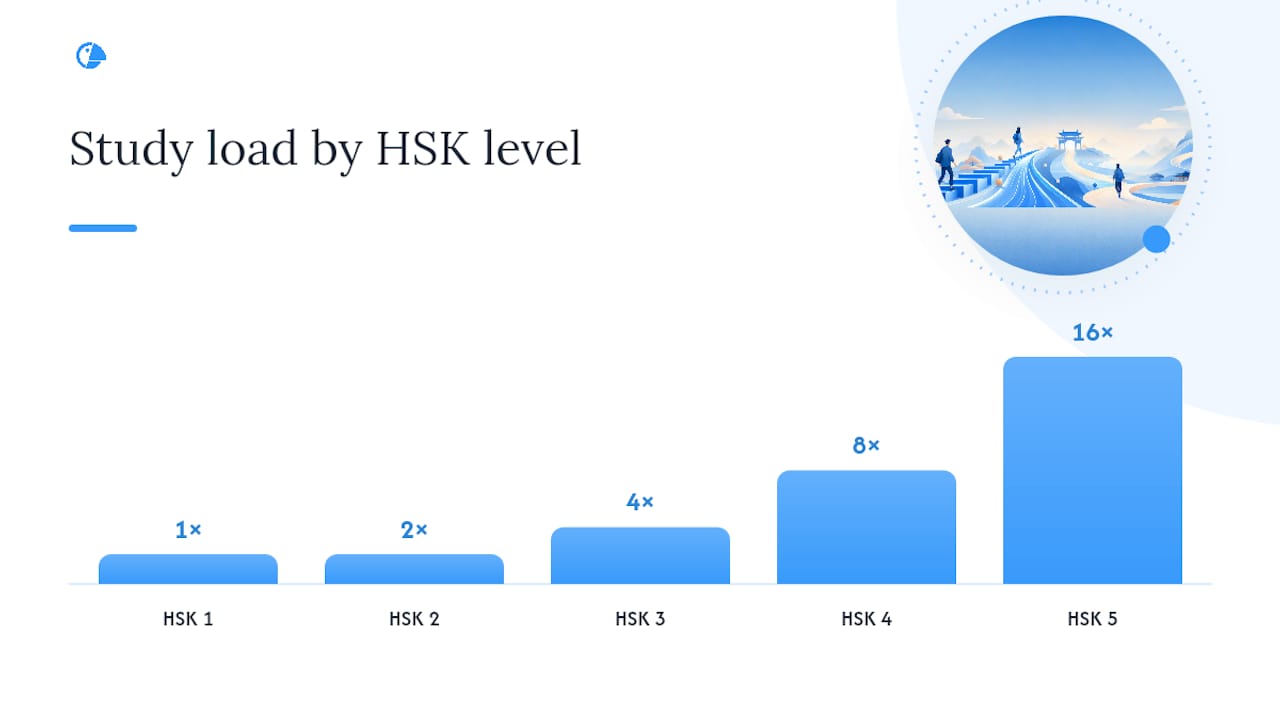
Study-hour estimates for HSK levels vary widely depending on your starting point and study intensity, but the general pattern holds: each level roughly doubles the vocabulary and grammar load of the one before it, which is why HSK 4 to 6 candidates see the biggest time savings from tutoring. A tutor won't compress that workload, but they will stop you wasting hours on approaches that don't match the exam format.
For a three to six month target, two lessons a week is a common structure, one focused on new material and corrections, one focused on timed practice and review. Some tutors offer package pricing for a block of lessons, which can work out cheaper per session than paying week to week.
- Entry-level tutors: best for conversation practice and vocabulary reinforcement
- Experienced tutors: best value for HSK 3 to 5 candidates needing structured correction
- Exam specialists: worth the premium only when a specific score, by a specific date, is non-negotiable
Pro Tip: Work out your rough cost-per-level before committing to a package. Take (lesson cost × lessons needed) ÷ expected benefit, whether that's weeks saved or your estimated boost in pass probability, and compare it against what a failed exam attempt or a delayed application would actually cost you.
How to choose an effective HSK tutor
Finding a tutor who actually moves your score, rather than just chatting pleasantly in Mandarin for an hour, comes down to a short checklist.
- Ask about exam experience directly. How many HSK candidates have they coached, and at what levels? A native speaker with no exam-coaching background often can't explain why an answer was marked wrong, only that it was.
- Request a sample lesson plan. A tutor who can outline how they'd structure your first month, including where mock exams sit in that plan, is showing you real pedagogy rather than improvisation.
- Clarify feedback cadence. Ask whether writing corrections come within the lesson, after it, or not at all. Written feedback turnaround matters enormously for HSK 4 to 6 candidates.
- Check cancellation and refund terms before paying for a package. Reasonable notice periods are standard; rigid no-refund policies on large upfront packages are a red flag.
Run a trial lesson before committing to anything bigger than a single session. Listen for whether the tutor corrects your tone in real time or lets errors slide, and test them with a timed mini passage to see how they mark it.
Pro Tip: During the trial, ask the tutor to explain why one wrong answer is wrong, not just that it is. Their answer tells you more about their exam expertise than any credential on their profile.
When apps and online courses are enough
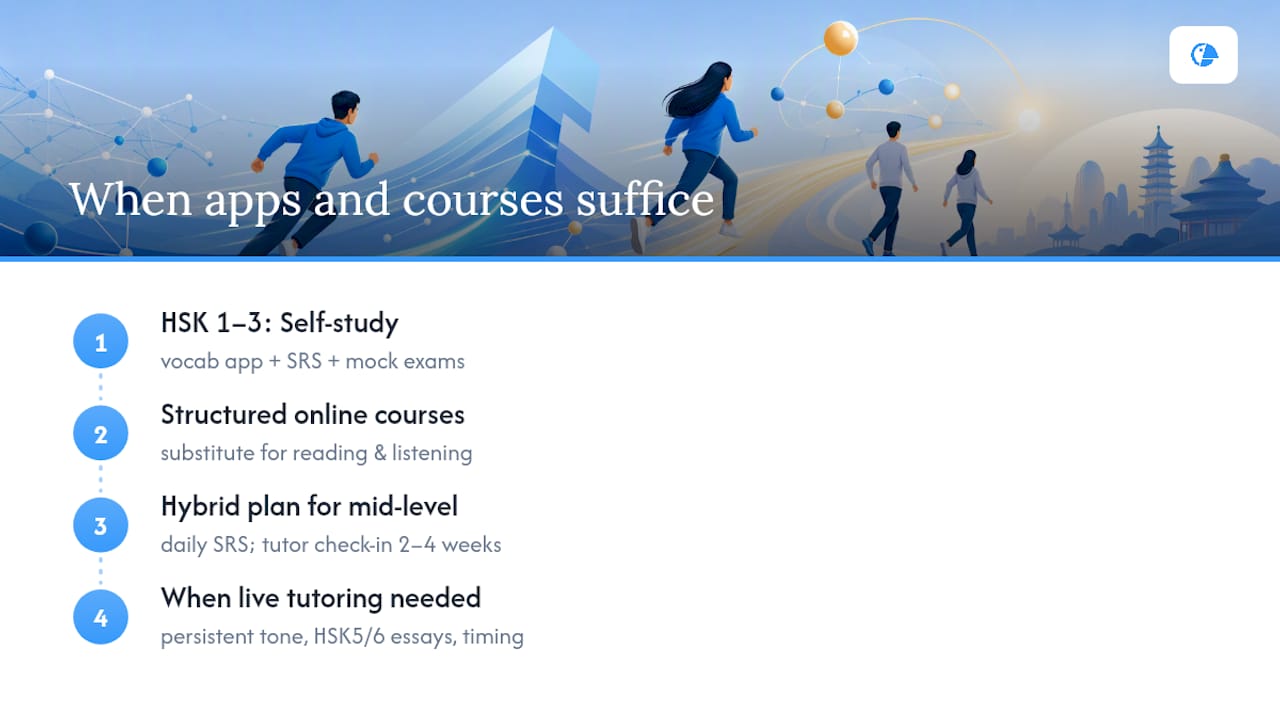
A disciplined combination of a vocabulary app, spaced repetition, and official mock exams will get most learners through HSK 1 to 3 without spending a cent on tutoring. These levels lean heavily on vocabulary recognition and basic grammar patterns, exactly what self-paced tools are built for.
Structured online courses can substitute for tutoring on reading and listening practice specifically. The Udemy HSK1 reading course data backs this up: strong satisfaction and measurable score gains, all without a live instructor.
A sensible hybrid plan for mid-level learners: daily SRS vocabulary work and mock tests on your own, with a tutor check-in every two to four weeks purely to review writing samples and correct tone drift before it hardens into a habit. If you'd rather have a structured, centre-led program than a self-directed one, providers like Linda Mandarin's HSK preparation courses offer that middle path.
Some problems almost always need live tutoring regardless of level: persistent tone errors that self-correction hasn't fixed, HSK 5 and 6 essay structure, and exam-timing collapse where you know the material but run out of time under pressure. If you recognise any of those in yourself, that's your signal to stop self-studying alone.
What TUTOROO's platform data shows about tutoring gains
Tutoroo connects learners with over 386,000 language tutors globally, including Mandarin specialists who focus specifically on HSK preparation rather than general conversation. That scale matters when you're trying to filter for someone with genuine exam-coaching experience rather than settling for whoever's available.
Platform data from Tutoroo indicates private tutoring produces roughly 1.11 times faster learning compared with other study methods, a figure consistent with the broader case for personalised correction over generic drilling.
To use the platform effectively for HSK prep:
- Filter tutor profiles for "exam experience" or "HSK specialist" tags rather than relying on native-speaker status alone
- Message shortlisted tutors before booking to ask about their track record with your target level
- Book a single trial lesson first and evaluate it against the checklist above before committing to a package
- Confirm lesson frequency and cancellation terms directly with the tutor through the platform's messaging system
Our honest view on paying for HSK tutoring
We think tutoring earns its cost when a real outcome depends on your score, a university place, a job, a visa condition. Outside that, it's a nice-to-have, not a necessity.
Our suggestion if you're on the fence: commit to one month of lessons with a specific, measurable goal, a mock exam score improvement, or fixing a specific tone pattern, and track it. If you can't point to a concrete gain after four to six lessons, the tutor or the approach isn't the right fit.
Tutoring is a tool, not a substitute for the unglamorous work of daily vocabulary review and mock tests. The learners who get the most from it are the ones who show up to lessons already having done their homework.
— TUTOROO
Finding the right HSK tutor without the guesswork
Tutoroo makes trialling an HSK tutor low-risk: you can filter by exam experience, compare tutor profiles side by side, and message candidates directly before booking a single lesson, so you're not locked into a course you haven't tested.
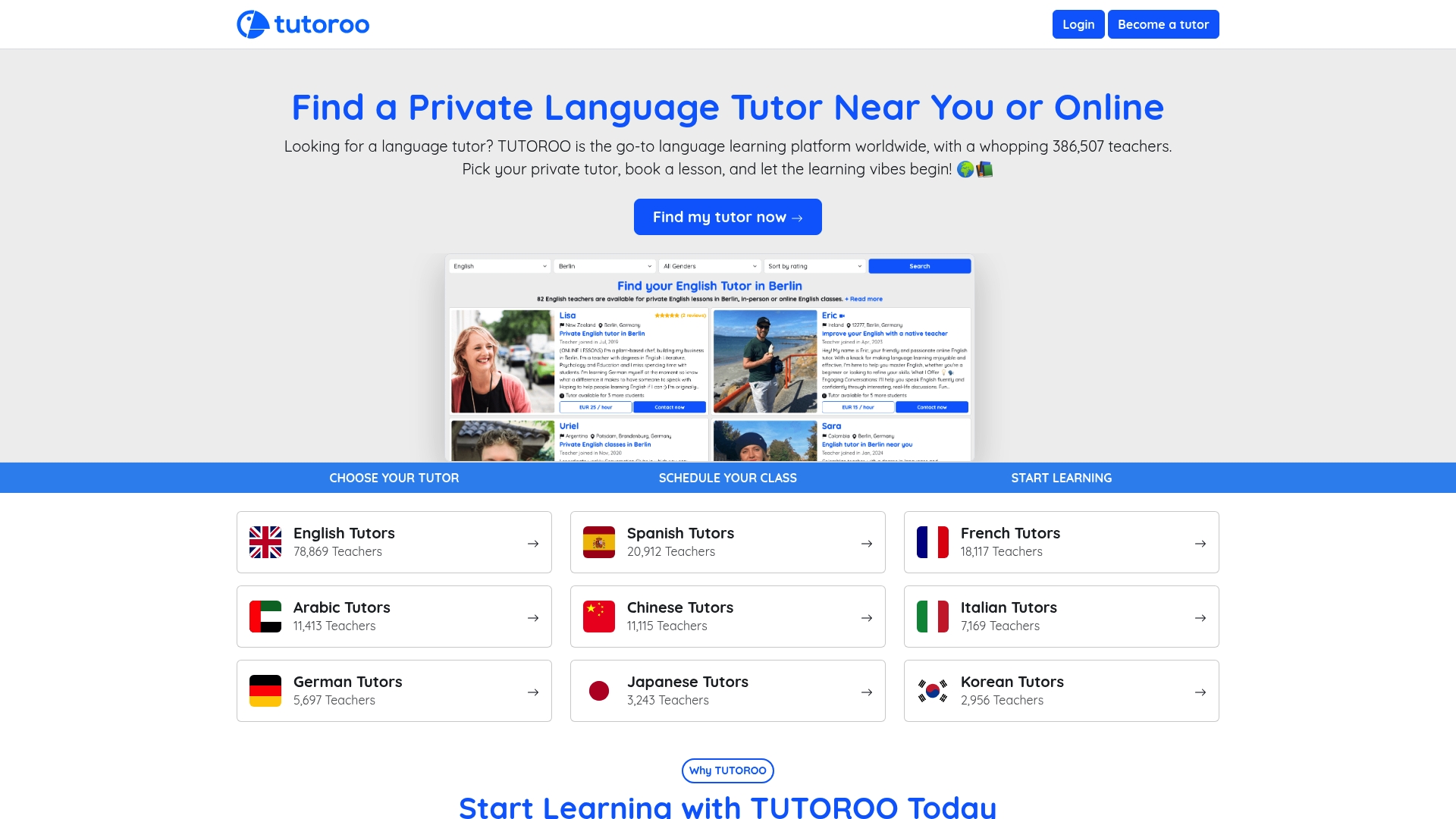
If you've read this far, you likely already know which tier you fall into: chasing a deadline, stuck on a plateau, or just curious. For the first two groups especially, the practical next step is to browse Chinese and Mandarin tutors on Tutoroo, filter for HSK specialists, and book one trial lesson to test tone correction and feedback style before considering a package. It costs you one session to find out whether tutoring is worth it for your specific goal, which beats guessing either way.
Sources
For readers who want to check the evidence directly rather than take our word for it:
- Research on Interactive Model for Online Learning of HSK Tutoring Course
- Students learning achievement and satisfaction of Chinese proficiency test (HSK1) reading courses on the Udemy platform