
For many candidates, yes, but not for everyone, and rarely for a long course. IELTS Life Skills is a short speaking and listening test with a pass or fail result, so a few well-aimed lessons can be worth the money if speaking aloud with a stranger worries you. If you already hold conversations in English comfortably, free official practice papers and a willing friend may be enough. Below we explain how to tell which group you are in, what a tutor can realistically fix, and what to check before you book.
TL;DR
- IELTS Life Skills tests speaking and listening only, at CEFR level A1, A2 or B1, and the result is pass or fail, not a band score.
- Tutoring pays most for candidates who understand English but freeze when speaking, who have never taken a face-to-face test, or who cannot afford a failed attempt.
- Two to six focused sessions on test tasks usually make more sense than an open-ended course. That is our view, not a published statistic.
- Official sample papers and audio are free, so try them first and let the result decide whether you need a tutor.
- Check the current fee and your nearest centre on the official IELTS pages before you plan a budget.
Table of Contents
- What IELTS Life Skills actually tests
- Who needs this test, and why the stakes feel high
- When tutoring is worth it
- When you can skip it
- What a good tutor does in a Life Skills lesson
- How many lessons, and what it costs
- How to choose an IELTS Life Skills tutor
- Our perspective at TUTOROO
- Prepare without a tutor first
- Find an English tutor on TUTOROO
- Frequently asked questions
- Sources
What IELTS Life Skills actually tests
IELTS Life Skills is an English test for people who need to prove their speaking and listening skills at CEFR level A1, A2 or B1, and it is used for UK visa and immigration purposes. It is not the same as IELTS Academic or General Training. There is no reading or writing paper, and the university-style essay is nowhere in sight.
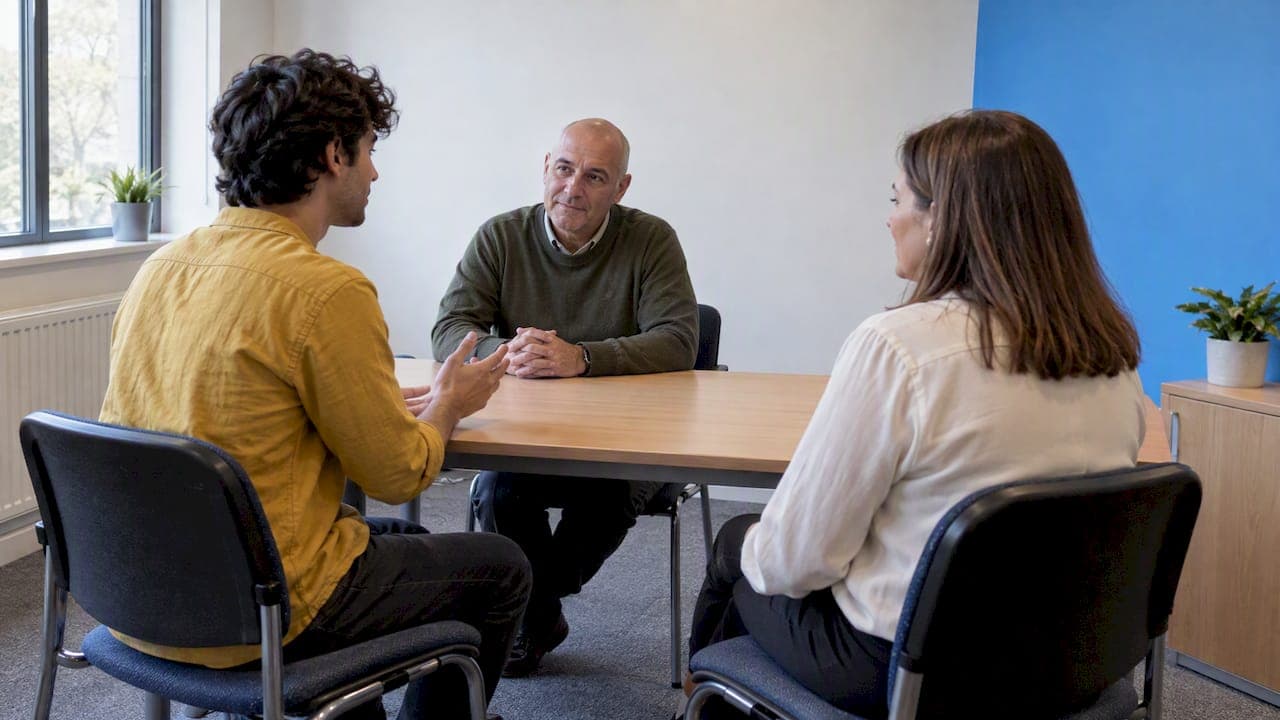
The test is face to face. According to the British Council, candidates sit with an examiner and another candidate, and the A1 test lasts 16 to 18 minutes while the B1 test lasts 22 minutes. There are two main parts: asking and answering questions on familiar topics, then a combined listening and speaking task. At B1, candidates also plan an activity together with the other candidate.
The topics are everyday ones. The test covers listening and responding, making meaning clear, and talking with others about subjects such as family, work, health, housing, transport, education, leisure and buying goods.
The result is simple: IELTS describes it as a pass or fail outcome rather than a band score. That changes how you should think about tutoring. You are not chasing a higher number. You are making sure you clear a threshold on one day, in one short conversation.

Who needs this test, and why the stakes feel high
Candidates sit A1, A2 or B1 depending on the visa route they are applying for, and the Home Office, not the test centre, decides which level you need. Check the requirement for your own application on the official UK government guidance before you book anything, because choosing the wrong level wastes the fee.
The pressure comes from the format. A short test with pass or fail scoring feels unforgiving. A retake means paying again, waiting for another slot and sometimes delaying an application. That is the real argument for preparation: not that the English is out of reach, but that nerves, an unfamiliar format and a partner you have never met can undo someone who is otherwise ready.
When tutoring is worth it
Tutoring is worth the money when a specific, fixable problem stands between you and a pass. These are the situations where we see the case being strongest.
You understand more than you can say
Many learners follow English well but hesitate when they must answer on the spot. A tutor can run you through timed question and answer rounds so that answering becomes a habit. For the speaking side, our guide to language lessons that build real speaking skills explains why live practice beats memorised phrases.
You have never taken a face-to-face test
Talking to an examiner while another candidate listens is its own skill. You must take turns, react to what your partner says, and keep going when they say something unexpected. Rehearsing this with a real person is hard to replicate alone. A tutor can play the partner, then stand back and give you feedback on how you handled it.
Your level sits near the A2 or B1 boundary
The tasks get more demanding as the level rises. According to IELTS, A1 tasks may include giving personal information, stating preferences, asking for information, agreeing or disagreeing, explaining, suggesting and deciding. A2 may add comparing, prioritising, planning and persuading, and B1 may add contrast, cause, reason or purpose, narration and questions about past or future events. If you are at the upper edge of a level, a tutor can show you which of those functions you are missing, such as talking about the past or giving a reason, and drill exactly those.

A failed attempt would be costly
If a delay would affect work, family or a visa deadline, spending a little on practice is cheap insurance. This is the strongest financial argument, and it applies regardless of your English level.
You study alone and cannot find speaking partners
Listening and speaking improve with conversation. If you have nobody to talk to, even a handful of paid sessions give you the practice that books cannot. Our piece on how to practise conversation skills in a new language covers ways to add more between lessons.
When you can skip it
Be honest with yourself here. Tutoring is probably not worth it if:
- you use English daily at work or with friends and are comfortable improvising;
- you have worked through the official sample papers and could answer every task calmly and clearly;
- your level is well above the one you need, for example a confident B1 speaker sitting A1;
- your budget is tight and the sample materials already feel easy.
In those cases, a single mock session with a patient friend, timed and recorded on your phone, will tell you whether you are ready.
What a good tutor does in a Life Skills lesson
The test is narrow, so lessons should be too. A strong tutor works from the real task types rather than general English chat. Expect something like this:
- A short diagnostic. The tutor listens to you answer sample questions and notes where you hesitate, which functions you avoid and whether you understand instructions the first time.
- Task-by-task practice. You rehearse the question and answer part, then the listening and speaking task, using the same kinds of everyday topics the test uses.
- Partner practice. The tutor plays the second candidate, interrupts, changes direction and checks that you keep the conversation moving.
- Feedback you can act on. Not a general comment such as "be more fluent", but a list: use a reason after "because", ask a follow-up question, speak a bit louder.
- A timed mock. Near the end, you run a full test-length practice so the real thing feels familiar.
Because the result is pass or fail, you do not need endless polish. You need clear, understandable English that completes each task. A tutor who keeps pushing you toward academic vocabulary is aiming at the wrong test.
How many lessons, and what it costs
There is no official figure for how many lessons a candidate needs, so treat any promise of a fixed number with caution. As a working rule, we would think in terms of a short block: a diagnostic, then a handful of sessions focused on tasks, then a mock. Candidates at A1 with some experience often need less than those near B1 who must narrate and give reasons. If you sit the diagnostic and your tutor says you are ready, you should be able to stop.
On money, there are two separate costs:
- The test fee. It is set by the test provider and varies by country and centre, so the figure you see in blogs from other countries will not apply to you. IELTS lists its network of US test centres and booking steps, and you should confirm the current US fee and whether your location offers the Life Skills test there before you budget. Not every centre offers every UKVI test.
- Tutoring. Hourly rates on a marketplace are set by each tutor, so they vary with experience and location. Compare a few profiles and ask what a sample session includes before you commit.
The sums are easier to judge when you compare them with the cost of one failed attempt. If a few lessons reduce the chance of paying the test fee a second time, the maths often works. If you were already likely to pass, it does not.
How to choose an IELTS Life Skills tutor
The label "IELTS tutor" covers everything from academic essay coaches to general conversation partners. Look for these things.
Experience with the exact test
Ask directly: have you prepared candidates for IELTS for UKVI Life Skills, and at which level? A tutor who only coaches Academic writing will not know the paired speaking format. Our overview of how tutors transform language exam preparation explains what to expect from exam-focused tuition in general.
A plan built on official materials
Good tutors use the free sample papers and audio from IELTS itself, then add their own role-play. Be wary of anyone who promises "leaked" questions or guaranteed results. Nobody can guarantee a pass.
Willingness to be a partner
The paired task is the unusual feature. Ask whether the tutor will act as your partner and whether they can arrange practice with another learner.
Clear, patient communication
At A1 and A2 especially, a tutor who speaks slowly, rephrases and encourages you will help more than a brilliant but impatient one. A trial lesson tells you quickly.
Practical fit
Check time zone, lesson length and whether lessons are online or in person. Online lessons let you work with someone anywhere in the world, which helps if you live far from a large city.
Our perspective at TUTOROO
We connect learners with private language tutors for personalised one-on-one lessons, online or in person, and we see the same pattern across exams. Candidates rarely fail because they know too little English. They stumble because they have never practised the situation they will face. A short test like this one rewards rehearsal more than study.
That is why we believe in focused tuition over long courses. The best use of a tutor is to get honest feedback early, fix the two or three habits holding you back and then practise on your own. We say the same about TOEFL tutoring and TOEIC tutoring: begin with a diagnostic, and pay for more only if it shows a gap.
It is also worth saying that on our platform you speak to a tutor through our messaging system before you commit, so you can ask about their experience with this test and judge whether they suit you. Tutors set their own schedules and are paid directly by students, which keeps lesson arrangements flexible.
— TUTOROO
Prepare without a tutor first
Whether or not you book lessons, start with free material. IELTS publishes official sample papers and audio for A1, A2 and B1, so you can get used to the format, try the tasks under timed conditions and compare your answers with model answers.
A simple plan for two weeks:
- Read the official format information for your level so nothing surprises you.
- Do one sample paper cold. Record yourself answering and listen back.
- Note where you paused, repeated yourself or gave one-word answers.
- Practise those gaps daily for 15 minutes, using everyday topics such as housing, health or work.
- Find a practice partner, in person or online, and run the paired task with a timer.
- Repeat a sample paper at the end. If it feels calm and clear, you may not need a tutor. If the same problems remain, book a few sessions.
For day-to-day speaking habits, step by step speaking improvement and how to improve speaking skills give practical routines, and our look at the best tools for language exam preparation shows where a private tutor fits alongside them.
Find an English tutor on TUTOROO
If your self-check shows you would benefit from live practice, you can browse English tutors on TUTOROO, compare profiles and message tutors about their experience with speaking tests before you decide. Mention the exact test and level you need, and ask whether they will act as your speaking partner.
Frequently asked questions
Is IELTS Life Skills hard to pass?
It is designed to check everyday communication at a specific level, not advanced English. Most difficulty comes from nerves and the paired format rather than vocabulary. Official sample papers will show you quickly whether the tasks feel manageable.
Can I prepare for IELTS Life Skills on my own?
Yes, for many candidates. IELTS provides free sample papers with audio, and you can practise the paired task with a friend. Tutoring adds the most when you need feedback you cannot give yourself.
How is IELTS Life Skills scored?
There is no band score. Candidates receive a pass or fail result for the level they sat. Passing A1 does not mean you have passed B1, so be sure you register for the level your application needs.
How many tutoring sessions do I need?
There is no official number. A diagnostic plus a small block of task-focused sessions and one timed mock is a sensible starting point. Stop when your tutor and your practice results both show you are ready.
Does the United States offer the test, and what does it cost?
IELTS runs a network of centres in the US, but availability of each test type depends on the location. Confirm the Life Skills option, the current fee and available dates on the official IELTS USA page before you plan.
Sources
- IELTS for UKVI Life Skills test format
- IELTS Life Skills for UKVI: A1, A2 and B1
- What's in the IELTS Life Skills test? British Council
- IELTS in the USA
- IELTS for UKVI Life Skills sample questions