

Personalised TOEIC tutoring is worth the cost for learners stuck at a score plateau, those with a specific weak section, and anyone facing a tight test date, but it adds less value for disciplined self-studyers with months of runway. The ETS examinee handbook confirms that steady, structured practice drives improvement, and tutoring simply compresses that timeline. We walk through the evidence, the costs, and a short session plan below.
TL;DR:
- Most targeted gaps close within 8 to 12 hours of focused coaching; estimate costs at $25 to $100 per hour before comparing courses.
- Choose a short block of 6 to 10 sessions for a narrow gap, beginning with a practice test and tracking recurring error types.
- Independent study can be enough when you have several months, reliable practice tests, and the discipline to review mistakes and measure steady progress.
- Before committing, ask a tutor to assess a recent practice test, set measurable goals for each session, and offer a trial lesson.
- ETS recommends learning the test format and practicing with official sample questions, while tutors can focus that work on diagnosed weaknesses.
Table of Contents
- Which learners benefit most from TOEIC tutoring?
- Cost, time and value: how to judge whether tutoring is worth the price
- How tutoring improves TOEIC scores: evidence and mechanisms
- How to choose a TOEIC tutor and a 6 to 8 session plan
- Why short, diagnostic-led tutoring blocks often outperform generic classes
- If you decide tutoring is worth it: getting started
- FAQ
- Sources
Which learners benefit most from TOEIC tutoring?
Tutoring earns its keep when a learner has a narrow, well-defined gap rather than a broad unknown. We see the clearest returns in four situations: a score plateau that will not budge with more unguided practice, a required band increase tied to a job or promotion deadline, a single weak section dragging down an otherwise solid result, and a test date close enough that self-correction has no time to work.
- Plateaued learners who have studied for months with no score movement
- Candidates who need a specific point increase for a visa, job or university deadline
- Test takers with a clearly weak section (listening traps, reading speed, speaking fluency, or writing structure)
- Anyone with a test date soon enough that self-correction has no time to work
Disciplined self-studyers with several months, access to reliable practice tests, and the habit of reviewing their own mistakes often do fine without ongoing lessons. The difference shows up in two quick examples. Anna needs a 70-point jump in eight weeks for a job offer: she has no time to discover her weak patterns alone, so a tutor who diagnoses them in session one saves her weeks. John has six months and already improves steadily with practice tests: his gains come from volume and consistency, and tutoring would mostly add cost without speeding anything up.
Cost, time and value: how to judge whether tutoring is worth the price
Private TOEIC tutors typically charge $25 to $100 per hour, with rates varying by tutor experience, region and lesson format. Structured TOEIC courses, by comparison, often run from roughly $500 to $7,700 for a full programme, according to the same cost comparison. For a learner chasing a narrow, specific gap, a short block of tutoring can beat a full course on price and on relevance.
A single targeted tutoring block can cost less than a full course while addressing the exact section holding your score back, according to Tutoroo's cost analysis, which compares hourly tutor rates against typical course fees.
Here's how to run the comparison for your own situation:
- Estimate the hours you realistically need: most targeted gaps close within 8 to 12 hours of focused coaching.
- Multiply by an hourly rate in the $25 to $100 range to get a total cost.
- Compare that total against the course fee for the same scope of material.
- Favour a short, intensive block of 6 to 10 sessions when your gap is narrow, and reserve weekly long-term lessons for broader skill-building.
As a worked example: 10 hours at $40 per hour comes to $400, against a $900 course covering material you may only need a third of. When the gap is specific, the one-off diagnostic or short intensive block usually wins on both cost and focus.
How tutoring improves TOEIC scores: evidence and mechanisms
The ETS examinee handbook recommends familiarising yourself with the test format and using official sample questions, noting that the TOEIC tests are not tied to any particular course and that improvement comes from sustained practice. A tutor's job is to turn that general advice into a specific, trackable plan.
Peer-reviewed research comparing coached and uncoached learners found that groups receiving targeted coaching and diagnostic feedback scored meaningfully higher on mock TOEIC tests than control groups studying without guidance. Our own platform data points the same direction: Tutoroo HSK case analysis shows learners progressing roughly 1.11 times faster with a tutor than with self-study alone, and a related TOEFL tutoring case study found diagnostic-led programmes over 8 to 12 weeks associated with ETS-observed score improvements.
The mechanism behind these gains is straightforward:
- A diagnostic test identifies which question types and skills are costing points
- An error log turns vague weakness into a specific, repeatable pattern
- Micro-lessons target that exact pattern instead of general review
- Timed practice rebuilds pacing under real exam conditions
- Targeted feedback closes the loop before the next attempt
Pro Tip: Ask a prospective tutor to review one of your recent practice tests before the first lesson. It tells you immediately whether they work from diagnosis or from a generic syllabus.
How to choose a TOEIC tutor and a 6 to 8 session plan
A good tutor asks for evidence before they teach. Look for someone who requests your most recent practice test score, proposes a diagnostic-first approach, sets clear objectives per session, and offers flexible scheduling with direct messaging for quick questions between lessons.
Before booking, ask:
- Have you prepared students for the TOEIC specifically, and can you describe a typical score gain?
- Will you review my practice test before our first session?
- What will each session focus on, and how will we measure progress?
- Can we start with a single trial lesson before committing to a block?
A sample 6 to 8 session plan looks like this:
- Session 1: diagnostic test and error-pattern review
- Sessions 2 to 3: micro-lessons on your two weakest question types
- Sessions 4 to 5: timed section practice under exam conditions
- Session 6: review of recurring mistakes and strategy adjustment
- Sessions 7 to 8: full exam simulation and final pacing strategy
Track progress by reusing the same diagnostic test format each time, logging which error types shrink, and setting a small, specific goal for each session rather than a vague "get better" target. For listening-specific pacing drills, the kind of structured mock-exam practice used in CELPIP listening preparation follows a similar diagnostic logic, even though it targets a different exam.
Why short, diagnostic-led tutoring blocks often outperform generic classes

We think the strongest argument for tutoring isn't volume of hours, it's focus. Group classes give structure, but a teacher splitting attention across a room cannot pivot to your specific recurring mistake the way a one-on-one session can. A tutor who opens with your practice test and builds the first three lessons around your actual error patterns will usually move your score further than a generic syllabus covering material you already know.
A large network of tutors, paired with direct messaging for pre-booking questions, makes it realistic to test this approach with a single trial lesson before committing to a full block. Typical hourly rates sit in the same range we outlined earlier, so the risk of trying it is small.
— TUTOROO
If you decide tutoring is worth it: getting started
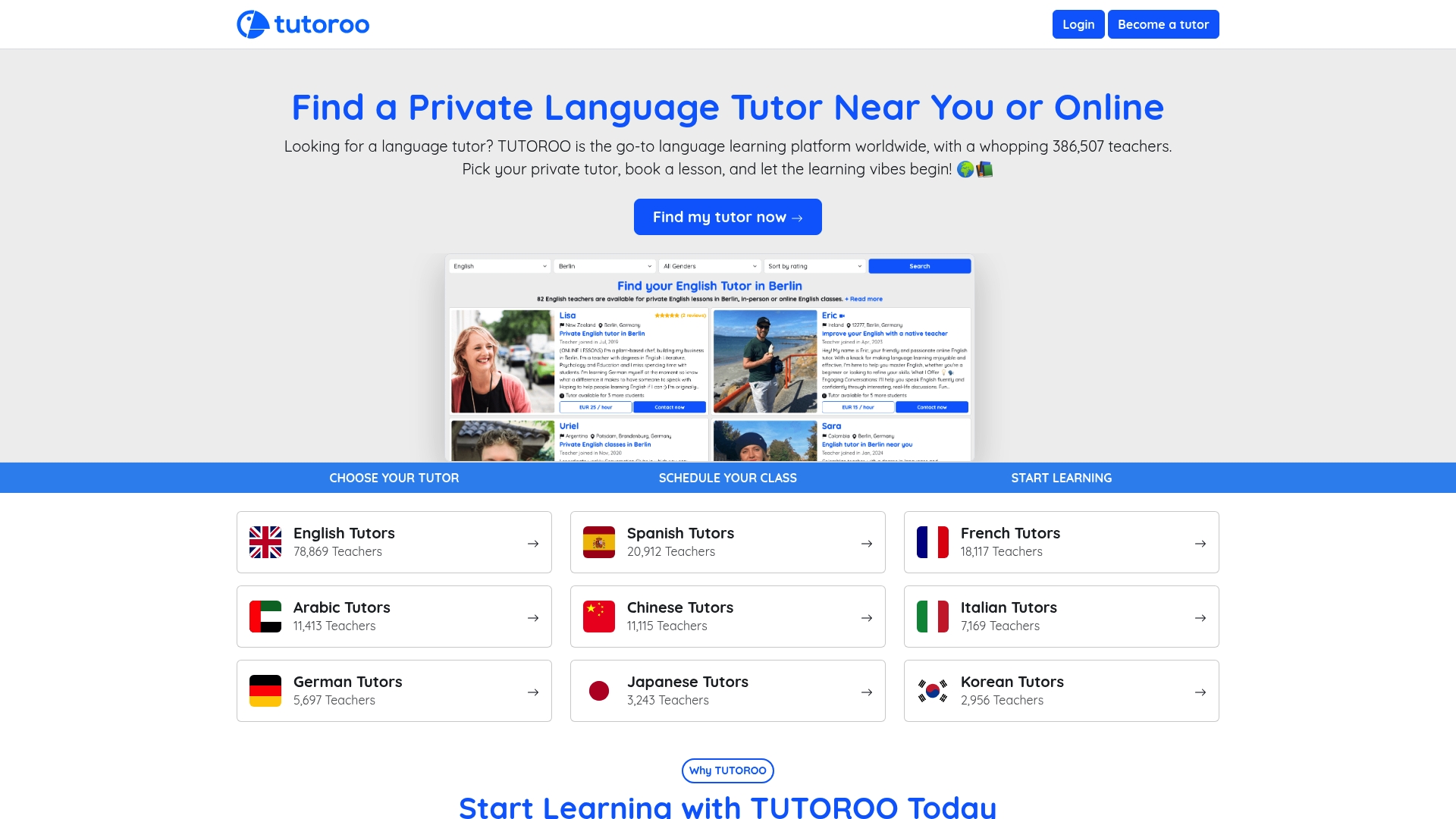
Once you've decided a focused tutoring block fits your timeline, the next step is finding someone who matches your specific gap rather than a generic TOEIC package. Our platform connects you directly with tutors by availability and specialism, and our messaging system lets you ask about TOEIC experience and share your practice test before you ever book a lesson.
- Run a diagnostic practice test first so you know exactly what to ask a tutor about
- Search our English tutors online directory and filter by TOEIC experience
- Book a single trial session before committing to a full 6 to 8 session block
Starting with one lesson keeps the decision low-risk while you see whether the tutor's approach matches what the evidence above says actually moves scores.
FAQ
Is $30 an hour for tutoring good value?
A $30 hourly rate sits toward the lower end of the typical $25 to $100 range for private TOEIC tutoring, so it's generally reasonable value if the tutor uses a diagnostic-first approach. Price alone doesn't guarantee quality: check that sessions target your specific weak areas rather than following a generic syllabus.
Is the TOEIC exam difficult to pass?
The TOEIC tests measure everyday workplace English communication rather than specialist or academic knowledge, according to the ETS examinee handbook. Difficulty depends mostly on your starting proficiency and how well your preparation matches the actual test format, which is why familiarising yourself with official sample questions matters.
Is $50 an hour too much for tutoring?
A $50 hourly rate falls within the typical $25 to $100 range for private TOEIC tutoring and is not excessive for an experienced tutor. Whether it's worth it depends on whether the sessions are diagnostic-led and targeted at your specific score gap rather than generic review.
Is it worth getting a language tutor at all?
For learners with a specific, narrow gap, a tight deadline, or a plateaued score, a tutor can compress months of unguided practice into a focused block of sessions. For learners with ample time and strong self-study habits, the benefit is smaller, since steady independent practice can achieve similar gains over a longer period.