

TL;DR:
- Choosing a language app depends on your learning style, goals, and preferred features.
- Combining app use with private tutoring often yields faster, more personalized progress.
- Successful language learning involves regular practice, real conversation, and human interaction.
Hundreds of language learning apps are available today, and choosing the right one can feel genuinely overwhelming. Whether you are a complete beginner or a seasoned learner brushing up on a second language, the sheer variety of tools, teaching methods, and pricing models makes comparison tricky. Some apps promise fluency through five-minute daily games. Others offer structured grammar lessons or live tutor sessions. This guide cuts through the noise by outlining clear selection criteria, exploring popular and personalised app options, and helping you match the right tool to your goals. By the end, you will have a clear picture of which app suits your learning style and why combining tools often produces the best outcomes.
Table of Contents
- How to choose the right language learning app
- Popular examples of language learning apps
- Apps with personalised and tutor-driven experiences
- Feature comparison: Language learning app options
- What most articles miss about finding the best app for you
- Take your language learning further with expert tutors
- Frequently asked questions
Key Takeaways
| Point | Details |
|---|---|
| Define your goals | Know what fluency means for you before selecting an app or method. |
| Mix apps and tutoring | Combining personalised support and self-paced learning delivers the fastest results. |
| Compare features | Focus on interactivity, feedback, and social options to keep engaged. |
| Evaluate progress | Choose an app with clear progress tracking and adapt when your needs change. |
How to choose the right language learning app
Not every app will suit every learner, and that is precisely why evaluating your options carefully matters. Before downloading the first app you find, it pays to think through a few core criteria that will shape your experience.
Here is what to look for when assessing any language learning app:
- Learning approach: Does the app use gamified lessons, structured grammar modules, or real tutor interaction? Your preferred style should guide this choice.
- Language options: Some apps cover over 30 languages while others specialise in just a handful. Confirm your target language is well supported before committing.
- Progress tracking: Adaptive platforms adjust to your level as you improve. This feature keeps content relevant and prevents boredom or frustration.
- Interactivity and feedback quality: Look for apps that correct your pronunciation or grammar in real time, rather than just marking answers right or wrong.
- Community and peer engagement: Peer correction, group challenges, and language exchange features can significantly enrich your practice.
- Integration with real conversation: Apps that encourage or facilitate live speaking practice build confidence much faster than passive study alone.
Personalised instruction leads to faster, more effective language outcomes, which is why it is worth asking whether an app offers tutor access or at minimum, dialogue-based exercises that mirror real conversation.
Pro Tip: Try the free version of at least two or three apps before subscribing to any paid plan. Your gut reaction after a genuine week of use will tell you more than any review.
Popular examples of language learning apps
With those criteria in mind, let's look at current favourites among language learners and what makes them stand out.
The app market is rich with options, each taking a different approach to building language skills. Language fluency examples show that some apps use gamification, while others focus on real-life conversation practice, and the distinction matters enormously for long-term progress.
Here is a snapshot of the most widely used apps:
- Duolingo: The world's most downloaded language app uses short, game-like lessons to build vocabulary and grammar. It is ideal for beginners and casual learners who respond well to streaks and rewards.
- Babbel: Focuses on practical, conversation-ready phrases from the very first lesson. Its curriculum is designed by linguists and works well for learners with specific travel or professional goals.
- Memrise: Combines spaced repetition with short video clips of native speakers, making vocabulary retention feel natural rather than mechanical.
- Busuu: Offers structured course content alongside a peer correction feature where native speakers review your writing and speaking exercises.
- HelloTalk: Connects learners directly with native speakers for text, voice, and video exchanges. It is less structured but highly authentic.
The most effective app is not always the most popular one. It is the one you actually return to each day.
Each of these platforms opens doors to culture, connection, and genuine communication. For learners who want to move faster, tutors unlock faster results by providing targeted feedback that no algorithm can fully replicate.
Apps with personalised and tutor-driven experiences
While popular apps offer versatility, many learners see the best gains with personalised or tutor-driven platforms.

If your goal is meaningful fluency rather than casual practice, platforms that connect you with real tutors represent a significant step up. One-on-one learning speed research consistently shows that apps designed for one-on-one tutoring produce more tailored results, because a real tutor can identify exactly where you are struggling and adjust accordingly.
Here are the key platforms offering personalised or tutor-driven learning:
- Preply: Matches learners with certified tutors for live video lessons. You can filter by language, tutor background, availability, and price per hour.
- iTalki: Offers both professional tutors and community language partners, giving learners flexibility based on budget and learning intent.
- TUTOROO: Connects learners with private tutors for both online and in-person lessons across a wide range of languages. With over 386,000 tutors worldwide, finding a specialist in your target language is straightforward.
- Rosetta Stone: Uses adaptive speech recognition technology to pace lessons according to individual progress, making it a strong self-guided option for those who prefer structured independence.
The step-by-step online tutoring process available through tutor-driven platforms means learners can set specific goals and receive focused feedback after every session. This is especially valuable for learners preparing for exams, job interviews, or relocation.
Pro Tip: If your schedule is unpredictable, look for platforms like TUTOROO that offer flexible tutor availability so you can book sessions around your routine rather than the other way around.
Feature comparison: Language learning app options
To simplify the decision, the following comparison will clarify which app best matches specific needs.
Different learning modes lead to different results, so it is worth matching your goals to the right platform from the outset.
| App | Learning mode | Cost | Personalisation | Social features |
|---|---|---|---|---|
| Duolingo | Gamified, self-guided | Free / Premium | Low | Leaderboards |
| Babbel | Structured lessons | Subscription | Medium | Limited |
| Memrise | Spaced repetition | Free / Premium | Medium | Community clips |
| Busuu | Structured + peer | Subscription | Medium | Peer correction |
| HelloTalk | Language exchange | Free / Premium | Low | High |
| Preply | Live tutor sessions | Per hour | High | One-on-one |
| iTalki | Live tutor / partner | Per session | High | Community |
| TUTOROO | Private tutor | Per session | Very high | Direct matching |
| Rosetta Stone | Adaptive, self-guided | Subscription | Medium | Minimal |
Beyond the table, here is a quick scenario guide to help you decide:
- Best for beginners: Duolingo or Babbel for structured entry points with low commitment.
- Best for speaking practice: HelloTalk or iTalki, where live conversation is central.
- Best for busy schedules: TUTOROO or Preply, where you book sessions on your own timeline.
- Best for exam preparation: A private tutor via TUTOROO or Preply, supported by Babbel for daily practice.
It is worth remembering that no single app is a perfect fit for everyone. Goals, schedules, and learning styles vary enormously. Following a language tutoring process that blends structured app use with live practice tends to produce the most consistent progress over time.
What most articles miss about finding the best app for you
Most app comparison articles focus almost entirely on features, ratings, and price. What they often overlook is the human element of language learning, and that is where the real difference lies.
No app, regardless of how well it is designed, can fully replicate the accountability and adaptability of a real conversation with another person. Motivation tends to drop sharply when learners feel stuck, and an app cannot sense that the way a skilled tutor can. Experimenting with different apps and supplementing with private tutoring benefits is not just a nice-to-have. For most learners, it is what separates those who finish a course and those who actually use the language.
Your end goal should also shape which app you reach for. Learning Spanish for a holiday requires a different tool than preparing for a DELF French exam or moving to Japan for work. The best approach is to let your specific purpose guide both your app choice and how much time you invest in live conversation practice alongside it.
Take your language learning further with expert tutors
Apps are a brilliant starting point, but the vibrant momentum of real progress often comes from speaking with someone who understands your goals, corrects your mistakes in the moment, and adapts every lesson to where you are right now.
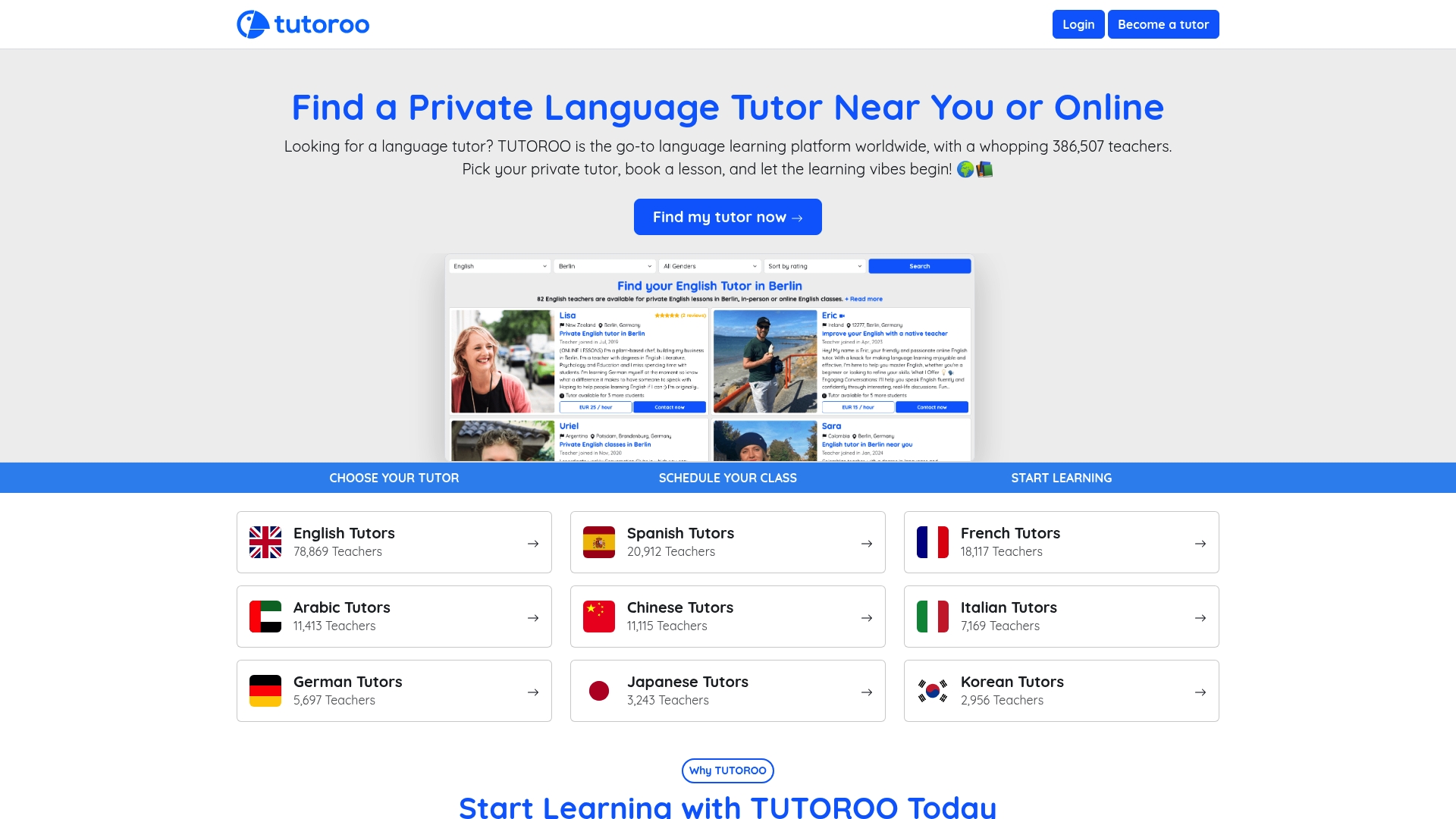
TUTOROO makes that next step genuinely easy. With over 386,000 tutors available for both online and in-person lessons, you can find a private tutor who fits your language, schedule, and learning pace. Whether you are looking for English tutors to sharpen professional communication or Malay tutors to connect more deeply with a new culture, TUTOROO's matching process brings the right expert to you. Combine your favourite app with regular tutor sessions and watch your confidence grow.
Frequently asked questions
Which language learning app is most effective for beginners?
Apps with structured, gamified lessons like Duolingo or Babbel are the most popular starting points for new learners, but tutoring increases effectiveness significantly for those who want to progress faster from the outset.
Are language learning apps enough to become fluent?
Apps can build vocabulary and grammar foundations, but personalised learning gains through regular conversation with native speakers are essential for achieving real fluency.
How do I choose the right app for my learning style?
Start by comparing features such as interactive lessons, tutor access, and community tools, then select the option that aligns with your goals. Different learning modes suit different learners, so there is no universal answer.
Can I combine language learning apps for better results?
Absolutely. Using more than one app or pairing an app with tutor sessions helps cover speaking, listening, and practical use more thoroughly. Combining tools enables faster, more flexible results for most learners.
Are private tutors available through language learning apps?
Some platforms, such as TUTOROO and iTalki, offer direct access to private tutors for online or in-person lessons that are fully tailored to your individual needs and goals.