

One-on-one tutoring has a reputation for being a luxury reserved for elite students, but the reality is far more accessible and far more powerful than most people realise. Research shows that one-on-one tutoring yields roughly two standard deviations of improvement over traditional classroom instruction, a finding that has reshaped how educators think about personalised learning. For language learners specifically, this kind of focused attention can mean the difference between years of slow progress and genuine conversational fluency in a matter of months. This article unpacks how one-on-one tutoring works, who it suits best, and how you can make every session count.
Table of Contents
- Defining one-on-one tutoring: how personalised learning works
- Why one-on-one tutoring accelerates language proficiency
- Is one-on-one tutoring right for you? Edge cases and alternatives
- Making one-on-one tutoring work: practical strategies for language learners
- Find your ideal language tutor: next steps with TUTOROO
- Frequently asked questions
Key Takeaways
| Point | Details |
|---|---|
| Personalised attention | One-on-one tutoring offers tailored learning and immediate feedback, boosting proficiency. |
| Proven effectiveness | Empirical studies confirm one-on-one sessions double literacy gains versus classroom instruction. |
| Best fit learners | Ideal for shy, neurodivergent, or rapid upskilling learners who benefit from focused support. |
| Practical strategies | Combining tutoring with self-study maximises retention and real-world language use. |
Defining one-on-one tutoring: how personalised learning works
At its core, one-on-one tutoring is supplemental individualised instruction where a single tutor works exclusively with one learner. There are no other students competing for attention, no fixed curriculum pace, and no need to wait for others to catch up. Sessions typically run between 30 and 60 minutes and are shaped entirely around your current level, your goals, and the gaps you need to close.
For language learners, this structure opens doors to culture, connection, and opportunity in ways that group classes simply cannot replicate. You can spend an entire session practising the specific vocabulary you need for a job interview, or work through the pronunciation patterns that have been tripping you up for months. The tutor adjusts in real time, which means feedback arrives the moment you need it.
The benefits of one-on-one language teaching are especially clear when it comes to conversational fluency. Speaking a new language requires confidence, and confidence grows fastest when you are not worried about making mistakes in front of a group.
Key advantages of one-on-one language tutoring include:
- Immediate, personalised feedback on pronunciation, grammar, and vocabulary
- Flexible pacing that matches your learning speed, not the group average
- Custom lesson content built around your real-world goals, whether travel, work, or study
- A safe space to make mistakes and ask questions without social pressure
- Consistent progress tracking so you always know where you stand
"Personalisation is the single greatest driver of conversational fluency. When a tutor can adapt every explanation to the way you think, language acquisition accelerates dramatically."
Pro Tip: Before your first session, write down three specific situations where you want to use the language confidently. Share these with your tutor so lessons feel immediately relevant and purposeful.
Exploring the types of private language lessons available can also help you choose the format that fits your lifestyle and learning preferences.
Why one-on-one tutoring accelerates language proficiency
The evidence behind one-on-one tutoring is striking. Benjamin Bloom's landmark research, known as the 2 Sigma Problem, found that one-on-one tutoring doubles literacy gains compared to two-on-one instruction, and yields roughly two standard deviations of improvement over conventional classroom teaching. A Stanford study reinforced this finding specifically for literacy outcomes.

The numbers for language learning are equally compelling. A Preply study found that 91% of learners felt more fluent after just 12 weeks of one-on-one instruction. That is not a marginal improvement. That is a fundamental shift in how learners relate to a new language.
| Format | Average proficiency gain | Feedback speed | Lesson personalisation |
|---|---|---|---|
| Traditional classroom | Baseline | Delayed | Low |
| Small group tutoring | Moderate | Moderate | Moderate |
| One-on-one tutoring | Up to 2 SD above baseline | Immediate | High |
So why does one-on-one tutoring work so well? Four reasons stand out:
- Zero-latency feedback corrects errors before they become habits, which is critical in language learning where bad pronunciation or grammar can calcify quickly.
- Full tutor attention means every minute of the session is productive. There is no downtime while others answer questions.
- Adaptive difficulty keeps you in the optimal learning zone, challenging enough to grow but not so hard that you disengage.
- Emotional attunement allows a skilled tutor to sense when you are frustrated or bored and shift the approach accordingly.
Understanding the full scope of private tutoring benefits can help you appreciate why so many serious language learners choose this path. You can also explore online tutoring examples to see how these principles play out in real sessions.
Is one-on-one tutoring right for you? Edge cases and alternatives
One-on-one tutoring is not a universal solution, and being honest about your learning style will save you time and money. That said, it suits a remarkably wide range of learners.
According to the National Tutoring Authority, one-on-one tutoring is ideal for shy or neurodivergent learners, those preparing for specific tests, and anyone who needs rapid upskilling for a job, trip, or academic programme. If you find group settings overwhelming or distracting, private sessions remove that friction entirely.
Learners who benefit most from one-on-one tutoring:
- Shy or introverted individuals who speak more freely without an audience
- Neurodivergent learners who need a consistent, predictable structure
- Professionals preparing for work in a foreign language environment
- Travellers who need practical, conversational skills quickly
- Students preparing for language proficiency exams
- Anyone who has plateaued in a group class and needs a fresh approach
However, group tutoring or self-study may be a better fit if your motivation comes from social interaction, if you are on a tight budget, or if you are at a very early stage and simply need exposure to the language in a low-pressure setting.
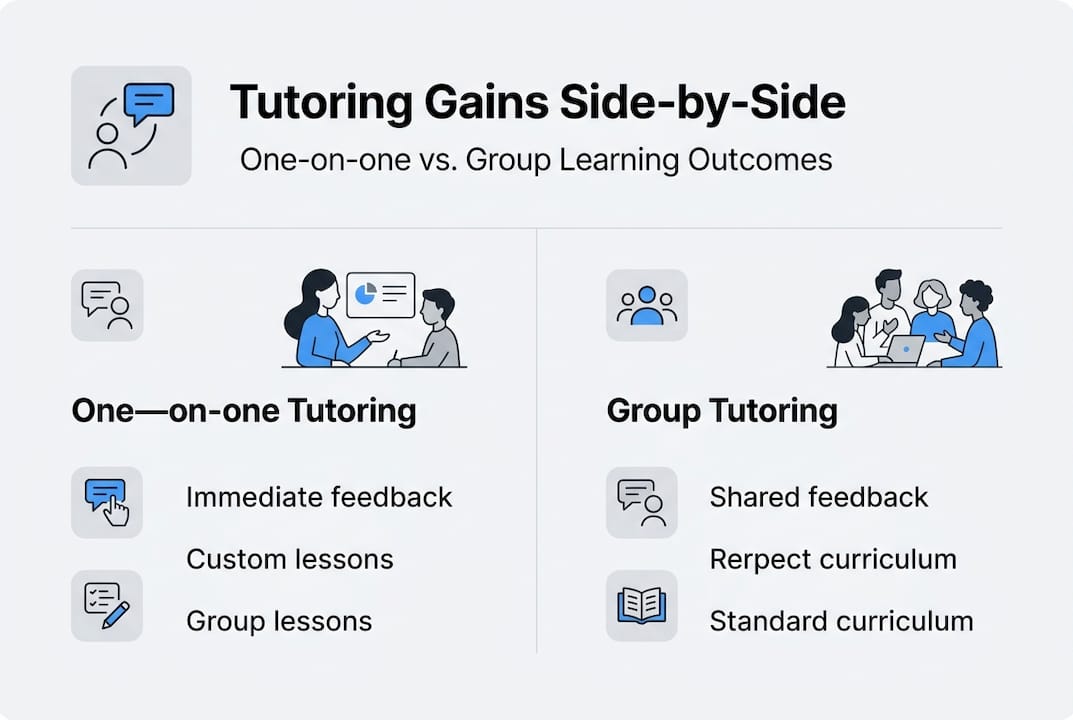
| Factor | One-on-one tutoring | Group tutoring |
|---|---|---|
| Feedback speed | Immediate | Shared and delayed |
| Cost | Higher per session | Lower per session |
| Social motivation | Lower | Higher |
| Lesson personalisation | Very high | Low to moderate |
| Best for | Goal-focused, shy, or neurodivergent learners | Social learners, budget-conscious learners |
If you are weighing up your options, comparing local vs online tutoring is a useful next step. You might also find it helpful to read about different tutoring styles for languages to find the approach that resonates with how you learn.
Making one-on-one tutoring work: practical strategies for language learners
Having the right tutor is only half the equation. How you show up to each session determines how quickly you progress. The power of one-on-one tutoring stems from zero-latency feedback loops and full personalisation, but pairing tutoring with self-study is what locks in long-term retention.
Here is a practical framework for getting the most from every session:
- Set clear, measurable goals before you start. "I want to hold a five-minute conversation about my job in French" is far more useful than "I want to improve my French."
- Review your previous session notes before each new lesson. Spending ten minutes revisiting vocabulary or grammar points keeps the material fresh and signals to your tutor where you still need support.
- Ask for real-world application. Request that your tutor use scenarios relevant to your life, whether ordering food, negotiating in a meeting, or navigating an airport.
- Record yourself speaking between sessions. Listening back reveals patterns in your errors that you might not notice in the moment.
- Use spaced repetition apps such as Anki to reinforce vocabulary your tutor introduces, so new words move from short-term to long-term memory.
- Request honest feedback. A good tutor will tell you what you are doing well and where you are falling short. Embrace both.
"The learners who progress fastest are those who treat tutoring as a launchpad, not a crutch. They practise between sessions, they ask hard questions, and they apply new skills in real situations as soon as possible."
Working with native-speaking tutors adds another layer of authenticity, exposing you to natural rhythm, idiom, and cultural nuance that textbooks rarely capture. For those managing busy schedules, a flexible tutoring guide can help you build a sustainable routine around your commitments.
Pro Tip: After each session, write three sentences in the target language summarising what you learned. This simple habit reinforces new material and gives your tutor a window into how well concepts are sticking.
Find your ideal language tutor: next steps with TUTOROO
If one-on-one tutoring sounds like the right path forward, the next step is finding a tutor who genuinely fits your goals, schedule, and learning style. That is exactly what TUTOROO is built for.
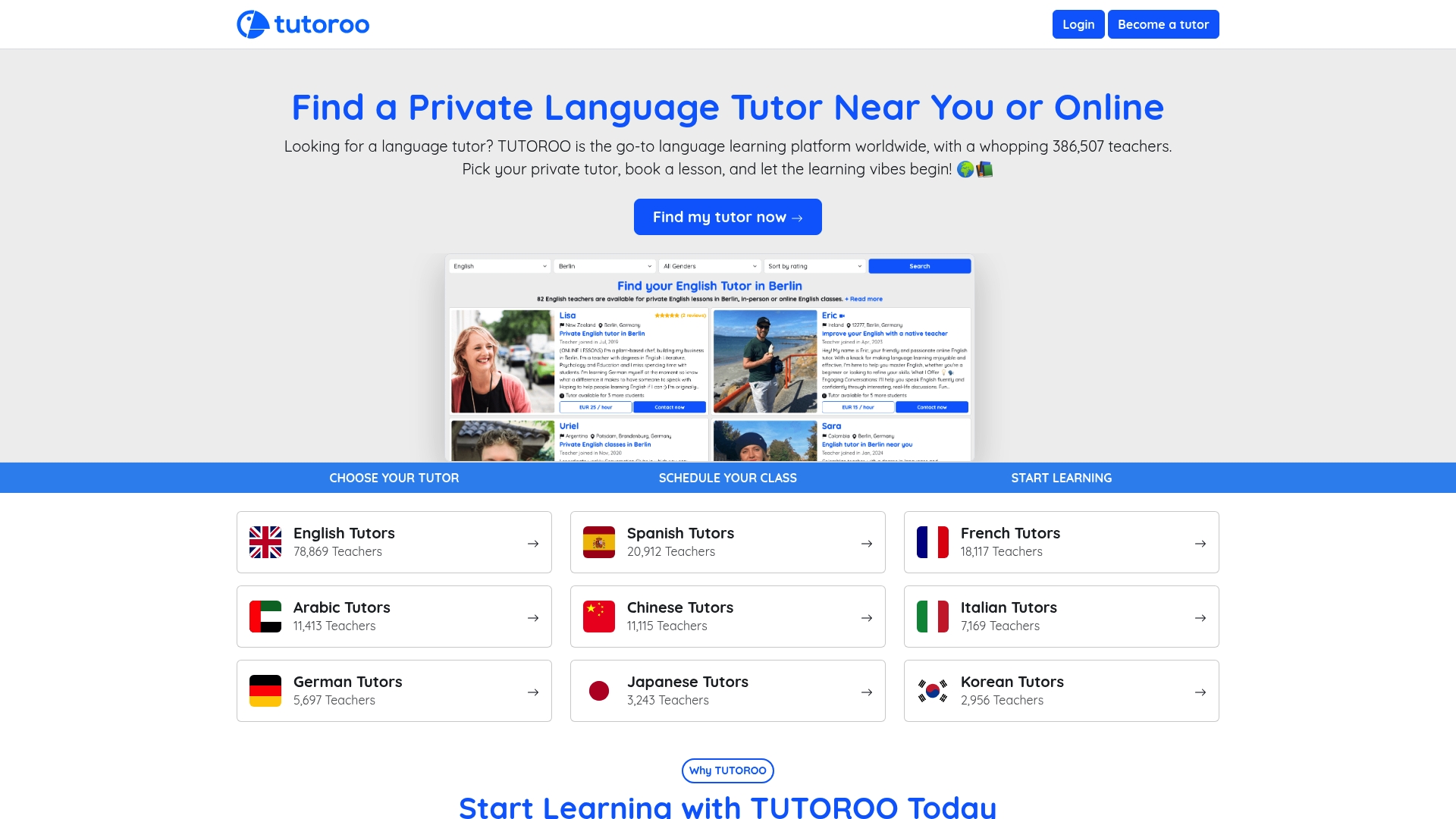
With over 386,000 language teachers on the TUTOROO platform, you can search by language, location, availability, and teaching style to find someone who feels like a natural match. Whether you are looking for an English tutor to sharpen your professional communication or a Japanese tutor to prepare for an upcoming trip, TUTOROO connects you with experienced tutors who offer both local and online sessions. Lessons are flexible, payments go directly to your tutor, and the messaging system makes it easy to ask questions before you commit. Your language learning journey deserves personalised support, and TUTOROO is here to help you find it.
Frequently asked questions
How long does a typical one-on-one tutoring session last?
Most sessions run between 30 and 60 minutes, giving learners enough time for focused, personalised instruction and meaningful feedback without fatigue setting in.
Is one-on-one tutoring more effective than group tutoring for language learning?
Research confirms that one-on-one tutoring doubles literacy gains and produces significantly greater proficiency improvements, largely because of undivided tutor attention and immediate feedback.
What types of learners benefit most from one-on-one tutoring?
Shy, neurodivergent, and goal-driven learners gain the most, as do those preparing for tests or rapid upskilling in a specific language for work, travel, or academic purposes.
Should you do self-study alongside one-on-one tutoring?
Absolutely. Pairing tutoring with self-study strengthens retention and ensures that new vocabulary and grammar patterns are reinforced between sessions, not just during them.