

TL;DR:
- Motivation fuels successful language learning but is often misunderstood and difficult to sustain over time. Personalized strategies that address learners' psychological needs, reduce boredom, and foster positive emotions are essential for long-term engagement. Applying frameworks like Self-Determination Theory and PERMA can help tutors create supportive, adaptable environments that nurture confidence and intrinsic motivation.
Motivation is the engine behind every successful language learning journey, yet it remains one of the most misunderstood elements in language education. Many learners begin with genuine enthusiasm, only to find that enthusiasm quietly slipping away weeks or months later. Generic advice like "set a goal" or "practise every day" rarely addresses why motivation fades in the first place. Understanding the real forces behind sustained engagement requires looking closely at individual needs, learning contexts, and the latest educational research to build strategies that actually hold up over time.
Table of Contents
- Understanding what motivates language learners
- Personalising motivation: Assessing and adapting to learner needs
- Reducing boredom and boosting engagement
- Harnessing positive psychology to foster confidence
- The power of translanguaging and motivational self-systems
- What most motivation advice for language learners misses
- Take your language motivation to the next level
- Frequently asked questions
Key Takeaways
| Point | Details |
|---|---|
| Personalise motivation | Tailoring activities to learner needs is far more effective than one-size-fits-all tips. |
| Combat boredom actively | Varying tasks and using real-life scenarios curbs boredom and fosters better engagement. |
| Build learner confidence | Integrating positive psychology interventions boosts confidence, though approaches must be adapted for each learner. |
| Leverage translanguaging | Using all of a learner's languages in class can transform motivation and deepen language acquisition. |
Understanding what motivates language learners
Before any strategy can work, it helps to understand the psychology beneath motivation. One of the most influential frameworks in this space is Self-Determination Theory (SDT), developed by psychologists Edward Deci and Richard Ryan. SDT identifies three core psychological needs that, when met, fuel genuine, lasting motivation.
Those needs are:
- Autonomy: Feeling in control of one's learning choices and direction
- Competence: Experiencing real progress and mastering new skills
- Relatedness: Feeling connected to others, including tutors, classmates, and the broader culture of the target language
Pragmatic classroom design can motivate learners by supporting the conditions highlighted by SDT. This matters whether you are learning in a formal classroom, online, or through personalised language lessons with a private tutor.
Motivation in language learning also takes several forms. Intrinsic motivation comes from genuine enjoyment of learning. Extrinsic motivation is driven by external rewards like grades or career outcomes. Integrative motivation describes the desire to connect with a culture or community, while instrumental motivation is goal-driven, such as passing an exam or getting a job.
It is important to recognise that motivation is not fixed. It shifts depending on context, progress, and emotional state. Crucially, intrinsic motivation boosters alone may not be enough because boredom can mediate the impact of basic needs on engagement. This means that even a learner who genuinely loves language learning can lose steam if the experience becomes repetitive or unchallenging. Keeping these language learning tips in mind from the start creates a stronger foundation for the practical strategies that follow.
Personalising motivation: Assessing and adapting to learner needs
Having set the theoretical framework, it is time to explore how to apply it practically for each individual learner. One size does not fit all in language education, and tailoring your approach is where real motivational breakthroughs happen.
Here is a practical, step-by-step process for personalising motivation:
- Assess current motivation drivers. Start with a simple conversation or written reflection. Ask learners why they are studying the language, what they enjoy, and where they feel most challenged. This surfaces whether their motivation is primarily intrinsic, extrinsic, integrative, or instrumental.
- Identify unmet psychological needs. If a learner feels micromanaged, their autonomy needs attention. If they are not noticing progress, competence support is needed. If they feel isolated, relatedness strategies should be introduced.
- Introduce meaningful choice. Allow learners to select topics, project formats, or conversation themes that reflect their own lives and interests. Even small choices can strengthen autonomy dramatically.
- Mark visible progress. Use progress charts, vocabulary milestones, or recorded speaking samples so learners can hear and see their own improvement. Recognising growth directly feeds the competence need.
- Build genuine connection. Encourage open dialogue between tutor and learner, celebrate cultural curiosity, and create space for personal storytelling in the target language. Connection transforms the experience.
- Review and adjust regularly. Motivation shifts. Return to these steps every few weeks to recalibrate the approach.
Instruction tailored to autonomy, competence, and relatedness supports practical personalisation in motivation, making this framework one of the most actionable in language education today. Applying it through personalised lessons and thoughtful methods for online teaching gives learners the best conditions for growth.
Pro Tip: Ask learners to keep a short weekly reflection journal. Even three sentences noting what felt easy, what felt hard, and what was interesting can reveal motivational patterns that might otherwise go unnoticed. Tutors who use this practice consistently report better results, as outlined in tutoring best practices.

Reducing boredom and boosting engagement
Personalisation is key, but without actively combating boredom, even the best-designed learning plans can fall flat. Boredom is not just an inconvenience. Research shows that boredom strongly mediates the link between basic needs and engagement for language learners. In practical terms, this means boredom can block motivation even when the learner's psychological needs are largely being met.
Boredom arises for several reasons. Repetitive tasks, predictable lesson structures, a mismatch between task difficulty and skill level, and limited opportunities for self-expression all contribute. Recognising the trigger is the first step to addressing it.
Evidence-based engagement boosters include:
- Variety in task types: Mix listening, speaking, reading, and writing activities within a single session
- Novelty: Introduce unexpected formats, such as podcasts, short films, songs, or news clips
- Task rotation: Rotate between structured grammar work and free creative tasks
- Strategic breaks: Short, deliberate pauses between activities help reset focus
- Clear micro-goals: Setting small, session-specific goals gives learners a sense of direction and completion
The following table illustrates common boredom triggers alongside practical classroom or tutoring fixes:
| Boredom trigger | Engagement fix |
|---|---|
| Repetitive grammar drills | Gamified grammar challenges or quizzes |
| Predictable lesson topics | Learner-chosen themes each session |
| Too-easy tasks | Scaffolded challenges just above current level |
| No real-world connection | Role plays, simulations, or authentic materials |
| Limited interaction | Pair or group tasks, even in online settings |
For more inspiration, fun practice activities offer creative ideas that work across languages and levels. The value of flexible tutoring options also becomes clear here, as adapting pace and format to the individual helps prevent the stagnation that breeds boredom. Strong student-tutor engagement also plays a critical role in keeping energy high across sessions.
Pro Tip: Ask learners at the start of each lesson what they have been watching, reading, or talking about in their own life. Weave that content into the session. A learner who is obsessed with cooking will respond far more enthusiastically to a recipe-based vocabulary task than to a generic dialogue about shopping.
Harnessing positive psychology to foster confidence
With engagement tackled, confidence and emotional wellbeing become the next important drivers of motivational change. Many language learners stall not because of a lack of ability, but because anxiety and self-doubt erode their willingness to speak and take risks. Positive psychology offers a research-backed path through this.
The PERMA model, developed by psychologist Martin Seligman, provides a useful structure. PERMA stands for Positive emotions, Engagement, Relationships, Meaning, and Accomplishment. Each element maps naturally to the language learning experience and offers actionable intervention points.
Here are five PERMA-aligned steps for building learner confidence:
- Cultivate positive emotions: Begin lessons with a brief moment of connection, a question about the learner's week or something they are looking forward to. This shifts the emotional tone before the lesson even starts.
- Deepen engagement: Use tasks that require genuine creative effort, not just rote repetition. When learners feel absorbed in a task, confidence grows organically.
- Invest in relationships: A trusting relationship between tutor and learner is one of the most powerful confidence-builders available. Regular check-ins and genuine encouragement matter deeply.
- Connect learning to meaning: Help learners articulate why the language matters personally, whether for travel, family, career, or cultural identity. Meaning sustains motivation through difficulty.
- Celebrate accomplishment: Mark milestones explicitly. Acknowledge when a learner successfully navigates a complex conversation or masters a difficult tense. Visible wins build resilience.
Motivation for speaking can improve when instruction integrates PERMA-aligned interventions to reduce anxiety and increase confidence. However, as with any strategy, customisation matters. Not every learner responds the same way to public praise, visualisation exercises, or gratitude journalling. Effective tutors observe, adapt, and find the combination that fits each person.
"Confidence in a new language is not something you have before you start. It is something you build one small success at a time." This perspective reflects what many experienced tutors and learners discover over time: the emotional environment of a lesson shapes learning outcomes just as powerfully as the content. Pairing positive psychology with innovative teaching methods opens doors to richer, more resilient language learning.
The power of translanguaging and motivational self-systems
Beyond individual interventions, systemic approaches like translanguaging can meet deeper motivational needs and transform the classroom dynamic entirely. Translanguaging refers to the fluid use of multiple languages as a unified communication resource, rather than treating each language as a separate, isolated system.
In practice, this might look like allowing a learner of French to briefly draw on their Italian to clarify a grammatical concept, or encouraging a bilingual learner to use both languages to explore meaning before arriving at a target-language expression. Translanguaging-informed pedagogy can enhance L2 motivation and vocabulary learning by shifting classroom meaning-making practices.
Understanding this approach also requires familiarity with motivational self-system theory. Linguist Zoltán Dörnyei proposed that learners are driven by two key self-concepts:
- The 'ideal L2 self': The person the learner imagines becoming through mastery of the language, such as a confident traveller, a bilingual professional, or someone who can connect deeply with family heritage
- The 'ought-to L2 self': The version of themselves they feel obligated to become, driven by external expectations like parental pressure or employer requirements
Translanguaging connects most powerfully with the ideal L2 self because it validates the learner's full linguistic identity rather than asking them to suppress it. This creates a more authentic, motivating experience.
That said, complexity matters here. Motivation and multilingual trajectories can show threshold and complexity effects, meaning more languages do not automatically produce more stable motivation. Careful, intentional design is essential.
| Approach | Classroom experience | Motivational impact |
|---|---|---|
| Traditional monolingual | Only target language permitted | Can increase anxiety, may limit meaning-making |
| Translanguaging | All languages used as resources | Validates identity, supports deeper engagement |
Exploring top learning methods that incorporate flexible language use can help learners and tutors find the right balance for their unique context.
What most motivation advice for language learners misses
After exploring research-driven strategies, it is worth stepping back for a frank perspective on what really works and what often lets people down over time. The honest truth is that most popular motivation advice for language learners is surface-level at best.
"Set a goal." "Practise every day." "Find a language partner." These tips are not wrong, but they are incomplete. They focus on behaviour without addressing the underlying conditions that make those behaviours sustainable. A learner who sets a goal but has no autonomy over their learning path will struggle. A learner who practises daily but never experiences genuine progress will eventually stop.
One of the most common and damaging mistakes is misdiagnosing a motivational drop. When a learner becomes disengaged, the instinct is often to push harder, add more content, or increase frequency. But in many cases, the real issue is boredom, anxiety, or a mismatch between the learner's ideal self and the learning experience on offer. Pushing harder in those situations makes things worse.
Another overlooked issue is that motivation needs change at different learning stages. A beginner often thrives on novelty and early wins. An intermediate learner faces the notorious "plateau" where progress slows and frustration builds. An advanced learner may struggle with identity, questioning whether native-like fluency is actually achievable or desirable. Each stage calls for a different motivational response.
Strong student-tutor interaction creates the space for these conversations to happen naturally, allowing tutors to spot motivational shifts before they become crises. The most effective tutors treat motivation as a living, evolving part of the learning relationship, not a box to tick at enrolment.
Pro Tip: Build a brief motivation check-in into your regular study routine. Once a fortnight, ask yourself honestly: Am I enjoying this? Am I noticing progress? Do I feel connected to my learning community? Honest answers to those three questions will tell you more about your motivational health than any productivity app.
Take your language motivation to the next level
Motivation is not something that simply happens to learners. It is something that can be cultivated, supported, and renewed through thoughtful, personalised instruction.
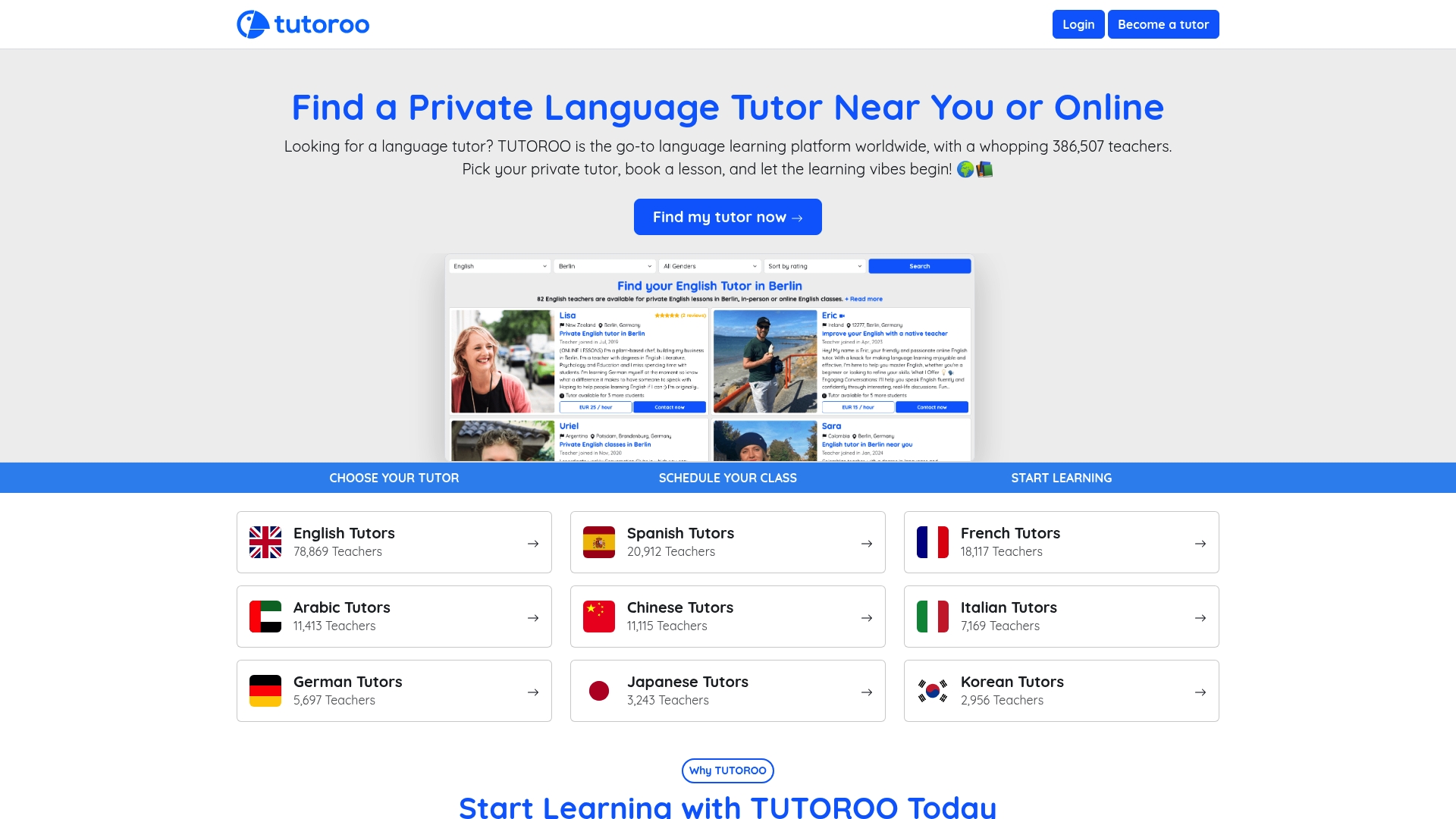
At TUTOROO, we believe every learner deserves a tutor who understands their unique motivational landscape and adapts to meet it. With over 386,000 language teachers across the world, covering languages from English and Spanish to Arabic, Chinese, French, and many more, there is a tutor here who can bring these strategies to life in a way that fits your goals. Whether you want to find a private language tutor for in-person sessions or connect with experienced English tutors online, TUTOROO makes it simple to start building the personalised learning experience you deserve. Your language journey opens doors to culture, connection, and opportunity. Let's make sure the motivation to walk through them never runs out.
Frequently asked questions
What is the most effective way to motivate language learners?
Personalising instruction to meet autonomy, competence, and relatedness needs is proven to boost motivation and engagement. Addressing these three psychological needs consistently produces more durable results than generic goal-setting advice.
How can boredom in language learning be reduced?
Mixing up activities, using real-life tasks, and incorporating learner interests help reduce boredom and keep engagement high. Research confirms that boredom strongly mediates the link between unmet psychological needs and disengagement, so addressing it directly is essential.
Do positive psychology interventions work for all language learners?
They boost confidence for many learners but must be tailored, as some individuals may not respond equally well to every technique. PERMA-aligned interventions work best when adapted to each learner's personality, preferences, and cultural background.
What is translanguaging and how does it help motivation?
Translanguaging allows learners to use all their languages in class, boosting motivation and vocabulary by connecting with their ideal self. Translanguaging-informed pedagogy validates the learner's full linguistic identity, which creates a more authentic and engaging learning environment.
Recommended
- Boost your language skills: Top expert tips for 2026
- Top language learning methods for faster, lasting results
- Private tutoring best practices for faster language success
- How to teach languages online: proven methods for success
- How to Stay Motivated to Learn: Build Routines, Set Goals, and Gamify Your Progress | Coursefy.ai Blog
- How to Practise Thai Everyday Without Living in Thailand - Thai Explorer