
TL;DR:
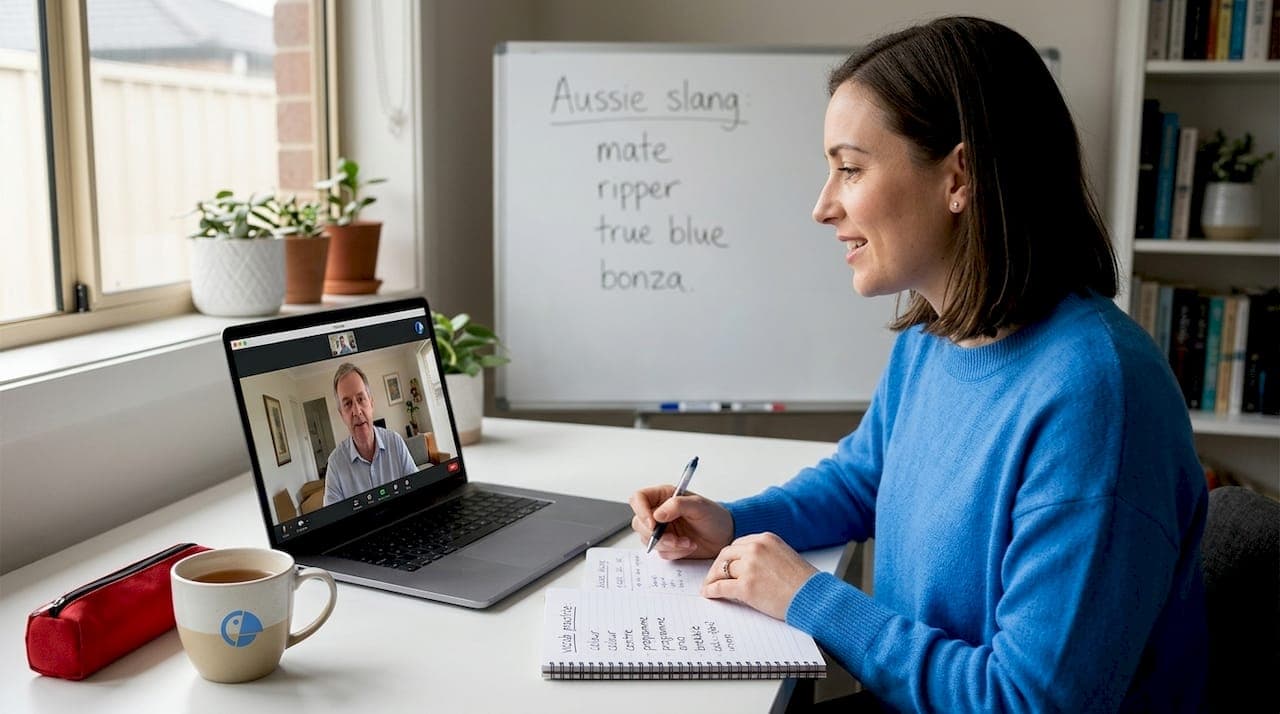
- Personalized one-on-one tutoring nearly doubles language learning gains compared to group classes.
- It offers real-time targeted feedback, adaptive pacing, and increased speaking time.
- Combining personalized lessons with consistent effort speeds progress and boosts motivation.
Many language learners assume that group classes are the gold standard, filling classrooms week after week hoping fluency will eventually follow. Yet one-on-one tutoring provides undivided attention, richer personalisation, and far better engagement than any group setting can offer. The evidence is striking, and it challenges everything most of us were taught about how language learning works. This article breaks down exactly why personalised lessons deliver such impressive results, what research says about the numbers, and how you can translate these insights into real, lasting progress.
Table of Contents
- How personalisation transforms language outcomes
- Key evidence: What research reveals about one-on-one tutoring
- Personalised learning in practice: Meeting your unique needs
- Are there limits? Comparing one-on-one, group, and AI-powered lessons
- How to get the most from your personalised lessons
- Why focusing on one-on-one is the real language-learning shortcut
- Start your personalised language journey today
- Frequently asked questions
Key Takeaways
| Point | Details |
|---|---|
| Individual attention drives results | Personalised lessons give you the full focus of your tutor, accelerating progress. |
| Better outcomes than group classes | Research shows one-on-one tutoring produces significantly stronger learning gains than group instruction. |
| Lessons adapt to your needs | Tutors customise sessions around your goals, style, and challenges so you stay motivated and see rapid improvement. |
| Practical, real-life application | The skills you gain are directly relevant to your reasons for learning—be it travel, work, or personal enrichment. |
How personalisation transforms language outcomes
After outlining the surprising benefits of personalisation, let's break down exactly how individualised instruction outpaces group-based learning.
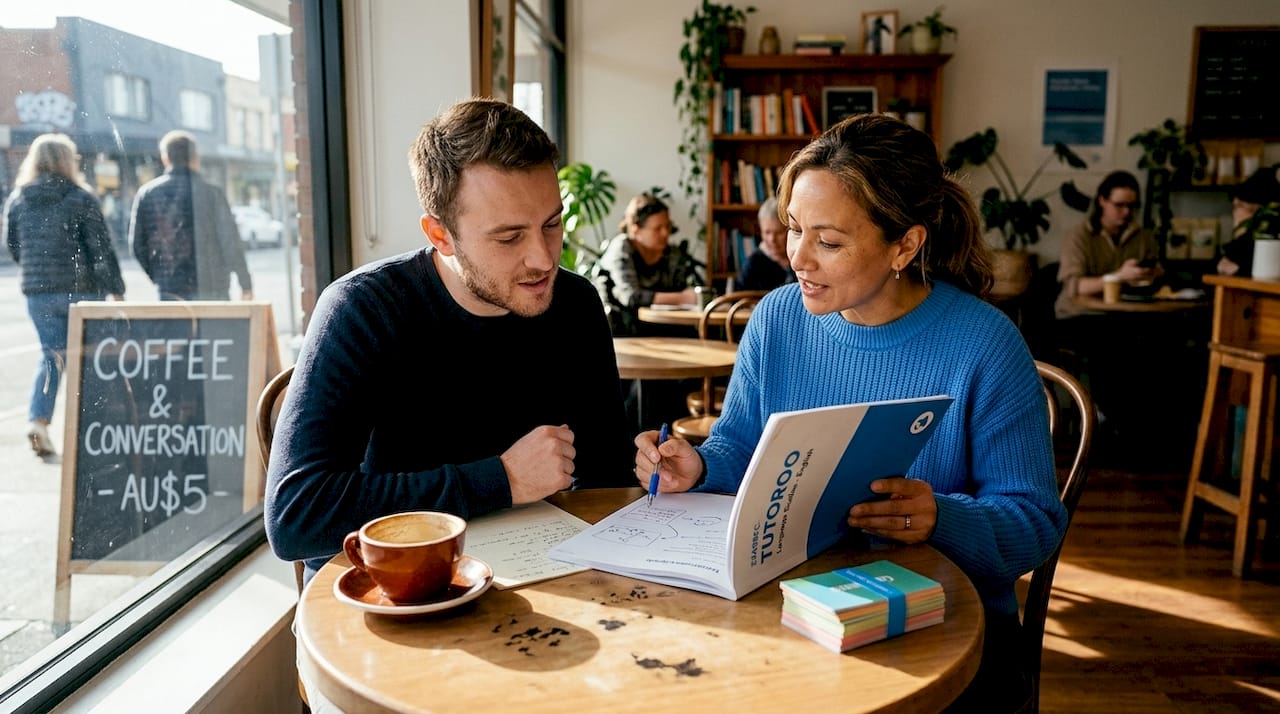
When you sit down with a private tutor, every minute of the session is about you. Your accent. Your vocabulary gaps. Your tendency to muddle verb tenses under pressure. A tutor spots these patterns quickly and adjusts on the spot, something no group class instructor can reasonably do for twenty students at once.
The impact is measurable. One-on-one tutoring nearly doubles literacy gains over group classes, and the landmark 2 Sigma research by educational psychologist Benjamin Bloom found that individually tutored students performed two full standard deviations above their group-taught peers. That is an extraordinary leap by any educational standard.
Understanding personalised learning gains requires thinking about three core mechanisms:
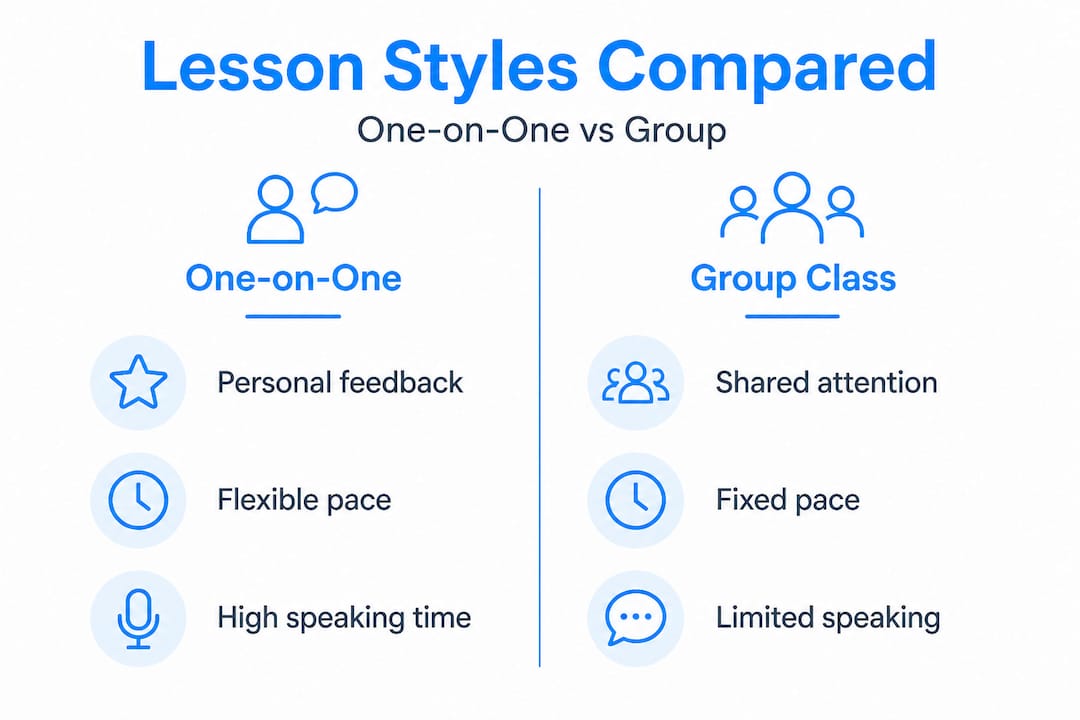
- Targeted feedback: Corrections happen in real time, stopping bad habits before they calcify.
- Adaptive pacing: Lessons slow down when a concept needs reinforcing and speed up when you're ready.
- Autonomy and confidence: You drive the direction, which builds motivation and a sense of genuine ownership over your progress.
Compare that experience with a typical group class, where you might speak for less than five minutes per hour, corrections are rare and delayed, and the curriculum moves at a pace suited to the group average rather than your specific needs.
"The most powerful shift in language learning happens not when a student studies harder, but when instruction finally meets them where they are."
One-on-one lessons boost language skills in ways that group formats structurally cannot replicate, simply because personalisation is built into every exchange.
| Feature | One-on-one tutoring | Group class |
|---|---|---|
| Speaking time per session | High (50%+ of lesson) | Low (5–10 minutes) |
| Feedback timing | Immediate | Delayed or absent |
| Curriculum flexibility | Fully customised | Fixed syllabus |
| Pacing | Adapted to learner | Slowest participant |
| Cultural context | Woven throughout | Often generic |
Key evidence: What research reveals about one-on-one tutoring
Now that we know the mechanisms, what does hard evidence show about the effectiveness of personalised lessons versus other options?
Benjamin Bloom's findings remain one of the most cited results in all of educational research. His 2 Sigma data showed average gains of about two standard deviations for tutored students, meaning a student who was previously performing at the 50th percentile in a group class would, under one-on-one instruction, reach the 98th percentile. Read that again. The 98th percentile. That is not a marginal improvement; it is a transformation.
For language learners, this translates directly into faster fluency milestones, higher test scores, and more confident conversation. Studies tracking IELTS preparation found especially compelling results. Learners using one-on-one methods consistently outpaced group cohorts on speaking and writing band scores. One recent study found that an AI-personalised system combined with teacher scaffolding produced gains of 1.45 IELTS bands alongside improved retention, showing that personalisation itself, whether delivered by human or hybrid means, is the critical variable.
Here's what the research landscape looks like when you map it out:
| Study / source | Format compared | Key outcome |
|---|---|---|
| Bloom (1984) | 1:1 vs. group | +2 standard deviations |
| Stanford (2024) | 1:1 vs. group | Nearly double literacy gains |
| PMC hybrid study | AI + teacher vs. group | +1.45 IELTS bands |
Four key findings from the research are worth highlighting:
- Percentile performance: Tutored learners consistently score at or near the 98th percentile compared with the 50th percentile for group-instructed peers.
- Speed to fluency: Learners in personalised sessions reach conversational milestones significantly faster than those in standard classes.
- Retention rates: Personalised instruction improves long-term retention because material is revisited at the learner's own pace.
- Motivation and persistence: Dropout rates are dramatically lower in one-on-one settings, likely because progress feels visible and achievable.
Group classes, by design, tend to move at the pace of the slowest participant. That means faster learners tread water while slower learners feel constant pressure. Neither experience is ideal. One-on-one tutoring sidesteps this entirely.
Personalised learning in practice: Meeting your unique needs
Armed with research insights, you might wonder how personalisation translates into your actual language learning journey.
The answer depends on who you are and what you need. Consider two very different learners. A business executive preparing for meetings in Tokyo needs precise, industry-specific Japanese vocabulary, polished email etiquette, and cultural nuance around hierarchy and formality. A university student planning a gap year in Barcelona needs conversational Spanish, regional slang, and the confidence to navigate everyday situations. The same group class cannot serve both of them equally. A private tutor can.
Personalised lessons adapt to individual learning styles, paces, and specific goals, which directly increases motivation and reduces the frustration that causes so many learners to quit. A visual learner benefits from mind maps, written dialogue, and colour-coded grammar tables. An auditory learner thrives with pronunciation drilling, listening exercises, and verbal repetition. A tutor observes these preferences and shapes every session accordingly.
The range of what a skilled tutor can personalise is broader than most learners realise:
- Content focus: Travel vocabulary, business jargon, academic writing, or casual conversation.
- Pronunciation drilling: Targeting specific sounds that native English speakers typically struggle with.
- Grammar scaffolding: Addressing the gaps in your existing knowledge rather than starting from zero.
- Resource selection: Choosing podcasts, films, reading materials, and exercises that match your interests.
- Homework design: Setting practice tasks that align with your weekly schedule and stamina.
Explore private lesson types to see just how varied personalised instruction can be, from conversation practice to structured grammar revision to exam preparation. Whether you're starting from scratch or pushing from beginner to advanced, a tutor adjusts the approach at every stage.
Pro Tip: Before your first session, write down three to five specific scenarios where you need to use the language. Hand this list to your tutor. Real-world context shapes lessons far more effectively than generic curriculum, and your tutor can build exercises directly around those situations.
Are there limits? Comparing one-on-one, group, and AI-powered lessons
No method is perfect for everyone, so let's see how the main options stack up so you can make an informed choice.
It is worth being honest here. One-on-one tutoring is not the right answer in every circumstance. Group classes are cheaper and sometimes more engaging socially, though they are notably slower for building genuine fluency. AI tools are improving rapidly and offer great supplementary practice, but they still need human oversight for motivation and cultural sensitivity.
| Format | Cost | Pacing | Fluency gains | Cultural context | Accountability |
|---|---|---|---|---|---|
| One-on-one tutoring | Higher | Fully adaptive | Highest | Rich and tailored | Strong |
| Group class | Lower | Fixed | Moderate | Generic | Moderate |
| AI-only app | Lowest | Self-directed | Variable | Limited | Low |
| AI + teacher hybrid | Moderate | Semi-adaptive | High | Moderate | Moderate |
Human tutors bring something that no algorithm can replicate. They notice when you are frustrated. They shift the tone of a lesson when you seem tired. They share cultural anecdotes that make vocabulary stick. They celebrate your breakthroughs in a way that feels genuinely encouraging.
"Technology can create the conditions for language learning, but human connection is what transforms exposure into fluency."
Small groups can work beautifully when they are highly structured and led by an expert facilitator, but even then, each participant receives only a fraction of the attention available in a one-on-one session. For learners with specific goals, tight timelines, or unique learning profiles, that fraction is rarely enough.
Consider top language learning apps as a useful supplement between sessions, not as a replacement for human instruction. Vocabulary apps, pronunciation tools, and grammar games all support retention. They work best when a tutor is directing the strategy around them.
The key limitations to be aware of with one-on-one tutoring:
- Cost: Private tuition is more expensive than apps or group classes, though the faster results often mean fewer total hours needed.
- Scheduling: Finding a time that suits both you and your tutor requires some flexibility.
- Tutor quality: Not every tutor is equally skilled. Choosing carefully matters.
How to get the most from your personalised lessons
Understanding why personalisation works is just the start. The next step is making sure you capitalise on these advantages.
The learners who see the fastest results are not necessarily the most naturally talented. They are the most intentional. They come prepared, they communicate clearly with their tutor, and they practise consistently outside of sessions. These habits compound over time.
Follow these six steps to maximise every lesson:
- Set measurable goals. "I want to hold a ten-minute conversation in French about my work" is a better goal than "I want to improve my French." Share specific goals with your tutor so they can build sessions around them.
- Communicate what works. If visual aids help you, say so. If you prefer less grammar explanation and more speaking practice, speak up. Your tutor wants this feedback.
- Practise between sessions. Even fifteen minutes a day of targeted practice outside lessons accelerates progress dramatically. Read, listen, speak, or write in your target language daily.
- Review lesson notes promptly. Reviewing within 24 hours of a session locks in new vocabulary and grammatical structures before they fade.
- Ask for adaptation. If a section of your lesson is not landing, say so in the moment. Personalised lessons should feel like a conversation, not a lecture.
- Track your progress. Keeping a simple journal of new words, phrases, and milestones keeps motivation high and gives your tutor useful data.
Personalised lessons support better knowledge retention and motivation precisely because they are responsive. Find tips for fast personalised language learning to complement these habits and explore best tutoring practices to get a deeper sense of how expert tutors structure sessions for maximum impact.
Pro Tip: Use a habit-tracking app or a simple notebook to log your streak of daily practice. Visual evidence of consistency is one of the most powerful motivators in language learning. Missing one day feels far more significant when you can see a 21-day streak on the line.
Why focusing on one-on-one is the real language-learning shortcut
Having covered the evidence and practicalities, it is worth reflecting on what really separates successful language learners from everyone else.
Most people who struggle with language learning are not failing because they lack talent or discipline. They are failing because their learning environment does not match their needs. They sit in group classes designed for the mythical average learner, or they tap through app exercises that never quite address the specific gaps holding them back. Progress stalls. Frustration builds. They conclude that they are simply "not a language person."
This is a damaging myth. We have seen learners transform completely once they switch to one-on-one instruction. The difference is not magic. It is the immediate, direct feedback that stops bad habits early. It is the tutor who notices that a learner is mispronouncing the same syllable every single time and corrects it before it becomes automatic. It is the lesson that pivots mid-session because the learner is struggling with one concept and needs a different approach.
Trendy methods come and go. Gamified apps, immersive podcasts, language exchange apps: all of these have genuine value as supplementary tools. But the learners who reach fluency fastest are almost always those who combine these tools with consistent, personalised, real conversations. They receive one-on-one teaching benefits that simply cannot be replicated in any other format.
Real progress is not about cramming more vocabulary. It is about maximising meaningful, corrected, motivated practice. A skilled tutor is the most efficient vehicle for that kind of growth. The research does not equivocate on this point, and neither do we.
Start your personalised language journey today
If you are ready to put these insights into action and move ahead in your language learning, here is where to begin.
TUTOROO connects you with over 386,000 skilled language tutors from around the world, each ready to build a personalised programme around your specific goals, learning style, and schedule. Whether you are preparing for a career opportunity, planning an overseas adventure, or simply pursuing the rich personal reward of speaking another language, a private tutor changes everything.
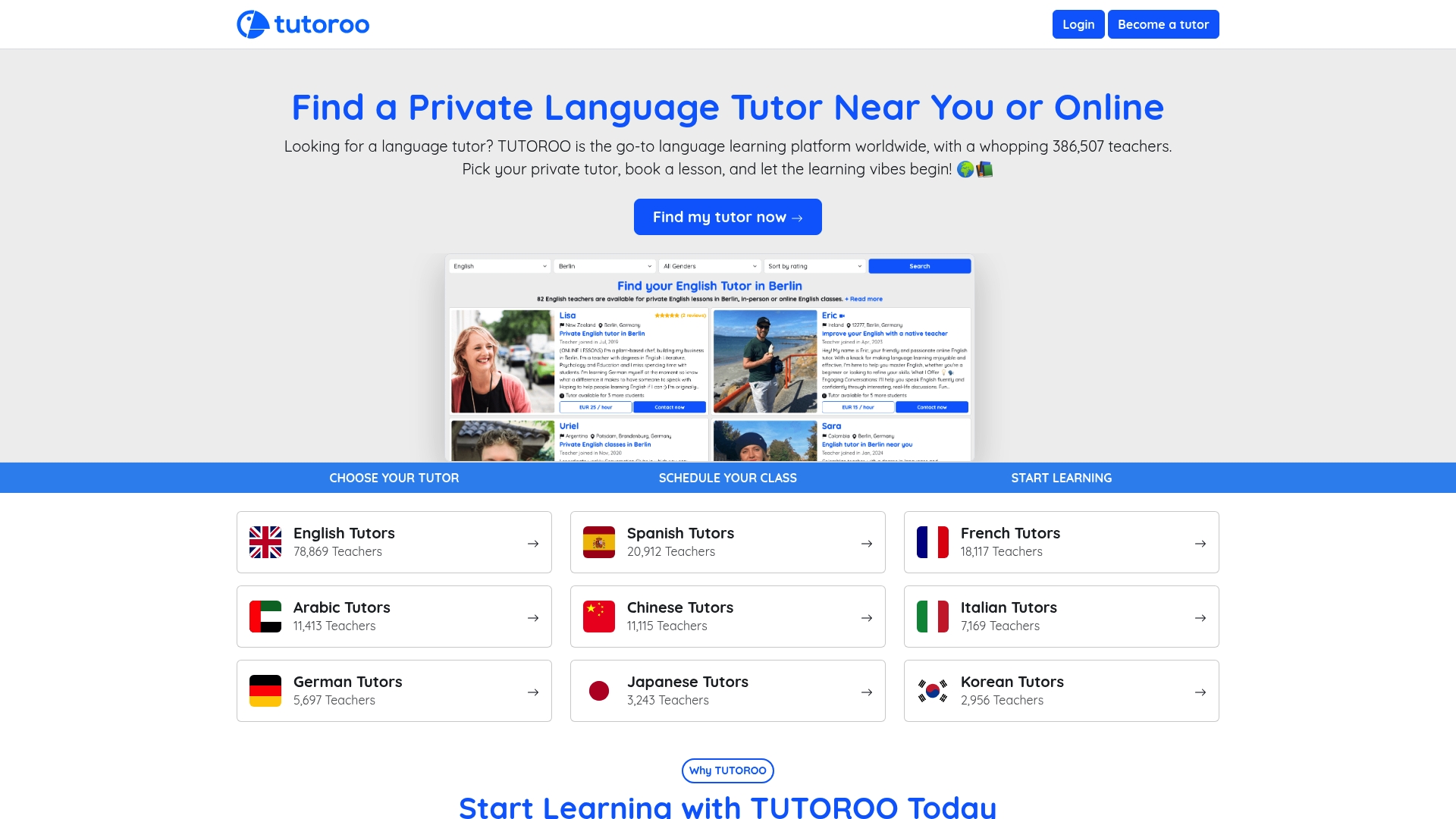
Starting is straightforward. Find a private language tutor by searching your target language, preferred location or online format, and availability. Browse profiles, read reviews, and send a message before committing. If you are learning Malay for travel, business, or cultural connection, explore Malay tutors online and find an expert who understands your goals. Your first session is just a click away, and the results speak for themselves.
Frequently asked questions
How quickly can I see results with personalised one-on-one lessons?
Most learners notice improved fluency and confidence within a few weeks of starting, with one-on-one tutoring consistently showing faster progress and better engagement than group classes. The speed depends on lesson frequency and how much you practise between sessions.
Are personalised lessons better than language learning apps?
Apps are excellent for supplementary practice, but human tutors provide tailored instruction, genuine accountability, and cultural insight that technology cannot fully replicate. Human tutors outperform AI-only systems, particularly when it comes to motivating learners and navigating cultural nuance.
Is one-on-one tutoring worth the extra cost?
Studies show tutored students average at the 98th percentile compared with the 50th percentile for group-instructed peers, making the investment highly worthwhile for learners who are serious about fluency or have specific skill goals to achieve.
Can personalised lessons help with specialised language goals?
Absolutely. One-on-one sessions are particularly effective for career-specific vocabulary, exam preparation, and unique learning styles because personalised lessons adapt to individual goals, which directly increases motivation and reduces the frustration of a one-size-fits-all approach.
Recommended
- Why one-on-one lessons boost language skills: 3x faster
- Why learn a language one-on-one: 3x faster results
- One-on-one tutoring: personalised learning gains explained
- Private tutors: the key to faster language mastery
- Why audio Spanish lessons fast-track real-life conversation. Why use audio Spanish lessons.
- Private Thai lessons in Singapore: fluency faster