

Teaching languages online has transformed how millions of learners worldwide access personalised instruction, yet many tutors struggle to replicate the engagement and progress of face-to-face lessons. Whether you're preparing students for travel, exams, or advanced fluency, the shift to digital platforms demands fresh strategies and purposeful planning. This guide walks you through research-backed techniques, practical preparation steps, and proven methods to deliver one-on-one online language lessons that genuinely accelerate learning. You'll discover how to assess learners effectively, choose the right tools, manage common challenges, and measure your teaching success with confidence.
Table of Contents
- Key Takeaways
- Understanding the essentials before you teach online
- Techniques and methodologies to maximise online language teaching
- Managing challenges and optimising learner engagement in one-on-one sessions
- Measuring success and improving your online teaching practice
- Discover personalised online language tutoring with TUTOROO
- Frequently asked questions
Key Takeaways
| Point | Details |
|---|---|
| Personalised one on one learning | Online one on one lessons can significantly speed learning when goals and technology readiness are aligned, with clear milestones and regular practice. |
| Upfront learner assessment | Begin with a clear assessment of language level and motivation to tailor lesson design and materials from day one. |
| Tech readiness checklist | Test your platform, internet connection, microphone and screen sharing before lessons and have backup options in place. |
| Immediate speaking focus | Start speaking and pronunciation practice from the first lesson with guided dialogues and real time feedback. |
| Spaced retrieval emphasis | Use spaced retrieval to reinforce vocabulary over time rather than cramming it into a single session. |
Understanding the essentials before you teach online
Successful online language teaching begins long before your first video call. You need a clear picture of your learner's current abilities, specific goals, and the technology that will support your sessions. Skipping this groundwork leads to mismatched lessons, frustrated students, and wasted time.
Start by assessing your learner's language level through a structured conversation or placement test. Ask direct questions about their motivation: are they preparing for a holiday, an exam, or professional advancement? Understanding whether they need travel phrases, exam prep, consistent short homework, and recorded sessions shapes every aspect of your lesson design. A business professional aiming for fluency requires different activities than a beginner learning basic greetings for a trip.
Next, identify and test your tech setup. Reliable platforms must support video, audio, digital whiteboards, and session recording. Test your internet connection, microphone quality, and screen-sharing capabilities before lessons begin. Have backup options ready in case your primary platform fails. Recording sessions allows learners to revisit challenging concepts and reinforces retention between lessons.
Set clear, measurable objectives for each session and the overall programme. Break long-term goals into weekly milestones. Assign regular homework or practice tasks outside sessions to maintain momentum. Short, consistent practice beats sporadic marathon sessions every time.
Pro Tip: Create a pre-lesson checklist covering tech tests, lesson materials, and learner goals. This routine saves time and builds professionalism.
Consider exploring online tutoring examples that boost language fluency to see how other tutors structure their lessons effectively. Preparation isn't glamorous, but it's the foundation of every successful online teaching relationship.
Techniques and methodologies to maximise online language teaching
Once preparation is complete, the real work begins: choosing and applying teaching methods that genuinely accelerate learning. Research consistently shows that certain approaches outperform others in online environments. Your job is to select techniques that match your learner's needs and deliver measurable progress.
Immersive virtual environments, interactive games, focus on speaking and pronunciation from day one, spaced retrieval practice, and interaction with corrective feedback form the core of effective online language teaching. Immersion doesn't require physical travel. Use virtual reality tools, authentic videos, and role-play scenarios to surround learners with the target language. Interactive games transform repetitive drills into engaging challenges that hold attention and reinforce vocabulary.
Speaking and pronunciation must start immediately, even with absolute beginners. Waiting until learners feel "ready" wastes precious time. Encourage oral practice from lesson one through guided dialogues, pronunciation exercises, and real-time conversation. Mistakes are learning opportunities, not failures.

Spaced retrieval practice ranks as the top research-backed technique for long-term retention. Instead of cramming vocabulary in one session, revisit key words and structures at increasing intervals. Task repetition works similarly: have learners perform the same communicative task multiple times with variations. Each repetition builds confidence and fluency.
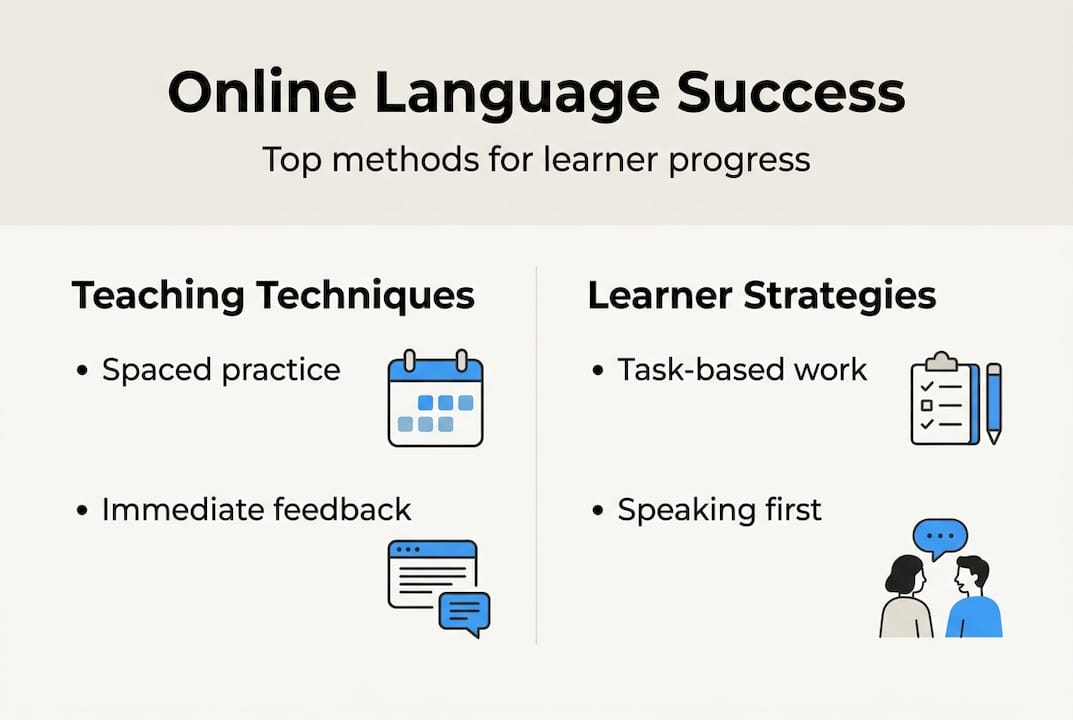
Provide immediate corrective feedback during speaking activities. Don't let errors fossilise. When a learner makes a mistake, gently correct it on the spot and have them repeat the correct form. This real-time adjustment prevents bad habits from taking root.
| Teaching Method | Application | Expected Outcome |
|---|---|---|
| Spaced retrieval practice | Review vocabulary at 1 day, 3 days, 1 week intervals | 80% retention after 4 weeks |
| Task repetition | Same role-play performed 3 times with feedback | 40% fluency improvement |
| Corrective feedback | Immediate error correction during speaking | 60% reduction in recurring mistakes |
| Input flood | Expose learners to target structures 10+ times per session | Natural pattern recognition within 3 lessons |
Task-based learning shifts focus from grammar rules to meaningful communication. Design activities where learners must use the language to accomplish a goal: booking a restaurant, giving directions, or negotiating a price. Input flood techniques expose learners to target structures repeatedly in context. Pushed output activities require learners to stretch beyond their comfort zone and produce language they haven't fully mastered yet.
Pro Tip: Record a short video demonstrating pronunciation for learners to practise between sessions. Asynchronous practice multiplies your teaching impact.
For younger learners, fun tutor activities for kids' language learning offer age-appropriate variations of these core methods. The principles remain consistent: immersion, interaction, feedback, and repetition drive results regardless of age or proficiency level.
Managing challenges and optimising learner engagement in one-on-one sessions
Even with perfect preparation and proven methods, online teaching presents unique challenges. Technical disruptions, learner anxiety, and motivation dips threaten progress. Anticipating these obstacles and having strategies ready keeps lessons on track and learners engaged.
Tech barriers, participation anxiety, and delayed feedback require balancing synchronous and asynchronous approaches, with engagement mediating both enjoyment and outcomes. Prepare backup plans for common tech failures: know how to switch platforms quickly, have offline activities ready, and maintain a list of alternative communication channels. When video freezes or audio cuts out, don't panic. Calmly move to your backup option and continue the lesson.
Manage cognitive load by incorporating breaks and reformulating tasks when learners show signs of fatigue. Online sessions can feel more intense than face-to-face lessons because learners stare at screens without physical movement. Build in short breaks every 20 minutes for adult learners, more frequently for children. Use these moments for quick physical activities or informal chat.
Learner anxiety often runs higher online than in person. Some students feel self-conscious speaking on camera or worry about technical mistakes. Create a supportive atmosphere by normalising errors, celebrating small wins, and sharing your own language-learning struggles. Use icebreakers and casual conversation to build rapport before diving into formal instruction.
Building community and relationships via cultural exchange and peer activities addresses digital literacy gaps and reduces the isolation many online learners experience. Even in one-on-one sessions, you can foster community by connecting learners with language exchange partners, sharing stories from other students (with permission), or organising occasional group events.
Mix synchronous sessions for real-time interaction with asynchronous tasks for reflection and consolidation. Live lessons excel at speaking practice, immediate feedback, and dynamic conversation. Asynchronous work suits reading, writing, and self-paced review. This balance prevents burnout and accommodates different learning preferences.
- Watch for disengagement signals: short responses, lack of eye contact, or declining homework completion
- Adjust lesson pace and difficulty based on real-time feedback
- Incorporate learner interests and cultural topics to maintain relevance
- Use positive reinforcement consistently to build confidence
- Address technical issues proactively rather than hoping they resolve themselves
"The most effective online language teachers don't just deliver content. They create an environment where learners feel safe to experiment, make mistakes, and gradually build competence through guided practice and genuine encouragement."
For learners studying independently, strategies to stay motivated when learning a language alone complement your teaching approach. Share these resources to support learners between sessions and reinforce the habits that lead to long-term success.
Measuring success and improving your online teaching practice
Effective teaching requires constant verification and adjustment. You can't improve what you don't measure. Tracking progress, gathering feedback, and comparing outcomes against benchmarks ensures your methods deliver real results and guides your professional development.
Track progress through regular speaking, reading, and listening assessments. Don't rely solely on informal observation. Use structured tasks that reveal specific competencies: can the learner handle a phone conversation, understand a news article, or follow complex instructions? Document these assessments to show concrete progress over time.
Online language learning can match or exceed face-to-face outcomes, with meta-analyses confirming modestly better performance online. This research validates your online teaching approach and helps combat the misconception that digital lessons are inferior. Share these findings with sceptical learners or parents who question online instruction's effectiveness.
| Assessment Method | Frequency | Purpose |
|---|---|---|
| Conversational fluency check | Every 4 lessons | Measure speaking progress and identify gaps |
| Vocabulary retention test | Every 6 lessons | Verify long-term memory and spaced practice effectiveness |
| Listening comprehension task | Every 5 lessons | Track ability to understand native speakers |
| Written composition | Every 8 lessons | Assess grammar accuracy and written expression |
Use learner feedback to personalise future lessons and address weaknesses. After every few sessions, ask direct questions: What's working well? What feels too difficult or too easy? Which activities help most? This input reveals blind spots and shows learners you value their experience.
Maintain detailed records of session content, homework completion, and assessment results. This documentation serves multiple purposes: it tracks accountability, identifies patterns in learner behaviour, and provides evidence of progress for learners who feel stuck. Digital tools make record-keeping efficient, but even simple spreadsheets work.
Continuously update your methods with the latest research and technologies. Language teaching evolves rapidly, and staying current separates exceptional tutors from adequate ones. Follow academic journals, join online teaching communities, and experiment with new tools and techniques.
- Review session recordings monthly to identify your teaching patterns and areas for improvement
- Compare learner outcomes against initial goals and adjust timelines or methods as needed
- Seek feedback from fellow tutors or mentors to gain outside perspective
- Test new activities on a small scale before implementing them across all learners
- Celebrate both learner achievements and your own professional growth milestones
Explore online tutoring examples that boost language fluency to see how other educators measure and communicate success. Learning from peers accelerates your development and exposes you to fresh approaches you might not discover independently.
Discover personalised online language tutoring with TUTOROO
Applying these proven teaching methods becomes easier when you connect with the right learners through a trusted platform. TUTOROO brings together over 386,000 language teachers and students worldwide, creating a thriving community focused on personalised, one-on-one instruction.
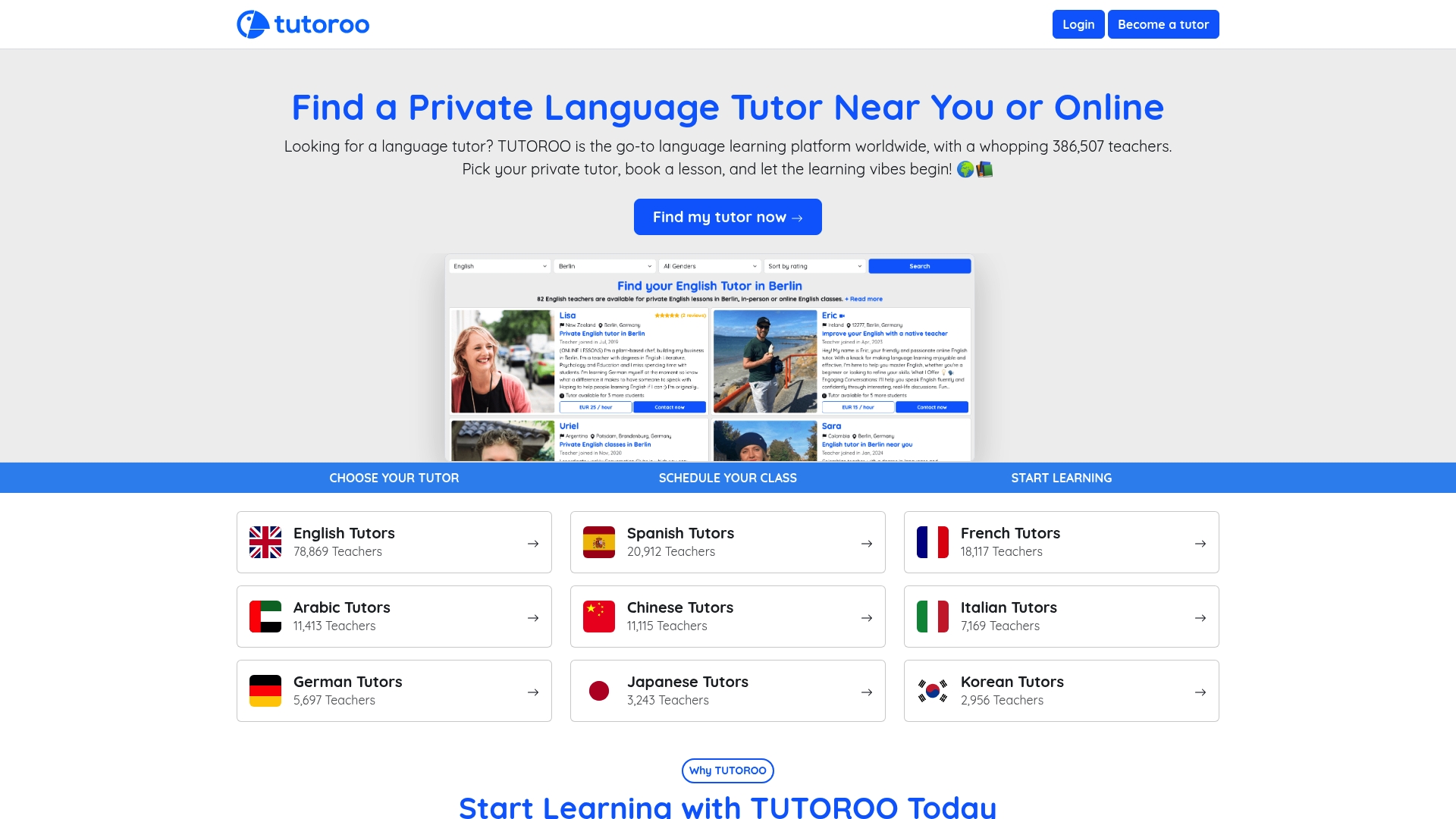
Whether you're an experienced tutor seeking new students or a learner searching for expert guidance, TUTOROO simplifies the matching process. The platform supports flexible scheduling, secure payments, and direct communication between tutors and students. You can learn languages online with private tutors who specialise in your target language and teaching approach.
Find English tutors online for exam preparation, business communication, or conversational practice. Explore Japanese tutors online if you're preparing for travel or professional opportunities in Japan. TUTOROO's global reach means you can access native speakers and certified teachers regardless of your location or time zone. The platform handles the logistics so you can focus on learning and teaching effectively.
Frequently asked questions
What equipment do I need to teach a language online?
A stable internet connection, webcam, and quality microphone form the essential foundation for online language teaching. Your platform should support video calls, screen sharing, and interactive tools like digital whiteboards. Optional equipment includes recording software for session review and a headset to improve audio clarity and reduce background noise.
How can I keep language learners motivated during online lessons?
Incorporate interactive tasks, cultural elements, and varied activities that connect to learners' real-world interests and goals. Set clear, achievable milestones and offer specific, positive feedback regularly. Building a supportive relationship through consistent encouragement and celebrating small wins maintains motivation better than generic praise or harsh criticism.
What are the best teaching methods for beginners online?
Focus on speaking and pronunciation from day one using real-life scenarios like ordering food or introducing yourself. Use spaced retrieval practice to reinforce vocabulary at increasing intervals rather than cramming. Interactive games and visual aids help beginners grasp concepts without relying heavily on grammar explanations they might not understand yet.
How do I balance synchronous and asynchronous learning effectively?
Use synchronous video sessions for speaking practice, immediate feedback, and dynamic conversation that requires real-time interaction. Assign asynchronous tasks like reading articles, watching videos, or completing written exercises for reflection and consolidation. This combination provides flexibility while maintaining the personal connection that drives engagement and accountability.
Recommended
- Online tutoring examples to boost language fluency
- TUTOROO Blog - How to Stay Motivated Learning a Language Alone | TUTOROO
- TUTOROO Blog - Teach Kids a Second Language with Fun TUTOROO Tutor Activities
- TUTOROO Blog - Do You Speak Slovenian? Learn or Teach the Slovenian Language with TUTOROO
- learn languages with music