

TL;DR:
- Set clear, measurable goals and track progress to stay motivated and focused.
- Use active recall and spaced repetition techniques for durable vocabulary retention.
- Combine contextual, audio, and interactive practice methods for more effective learning.
Choosing the right language learning strategy in 2026 feels overwhelming. Hundreds of apps, methods, and expert opinions compete for your attention, and not all of them actually work. Whether you are preparing for a proficiency exam, planning a trip abroad, or simply chasing fluency for personal growth, you deserve an approach grounded in real evidence. This article cuts through the noise and presents a focused set of evidence-backed tips to help you learn faster, retain more, and stay motivated throughout your journey.
Table of Contents
- Understand your goals and tracking progress
- Embrace active recall and spaced practice
- Mix methods: Integrate contextual, audio, and interactive practice
- Apply pretesting and intelligent guessing techniques
- What most learners get wrong about mastering a language
- Take your language learning further with personalised tutoring
- Frequently asked questions
Key Takeaways
| Point | Details |
|---|---|
| Define measurable goals | Clear, trackable milestones keep you motivated and speed up language learning. |
| Prioritise active recall | Retrieving information boosts memory and fluency far more than passive review. |
| Mix your methods | Combining reading, listening, speaking, and smart guessing leads to lasting language skills. |
| Use science-backed techniques | Techniques like spacing, contextual input, and pretesting are proven to improve results. |
Understand your goals and tracking progress
Every effective language learning journey starts with a clear destination. Without defined goals, it is easy to drift between apps and textbooks, feeling busy but making little real progress. Ask yourself why you are learning the language. Is it for an upcoming trip, a professional opportunity, or a formal exam like IELTS or DELF? Your answer will shape every decision you make about how and what to study.
Once you know your purpose, the next step is setting measurable milestones. Vague goals like "become fluent" rarely lead anywhere useful. Instead, break your journey into concrete steps:
- Define your proficiency target. For travel or exams, target CEFR B1 or B2 and track your progress concretely through recordings, word counts, and mock tests.
- Record yourself speaking every two to four weeks. Listening back reveals growth you might otherwise miss and highlights specific areas to improve.
- Log new vocabulary daily. A simple spreadsheet tracking word counts gives you a tangible sense of momentum.
- Run mock tests monthly. Timed practice under exam conditions builds confidence and exposes weak spots before they matter most.
"Progress that is invisible feels non-existent. Making your growth measurable keeps motivation alive when the novelty of learning fades."
Tracking tools do not need to be complicated. Voice memos on your phone, a vocabulary notebook, or a shared document work just as well as any premium app. The key is consistency. You can explore personalised language learning tips to find approaches that match your individual style and schedule.
Pro Tip: Set a "checkpoint week" every month where you review recordings, test yourself on recent vocabulary, and adjust your study plan. This small habit prevents stagnation and keeps your efforts aligned with your actual goals.
Visible progress is one of the most powerful motivators in language learning. When you can see exactly how far you have come, pushing through the harder weeks becomes much easier.
Embrace active recall and spaced practice
Not all study methods are created equal. There is a significant difference between passively reviewing your notes and actively retrieving information from memory. That distinction matters enormously for how well you retain what you learn.
Active recall means testing yourself on material before you feel ready, forcing your brain to reconstruct knowledge rather than simply recognise it. Spaced repetition means revisiting that material at increasing intervals over time, so information moves from short-term to long-term memory. Together, these two techniques form the most evidence-supported approach to vocabulary acquisition available today.

| Method | Retention after one week | Retention after one month |
|---|---|---|
| Passive rereading | Low | Very low |
| Active recall only | Moderate | Moderate |
| Spaced repetition + recall | High | High |
| Contextual input + audio + recall | Very high | Very high |
Spaced retrieval practice enhances fluency and vocabulary retention, particularly for beginners who are still building their foundational word bank. The research is clear: retrieving a word is far more powerful than re-reading it.
For daily application, tools like Anki or purpose-built flashcard decks let you schedule reviews automatically. But you do not need an app to apply the principle. Quizzing yourself with handwritten cards, asking a study partner to test you, or simply covering your notes and trying to recall key points all produce the same cognitive effect.
A combination of contextual input, active recall, spacing, and audio consistently ranks as the highest-scoring approach for retention, achieving a 94 out of 100 in recent methodology evaluations. That is a remarkable result and a strong signal about where your study time is best spent.
- Use flashcard apps to build and review vocabulary decks daily
- Test yourself before looking up answers, even when guessing feels uncomfortable
- Review new words after one day, then three days, then one week
- Speak words aloud during recall sessions to activate auditory memory
Pro Tip: After watching a video in your target language, immediately close it and write down every word or phrase you remember. This retrieval exercise is more effective than rewatching the same content twice.
Exploring methods for lasting results can help you build a daily practice that uses these techniques consistently.
Mix methods: Integrate contextual, audio, and interactive practice
Relying on a single learning tool, no matter how good it is, limits your progress. Language lives across multiple sensory channels: reading, listening, speaking, and writing. Engaging all of them creates richer, more durable memories and prepares you for real-world communication.
Contextual learning means encountering words and grammar inside meaningful, authentic situations rather than in isolated lists. When you read a short story in French, hear a podcast in Mandarin, or watch a drama in Korean with subtitles, your brain connects vocabulary to emotion, situation, and sound simultaneously. That multidimensional memory is far stickier than a definition on a flashcard alone.
Contextual input combined with audio achieves a 94 out of 100 retention score in methodology comparisons, making it the strongest blended approach available to modern learners.
| Learning mode | Best for | Example activity |
|---|---|---|
| Reading | Grammar and vocabulary | Graded readers, news articles |
| Listening | Pronunciation and rhythm | Podcasts, audiobooks |
| Speaking | Fluency and confidence | Conversation partners, tutors |
| Writing | Accuracy and structure | Journaling, essay practice |
- Listen to a short podcast episode in your target language each morning
- Read one page of a graded reader before bed
- Practise speaking aloud, even if only narrating your daily routine to yourself
- Write a five-sentence journal entry in your target language three times per week
Interactive technologies amplify this approach. Video chat with native speakers, interactive story platforms, and shadowing exercises, where you mimic a native speaker's rhythm and intonation in real time, all push you well beyond what passive content consumption can offer.
Pro Tip: Pair a listening activity with speaking immediately afterwards. After a five-minute podcast, try to summarise what you heard aloud in the target language. This transfers passive input into active output and solidifies comprehension.
Learning how to integrate innovative online teaching approaches into your personal study plan opens up a genuinely exciting range of possibilities.
Apply pretesting and intelligent guessing techniques
Most learners wait until they feel confident before attempting a quiz or test. Research suggests this is exactly backwards. Attempting to answer questions before you have fully learned the material, a process called pretesting, actually improves how well you remember the correct answer afterwards.
Pretesting works because the act of guessing activates prior knowledge and creates a memory gap that the brain works to fill. When the correct answer arrives, it sticks more firmly because your brain was already searching for it. This is sometimes called the "generation effect," and it is one of the most robust findings in cognitive science.
Here is how to apply it in your language study:
- Try matching a new word to an image before reading its translation.
- Attempt to fill in a blank sentence before checking the grammar rule.
- Guess how a word might be pronounced before listening to a native speaker.
- Predict the meaning of a paragraph heading before reading the full text.
"Guessing is not a sign of not knowing. It is an active, effortful process that prepares the mind to receive and retain new knowledge."
Pretesting and guessing exercises, such as Duolingo-style word-image matching, improve vocabulary recall significantly, with effect sizes ranging from Cohen's d of 0.18 to 0.67 compared to traditional reading.
- Design short five-question quizzes at the start of each study session covering material from the previous session
- Use fill-in-the-gap exercises before reviewing grammar explanations
- Play word-to-image matching games for new vocabulary sets
- Challenge yourself to produce a sentence using a new word before seeing an example sentence
You can discover more about how international platforms for faster learning incorporate these evidence-based approaches into structured programmes.
What most learners get wrong about mastering a language
Here is something worth saying plainly: most learners overestimate what apps can do for them. Gamified tools are genuinely useful for building vocabulary exposure and daily habits, but they create a particular trap. The satisfaction of completing streaks and earning badges can feel like progress when it is actually producing only passive recognition. You recognise a word when you see it, but you cannot retrieve it when you need it in a real conversation.
Retrieval, not recognition, builds fluency, and gamified apps used alone tend to reinforce the easier skill while leaving the harder one underdeveloped.
The learners who progress fastest are not necessarily the ones who study the longest. They are the ones who seek genuine feedback, speak before they feel ready, and regularly test themselves in uncomfortable conditions. Motivation also tends to be far more durable when it is anchored to a specific, meaningful goal rather than a daily notification.
Working with a real person, whether a tutor, a language exchange partner, or a coach, introduces the accountability and spontaneity that no app can replicate. Exploring step-by-step online tutoring can show you how guided human interaction accelerates what self-directed study alone cannot achieve.
Take your language learning further with personalised tutoring
The strategies in this article can genuinely transform your progress. But even the best self-study plan has limits, and that is where personalised guidance changes everything.
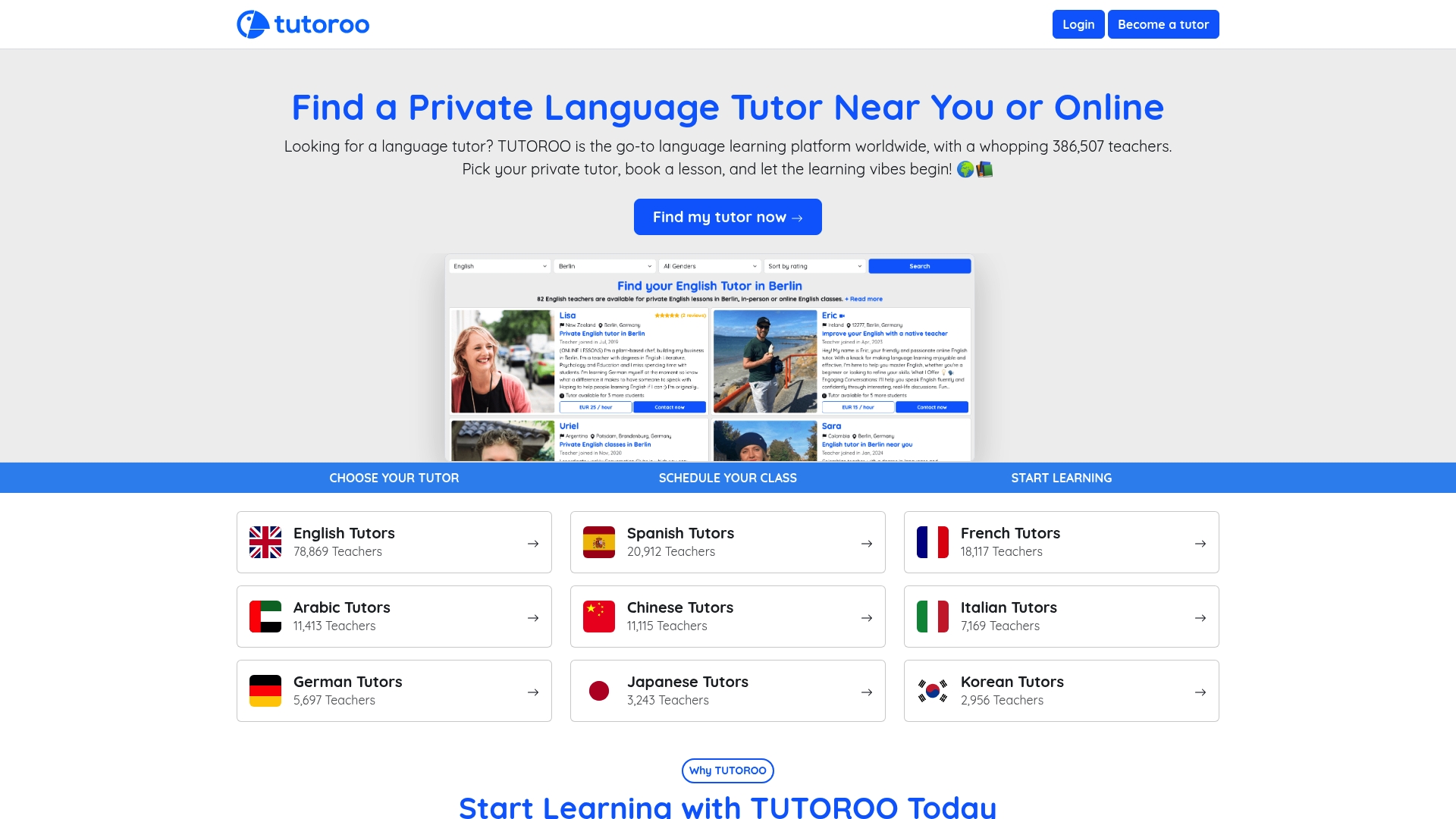
Working with private language tutors through TUTOROO gives you access to over 386,000 qualified teachers across dozens of languages. A skilled tutor applies the very techniques covered here, including active recall, contextual input, and targeted feedback, in real time and tailored specifically to your goals. Whether you are building confidence with English tutors or exploring less commonly taught languages like those offered by Lebanese tutors, TUTOROO connects you with the right expert to accelerate your journey.
Frequently asked questions
What is the best way to remember vocabulary long-term in 2026?
Spaced retrieval practice enhances vocabulary retention significantly, so combine scheduled recall sessions with real-world listening and contextual reading to make new words stick deeply and stay usable.
How do I set a realistic language learning goal?
Decide whether you need conversational confidence, exam success, or travel basics, then target CEFR B1 or B2 to give yourself a clear, trackable standard to work towards.
Are language apps enough for fluency?
Apps build useful habits, but gamified apps used alone tend to develop passive recognition rather than active fluency, so speaking practice and human interaction remain essential.
How can I make studying more fun and effective?
Introduce pretesting and guessing exercises like word-image matching into each session. These proven techniques make learning active, engaging, and far more memorable than passive review alone.