

TL;DR:
- Research supports using engaging activities like extensive reading and spaced retrieval for effective language learning.
- Personal interest, skill focus, and enjoyment are key criteria for selecting the most beneficial practice activities.
- Combining activities suited to your style, environment, and goals, while maintaining consistent, enjoyable practice, leads to success.
Choosing the right language practice activities can feel overwhelming. There are hundreds of methods, apps, worksheets, and techniques competing for your attention, and not all of them deliver real results. The good news is that research actually points to a clear set of strategies that work. Evidence-based activities like extensive reading and spaced retrieval have demonstrated meaningful learning gains, with effect sizes ranging from moderate to large depending on how they are applied. Knowing which activities to prioritise means spending less time guessing and more time genuinely improving, all while keeping the process engaging and worthwhile.
Table of Contents
- How to choose the right language practice activity
- Top language practice activities backed by research
- Comparing practice methods: What suits your needs?
- Tailoring activities for self-study, tutoring, and group settings
- Our perspective: Why fun and fitting activities always win
- Level up your language skills with expert support
- Frequently asked questions
Key Takeaways
| Point | Details |
|---|---|
| Personal interest matters | Activities tied to your interests are more motivating and lead to better long-term language progress. |
| Mix activity types | Blending speaking, reading, writing, and listening tasks builds balanced skills and prevents boredom. |
| Research-backed methods work | Tasks like spaced repetition, role-plays, and extensive reading have strong evidence for boosting results. |
| Adapt to your situation | Customise each activity for solo, tutor, or group settings to maximise value and engagement. |
| Enjoyment drives consistency | Prioritising fun, engaging activities increases your motivation and helps make language practice a habit. |
How to choose the right language practice activity
Once you understand why intentional selection matters, you can start using a practical framework to evaluate which activities are the best fit for you. Not every popular method suits every learner, and that gap between hype and genuine helpfulness is where many learners lose motivation early on.
When assessing an activity, consider these key criteria:
- Personal interest: An activity you actually enjoy is one you will stick with. Choosing topics and formats that genuinely interest you removes the friction of forcing yourself to study.
- Skill focus: Are you working on speaking, listening, reading, or writing? Match the activity to the skill you need most right now.
- Level appropriateness: Activities pitched too far above or below your current level waste time and erode confidence.
- Variety: Mixing different activity types prevents boredom and strengthens multiple skill areas at once.
- Interaction and feedback: Activities that include a response component, whether from a tutor, a partner, or even a language app, accelerate learning by showing you where you are going wrong.
- Enjoyment: If it feels like punishment, you will stop. Enjoyment is not a luxury in language learning. It is a requirement for consistency.
Research supports personalising tasks and media based on individual interest across all levels. Beginners benefit most from structured scaffolding, meaning clear instructions, predictable formats, and lots of support. Advanced learners, on the other hand, grow fastest through what researchers call pushed output, which means being gently challenged to produce language just beyond their current comfort zone, and through negotiation of meaning during genuine communication.
When you are studying solo, you can tailor activities using digital tools, journals, and language learning apps. When working with a tutor, you have the added benefit of someone who can adjust difficulty in real time and provide the kind of feedback that is hard to replicate independently. Explore personalised language tips to get a clearer sense of how customisation accelerates results.

Pro Tip: Tell your tutor or study partner your specific goals upfront. Accountability transforms even a casual conversation practice session into a measurable step forward.
Top language practice activities backed by research
Armed with your framework, here are the top activity options that research consistently supports. These are not just popular choices. They are methods with real evidence behind them.
-
Role-plays and simulations: Practising real-world scenarios, such as ordering at a restaurant, asking for directions, or handling a job interview, builds the automatic responses needed for genuine fluency. These activities mirror authentic communication and reduce the gap between classroom learning and real life.
-
Information gap tasks: In these exercises, two learners each hold different pieces of information and must communicate to complete a shared task. This creates a genuine reason to speak, listen, and negotiate meaning, which is exactly the kind of interaction that research links to faster acquisition.
-
Debates and structured discussions: These push learners to organise their thoughts, argue a position, and respond to counterarguments in real time. They are excellent for intermediate and advanced learners looking to sharpen both fluency and accuracy.
-
Collaborative storytelling: Working with a partner or group to build a narrative encourages creativity, vocabulary use, and listening skills simultaneously. It also makes practice memorable and fun.
-
Extensive reading: This means reading widely and pleasurably at or slightly below your level. Think graded readers, news apps in your target language, or novels you already love translated into the language you are learning.
-
Spaced retrieval and flashcards with mnemonics: Reviewing vocabulary at increasing intervals, rather than cramming, leads to significantly better long-term retention. Combining mnemonics with spaced repetition has shown that learners recalled an average of 27.23 out of 80 words after one week, far outperforming traditional study methods.
Pair and group activities like role-playing, information gap tasks, debates, and collaborative storytelling are particularly powerful because they promote the kind of real-world communication that classroom drills rarely replicate. They create authentic reasons to use the language, which is exactly the condition under which acquisition happens most naturally.
"The most effective language activities are those that create genuine communication needs. When learners have a real reason to speak, listen, and negotiate meaning, acquisition follows."
For additional inspiration on activities that experienced educators swear by, check out these language expert tips or browse practical online fluency activities to see what works in real lessons.
Pro Tip: Do not limit yourself to one modality. Combining reading, speaking, listening, and writing within a single theme, such as watching a short video clip, discussing it with a tutor, then writing a brief summary, reinforces vocabulary and ideas from multiple angles at once.
Comparing practice methods: What suits your needs?
With these activities in mind, a direct comparison can help you narrow down your selection based on your learning style, goals, and available resources.
Two of the most discussed teaching frameworks in language education are TBLT (Task-Based Language Teaching) and PPP (Present, Practise, Produce). TBLT prioritises meaning and fluency first, asking learners to complete real tasks before formally studying the grammar or vocabulary involved. This approach aligns closely with how researchers believe languages are naturally acquired. PPP, by contrast, presents new language forms first, then guides learners through controlled practice before asking them to produce it freely. PPP has been criticised for being overly teacher-controlled, but it remains effective when introducing new grammatical structures, particularly when adapted into formats like TTT (Test, Teach, Test).
Similarly, extensive reading and intensive reading serve different purposes. Extensive reading builds fluency and motivation through volume and enjoyment, while intensive reading builds accuracy by analysing texts in close detail. Research consistently recommends combining both approaches for the best overall results. Explore top learning methods to see how these fit into a broader study plan.
Here is a comparison of the most common practice methods to help you choose:
| Activity type | Skill focus | Best context | Recommended level |
|---|---|---|---|
| Role-plays | Speaking, listening | Tutor or partner sessions | Beginner to advanced |
| Information gap tasks | Speaking, listening | Pair or group settings | Elementary to intermediate |
| Debates | Speaking, critical thinking | Group or class settings | Intermediate to advanced |
| Extensive reading | Reading, vocabulary | Self-study | All levels |
| Intensive reading | Reading, grammar, accuracy | Tutor-led or self-study | Elementary to advanced |
| Spaced flashcards | Vocabulary retention | Self-study, apps | All levels |
| Collaborative storytelling | Speaking, writing, creativity | Group or tutor sessions | Elementary to advanced |
| TBLT tasks | All skills, fluency | Tutor-led or classroom | Intermediate to advanced |
Key strengths of each major method at a glance:
- TBLT: Mirrors real-world communication, builds fluency naturally, highly motivating for learners who crave authentic use
- PPP: Clear structure, excellent for introducing new grammar, works well for learners who prefer explicit instruction
- Extensive reading: Builds vocabulary passively, highly enjoyable, scalable to any level with graded materials
- Intensive reading: Develops precision, ideal for learners preparing for exams or professional language use
- Spaced retrieval: Highly efficient for vocabulary growth, easy to automate with apps
Matching your activity to your personality matters too. Talkative, social learners thrive in conversational tasks and group settings. Analytical learners often prefer structured grammar activities and intensive reading. Creative learners light up during storytelling, journalling, and open-ended production tasks. There is no single correct path. The right path is the one that keeps you practising.
Tailoring activities for self-study, tutoring, and group settings
Even the best activity will not deliver results if it does not suit your actual study environment. Here is how to adapt each approach for solo learning, one-on-one tutoring, and group practice.
For self-study learners, digital tools make it easy to replicate the benefits of interactive activities. You can practise role-plays by speaking aloud to yourself or recording your responses. Journalling in your target language acts as a written production task. Reading apps with built-in dictionaries lower the barrier to extensive reading significantly.
Useful tools for solo learners include:
- Anki or Quizlet for spaced repetition flashcards
- Duolingo or Babbel for gamified vocabulary and grammar practice
- LingQ for extensive reading with integrated vocabulary tracking
- HelloTalk or Tandem for finding language exchange partners
- Speechling for pronunciation feedback through recorded speaking tasks
Digital flashcards are especially robust because their benefits transfer across different study contexts and modalities. Whether you study on your phone, tablet, or computer, the retrieval effort involved consistently strengthens memory.
For tutor-led sessions, the dynamics shift considerably. A skilled tutor can introduce information gap tasks, provide immediate corrective feedback during role-plays, and calibrate the difficulty of reading or speaking tasks in real time. This is where tutoring best practices make a genuine difference, because a good tutor does not just assign activities. They monitor your output and adjust accordingly.
One-on-one sessions also allow for deeper exploration of creative tasks like collaborative storytelling, where the tutor can gently introduce new vocabulary or grammatical structures mid-narrative without breaking the creative flow.
For group or classroom settings, motivation tends to come from social dynamics. Structuring debates, team storytelling, or peer review activities keeps energy high and creates natural opportunities for learners to notice gaps in their own language use. Innovative online teaching methods are opening new doors for group learners working remotely, with breakout rooms and collaborative documents making pair and group tasks fully accessible online.
Extensive reading yields gains with effect sizes between d=0.46 and d=0.88 when implemented well, and spaced retrieval consistently outperforms massed practice for vocabulary. These benchmarks are powerful reminders that the method matters, but so does the consistency of application.
Pro Tip: Use a spaced repetition app every day for at least ten minutes, even on busy days. Consistency, not duration, is the key driver of long-term vocabulary growth.
Our perspective: Why fun and fitting activities always win
We see learners at every stage of their journey, and one pattern stands out clearly. Too many people spend enormous energy searching for the single "best" method instead of simply committing to one that excites them and suits their life. The result? Analysis paralysis, inconsistent practice, and slow progress despite genuine effort.
The uncomfortable truth is that no method is universally superior. TBLT has impressive research support, but a learner who finds structured tasks tedious will gain far less from it than from an extensive reading habit they genuinely look forward to every day. Enjoyment is not separate from effectiveness. It is central to it.
We have seen this play out repeatedly. Learners who choose activities they love, even if those activities are not perfectly optimised on paper, outpace learners who rigidly follow "scientifically proven" routines they secretly dread. Regular, joyful practice builds the neural pathways that lead to fluency. Sporadic, reluctant study does not.
The secret is not finding a perfect method. It is finding an activity interesting enough to return to tomorrow. And the day after that. Tutors who understand this build programmes around a learner's personality and passions, not just their proficiency level. That adaptive, pleasure-driven approach is what separates learners who reach fluency from those who plateau after six months.
Quality activities combined with consistent engagement. That is the real formula.
Level up your language skills with expert support
Finding the right practice activity is a great first step. But pairing that activity with expert guidance takes your progress to an entirely different level. A skilled tutor brings personalised feedback, real-time adjustment, and the kind of authentic conversation practice that no app can fully replicate.
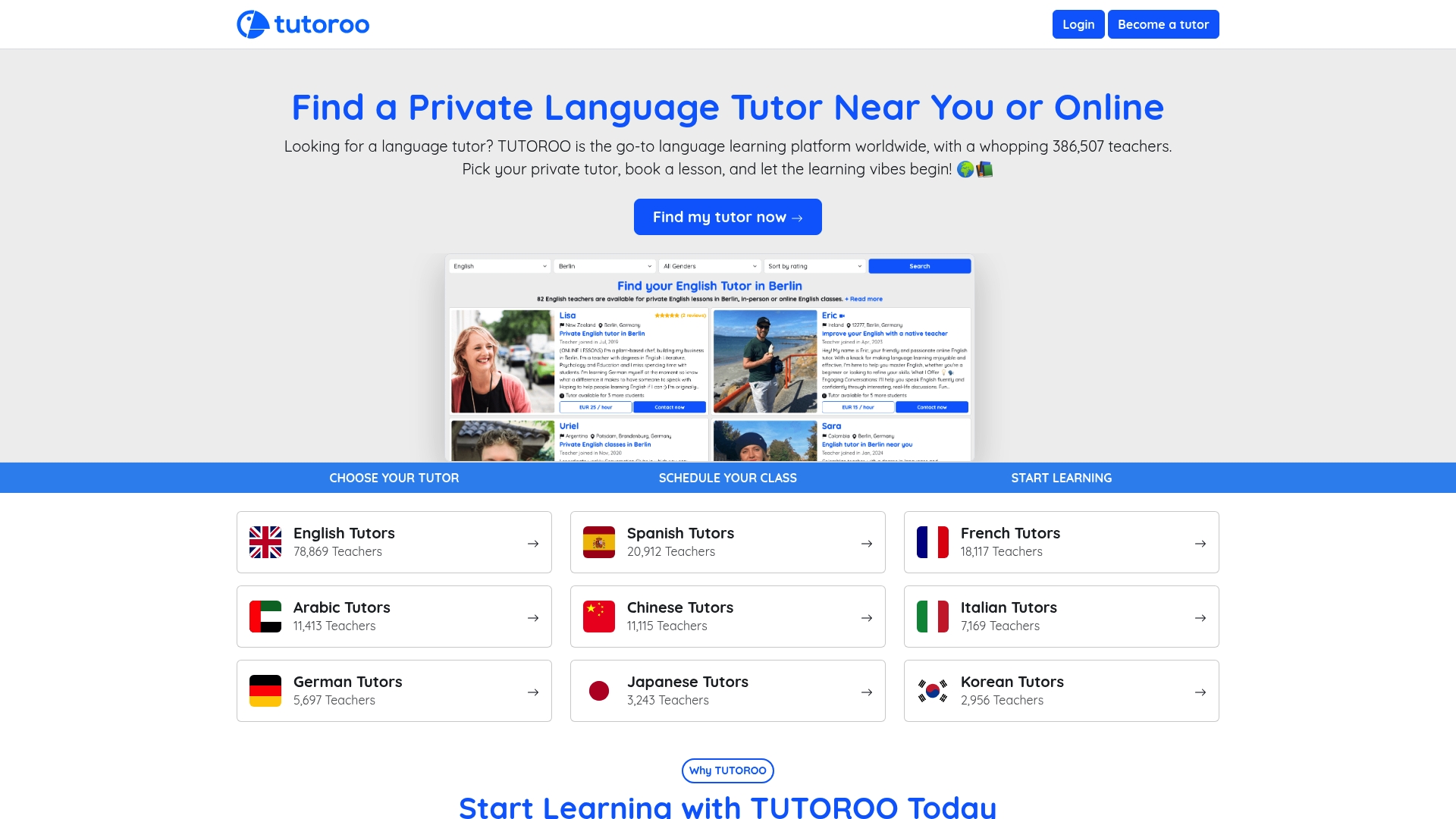
At TUTOROO, you can find your tutor from a community of over 386,000 language teachers worldwide, covering dozens of languages and every proficiency level. Whether you prefer in-person lessons or online sessions from the comfort of your home, TUTOROO makes it simple to connect with someone who fits your schedule, goals, and learning personality. If you are exploring a specific language, options like a Malay tutor are ready and waiting to help you make meaningful progress from your very first lesson.
Frequently asked questions
What is the most effective language practice activity for beginners?
Interest-based tasks with strong support, like basic conversation role-plays and guided reading, work best for beginners because beginners need scaffolding and structured activities help build confidence alongside competence.
How often should I use spaced repetition for vocabulary?
Aim for short, daily sessions with increasing intervals between reviews to strengthen long-term retention, as retrieval effort increases with each spacing round and benefits transfer across different study contexts.
Can reading alone improve my speaking skills?
Reading boosts vocabulary and comprehension, but extensive reading effect sizes are strongest for reading proficiency and vocabulary, making it most powerful when combined with speaking-focused tasks for well-rounded development.
What is the difference between TBLT and PPP in language practice?
TBLT focuses on real communication and fluency first, while PPP is more structured and teacher-led. TBLT aligns more closely with natural acquisition research, but PPP remains effective for introducing new language forms in a clear, predictable way.
How can I stay motivated when practising a new language?
Choose activities you enjoy and set small, achievable goals to keep practice rewarding. Positive psychology interventions alongside evidence-based methods like extensive reading and spaced retrieval are shown to boost engagement and sustain motivation over the long term.