

TL;DR:
- Effective communication is crucial for tutors, as structured updates build trust, clarify goals, and improve retention. A systematic four-stage process—including introductory messages, weekly progress reports, and regular check-ins—ensures consistent engagement and avoids misunderstandings. Utilizing scheduled, specific interactions enhances student motivation, satisfaction, and long-term learning success.
Many language tutors are skilled educators, yet they quietly lose students not because of poor teaching but because of unclear, inconsistent communication. A student who finishes a lesson unsure of their progress, or who waits days for a follow-up, will start wondering whether this arrangement is really working. The good news is that building a structured communication system using scheduled, role-appropriate updates transforms that uncertainty into confidence. This guide walks you through a practical, step-by-step process to sharpen every client interaction and keep students genuinely engaged.
Table of Contents
- Why structured communication is critical for tutors
- Preparation: Foundations for effective tutor-client communication
- How to implement a step-by-step client communication process
- Troubleshooting and adjusting your approach for better outcomes
- Measuring success: How communication drives outcomes
- Our perspective: What most tutors overlook about client communication
- Next steps: Unlock more tutoring success with TUTOROO
- Frequently asked questions
Key Takeaways
| Point | Details |
|---|---|
| Structure beats spontaneity | Planned, scheduled communications ensure students always know where they stand and reduce anxiety. |
| Preparation is key | Having templates and a clear plan before engaging new clients sets you up for success. |
| Adapt for each student | Personalise communication and regularly check fit to prevent misunderstandings and foster strong relationships. |
| Measure and improve | Tracking outcomes helps you refine your approach for better retention and satisfaction. |
Why structured communication is critical for tutors
Ad-hoc messages sent only when something goes wrong do very little to build trust. When students receive irregular updates or vague "just checking in" notes, they fill the silence with doubt. They wonder whether their tutor has a plan for them, whether their progress is on track, and whether the investment is worthwhile. That anxiety often leads to cancellations, which is entirely avoidable.
A structured communication approach means every student always knows what to expect. It signals professionalism, care, and competence before you even open a textbook. Following tutoring best practices that include consistent messaging is one of the simplest ways to protect your reputation and your student retention rate.
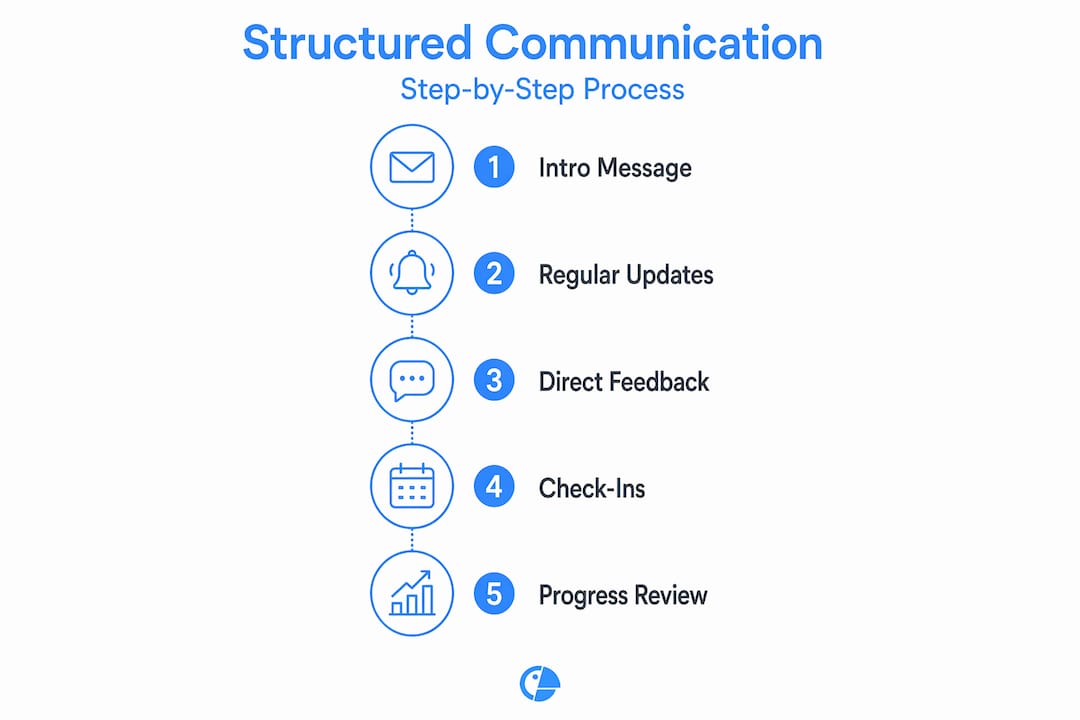
Research from Stanford's tutoring programme toolkit confirms that tutor–family communication structures, including introductory statements and ongoing updates, are essential for programme success. The same research treats inconsistent tutor messaging as an operational risk, one serious enough to require centralised logging and oversight. That framing is telling. It is not just a courtesy issue. It is a professional one.
Consider what understanding feedback's role in tutoring reveals: students who receive specific, timely updates on their progress stay more motivated than those who only hear from their tutor when a problem arises.
Here is what structured communication protects you from:
- Students dropping out due to feeling unguided or unsupported
- Misunderstandings about lesson goals, homework expectations, or pacing
- Reputation damage from word-of-mouth complaints about poor responsiveness
- Wasted sessions caused by students not understanding why certain activities were chosen
"Inconsistent tutor messaging is not just inconvenient. It is a measurable operational risk that high-quality tutoring programmes actively work to eliminate."
Preparation: Foundations for effective tutor-client communication
Once you have grasped the need for structure, the next step is setting your communication foundations before the very first session. This preparation phase is where many tutors cut corners, and it shows.
Strong student-tutor interaction begins with clarity about the basics: how you will communicate, how often, and what each message will cover. Establishing this upfront removes ambiguity and creates a shared understanding that carries through the entire tutoring relationship.
Familiarising yourself with industry terminology for tutors also helps you communicate progress in ways that are credible and reassuring to students and their families.
Use the following checklist and table to build your communication foundations before engaging a new student:
Pre-session communication checklist:
- Confirm the student's preferred communication channel (email, app, platform messaging)
- Prepare a template for your introductory message covering goals, schedule, and expectations
- Set a written policy for your response time, such as "within 24 hours on weekdays"
- Agree on how and when feedback will be delivered after sessions
- Schedule a brief fit check (a short conversation or form to clarify communication preferences)
- Identify any access needs or language barriers that affect how you write updates
| Communication element | What to prepare | Why it matters |
|---|---|---|
| Introductory message | Template with goals, schedule, and tools | Sets the tone and manages expectations |
| Feedback format | Written summary or voice note after sessions | Reinforces learning and shows engagement |
| Response time policy | Stated turnaround for replies | Reduces student anxiety |
| Preferred channel | Email, SMS, platform messenger | Ensures messages are actually read |
| Fit check method | Short call or intake form | Avoids communication mismatches early |
As programme research consistently shows, introductory statements and ongoing update structures are not optional extras. They are foundational to a tutor-client relationship that functions well under real-world conditions.
Pro Tip: During your fit check, ask students directly: "Do you prefer bullet-point summaries or conversational updates after sessions?" This single question saves enormous time and prevents mismatched expectations from building up over weeks.
How to implement a step-by-step client communication process
With the foundations set, you can move into the actionable process itself. This is the part you can begin applying today, regardless of how long you have been tutoring.
A well-sequenced communication approach replaces unpredictable "just checking in" messages with purposeful, scheduled touchpoints. Each stage has a specific role to play, and each one builds on the last.
The four-stage communication sequence:
-
Introductory message (before or after Session 1): Introduce yourself, confirm the lesson plan, outline your communication style, and invite any questions. Keep it warm, brief, and specific.
-
Week-one update (after the third or fourth session): Summarise what was covered, highlight what the student did well, flag any areas needing attention, and confirm upcoming focus areas. This is your most important early message.
-
Ongoing progress notes (every two to four weeks): Send a concise progress summary referencing specific activities, vocabulary milestones, or grammar points the student worked on. Avoid vague praise like "great work this week."
-
Retention check-in (around the six to eight week mark): Ask whether the student feels the sessions are meeting their goals, whether the pace is right, and whether any adjustments would help. This is not just courtesy. It is quality assurance.
A key insight from research on structured client messaging is that when students or parents do not understand why homework or activities were chosen, generic check-in messages feel hollow and dismissive. Your week-one update is the ideal moment to close that gap before it widens.
| Stage | Timing | Key content | Tone |
|---|---|---|---|
| Introductory message | Before or after Session 1 | Goals, tools, expectations | Warm and welcoming |
| Week-one update | After Session 3 or 4 | Progress summary, focus areas | Encouraging and specific |
| Ongoing progress notes | Every 2 to 4 weeks | Vocabulary, skills, milestones | Professional and positive |
| Retention check-in | Week 6 to 8 | Satisfaction, pace, adjustments | Collaborative and open |
Documenting each message in a simple spreadsheet or notes file also protects you. If a student later disputes what was communicated, you have a clear record. It also helps you spot patterns, such as noticing that students who did not receive a week-one update tend to disengage by week four.
Exploring step-by-step online tutoring guidance can further refine how you time and structure each interaction throughout a student's learning journey.
Troubleshooting and adjusting your approach for better outcomes
Even the best-prepared tutors will encounter situations where communication breaks down. A student goes quiet. Responses become short and unenthusiastic. Rescheduling requests multiply. These are red flags, and catching them early makes all the difference.
Effective communication for online tutors requires not only frequency but also specificity. Referencing what the learner actually produced, such as a particular sentence construction they nailed or a pronunciation pattern they are still refining, signals genuine attention. Vague updates do not build trust. Specific ones do.

This is also where trial and fit checks prove their value. A fit check conducted at the start of the relationship surfaces mismatched communication styles before they become problems. Understanding how to help students find the right tutor match from the outset reduces the friction that poor communication creates later.
Signs that your communication needs adjusting:
- Students take more than 48 hours to reply to progress updates
- Responses to your summaries are consistently one word or one line
- Students frequently say they are "not sure" what to focus on next
- Rescheduling requests arrive without explanations
- A student has not asked a single question after three or more sessions
When you notice these signals, do not wait. Send a brief, direct message acknowledging the situation and inviting honest feedback. Something like: "I want to make sure our sessions are working well for you. Is there anything about how I share updates or explain next steps that you would like me to change?" That kind of transparency builds enormous goodwill.
Understanding the process of hiring the right tutor from the student's perspective also helps you communicate in a way that matches their expectations from the very beginning.
Pro Tip: After each session, take 60 seconds to write two specific observations about that student's performance. Use those notes in your next progress update. Students notice when updates reference their work, not a generic template.
Measuring success: How communication drives outcomes
The final piece of the process is tying your communication improvements to real, trackable results. Without measurement, it is difficult to know whether your efforts are actually moving the needle.
Research on online tutoring effectiveness highlights that student engagement and motivation during instruction are central to satisfaction, and tutors who build rapport and interaction into their communication style actively support both. The data suggests students working with engaged, communicative tutors report higher motivation scores (mean 3.4 versus 3.1) and significantly better engagement ratings (mean 4.1 versus 3.6).
Those numbers reflect something practical: students who feel heard and informed by their tutor show up more prepared, stay longer, and refer others.
Key outcomes to track as you refine your communication:
- Student retention: Are students rebooking consistently after the six-week mark?
- Feedback frequency: Are students offering unprompted feedback or questions between sessions?
- Lesson satisfaction: Are session ratings or informal responses trending positively?
- Progress milestones: Are students reaching the vocabulary or fluency targets set in the introductory message?
- Response time: How quickly are students replying to your updates? Quick replies usually signal genuine engagement.
Tracking these indicators monthly gives you actionable data to improve with. If retention dips after week four, review your progress notes from that period. If feedback frequency drops, consider whether your updates have become generic over time.
Exploring strategies for unlocking language potential through better tutor practices can help you connect communication improvements directly to the learning outcomes students care about most.
Our perspective: What most tutors overlook about client communication
Most advice about tutor communication focuses on frequency: send more updates, check in more often. That framing misses something important. Frequency without specificity is noise. A weekly message that says "great session today, keep up the good work!" is technically frequent. It is also almost useless.
What genuinely moves the needle for tutors on TUTOROO's platform, and what separates those with consistent rebooking from those constantly chasing new students, is contextual specificity. The update that references a student's exact sentence, the vocabulary list they struggled with, or the listening exercise they finally cracked is the one that builds loyalty. It tells the student: you are not just another name on a schedule. You are being watched, guided, and genuinely supported.
The second thing most tutors overlook is verification. Sending a message does not mean the student understood it. Early in the relationship, it is worth building in a simple confirmation step, something like "Does that reflect what you experienced in our last session?" This small addition dramatically reduces the chance of silent misunderstandings accumulating into dissatisfaction.
From our experience working with a global community of tutors, scheduled communications do more than inform. They reinforce accountability on both sides. When a student knows a progress update is coming every fortnight, they show up to sessions with more intention. They prepare. They take notes. The communication ritual itself shapes the learning behaviour.
Tutors who commit to private tutoring insights around transparent, specific, and scheduled communication consistently see higher rebooking rates. That is not a coincidence. It is the result of students trusting that their learning is in capable, attentive hands.
Next steps: Unlock more tutoring success with TUTOROO
Applying this structured communication process becomes significantly easier when you have the right platform supporting your practice. Centralised messaging tools, student profiles, and scheduling features all reduce the administrative load and help you focus on what matters most: authentic, meaningful connections with your students.
TUTOROO connects over 386,000 language tutors with students around the world, offering a platform designed to simplify every stage of the tutor-client relationship. Whether you are looking to find English tutoring opportunities, explore Malay tutoring roles, or simply grow your student base across any language, the platform gives you the tools to communicate professionally and consistently. Join TUTOROO today and put this communication guide to work in a community built for tutoring success.
Frequently asked questions
What is the first message a tutor should send to a new student?
A clear introductory statement outlining lesson goals, platforms used, and response time expectations sets a confident, professional tone from the outset and gives the student an immediate sense of direction.
How often should a tutor check in with their clients?
Rather than sending sporadic messages, best practice is to follow a scheduled communication sequence that includes a welcome message, a week-one feedback update, and regular fortnightly progress notes.
How does structured communication impact student engagement and motivation?
Research on tutoring outcomes shows that consistent, interaction-rich communication supports higher student engagement and motivation scores, both of which directly contribute to satisfaction and long-term learning success.
What is a fit check and why should it be used?
A fit check is an early conversation or short intake process designed to uncover a student's communication preferences, and research confirms that using these checks helps tutors avoid mismatched communication styles that quietly erode student satisfaction over time.