

TL;DR:
- Private tutors offer personalized, real-time feedback and adaptability that apps often lack.
- Clear goals and proper platform selection improve matching and learning efficiency.
- Booking multiple trial lessons helps find a tutor aligned with your specific needs and learning style.
Language apps promise fluency but often deliver frustration. You tap through flashcards, repeat phrases into a microphone, and still feel stuck when a real conversation starts. The problem is not your ability; it is the absence of someone who can adapt to your specific gaps, correct your accent in real time, and keep you accountable. Hiring a private language tutor changes that equation entirely. This guide walks you through every step, from clarifying your goals and choosing the right platform, to evaluating tutor profiles, booking trial lessons, and setting yourself up for lasting progress.
Table of Contents
- Clarifying your language learning goals and requirements
- Where to find quality language tutors online
- How to filter and select the best tutor for you
- Booking lessons, assessing fit, and setting up for success
- Why personalised tutor matching beats generic language apps
- Connect with qualified language tutors today
- Frequently asked questions
Key Takeaways
| Point | Details |
|---|---|
| Set clear goals | Knowing your language needs helps you find the best tutor for personal progress. |
| Choose the right platform | Compare major tutoring websites for languages, prices, and tutor types. |
| Evaluate tutor fit | Try trial lessons and review qualifications, teaching style, and reviews before committing. |
| Maximise progress | Book frequent, shorter lessons and track your results for best learning outcomes. |
Clarifying your language learning goals and requirements
Before you search for a single tutor profile, you need a clear picture of what you actually want to achieve. This sounds obvious, but most learners skip it and then feel disappointed when lessons do not quite fit their needs. A few minutes of honest reflection at this stage saves hours of backtracking later.
Start with your primary motivation. Are you preparing for travel to Spain or Japan? Sitting an IELTS or DELF exam? Advancing your career in an international workplace? Or simply exploring a language for personal joy and cultural connection? Each goal points to a different type of instruction. Exam preparation requires structured grammar work and timed practice. Travel conversation calls for practical phrases and real-world listening. Career-focused learning often demands formal vocabulary and industry-specific terminology.
Next, list your practical preferences:
- Online or in-person: Consider whether you prefer flexible online sessions or face-to-face contact. Exploring local vs online language tutoring can help you decide which suits your lifestyle.
- Session frequency: Do you want daily 30-minute sessions or two longer lessons per week?
- Budget: Know your upper limit per hour before you begin browsing.
- Special focus areas: Pronunciation correction, written expression, listening comprehension, or pure conversation practice.
Also note your current level. A complete beginner needs a tutor comfortable with foundational teaching. An intermediate learner may benefit more from conversation-led sessions with fewer structured exercises. Understanding the tutoring benefits of personalised instruction can reinforce why this preparation matters.
As PCMag notes, it is worth taking time to define specific learning goals such as exam prep, conversation practice, or travel readiness before searching for a tutor, because clear objectives make matching far more effective.
Pro Tip: Write your goals down in two or three sentences before you open any tutoring platform. A specific brief like "I want to hold a ten-minute conversation in French about daily life within three months" gives any tutor an immediate, actionable target to work towards.
Where to find quality language tutors online
With your requirements clearly mapped out, you are ready to explore the platforms best suited to your needs. The good news is that the online tutoring market has matured significantly, offering learners a wide range of choices at varying price points.
Here is a quick comparison of the leading platforms available in 2026:
| Platform | Languages available | Price range (per hour) | Key feature |
|---|---|---|---|
| italki | 150+ | $4 to $30 | Community tutors and professional teachers |
| Preply | 100+ | $15 to $60 | Structured plans and progress tracking |
| Verbling | 70+ | $15 to $70 | Live classroom tools and scheduling |
| Cambly | English only | $10 to $30 | Instant connection with native speakers |
According to a PCMag review of Preply, platforms like italki, with over 150 languages at $4 to $30 per hour, and Preply, with 100-plus languages, 25,000-plus tutors, and rates from $15 to $60, rank among the leading options for online language learners.
When shortlisting platforms, keep these factors in mind:
- Native speaker access: Some platforms specialise in native-speaking tutors, which is valuable for accent work and cultural immersion.
- Trial lesson policies: Many platforms offer a first lesson at a discounted rate or with a satisfaction guarantee.
- User reviews: Genuine student feedback reveals teaching personality and reliability far better than a polished profile photo.
- Language availability: Niche languages may only be well covered on certain platforms, so check before committing.
For learners who want a detailed walkthrough of getting started, the online tutoring steps guide covers the process from registration to your first lesson in practical detail.
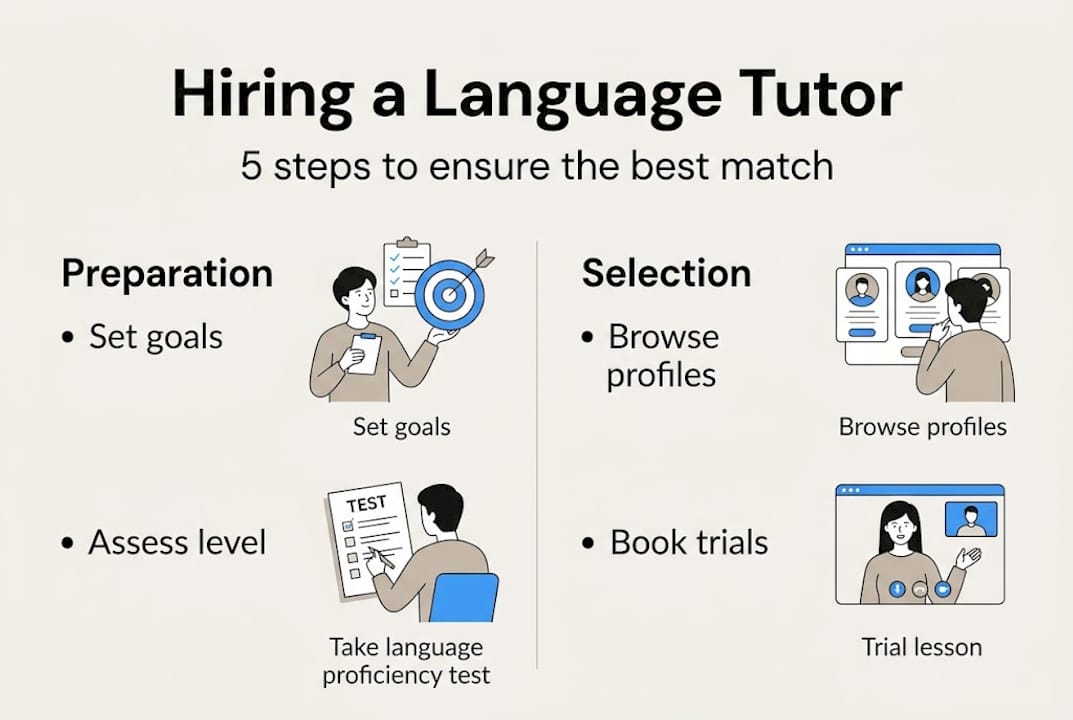
Do not feel you need to commit to one platform immediately. Browse two or three, compare the tutor selection for your target language, and note which interfaces feel intuitive. Your comfort with the platform itself will shape how consistently you show up for lessons.
How to filter and select the best tutor for you
Now you know where to look. The next task is narrowing a potentially overwhelming list of tutor profiles down to a shortlist of two or three genuine candidates.
Use this checklist when reviewing profiles:
- Native speaker status: Check whether the tutor speaks the language as their first language. Understanding the native-speaking tutor benefits can clarify when this matters most.
- Teaching certifications: Look for qualifications such as TEFL (Teaching English as a Foreign Language) or CELTA (Certificate in English Language Teaching to Adults). Why certified tutors matter is often overlooked by learners focused only on native fluency.
- Student reviews: Read recent reviews carefully. Look for comments about patience, adaptability, and whether lessons felt productive.
- Intro video: Most platforms allow tutors to post a short video. Watch it.
- Specialisations: Some tutors focus on business language, others on children or exam preparation. Match their expertise to your goal.
The balance between native speakers and certified professionals is worth understanding. As PCMag observes, native speakers are ideal for immersion and authentic expression, but pairing that fluency with a certified tutor's structured approach provides the best of both worlds for most learners.
| Tutor type | Best for | Potential gap |
|---|---|---|
| Native speaker | Accent, idioms, cultural context | May lack formal teaching methods |
| Certified tutor | Grammar, structure, exams | May have less native fluency |
| Native + certified | Balanced, all-round progress | Higher price point |
Pro Tip: Watch a tutor's intro video with the sound off first. Body language, facial expression, and energy tell you a great deal about whether their teaching style will hold your attention across many sessions.
Booking lessons, assessing fit, and setting up for success
With your shortlist ready, it is time to move from browsing to booking. This stage is where many learners either commit too quickly or hesitate too long. A structured trial process removes both problems.
Follow these steps:
- Send a brief introduction message to each shortlisted tutor. Explain your current level, your goal, and your preferred schedule. A tutor who responds promptly and thoughtfully is already demonstrating good communication.
- Book a trial lesson with at least two tutors. As PCMag recommends, booking trial lessons with two or three tutors to compare styles and feedback gives you a genuine basis for comparison rather than guesswork.
- Attend each trial with a short task in mind. Ask the tutor to help you with one specific thing: a pronunciation challenge, a grammar question, or a short conversation. This reveals their teaching instincts immediately.
- Reflect after each session. Ask yourself: Did I feel comfortable asking questions? Did the tutor adjust when I struggled? Did the lesson feel relevant to my actual goals?
- Choose and commit. Once you have found your match, book a recurring schedule and stick to it.
"The learners who progress fastest are rarely those with the most natural talent. They are the ones who found the right tutor, showed up consistently, and were not afraid to ask uncomfortable questions."
On session structure, research supports distributing your study time into three 30-minute sessions per week rather than a single long lesson, as shorter, more frequent sessions improve retention and deliver better value over time.

For a more detailed breakdown of what to expect when booking language lessons for the first time, or to explore tutoring best practices that accelerate results, both resources offer practical next steps worth reading before your first session.
Why personalised tutor matching beats generic language apps
Here is a perspective worth sitting with. Language apps are genuinely useful for vocabulary exposure and low-stakes practice. But they are engineered to keep you engaged, not necessarily to make you fluent. Their algorithms optimise for daily streaks, not real-world communication.
A well-matched tutor does something no app can replicate. They notice the specific moment you hesitate before a verb conjugation. They sense when you are bored and shift the lesson entirely. They remember that you mentioned a work trip to Tokyo and build a session around it. That level of responsiveness compounds over weeks and months into something powerful: genuine fluency and real confidence.
Many learners underestimate how much of their slow progress comes from a lack of accountability, not a lack of ability. A tutor creates a relationship, and relationships create consistency. The process of faster fluency with tutoring is less about magic methods and more about showing up for someone who is showing up for you. That simple dynamic is why methodical tutor matching produces results that apps rarely can.
Connect with qualified language tutors today
For those motivated to fast-track their language journey, your next step is simple.
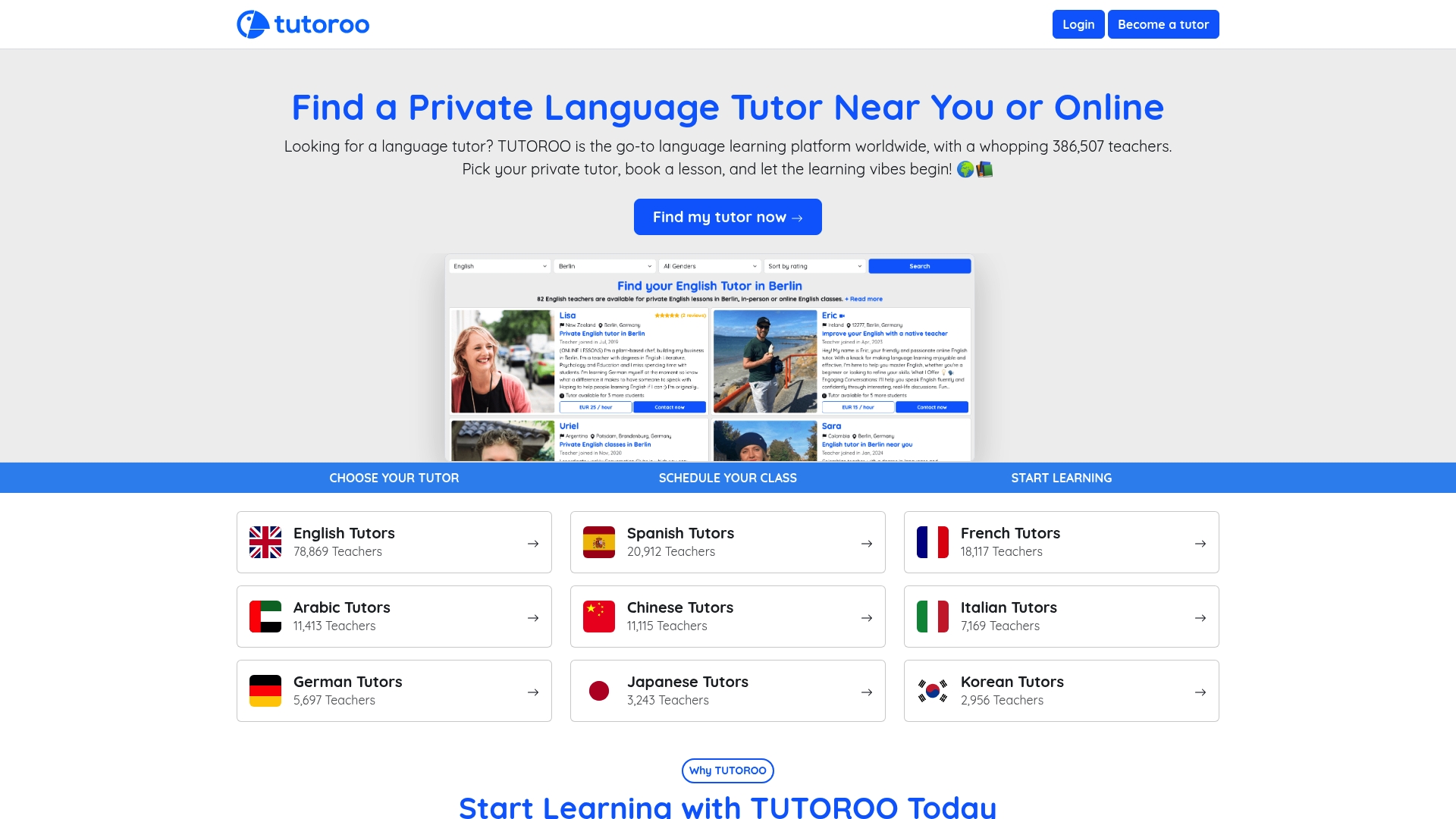
TUTOROO connects learners with over 386,000 experienced, native-speaking, and certified language tutors across the globe, covering all major languages from Spanish and French to Arabic, Mandarin, and beyond. Whether you prefer to find a language tutor online or locally, the platform makes it easy to search by language, location, and availability. Browse profiles, watch intro videos, and send a message directly to tutors who match your goals. Your personalised lessons, built around your schedule and your ambitions, are ready to begin.
Frequently asked questions
How much should I budget for a private language tutor?
Most online tutors charge between $10 and $80 per hour, with platforms like italki and Preply offering rates from $4 to $60 to suit a wide range of budgets.
Should I choose a native speaker or a certified tutor?
Native speakers excel at immersion and authentic accent development, while certified tutors bring structured lesson design. Many successful learners benefit from working with someone who is both.
How many trial lessons should I book before deciding?
Aim for at least two or three trials with different tutors. Comparing styles and feedback across multiple sessions gives you a far more reliable basis for choosing your long-term tutor.
Can shorter, frequent sessions improve learning results?
Yes. Three 30-minute sessions per week consistently outperform a single long lesson in terms of retention and overall learning value.
What information should I have ready when contacting a tutor?
Prepare a brief message covering your current language level, your main learning goal, your preferred session times, and any specific focus areas such as pronunciation, grammar, or conversation practice.