

TL;DR:
- Understanding industry terms like shadow education and high-dosage tutoring improves communication and decision-making.
- Different tutoring formats, such as one-on-one, group, and high-dosage, suit various learning goals.
- Clarifying roles like tutor, coach, and mentor helps set accurate expectations and optimize language learning.
Terms like 'shadow education,' 'high-dosage tutoring,' and 'academic coach' float around the private tutoring world with surprising frequency, yet most learners and tutors have never had them properly explained. This gap in understanding can lead to mismatched expectations, wasted money, and missed opportunities for genuine language growth. Shadow education is the primary industry term for private tutoring, yet even that surprises many people. Whether you are searching for the right language tutor or working to sharpen your own tutoring practice, knowing the language of the industry opens doors to clearer communication, smarter decisions, and far better outcomes.
Table of Contents
- What is private tutoring? Key industry terms explained
- Types of tutoring: One-on-one, group, high-dosage and more
- Understanding roles and titles: Tutor, academic coach, mentor and more
- Key terminology for language tutoring: Assessments, levels and approaches
- Industry best practices and evidence-based benchmarks
- Why industry terminology is the secret weapon for language learning success
- Find the right tutor with expert insight
- Frequently asked questions
Key Takeaways
| Point | Details |
|---|---|
| Essential terminology | Understanding terms like shadow education and high-dosage ensures clear communication and smarter choices in language tutoring. |
| Tutoring types compared | One-on-one, group, and high-dosage tutoring each suit different needs and deliver distinct learning outcomes. |
| Expert roles decoded | Titles like tutor, academic coach, and learning specialist reflect differences in skillset, focus, and impact. |
| Evidence-based strategies | Effective language tutors use proven methods such as formative assessment and spaced repetition for the best results. |
| Informed decisions | Mastery of industry language empowers learners and tutors to set clear goals and track meaningful progress. |
What is private tutoring? Key industry terms explained
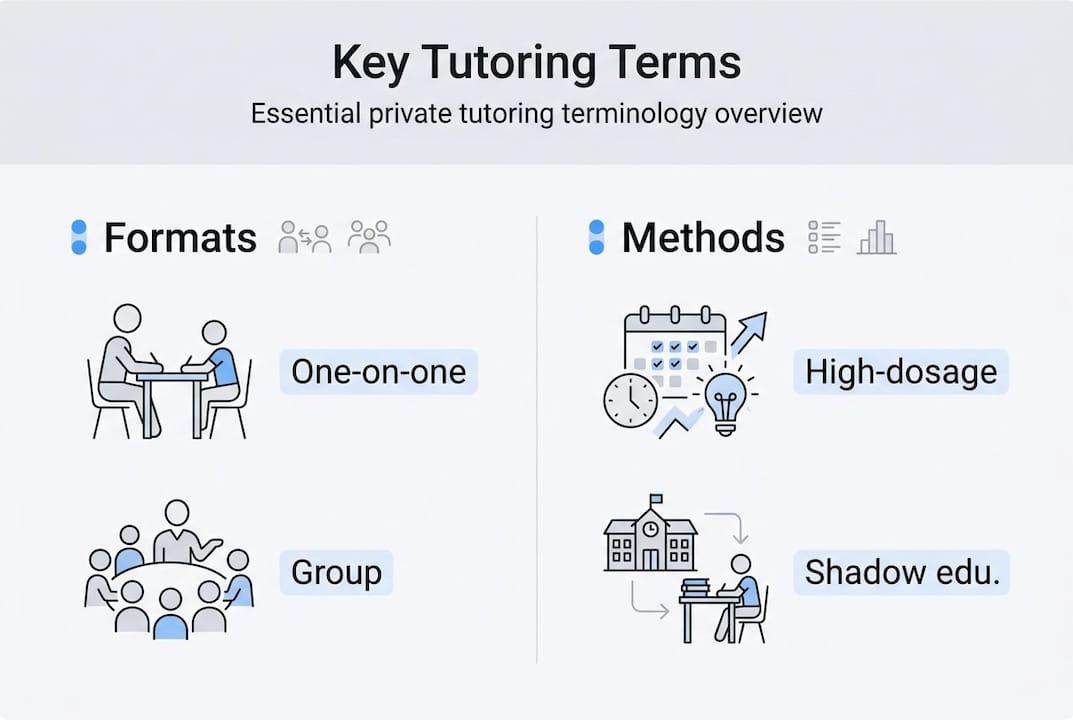
Private tutoring refers to fee-based, supplementary instruction delivered outside the formal school system. It sits alongside mainstream education rather than replacing it, which is precisely why researchers coined the term 'shadow education' to describe it. Just as a shadow mirrors a form without being the form itself, private tutoring mirrors the school curriculum while operating in a separate, largely unregulated space.
Understanding this distinction matters because it shapes how families, learners, and policymakers approach tutoring. Governments around the world are actively regulating tutoring as a public good, recognising that unequal access to private lessons can widen educational gaps between socioeconomic groups.
Here are the core terms you will encounter most often:
- Private tutoring: One-to-one or small-group instruction provided for a fee, outside school hours
- Shadow education: The academic term for the global private tutoring sector
- 1:1 (one-on-one): A single tutor working exclusively with one student per session
- Group tutoring: A tutor working with two or more students simultaneously
- Academic coach: A professional who focuses on study skills, organisation, and learning strategies rather than subject content alone
- Learning specialist: A practitioner trained to support students with specific learning differences such as dyslexia or ADHD
"Private tutoring is not simply extra homework help. It is a structured, evidence-informed practice with its own frameworks, ethics, and professional standards."
For language learners, understanding the private tutoring benefits of each format helps set realistic goals from the very first session. Knowing these terms also helps you ask better questions when interviewing a prospective tutor, ensuring you find someone whose approach genuinely matches your learning needs.
Types of tutoring: One-on-one, group, high-dosage and more
With the foundational definitions covered, let's explore the main types of private tutoring, how they differ, and which might fit your needs.
| Modality | Best for | Cost | Learning intensity |
|---|---|---|---|
| One-on-one | Personalised language goals | Higher | Very high |
| Group tutoring | Test prep, conversation practice | Lower | Moderate |
| High-dosage | Rapid catch-up, intensive goals | Highest | Exceptional |
| Peer tutoring | Confidence building, review | Lowest | Variable |
One-on-one tutoring is the oldest and most effective modality, with group formats working particularly well for test preparation and reducing overall cost. The personalised attention in 1:1 sessions means a tutor can adapt every explanation, activity, and piece of feedback to your exact level and pace.

High-dosage tutoring refers to intensive programmes involving three or more sessions per week. Research shows that high-dosage tutoring yields two to three times higher learning gains compared to regular instruction. For language learners aiming to reach conversational fluency quickly, this format can be genuinely transformative.
Peer tutoring pairs learners of similar or slightly different ability levels together. While the gains are more variable, the format builds confidence and reinforces knowledge through explanation, which is a powerful learning mechanism in its own right.
When choosing a modality, consider these factors:
- Your current proficiency level and target goal
- How quickly you need to see measurable progress
- Your budget and schedule flexibility
- Whether you thrive with direct feedback or prefer collaborative learning
Pro Tip: Blending modalities often produces the best results. Pair weekly one-on-one sessions for targeted feedback with a small conversation group to build fluency and confidence simultaneously. Many learners find this language learning approach accelerates progress more than either format alone.
For a broader look at how tutoring effectiveness stats compare across formats, the data consistently favours structured, frequent sessions with a qualified tutor.
Understanding roles and titles: Tutor, academic coach, mentor and more
Each tutoring session depends not only on format but on who delivers the instruction, so let's decode what different titles and roles actually mean in the industry.
The title a professional uses signals their focus, training, and the outcomes they are best positioned to deliver. Research indicates that 68% of Australian families select tutoring support based on the professional's title alone. That means misreading a title can lead to a poor match before the first session even begins.
Here is how the main roles break down:
- Tutor: Delivers direct subject or language instruction, focused on knowledge and skill building within a specific area
- Academic coach: Addresses broader learning strategies, goal-setting, time management, and study habits rather than content alone
- Learning specialist: Works with students who have diagnosed learning differences, adapting materials and methods accordingly
- Mentor: Supports personal development, motivation, and long-term goal clarity, often drawing on their own experience in a field
| Role | Primary focus | Typical fee range | Best suited to |
|---|---|---|---|
| Tutor | Subject/language skills | Moderate | Exam prep, fluency goals |
| Academic coach | Study strategies | Moderate to high | Organisation, motivation |
| Learning specialist | Learning differences | Higher | ADHD, dyslexia support |
| Mentor | Personal growth | Variable | Career, confidence |
For language learners, a tutor is usually the right starting point. However, if you struggle with consistency or motivation, pairing tutoring with academic coaching can be highly effective. Knowing the private tutoring best practices for each role helps you set clear expectations from the outset.
Pro Tip: When making an initial enquiry, ask the professional directly: "Do you focus on language instruction, study strategy, or both?" This single question eliminates the most common source of mismatched expectations and saves everyone time.
Key terminology for language tutoring: Assessments, levels and approaches
Beyond who teaches and how, language education brings its own suite of key terms and frameworks. Here is what language learners and tutors need to know.
The language tutoring field uses several established proficiency frameworks to describe learner levels and track progress. The most widely recognised include:
- CEFR (Common European Framework of Reference): A six-level scale from A1 (beginner) to C2 (mastery), used globally for European languages
- ACTFL (American Council on the Teaching of Foreign Languages): A proficiency scale used widely for English and modern languages in North America
- WIDA: A framework specifically designed for English Language Learners in academic settings, with 5.3 million students in the US alone assessed under this system
Beyond levels, effective language tutors apply specific instructional techniques grounded in research. Core methodologies include formative assessment, scaffolding, spaced repetition, and input flood, each targeting a different aspect of language acquisition.
- Formative assessment: Ongoing checks during lessons to gauge understanding and adjust instruction in real time
- Scaffolding: Breaking complex language tasks into smaller, manageable steps that build on each other
- Spaced repetition: Reviewing vocabulary and grammar at increasing intervals to strengthen long-term retention
- Input flood: Exposing learners to large amounts of target language in context to accelerate natural acquisition
- Pushed output: Encouraging learners to produce language slightly beyond their comfort zone to build fluency
Understanding these terms helps you evaluate whether a tutor's approach is evidence-based or simply improvised. When a tutor mentions scaffolding or retrieval practice, they are signalling a structured, professional methodology. To see how these techniques unlock language potential in practice, the difference between a structured lesson and an informal chat is often dramatic.
Industry best practices and evidence-based benchmarks
Knowing the terms and options is essential, but how do you measure success in private tutoring? Here is how industry leaders set benchmarks and ensure quality.
The most cited metric in tutoring research is effect size, a statistical measure of how much an intervention improves outcomes compared to no intervention. A tutoring effect size of 0.37 standard deviations moves a student from the 50th to the 66th percentile, a meaningful and measurable gain. For language learners specifically, online tutoring has been shown to produce 2.1 CEFR level gains within six months of consistent study.
Here are the top evidence-based strategies used by effective language tutors:
- Explicit instruction: Clearly explaining grammar rules, vocabulary patterns, and language structures rather than hoping learners will absorb them passively
- Retrieval practice: Regularly testing recall of previously learned material to strengthen memory pathways
- Scaffolded tasks: Designing activities that gradually increase in complexity as learner confidence grows
- Spaced sessions: Distributing learning across multiple shorter sessions rather than cramming into one long block
- Targeted feedback: Providing specific, actionable corrections rather than general praise or vague suggestions
The current gold standard in the industry is high-dosage tutoring at three or more sessions per week. For language learners, this frequency creates the immersive exposure needed for genuine fluency development. Explore online tutoring stats to see how session frequency directly correlates with measurable progress.
When evaluating whether tutoring is delivering value, track progress against a CEFR or ACTFL level every six to eight weeks. If you are not advancing at least one sub-level per term, it may be time to adjust the approach. Understanding the difference between private tutors for mastery versus maintenance is key, as is knowing when local vs online tutoring best suits your circumstances.
Why industry terminology is the secret weapon for language learning success
There is a common assumption that tutoring jargon exists to make professionals sound impressive. We would argue the opposite is true. Knowing what terms like 'high-dosage,' 'scaffolding,' or 'CEFR level' actually mean puts the learner in the driver's seat.
When you can articulate your goals using the same language as your tutor, sessions become more focused and progress becomes measurable rather than vague. You stop asking "Am I improving?" and start asking "Have I moved from B1 to B2 this term?"
The same applies to tutors. Professionals who use precise terminology signal that their practice is grounded in evidence, not guesswork. It raises the standard of the entire interaction. The most common mistake we see is learners assuming all tutors offer the same thing. They do not. Titles, modalities, and methodologies vary enormously, and understanding those differences is what separates a frustrating experience from a genuinely transformative one. Reviewing tutoring best practices is not just useful for tutors. It is essential reading for anyone serious about their language journey.
Find the right tutor with expert insight
Armed with industry know-how, you are ready to make an informed choice about your language learning path.
At TUTOROO, we connect language learners with over 386,000 expert tutors worldwide, spanning languages from English and Spanish to Arabic, Mandarin, and beyond. Understanding terms like CEFR levels, high-dosage tutoring, and scaffolding means you can search smarter, ask better questions, and choose a tutor whose approach genuinely fits your goals.
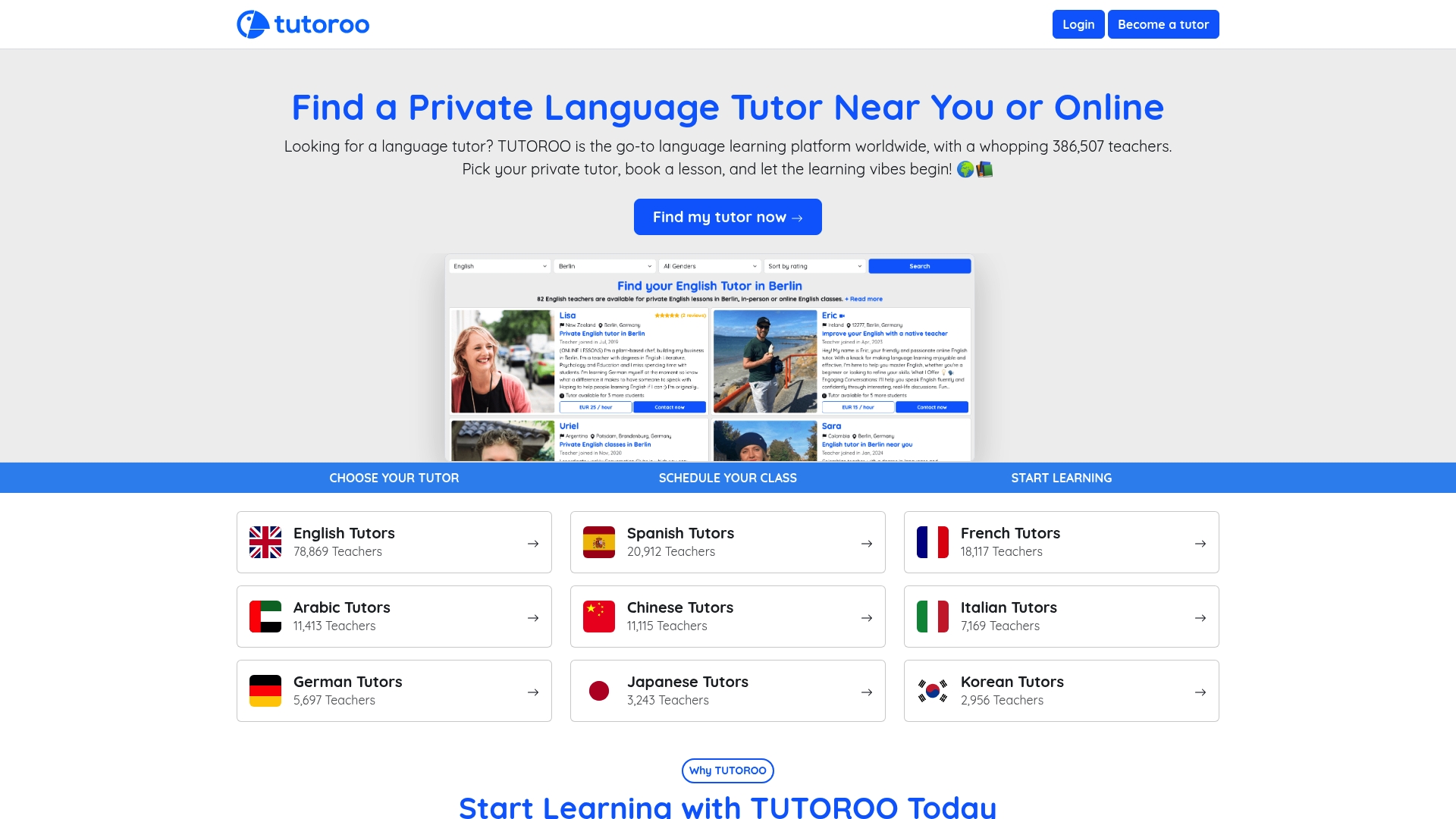
Whether you are looking to find private language tutors for general fluency or need a specialist such as Malay tutors online for a specific cultural or professional goal, TUTOROO makes the matching process straightforward and transparent. Book your first session today and put your new industry knowledge to work.
Frequently asked questions
What does 'shadow education' mean in private tutoring?
'Shadow education' refers to fee-based supplementary lessons that run alongside formal classroom learning and mirror the mainstream curriculum. The term is widely used by researchers and policymakers to describe the global private tutoring sector.
How does high-dosage tutoring improve language learning?
High-dosage tutoring involves three or more sessions per week and delivers two to three times higher learning gains compared to regular instruction, making it the gold standard for rapid language progress.
What's the difference between a tutor, academic coach, and mentor?
A tutor teaches subject or language skills directly, an academic coach focuses on study strategy and organisation, and a mentor supports broader personal growth. Each role suits different needs and carries different expectations around fees and outcomes.
What does one-on-one tutoring offer compared to group tutoring?
One-on-one tutoring delivers fully personalised instruction and immediate feedback, making it significantly faster for language progress than group formats, which suit test preparation and conversation practice at a lower cost.
Which evidence-based methods do top language tutors use?
Leading tutors apply formative assessment, scaffolding, spaced repetition, and targeted input and output activities, all of which are research-backed strategies for accelerating language acquisition and retention.