

TL;DR:
- Tutor registration filters for quality, safety, and accountability, ensuring better learning experiences.
- The registration process involves profiles, videos, certifications, and identity verification, taking several days.
- Choosing between community and professional tutors depends on learning goals, with ongoing quality checks benefiting learners.
Plenty of people assume that speaking a language fluently is enough to teach it online. It isn't. Behind every great language lesson is a registration process designed to separate passionate speakers from genuinely effective educators. Whether you're searching for a French tutor to prepare for travel or an English coach to advance your career, the way a platform screens its tutors directly shapes the quality of your learning experience. Understanding how tutor registration works gives you a real edge, helping you ask better questions, read profiles more critically, and ultimately find someone who opens doors to genuine fluency.
Table of Contents
- Why tutor registration matters for learners
- How the tutor registration process works
- Community tutors vs professional tutors: A closer look
- Ongoing quality assurance after registration
- How to use the registration process to find your best-fit tutor
- Why strong tutor vetting isn't just box-ticking
- Find your ideal language tutor with TUTOROO
- Frequently asked questions
Key Takeaways
| Point | Details |
|---|---|
| Registration builds trust | Tutor vetting ensures your language tutor is qualified and reliable. |
| Different tutors, different checks | Community and professional tutors face different standards—know which suits your needs. |
| Ongoing quality monitoring | Reviews, trial lessons, and KPIs keep tutor standards high after they join. |
| Use profiles to your advantage | Check verified details, reviews, and videos to pick the best tutor for you. |
| Platforms are not identical | Every learning platform has unique registration requirements and timelines. |
Why tutor registration matters for learners
With the misconception addressed, let's see why the registration process truly matters for you as a language learner.
Tutor registration is far more than an administrative hurdle. It acts as a filter that protects learners from wasted time and money. Without a structured screening process, anyone could present themselves as a qualified teacher regardless of their actual ability to explain grammar rules, manage lesson pacing, or adapt to different learning styles.
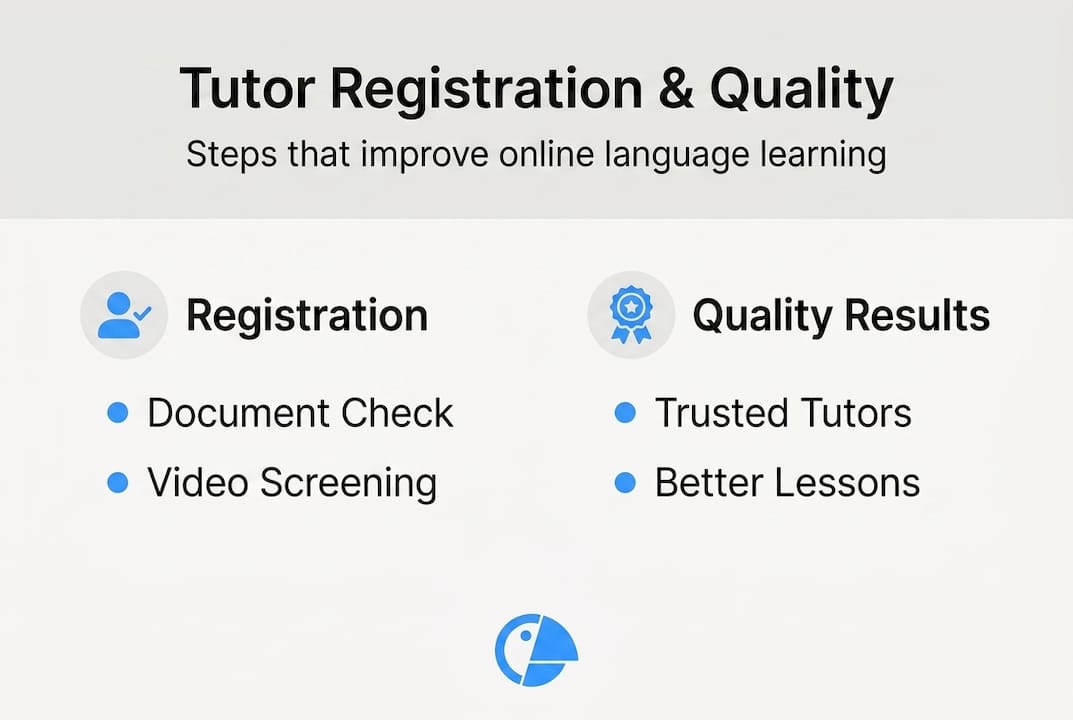
Platforms like italki, Preply, and Verbling use registration to verify tutor qualifications, ensure consistent quality, and build learner trust by screening for experience, credentials, and teaching ability through profiles, videos, and reviews. That process matters because it creates a reliable baseline that learners can count on before they ever book a session.
Here is what robust tutor registration achieves for you as a learner:
- Quality control: Only tutors who meet minimum standards can appear in search results, reducing the chance of a poorly matched lesson.
- Accountability: Registered tutors have reputations to protect, which motivates them to show up prepared and engaged.
- Safety: Identity verification and credential checks create a safer environment for learners of all ages.
- Better matching: Detailed profiles gathered during registration feed the tutor matching process, helping algorithms and learners alike find the right fit faster.
"Registration is not just paperwork. It is the foundation of learner trust and the starting point for every successful teaching relationship."
When a platform invests in thorough vetting, you benefit directly. Lesson quality improves, cancellation rates drop, and the tutor you meet on screen is much more likely to be the tutor described in the profile. That reliability is what transforms language learning from a gamble into a genuine investment.

How the tutor registration process works
Now that we know why registration is important, let's break down exactly how platforms vet new tutors and what you, as a learner, can expect.
Most major platforms follow a multi-step application flow, though the specifics vary considerably. A typical registration journey looks like this:
- Profile creation: Tutors write a bio, list languages taught, set availability, and upload a profile photo.
- Introductory video: A short recorded video lets learners assess personality, communication style, and teaching energy before committing.
- Credential upload: Depending on the platform, tutors may need to submit TEFL, CELTA, or other teaching certificates.
- Identity verification: Photo ID confirms the tutor is who they claim to be.
- Platform review: Staff or automated systems assess submissions before approving the profile.
Timelines for tutor registration steps typically range from 3 to 10 business days, though high application volumes can extend this period.
| Platform | Certificates required | Video required | Avg review time |
|---|---|---|---|
| Preply | Recommended | Yes | A few business days |
| italki (Community) | No | Yes | 7 to 10 days |
| italki (Professional) | Yes | Yes | 7 to 10 days |
| Verbling | Yes + references | Yes | Varies |
The local vs online tutoring criteria differ as well. Online tutors face more scrutiny around video presentation and digital communication skills, while local tutors may rely more heavily on in-person references.
Rejections are more common than many applicants expect. Poor video quality, missing documents, or a vague bio are the leading causes. For learners, this filtering is a feature rather than a flaw. It means the tutors you see have already cleared meaningful hurdles before you ever reach their profile. Platforms managing remote tutor registration continue to refine their processes to improve both tutor experience and learner confidence.
Pro Tip: When browsing tutor profiles, check whether the intro video was recorded professionally or casually. A well-prepared video often signals the same care a tutor brings to their lessons.
Community tutors vs professional tutors: A closer look
Not all tutors are vetted equally. Here's how platforms distinguish between different types and what that means for your learning path.
One of the most important distinctions in online language learning is the difference between community tutors and professional tutors. Understanding this divide helps you choose the right fit for your specific goals.
| Feature | Community tutor | Professional tutor |
|---|---|---|
| Certificates required | No | Yes (e.g., TEFL, CELTA, degree) |
| Teaching experience | Optional | Mandatory |
| Lesson structure | Conversational, flexible | Structured, curriculum-based |
| Typical hourly rate | Lower | Higher |
| Best for | Conversation practice | Grammar, exams, formal learning |
italki distinguishes community tutors from professionals clearly. Community tutors need no formal credentials, while professionals must hold relevant certificates or a teaching degree. Verbling takes an even stricter approach, requiring prior teaching experience and reference letters for all tutors.
Here is a quick guide to help you decide:
- Choose a community tutor if you want casual conversation practice, cultural exchange, or flexible, affordable sessions without rigid structure.
- Choose a professional tutor if you are preparing for language exams, need structured grammar instruction, or want a lesson plan tailored to a clear progression.
Neither type is inherently superior. The right choice depends entirely on where you are in your learning journey and what you need next. Knowing the certified tutor benefits helps you weigh up whether a credential-holding professional is worth the higher investment for your particular goals.
Pro Tip: If you are a beginner, start with a professional tutor to build solid foundations. Once you have core grammar and vocabulary, a community tutor is a wonderful way to practise natural conversation without pressure.
Ongoing quality assurance after registration
Completing registration isn't the end. Here's how your chosen platform keeps quality high after a tutor is approved.
Approval is just the beginning of a tutor's accountability on a reputable platform. The best platforms treat quality assurance as a continuous process, not a one-time event. This ongoing oversight directly benefits learners, because it creates pressure for tutors to maintain high standards throughout their time on the platform.
Key mechanisms platforms use to maintain quality after registration include:
- Star ratings and written reviews: Students leave feedback after each lesson, creating a transparent record of tutor performance over time.
- Trial lessons: Many platforms offer reduced-cost first sessions so learners can assess a tutor's style before committing to a package.
- Tutor Academy programmes: Preply, for example, runs ongoing support and training resources to help tutors improve their methods.
- Performance KPIs: Platforms monitor metrics like lesson completion rates, cancellation frequency, and average ratings to identify underperforming tutors.
"Multi-layered vetting through credentials, ratings, and trial lessons, combined with ongoing performance monitoring, is what separates genuinely great tutoring platforms from directories that simply list names."
Research into tutor vetting practices confirms that structured interviews and demos predict better tutor-learner matches, while prioritising verified credentials over self-reported experience reduces poor outcomes significantly.
For learners, this means that a tutor's current rating reflects real accumulated experience with real students, not just a polished application. Always check trial lesson feedback from other learners before committing to regular sessions. The benefits of ongoing tutor evaluation are clear: learners who choose tutors with strong post-registration track records progress faster and report higher satisfaction.
How to use the registration process to find your best-fit tutor
Armed with a clear understanding, here's how you can turn the registration process into an advantage for your language learning journey.
Knowing how registration works gives you a sharper eye when browsing tutor profiles. Registration ensures matching quality, reducing mismatches and boosting retention, but the smartest learners go beyond the badge and dig into the details. Here is a practical approach:
- Check credentials first: Look for TEFL, CELTA, or a relevant degree if you need structured instruction. Community tutor labels mean no formal certification was required.
- Watch the intro video carefully: Does the tutor explain things clearly? Do they seem enthusiastic? Does their communication style suit yours?
- Read recent reviews, not just the overall star rating: A tutor with 4.9 stars from two years ago may have declined in quality since then.
- Ask specific questions before booking: Enquire about their lesson structure, how they handle mistakes, and whether they have experience with your goals.
- Book a trial lesson before committing: Use it to assess pacing, communication, and whether their teaching style genuinely suits you.
Red flags to watch for include very few reviews despite a long profile history, vague bios with no mention of teaching methodology, and intro videos that were clearly recorded without preparation.
Pro Tip: Look for tutors who mention specific teaching approaches in their profiles, such as communicative language teaching or task-based learning. This signals genuine professional awareness rather than a generic "I love languages" pitch.
Following a clear language tutoring process from your very first search makes it far more likely you'll find a tutor who accelerates your progress from day one.
Why strong tutor vetting isn't just box-ticking
Having seen the mechanics and impact of tutor registration, let's address a few hard truths that are often overlooked.
Here is something most guides won't tell you: a lot of platforms rush through registration because they need tutor supply to meet learner demand. That speed creates risk. When a platform approves tutors in under 24 hours with minimal document checks, it signals that volume matters more than quality. Learners pay the price through inconsistent experiences and wasted sessions.
The best vetting systems are not just about ticking credential boxes. They assess practical teaching ability through video, require real references, and use trial lessons as living proof of competency. Credentials without demonstrated teaching skill are hollow. Enthusiasm without structure is equally problematic.
We also believe some platforms place too much weight on self-reported information. A tutor can list ten years of experience on a form. What that experience actually looks like in a lesson is a different matter entirely. Platforms that invest in ongoing monitoring, the kind that tracks lesson quality after approval, consistently produce better learner outcomes than those that treat registration as a finish line.
When choosing a platform, look beyond the marketing and ask: how does this platform hold tutors accountable after they're approved? The answer tells you everything about the value of certified tutors and the rigour behind the matching experience.
Find your ideal language tutor with TUTOROO
Ready to put your knowledge into practice? Here's how TUTOROO can help you connect with verified language tutors.
Now that you understand what quality tutor registration looks like, you're better equipped to make confident choices. TUTOROO connects language learners with over 386,000 private language tutors with TUTOROO across the globe, spanning dozens of languages and learning goals.
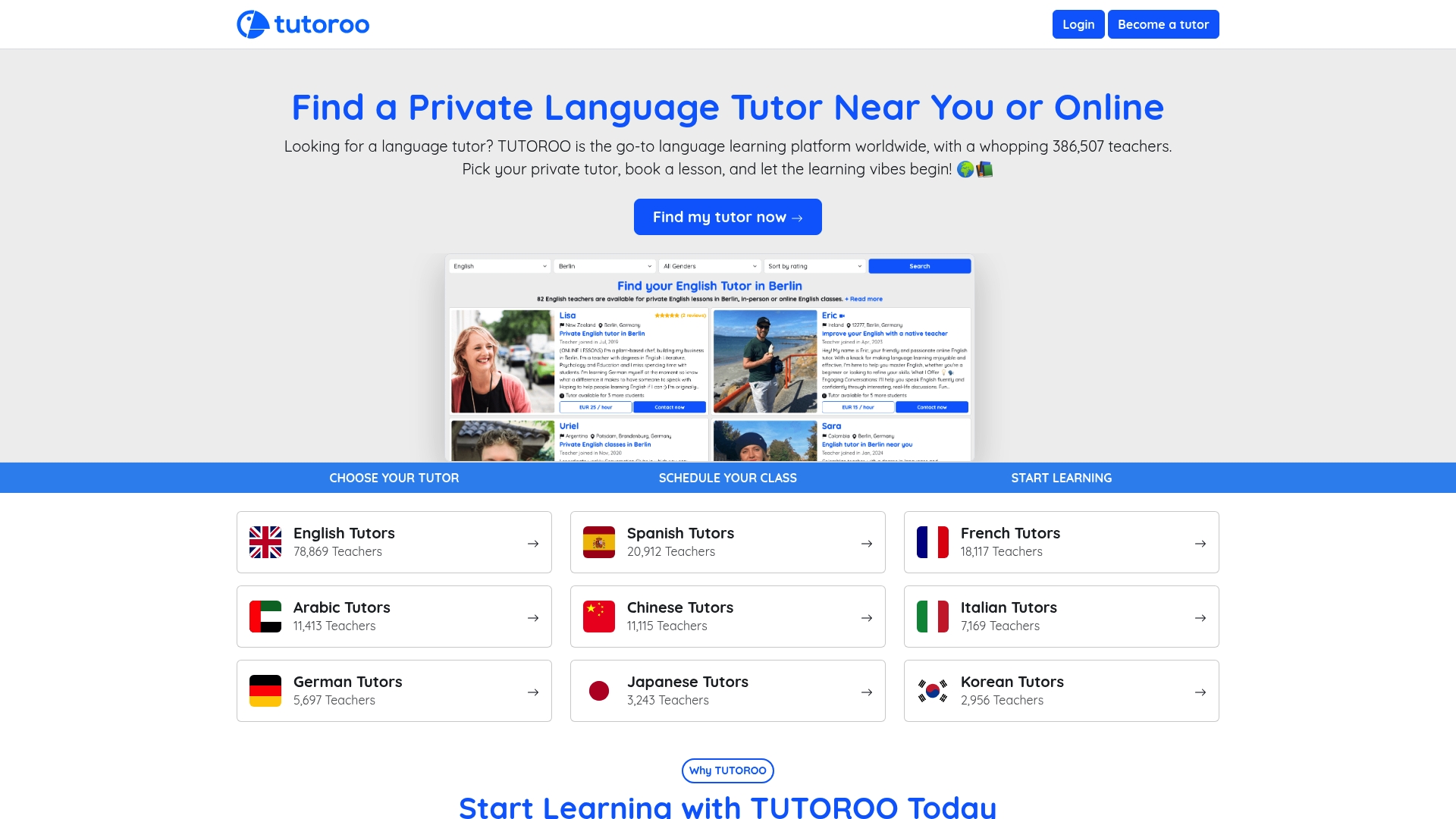
Whether you want to sharpen your professional English or explore a completely new language, TUTOROO makes it simple to search, compare, and connect with tutors who suit your schedule, budget, and goals. You can browse detailed profiles, read authentic student reviews, and message tutors directly before committing. If you're looking for a great place to start, explore English tutors on TUTOROO and take the first step toward meaningful, personalised language learning today.
Frequently asked questions
Do all online platforms have the same tutor registration requirements?
No, requirements vary significantly by platform. Some require certifications for all tutors, while others, like italki, allow community tutors without formal credentials, and Verbling mandates prior teaching experience and reference letters.
How long does tutor registration take on average?
Most platforms review applications within 3 to 10 days, depending on the platform and application volume. Preply typically takes a few business days, while italki and similar platforms can take up to 10 days.
Can a community tutor upgrade to become a professional tutor?
Yes, upgrades from community to professional status are possible on many platforms once a tutor obtains the required qualifications and updates their profile accordingly.
What if my tutor turns out not to be a good fit?
Learners can usually switch tutors with ease. Platforms with ongoing performance KPIs and ratings help surface consistently reliable teachers, making it easier to find a better match quickly.
Does registration guarantee a good tutor match?
Registration improves the odds considerably, but registration alone boosts matching quality rather than guaranteeing it. Learners should also review profile details, student feedback, and trial lessons to make the most informed choice.