

TL;DR:
- Effective language tutoring depends on structured teaching methods and professional credentials.
- Credentials like CELTA and TESOL signal expertise in pedagogical techniques and proven success.
- Verifying certificates through official bodies and matching them to learning goals ensures quality tutoring.
Many language learners assume that fluency alone makes someone a great tutor. If a person grew up speaking French or Mandarin, surely they can teach it well, right? This is one of the most common misconceptions in language education, and it can cost you months of slow progress. The reality is that effective tutoring requires far more than knowing a language. It demands structured teaching methods, an understanding of how people learn, and a commitment to ongoing professional growth. Credentials are often the clearest signal that a tutor has developed these skills and can genuinely accelerate your learning journey.
Table of Contents
- Understanding tutor credentials: What do they actually signal?
- How credentials benefit your language learning journey
- Native speakers, certified teachers, and non-native tutors: finding the right fit
- How to verify tutor credentials and choose with confidence
- What most people get wrong about credentials in tutoring
- Find qualified language tutors tailored to your needs
- Frequently asked questions
Key Takeaways
| Point | Details |
|---|---|
| Credentials verify expertise | Formal teaching certificates and licences prove tutors have essential knowledge and teaching skills. |
| Certified tutors drive progress | Qualified tutors consistently use better methods, boosting learning confidence and efficiency. |
| Fit credentials to your needs | The best tutor has the right mix of credentials, experience, and communication for your goals. |
| Native is not always best | Non-native teachers with strong credentials excel in grammar and support structured learning, especially early on. |
Understanding tutor credentials: What do they actually signal?
Tutor credentials are formal qualifications that verify a person's ability to teach effectively. They are not simply pieces of paper. Each credential represents hours of training, examination, and demonstrated competence in specific areas of education. When you understand what different certifications actually require, you can make a far more informed choice about who guides your language learning.
The most respected credentials in language education include TESOL (Teaching English to Speakers of Other Languages), CELTA (Certificate in English Language Teaching to Adults), and DELTA (Diploma in English Language Teaching to Adults). These qualifications require tutors to study linguistics, practise supervised teaching, and demonstrate mastery of classroom management and student assessment. Other widely recognised credentials include state teaching licences, CRLA (College Reading and Learning Association) certification, and ACTP (Association of Coach Training Programs) accreditation. As tutor qualifications research confirms, credentials such as state teaching licences, CRLA, ACTP certifications, TESOL, CELTA, and DELTA validate tutor expertise in pedagogy, subject knowledge, and teaching methodologies essential for effective language tutoring.
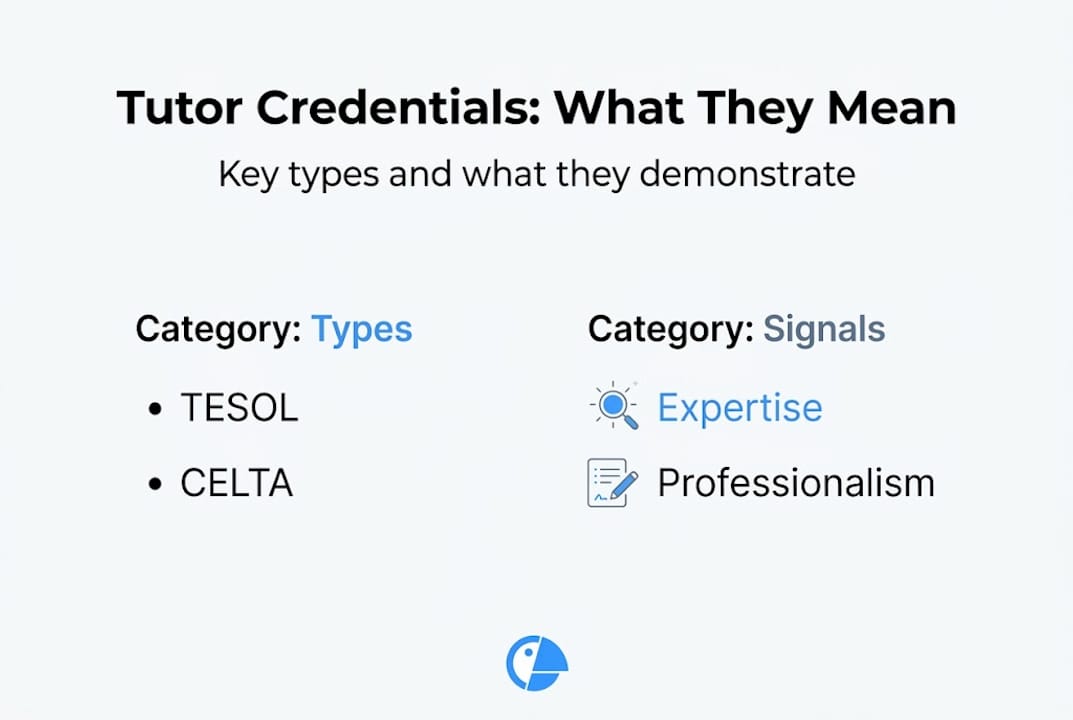
So what do these credentials actually prove? Consider the CELTA, which is widely regarded as the global benchmark for English language instruction. To earn it, candidates must complete a rigorous 120-hour programme combining theory with observed, assessed teaching practice. They study phonology (the study of sound systems in language), lesson planning, error correction techniques, and learner psychology. A tutor who has completed this process has not simply passed a test. They have demonstrated the ability to adapt their teaching to real students with real challenges.
Here are the major categories of credentials and what they signal:
- Teaching licences and diplomas: Awarded by government or accredited institutions, these confirm formal education in teaching theory and practice.
- Language-specific certificates (TESOL, CELTA, DELTA): Signal deep expertise in language instruction methodology.
- Professional association certifications (CRLA, ACTP): Demonstrate commitment to tutoring standards and ethics.
- University degrees in education or linguistics: Provide foundational academic knowledge in how language is acquired and taught.
"Not all credentials carry equal weight. Focus on those that are externally verifiable and widely recognised by professional organisations, rather than self-awarded or unregulated certificates."
Understanding the value of certification is especially important when comparing tutors online, where anyone can write an impressive-sounding bio. It is also worth noting that credentials apply equally to native and non-native tutors. A certified non-native English teacher may offer far more structured and effective instruction than an uncertified native speaker, depending on your goals. Credentials bridge this gap by providing a common, objective standard by which all tutors can be measured. As educators and institutions increasingly recognise, why credentials matter in tutoring goes beyond personal reputation and extends to verified, accountable expertise.
How credentials benefit your language learning journey
Understanding what credentials mean is one thing. But how do they actually impact your learning, motivation, and outcomes? The difference can be surprisingly significant, especially if you have specific goals such as exam preparation, professional communication, or rapid conversational fluency.

Certified tutors are trained in research-backed methods that accelerate learning. These include retrieval practice (the act of recalling information from memory rather than simply re-reading it), spaced repetition (revisiting content at strategically timed intervals), and scaffolding (building new knowledge step by step on existing foundations). These are not buzzwords. They are techniques rooted in cognitive science, and they consistently produce better results than improvised or intuition-based instruction.
Here is how certified tutors typically deliver better outcomes:
- They diagnose your specific gaps early. Trained tutors assess your current level, identify where you struggle, and design lessons that target those precise areas.
- They use proven error correction strategies. Rather than interrupting your flow constantly or ignoring mistakes, they know when and how to correct you for maximum retention.
- They adapt their pacing to your learning style. Whether you are a visual learner, an auditory learner, or someone who learns best through repetition, a certified tutor has the tools to adjust.
- They set measurable goals. Professional tutors track your progress and adjust their approach based on what is and is not working.
- They prepare you for real-world use. Certified instructors build lessons around authentic contexts, helping you use the language confidently outside the classroom.
As career research on tutor certifications confirms, certified tutors demonstrate commitment, enhance skills in innovative methods, student psychology, and communication, and this leads to higher earning potential and better job opportunities in language instruction. This market signal matters. It means that schools, institutions, and learners consistently reward certified tutors with more work and higher rates, precisely because their outcomes are superior.
The private tutoring benefits of working with a qualified instructor go further than just faster progress. Students who work with certified tutors report greater confidence, higher motivation, and a stronger sense of achievement. These psychological benefits compound over time, making you more likely to continue learning and reach fluency.
Pro Tip: When meeting a potential tutor, ask directly: "How does your certification influence how you structure lessons?" A strong, specific answer tells you they actively apply their training. A vague or confused response suggests their credentials may be more decorative than functional.
The impact on faster language learning results is real and measurable, particularly for learners working toward specific milestones like IELTS, DELF, or HSK examinations. Certified tutors know the exam formats, scoring criteria, and common learner pitfalls, giving you a genuine edge.
Native speakers, certified teachers, and non-native tutors: finding the right fit
Since tutor expertise goes beyond credentials alone, who is truly right for your learning style and goals? This question sits at the heart of many learner decisions, and the answer is more nuanced than most people expect.
| Tutor type | Key strengths | Best suited for |
|---|---|---|
| Native speaker (uncertified) | Authentic pronunciation, natural idioms, cultural fluency | Conversational practice, advanced fluency |
| Non-native certified tutor | Grammar explanation, structured learning, learner empathy | Beginners, exam preparation, formal writing |
| Native certified tutor | All of the above combined | Any level, complex goals |
| Bilingual non-native tutor | Shared learner experience, translation clarity | Beginners, learners needing L1 (first language) support |
Each tutor type brings genuine strengths. Native speakers offer an immersive window into how the language actually lives and breathes in everyday conversation. Their instinctive use of idioms, regional expressions, and authentic intonation patterns is difficult to replicate in a textbook. For native-speaking tutor benefits, these qualities are especially valuable for advanced learners who want to sound natural rather than textbook-perfect.
Research supports this nuanced view. For advanced levels and exam preparation, native speakers provide authentic pronunciation, idioms, and cultural nuances, while hybrid tutors who are both certified and native or non-native are considered optimal across all levels from beginner to advanced.
Non-native certified tutors often have a significant advantage for beginners. Having learned the target language themselves, they understand precisely where learners struggle. They can explain grammar rules in clear, systematic terms because they once had to master those rules consciously. As studies confirm, credentials and pedagogy matter more than native status alone, and traits like communication and adaptability outweigh test scores or credentials alone, with non-native tutors excelling at grammar explanation for beginners.
Here are the key factors to weigh when choosing your tutor type:
- Your current level: Beginners often progress faster with structured, grammar-focused instruction from certified non-natives.
- Your goals: Exam preparation benefits from certified tutors; conversational fluency benefits from native exposure.
- Your learning style: Some learners thrive with strict structure; others flourish in relaxed, conversation-based environments.
- Subject area: Business language, academic writing, and professional communication benefit strongly from certified expertise.
Pro Tip: For the best possible results, consider working with two tutors simultaneously: a certified tutor for structured grammar and writing, and a native speaker for conversational practice and cultural insight. Many successful language learners take exactly this approach.
How to verify tutor credentials and choose with confidence
Knowing the value of credentials and the differences between tutor types, how can you confidently choose the right tutor and avoid common pitfalls? The process does not need to be complicated, but it does require a few deliberate steps.
First, always ask to see original certificates, not just claims on a profile. A reputable tutor will be comfortable sharing verification. You can also check whether their certifications are registered with official bodies, such as Cambridge Assessment English (which administers CELTA and DELTA), or relevant national teaching authorities.
Here is a clear process for verifying and matching tutor credentials to your needs:
- Request original documents. Ask tutors to share scanned or photographed copies of their certificates and confirm the issuing organisation.
- Verify with the issuing body. Many professional organisations offer online verification tools. Cambridge Assessment English, for example, allows you to confirm CELTA and DELTA holders.
- Ask for references or testimonials. Past students offer real-world evidence of a tutor's effectiveness. Look for reviews that mention specific outcomes, not just general satisfaction.
- Match credentials to your specific learning needs. If you have a learning difference such as dyslexia, seek a tutor with a state licence or specialist qualification in that area. If you are preparing for IELTS, prioritise CELTA or DELTA-certified tutors with exam experience.
- Conduct a trial lesson. Observe how the tutor explains concepts, handles your mistakes, and adapts their pace. This is where credentials meet real-world teaching ability.
Watch for these red flags when reviewing tutor profiles:
- Vague credential claims with no issuing organisation named
- Certificates from unrecognised or self-regulated bodies
- Unwillingness to share documentation when asked
- No reviews or testimonials from past students
- Claims of "guaranteed fluency" in unrealistic timeframes
As established guidance on tutor qualifications makes clear, credentials signal professionalism and verify skills but do not guarantee effectiveness. Prioritise verifiable ones such as state licences and CELTA over self-awarded certificates, and always match the credential type to your specific learning needs.
A helpful step-by-step tutor selection process can make this decision much less overwhelming, especially for learners who are new to private tutoring. Similarly, if you are ever considering becoming a tutor yourself, understanding how to check tutor qualifications gives you a strong foundation for the profession. Resources on criteria for choosing online courses can further support your decision-making when comparing tutors and platforms.
What most people get wrong about credentials in tutoring
After breaking down the practical steps, it is worth reconsidering what truly matters in your search for a tutor.
Here is an uncomfortable truth: credentials open doors to higher-quality teaching, but they are not a guaranteed measure of a great tutor. We have all encountered highly qualified professionals who cannot explain things clearly or connect meaningfully with their students. Relying exclusively on credentials risks overlooking tutors who excel through adaptability, empathy, and a genuine passion for helping learners grow.
The most effective learning happens when strong credentials are matched with a modern, student-centred approach and authentic rapport. A CELTA-certified tutor who plans rigid, one-size-fits-all lessons will rarely outperform a flexible, engaged instructor who listens and adapts. The credential gets them to the starting line. What happens in the room is what determines your results.
We also encourage learners to be cautious about over-valuing "native" status as a standalone marker of quality. Nativeness is a characteristic, not a qualification. The best tutors, native or otherwise, are those who show proven results, clear communication, and genuine investment in your progress. Exploring private tutoring best practices can help you understand the combination of factors that truly drives language success, well beyond titles and certificates alone.
Find qualified language tutors tailored to your needs
Ready to find your ideal tutor? Here's a smarter way to take the next step.
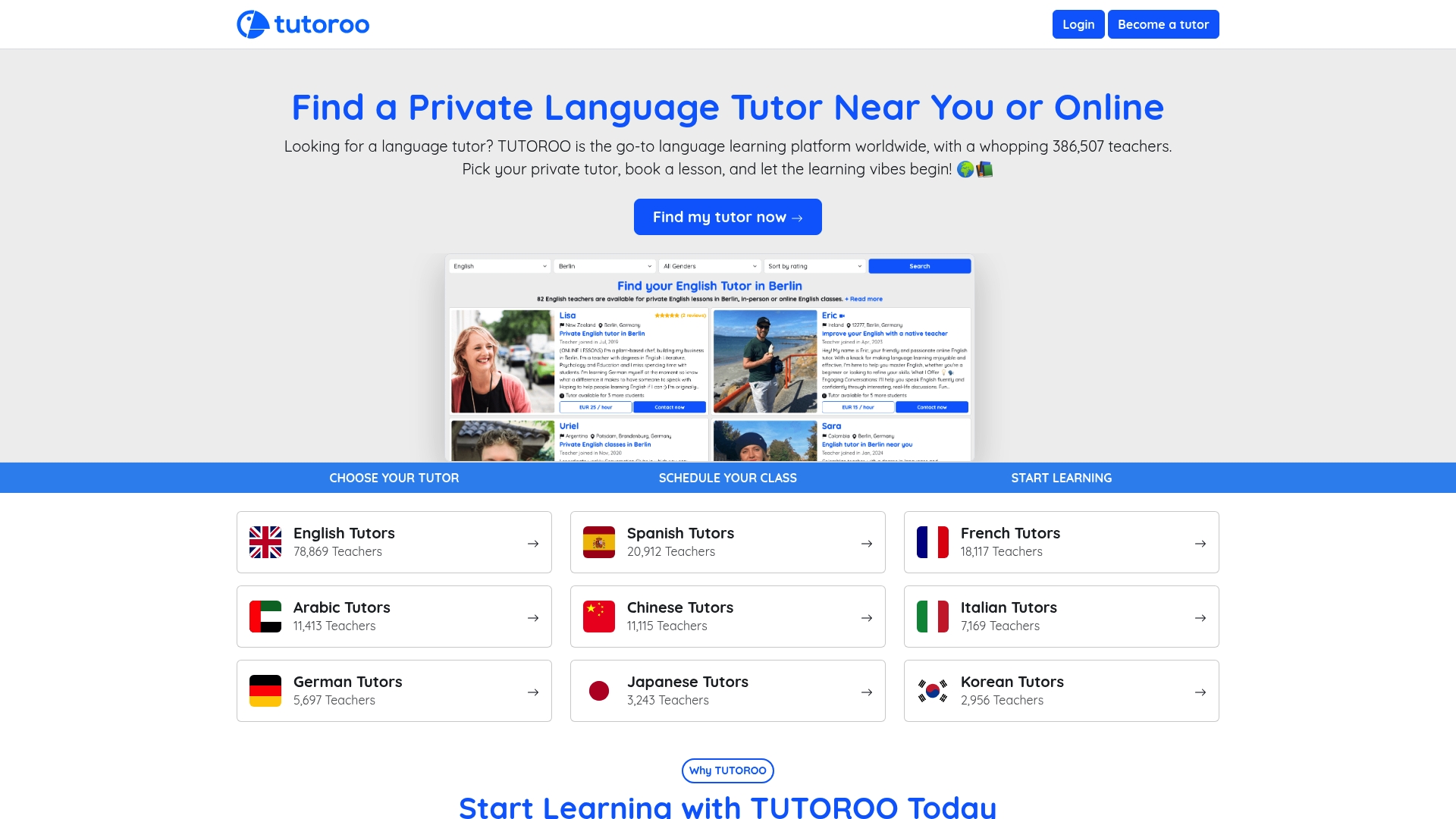
TUTOROO makes it straightforward to compare tutor credentials, backgrounds, teaching styles, and student reviews all in one place. With a community of over 386,000 language tutors on TUTOROO, you can filter by language, location, availability, and certification level to find someone perfectly matched to your goals. Whether you need a certified specialist for exam preparation, a native speaker for conversational fluency, or a bilingual tutor who shares your first language, the right match is ready. Explore options like English tutors for structured language learning or discover Lebanese tutors for a culturally rich, personalised experience. Your next great lesson is closer than you think.
Frequently asked questions
Why are tutor credentials important for language learners?
Credentials validate tutor expertise in pedagogy, subject knowledge, and teaching methodologies, ensuring a higher likelihood of structured, effective language instruction.
Do all good tutors need to be native speakers?
No. As research confirms, credentials and pedagogy matter more than native status alone, and non-native tutors often excel at grammar explanation, particularly for beginners building foundational skills.
What is the best way to verify a tutor's credentials?
Ask to see original certificates, confirm the issuing organisation through official channels, and review student references or testimonials, prioritising verifiable credentials such as state licences and CELTA over self-awarded ones.
How do certified tutors impact success in language exams?
Certified tutors apply proven teaching methods and exam-specific strategies. For advanced and exam-level learning, native and certified hybrid tutors are considered optimal, offering the combination of authentic language exposure and structured exam technique.