

Private Spanish lessons are one-on-one sessions with a tutor who builds every hour around your goal, whether that is ordering confidently on a trip, passing an exam, talking with a partner's family or preparing for a move. The best way to choose well is to match the tutor to your purpose first (which Spanish, which level, which schedule) and then confirm the fit in a short trial. On TUTOROO you can browse Spanish tutors drawn from a community of more than 386,000 language teachers, message them directly and arrange lessons in person or online.
This guide covers what private lessons are, what they typically cost in the United States, how to pick the right variety of Spanish, how to judge your level, and how to make each hour count. It also has a short section for tutors who want to teach.
TL;DR
- Private lessons are one-to-one and tailored to your goal, which makes them the fastest way to fix your own weak spots, unlike a group class that moves at the pace of the room.
- Budget roughly $15 to $60 an hour in the US, depending on the tutor's experience, lesson length, specialism and whether you meet online or in person.
- Choose the Spanish variety by who you will actually talk to: Mexican, Colombian, Castilian and so on.
- Spanish is a Category I language for English speakers, so steady weekly hours beat any promise of fluency in a few months.
- Message two or three tutors and book trial lessons before you commit to a block.
Table of Contents
- What private Spanish lessons are
- What private Spanish lessons cost in the US
- Choose the Spanish you will actually use
- Know your level before you book
- How long it takes, and why a clear goal matters
- How online lessons with a teacher work
- Compare tutors with trial lessons
- Preparing for a move to a Spanish-speaking country
- Promo: find your Spanish tutor on TUTOROO
- Our perspective
- For tutors: teaching Spanish on your own schedule
- FAQ
- Sources
What private Spanish lessons are
A private lesson is a session between you and one tutor. There is no syllabus fixed in advance and no classmates to wait for. The tutor listens to how you speak, corrects what matters most for your goal and sets work for the days between sessions. Lessons can be held in a café, a library or your home, or over video from anywhere.
That is the main difference from a group class. In a group, the pace and content suit the average student. In a private lesson, if your problem is the past tense, you spend the hour on the past tense. If you need to rehearse a job interview in Spanish, that is the lesson. Group classes can be good for social practice, but they cannot flex to one person's needs in the way a one-to-one hour does.
Private lessons suit several kinds of learner:
- Beginners who want correct pronunciation and habits from the first session.
- Intermediate learners who have a vocabulary but freeze when they have to speak.
- Exam candidates working towards a certificate such as DELE or SIELE.
- Travellers and people relocating who need practical Spanish by a certain date.
- Parents and educators looking for a patient tutor for a child or student who needs extra support or enrichment.
Our guide to how private language lessons work, what they cost and how to choose goes into the general picture for any language.
What private Spanish lessons cost in the US
Prices vary widely because the market is wide. Our own breakdown of US Spanish tutor prices puts typical rates between $15 and $60 an hour. Where you land in that range depends on a handful of factors:
| Factor | Effect on the hourly rate |
|---|---|
| Tutor experience and specialism | Exam preparation and business Spanish usually sit higher than conversation practice |
| Online or in person | In-person lessons in large cities such as San Francisco or Miami tend to cost more than online sessions |
| Lesson length | Longer sessions often have a lower effective hourly cost, shorter ones a higher one |
| Frequency | Weekly or twice-weekly blocks make planning simpler and progress steadier |
| Tutor location | Rates differ by country and by city |
A simple way to budget is to decide how many hours a week you can practise, multiply by the rate you are comfortable with, and then by four. At two hours a week and $30 an hour, that is $240 a month. If you are learning for work, our page on business Spanish tutoring costs shows what professionals can plan for each month, and our online language tutor cost guide shows the same for online lessons.
Because tutors on TUTOROO set their own schedules and are paid directly by students for ongoing lessons, you agree the rate and timing with the tutor yourself through the platform's messaging system. That keeps the conversation simple: you ask, the tutor answers, and you both know where you stand before the first lesson.
Choose the Spanish you will actually use
Spanish is spoken across more than twenty countries and the differences matter. Vocabulary, pronunciation and even the pronouns change. A tutor in Mexico City will teach you the Spanish of Mexico City. A tutor from Spain will use vosotros for the informal plural, which you will hear in Madrid but rarely in Bogotá or Los Angeles.
So start with a question: who will you talk to?
- Customers or neighbours in the US: most Spanish speakers in the US speak a Latin American variety, and Mexican Spanish is widely heard. A tutor from Mexico or Central America is a natural fit.
- A partner's family: choose a tutor from that country or region, so the slang and the accent are the ones you will meet at the dinner table.
- A move to Spain or clients there: a Castilian tutor will cover vosotros and the local usage.
- A move to a specific city: look for a tutor from that country, or ideally that region.
If you are torn, our four-question guide to Castilian versus Latin American Spanish walks through the decision. Whichever you pick, a good tutor will also make you aware of the differences, so you are not surprised when you travel.
Know your level before you book
Tutors and exams describe ability using the CEFR, the Common European Framework of Reference for Languages. It grades users in three bands from A (basic) through B (independent) to C (proficient), each split into two levels, A1 to C2. Knowing roughly where you sit helps a tutor plan, and it helps you describe your goal.
A rough guide:
- A1 to A2: you can handle greetings, simple questions and everyday phrases.
- B1 to B2: you can hold a conversation on familiar topics and cope with most travel situations.
- C1 to C2: you can use Spanish flexibly for work and study, and understand nuance.
You do not need a formal test. A tutor can place you in a single trial lesson by asking you to talk, read a short passage and explain what you have understood. If you want to prepare, try describing your day aloud in Spanish for two minutes and notice where you stall. Pronunciation is another quick check: the rolled r trips up many English speakers, and practising rolled r exercises for home practice before your first session gives your tutor a clearer starting point.
If an exam is your goal, see DELE versus SIELE to decide which certificate suits you, and when 12 to 20 weeks of DELE tutoring beats self-study for the timeline.
How long it takes, and why a clear goal matters
The US Department of State's Foreign Service Institute groups languages by how hard they are for English speakers. Spanish is in the easiest group, and the Department of State's language training page describes the easier languages as taking around 24 to 30 weeks of full-time study to reach professional working proficiency. That is roughly 600 class hours.
For a part-time learner, the arithmetic is useful:
| Weekly lesson hours | Time to reach about 600 hours |
|---|---|
| 2 hours | about 5.8 years |
| 4 hours | about 2.9 years |
| 10 hours | about 1.2 years |
Those figures are for professional working use, which is a demanding target. Most learners need far less: enough to travel comfortably, to chat with relatives, or to pass an intermediate exam. The lesson is that goals should be concrete and dated. "Be fluent" gives a tutor nothing to plan around. "Hold a ten-minute conversation about my work by June" does. Share a goal like that in your first message and a tutor can build the sessions backwards from it.
Practice between lessons carries a great deal of the gain. A tutor can set short tasks: five minutes of speaking aloud each day, a voice note to send before the next lesson, a page of reading. Ask for homework that fits your week.
How online lessons with a teacher work
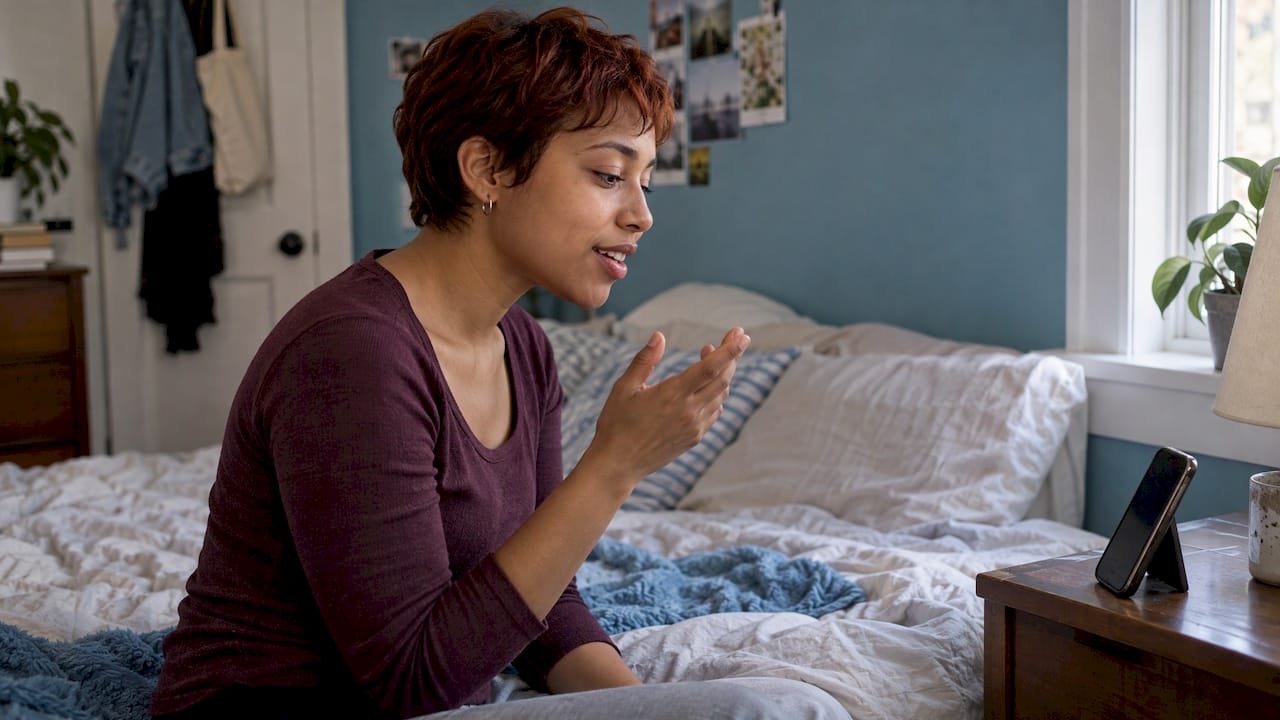
Online lessons run over video call at a time you and the tutor agree. They suit people whose city has few Spanish tutors, and they let you choose a teacher from the country whose Spanish you want. They also save travel time, so a one-hour lesson is exactly one hour.
A typical routine looks like this:
- Search. Filter by language, location or online, and availability.
- Read profiles. Look at the tutor's native language or background, the levels and goals they teach, and their lesson formats.
- Message. Tell the tutor your level, your goal and your available days. Ask how they would structure your first lesson.
- Trial. Have a first lesson to test the fit.
- Set a rhythm. Agree a weekly time and how the tutor will share materials and homework.
On TUTOROO, steps one to three happen on the platform, so you can approach several tutors and compare answers before spending an hour with anyone.
Questions to ask a tutor before the first lesson
- Which variety of Spanish do you teach, and have you taught learners at my level?
- How will you correct me: as I speak, or at the end?
- How much of the lesson will be in Spanish?
- What will we cover in the first session?
- Have you prepared students for DELE or SIELE, if that is my goal?
- What are your cancellation and rescheduling terms?
Agree the cancellation and payment terms in writing in the messages. If a tutor asks for payment in an unusual way, such as gift cards, cryptocurrency or a wire transfer, treat that as a reason to stop and pay only by ordinary methods.
Compare tutors with trial lessons
Two trial lessons with two different tutors tell you more than any profile. Notice whether the tutor listens more than they talk, whether they correct you in a way that keeps you speaking, and whether you leave knowing what you will do next. Teaching style is personal, and a tutor who suits a friend may not suit you. Our guide to booking two trial lessons before choosing a Spanish tutor lays out what to compare.
Private lessons also suit different learners differently:
- Adults learning for work often want a fixed weekly slot and a tutor who uses their industry's vocabulary.
- Children and teenagers usually do better with shorter, more frequent sessions and a tutor who keeps things playful. Parents can message tutors directly about the child's age and school Spanish, and ask what a first lesson will look like.
- Educators looking for a student who needs enrichment or catch-up can describe the curriculum and ask a tutor to work to it.
Preparing for a move to a Spanish-speaking country
If you are relocating, your lessons should look different from a general course. Spend the first sessions on the situations of your first weeks: renting a flat, opening a bank account, visiting a doctor, handling a phone contract, making small talk with neighbours. Ask your tutor to role-play these and to teach the regional words you will hear daily. Choose a tutor from your destination country, or ideally your destination city, so the accent in your ears matches the one on the street.
Schedule matters too. Start at least a few months ahead if you can, and treat the first month after arrival as a continuation of lessons, not a replacement for them. Keeping a tutor on video while you are abroad lets you bring real questions from daily life back into the lesson.
Promo: find your Spanish tutor on TUTOROO
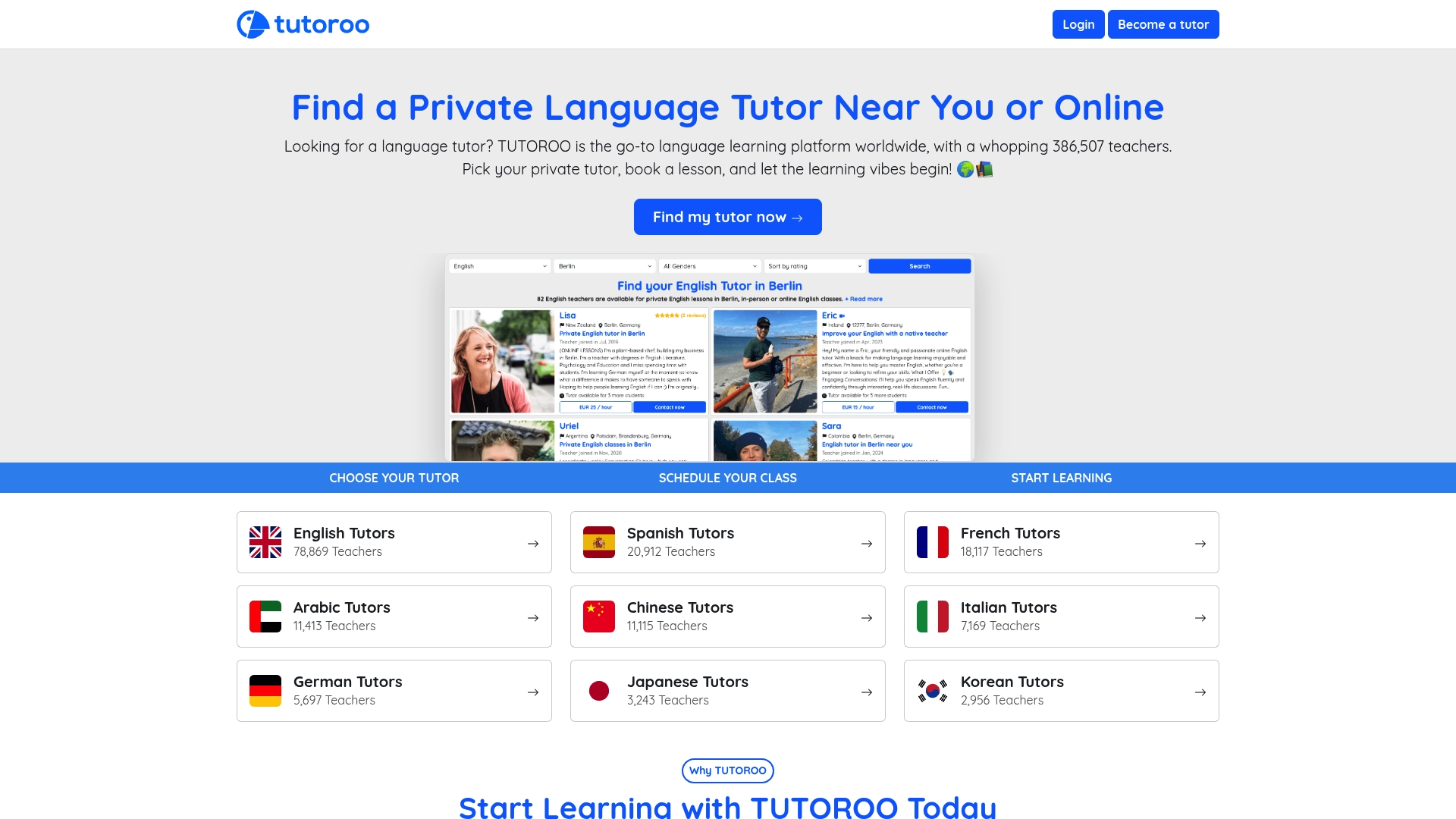
If you are ready to start, TUTOROO lets you search for Spanish teachers by location, availability and whether you want lessons in person or online. You can message tutors directly, ask the questions above and arrange a trial lesson. Start at our Spanish tutors page or browse every language at TUTOROO.
Our perspective
Spanish rewards people who speak it early and often. We built TUTOROO around that idea: a worldwide community of more than 386,000 language teachers, so a learner can find a tutor whose Spanish, location and schedule match their own life rather than settling for the nearest class.
The match matters more than any single feature. A learner preparing for Mexico City needs a different voice from one preparing for Madrid, and a parent finding a first tutor for a teenager needs a different conversation from a manager rehearsing meetings. Because students message tutors directly, those details are settled in plain language before the first lesson.
We also believe language learning is about culture as much as grammar. A tutor who grew up with the language opens doors to the music, the food and the everyday expressions that no textbook captures. That is the kind of personalised tuition we want every learner to find.
TUTOROO
For tutors: teaching Spanish on your own schedule
If you speak Spanish and want to teach, TUTOROO lets you register, build your profile, set your own schedule and receive payment directly from students. There is no requirement for qualifications or certifications for native speakers. You can see the listings for your city on pages such as Spanish teaching jobs in Barcelona or Dublin. A clear profile that names your variety of Spanish, the levels you teach and the goals you support helps learners find you.
FAQ
How much do private Spanish lessons cost?
In the US, expect roughly $15 to $60 an hour, according to our Spanish tutor price guide. Experience, specialism, lesson length and whether you meet online or in person shape where a tutor falls. Agree the rate with the tutor before the first lesson.
Are private lessons better than group classes?
Private lessons give you the tutor's full attention and a plan built around your goal, so every minute goes to what you need. That makes them a strong choice for exam preparation, a deadline or a specific weakness. Many learners also enjoy the flexibility of choosing their own time.
How many lessons a week should I take?
Two hours a week is a common starting point, and four or more speeds things up noticeably. Pair lessons with short daily practice, such as speaking aloud for five minutes. Tell your tutor your goal and date, and ask them to suggest a rhythm.
Can I take Spanish lessons online with a teacher from another country?
Yes. Online lessons let you pick a tutor from the country whose Spanish you want to learn, and you meet over video at a time that suits you both. On TUTOROO you can filter for online lessons and message tutors before booking.