

Expect to pay between $15 and $60 per hour for private Spanish tutoring, with many learners spending around $30 an hour for general conversation and grammar lessons. Where you land depends on the tutor's experience, whether you're learning online or face to face, and how long each session runs. The breakdown below shows exactly what shifts that number up or down.
TL;DR:
- Typical online Spanish tutoring rates range from $15 to $60 per hour, with most learners paying around $30 for standard lessons.
- Experience, certifications, and lesson format (online versus in-person) significantly influence the hourly price, especially in larger cities or for specialized subjects.
- Converting shorter lessons into an hourly rate reveals that a 30-minute session at $20 equals $40 per hour, which may be more expensive than longer sessions at a similar total cost.
- Booking packages or block lessons often results in better value, and trial lessons help determine if a tutor’s style matches your learning needs before committing.
- Regional differences mean tutors in big cities tend to charge more, but online lessons reduce geographic price disparities by allowing tutors to teach from lower-cost areas.
Table of Contents
- Spanish tutor cost: typical hourly rates by budget tier
- What actually drives the price difference between tutors
- Lesson lengths and how to work out the real hourly rate
- How to budget smarter and get better value
- How to choose a tutor without overpaying for the wrong fit
- Regional price differences you'll notice across the US
- Individual tutors vs language schools: which costs less?
- Additional costs beyond the hourly rate
- Finding affordable Spanish tutoring without cutting corners
- Tutoroo's take: comparing tutors properly matters more than chasing the lowest price
- Ready to compare Spanish tutors and find your fit?
Spanish tutor cost: typical hourly rates by budget tier
Rates cluster into three fairly predictable bands, and knowing which one you're shopping in saves a lot of back and forth with tutors who aren't the right fit.
- Budget tier ($15–$22/hr): Casual tutors, university students, or non-certified native speakers offering conversational practice. Great for building confidence and vocabulary, less structured for exam prep.
- Mid-range ($22–$40/hr): Experienced tutors, often with a TEFL or similar teaching qualification, who bring a lesson plan, homework, and progress tracking. This is where most private Spanish tutors sit.
- Premium ($40–$60+/hr): Certified language teachers, specialists in business Spanish or exam preparation (DELE, SIELE), or tutors with niche expertise like medical or legal Spanish.
Marketplace listings consistently show that $15–$60/hr range, with the general mid-point sitting near $30 an hour for standard one-on-one lessons. That figure moves around depending on your city, the tutor's location if lessons are in person, and how many years they've spent teaching. A retired schoolteacher in a smaller US city might charge $25 an hour for the same quality of instruction that costs $55 in a major metro from a tutor juggling a waitlist.
Platform-based tutoring tends to sit lower than boutique language schools because there's no bricks-and-mortar overhead baked into the price. That's one reason a marketplace model works well for budget-conscious learners who still want a properly vetted tutor.
What actually drives the price difference between tutors
Two tutors can teach the same textbook and charge wildly different rates. The gap usually comes down to four things.
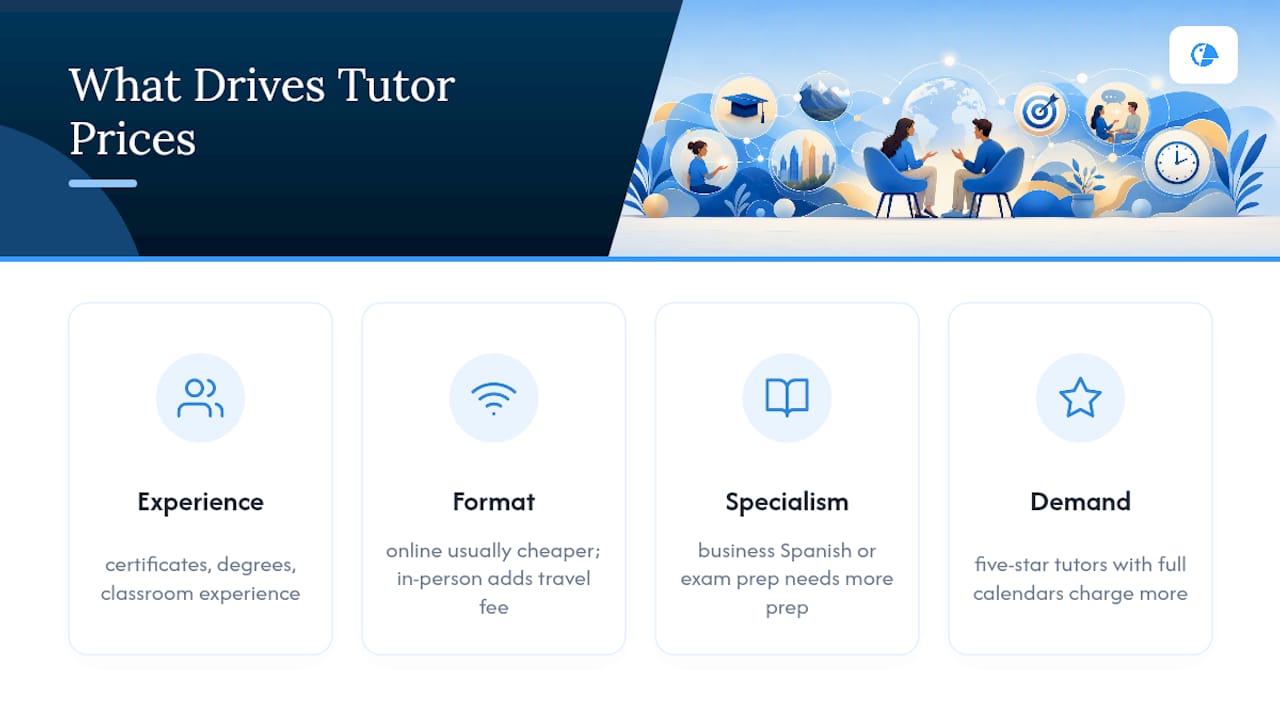
Experience and credentials. A tutor with a teaching certificate, several years of classroom experience, or a university language degree will price higher than a casual native speaker offering conversation practice. That's a fair trade, because qualified tutors tend to teach with more structure and measurable progress, not just chat. If you're specifically after native fluency and cultural nuance, it's worth understanding what a native-speaking tutor actually brings to a lesson before you compare it against a cheaper non-native option.
Format: online versus in-person. Online lessons are almost always cheaper because there's no travel time or petrol involved. In-person tutors often add a travel fee or charge more per hour to cover the commute, particularly in spread-out cities. If you're weighing up the two, the trade-offs between local and online tutoring are worth a proper look before you commit to a term of lessons.
Specialism and prep time. Business Spanish, exam coaching, or lessons built around your industry's vocabulary take more preparation than a general conversation class, and tutors price accordingly.
Demand and availability. A tutor with five-star reviews and a full calendar can charge more simply because they can. A tutor just starting out on a platform often prices lower to build a client base.
Pro Tip: Ask a prospective tutor whether their listed rate already includes platform fees or whether that gets added at checkout. Some tutors quote their net take-home; others quote the all-in price. It changes what looks like the "cheaper" option.
Lesson lengths and how to work out the real hourly rate
Tutors rarely sell lessons in tidy one-hour blocks. Thirty and forty-five-minute sessions are common, and converting those into an hourly equivalent is the only fair way to compare two tutors quoting different session lengths.
- Take the session price and divide by the minutes, then multiply by 60. A $20 30-minute lesson works out to $40 an hour, even though it looks cheaper upfront.
- Compare that hourly equivalent against the tutor's own 60-minute rate, if they offer one. Some tutors charge proportionally less per minute for longer sessions because there's only one lesson setup and one wrap-up per booking.
- Factor in prep time for anything customised. A tutor building materials around your job or exam might fold 15 to 30 minutes of planning into a 60-minute rate, which is why two "one-hour" lessons can feel very different in value.
A worked example: a 45-minute lesson at $30 equals $40 an hour. A 60-minute lesson at $35 is actually cheaper per hour despite the higher sticker price. Shorter lessons suit total beginners who tire quickly, or busy professionals fitting Spanish around a lunch break, but they're rarely the cheapest option once you do the maths on the hourly conversion.
How to budget smarter and get better value
Most tutors expect to discuss packages, not just single sessions, so this is where real savings happen.
- Ask about block discounts. Buying five or ten lessons upfront often earns a reduced rate compared with paying session by session, and it locks in a consistent booking slot.
- Weigh frequency against length. Two 30-minute sessions a week can build momentum faster than one long weekly lesson, especially for beginners, even if the combined cost is similar.
- Book a trial lesson before committing to a package. A short introductory session tells you fast whether the tutor's teaching style and pace actually suit you, and most tutors on marketplaces offer one precisely for this reason.
Pro Tip: Frame any price conversation around a package, not a single lesson. Tutors are far more open to a discount for four weeks of committed bookings than a discount on one isolated hour.
How to choose a tutor without overpaying for the wrong fit
Price alone tells you very little about whether a tutor will actually get you speaking Spanish confidently. Run through these before you book anything beyond a trial.
- Ask about qualifications and teaching approach. A quick question about their background and how they structure a typical lesson tells you whether you're getting a plan or just improvised chat.
- Ask what materials are included. Some tutors provide worksheets, recordings, and homework as standard; others charge separately or expect you to source your own.
- Check the cancellation and rescheduling policy. This matters more than it sounds, particularly if you travel for work or have an unpredictable schedule.
- Read reviews and check response times. Tutors with detailed profiles and genuine student feedback are easier to judge on value, not just price.
Red flags worth taking seriously: a tutor who can't explain their lesson structure, one who pushes an expensive package before you've had a trial, or one with no reviews and a suspiciously low rate. Comparing tutors by profile depth and reviews, not just the number next to the dollar sign, is how platforms are designed to help you filter properly.
Regional price differences you'll notice across the US
Where you live shapes your Spanish tutor price per hour more than almost any other factor, aside from the tutor's own experience level. Tutors in large coastal cities, particularly where cost of living runs high, tend to price toward the upper end of the $15–$60 range simply because their own expenses are higher and demand is stronger.

Smaller cities and regional areas often see lower average rates, partly because tutors there have less competition pushing prices up, and partly because the cost of living gives them more flexibility to charge less. This regional difference mostly applies to in-person tutoring. Online lessons flatten a lot of that variation, because a tutor based in a lower cost-of-living area can teach a student anywhere in the country at the same online rate, which is one of the quieter advantages of learning remotely rather than insisting on someone local.
Time zones can still nudge things slightly. A tutor working evenings to match a very different US time zone might charge a touch more for the inconvenience, though this is a minor factor compared with experience and lesson format.
Individual tutors vs language schools: which costs less?
Language schools and structured course providers typically price higher than an individual private tutor, and the reason is straightforward: you're partly paying for the institution, not just the teaching time. A private class through an education provider often bundles in curriculum design, facilities, and administrative overhead that an independent tutor simply doesn't carry.
That doesn't make schools bad value. Established institutions can offer more rigorous placement testing, structured progression through levels, and sometimes group options that lower the per-person cost if you're comfortable learning alongside others. But for one-on-one instruction specifically, an independent tutor sourced through a marketplace almost always beats a school's private tutoring rate, because there's no institutional markup sitting between you and the person actually teaching you.
The trade-off is that you do more of the vetting yourself. A school pre-screens its teachers; with an individual tutor, you're relying on reviews, profiles, and your own judgement during a trial lesson. For most budget-conscious learners, that extra bit of homework upfront is worth the savings over a full term of lessons.
Additional costs beyond the hourly rate
The hourly rate rarely tells the whole story. A few extra line items can quietly add to your total spend if you're not asking about them upfront.
Materials and textbooks. Some tutors supply worksheets and resources as part of their rate; others expect you to buy a textbook or subscribe to a workbook platform separately. Ask before you commit to a package.
Platform or registration fees. Some marketplaces charge a one-off matching or introduction fee to connect you with a tutor, after which ongoing lessons are paid directly to the tutor with no further platform charge. Others fold a service fee into every session price. Understanding how a tutor's posted rate is composed avoids an unpleasant surprise at checkout.
Cancellation and no-show charges. Many tutors charge for lessons cancelled with less than 24 hours' notice, which is standard practice and worth confirming before your first booking.
Currency or payment processing fees, if you're booking a tutor based overseas, can also add a small percentage on top of the quoted price.
Finding affordable Spanish tutoring without cutting corners
You don't need to pay premium rates to get consistent, useful practice. A few routes are genuinely underused.

Community and library programs. Many US public libraries and community colleges run low-cost or free conversation groups, particularly in areas with a strong bilingual population. These won't replace structured tutoring but they're excellent for building fluency between paid sessions.
Language exchange. Trading English conversation practice for Spanish practice with a native speaker costs nothing but time, and platforms built specifically for this exist alongside tutoring marketplaces. It suits learners who already have some grammar grounding and mainly need speaking confidence.
Student and trainee tutors. Tutors still completing certification, or university students majoring in Spanish, typically charge toward the bottom of the $15–$60 range while still offering genuine structured lessons.
Group lessons. Splitting a tutor's hourly rate across two or three learners cuts your individual cost significantly, though you sacrifice some of the personalised attention.
Tutoroo's take: comparing tutors properly matters more than chasing the lowest price
The biggest budgeting mistake we see isn't overspending. It's picking the cheapest tutor without checking whether their teaching style actually fits, then paying for a package that goes unused after three lessons. A marketplace with a large, transparent pool of tutors, Tutoroo's community runs into the hundreds of thousands of teachers, exists precisely to let you compare profiles, read genuine reviews, and message a tutor before you commit a cent to a block booking.
Trial lessons matter more than any discount. Spend five minutes messaging two or three tutors about their approach before booking, and you'll spend your budget far more wisely than by sorting a list purely by price.
— TUTOROO
Ready to compare Spanish tutors and find your fit?
Tutoroo gives you direct access to tutor profiles, real rates, and a messaging system, so you can compare fit before you spend a dollar on a package, unlike a language school where you're often locked into a fixed curriculum and price. Search by availability, budget, and specialism, message a few tutors about their teaching style, and book a trial lesson to see how it feels before committing to anything longer.
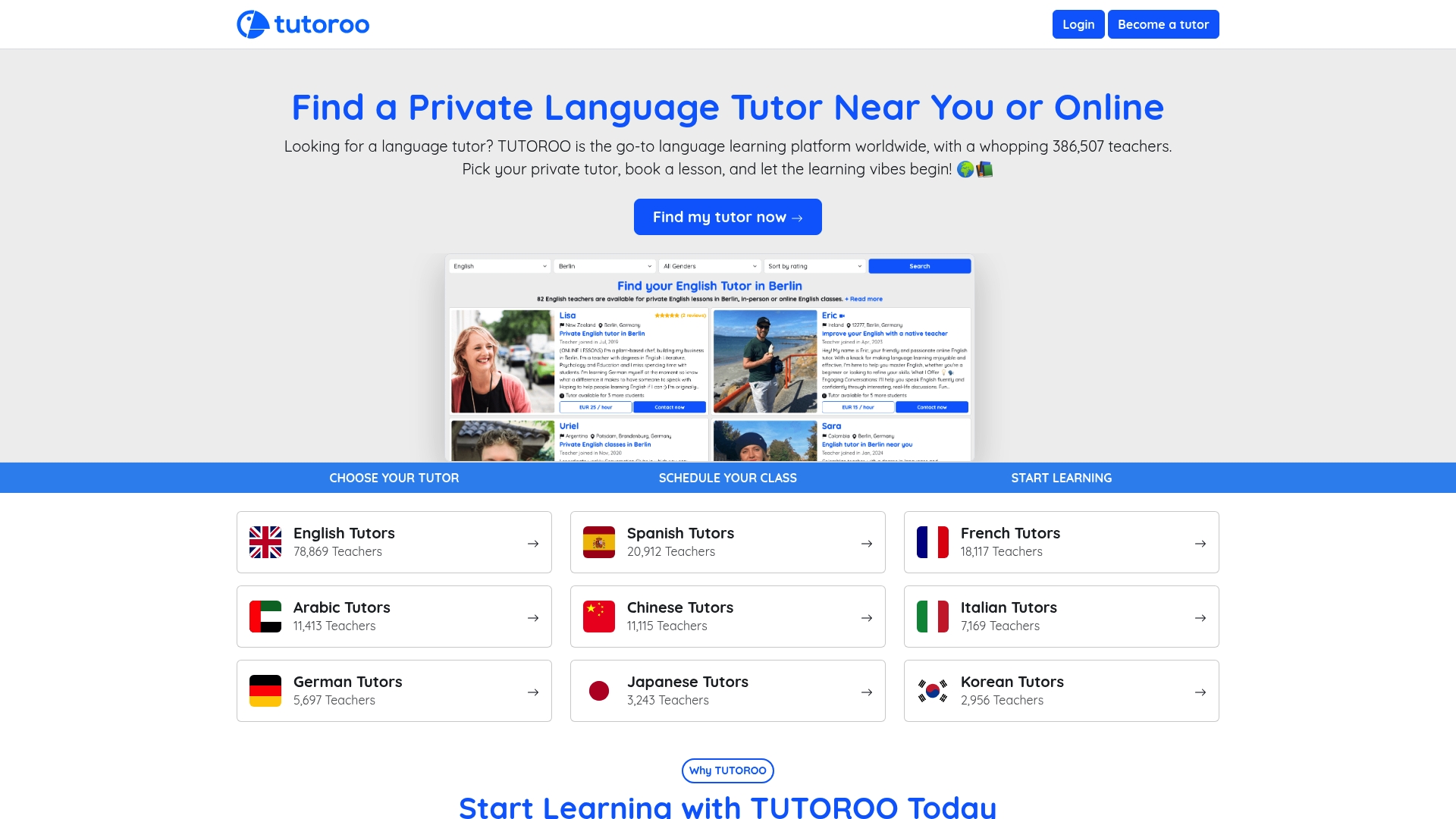
Head to Tutoroo to browse tutor profiles and rates, or go straight to the Spanish tutor listings to start messaging tutors who match your budget and schedule today.