

Book a trial with a vetted tutor through a marketplace that allows direct messaging and encourages diagnostic replies, then judge fit by how the tutor structures that first session, not by their résumé. Look for a tutor who asks about your goals before pitching a package, proposes a short plan, and checks your understanding rather than just talking at you. One option built around exactly this trial-first approach is a marketplace platform.
TL;DR:
- A trial session should include a diagnostic assessment, a short practice relevant to your goal, and a clear follow-up plan to evaluate tutor fit.
- Matching the tutor's specialty to your specific goal is crucial; a conversation-focused tutor may not be suitable for exam preparation, and vice versa.
- Preparing a concise goal statement before messaging tutors improves response quality and helps identify the best fit quickly.
- On platforms like Tutoroo, look for tutors who ask diagnostic questions, propose a plan, and avoid committing until after trial sessions with at least two candidates.
- Pricing varies widely based on credentials and specialization, but value often depends on the tutor's ability to diagnose gaps and tailor lessons rather than just the hourly rate.
Table of Contents
- How do I choose a Spanish tutor?
- Where do I find a vetted online Spanish tutor?
- What does a Spanish tutor typically cost?
- What should the trial session actually look like?
- What questions should I ask a potential tutor?
- How do tutor qualifications and certifications actually compare?
- How do I evaluate teaching style against my own goals?
- Tutoroo's take on choosing a tutor without the guesswork
- Get started with a Spanish tutor on Tutoroo
- Sources
- FAQ
How do I choose a Spanish tutor?
Choosing well comes down to matching the right tutor type to your actual goal, then testing that match in a real session before committing to anything longer. A tutor who's brilliant for exam preparation might bore a learner who just wants confident holiday conversation. The screening below sorts candidates before you spend a cent on a full package.
Match goals to tutor type first. Conversational fluency, DELE exam prep, and business Spanish call for different teaching approaches entirely. A tutor who specialises in grammar drilling for certification exams isn't necessarily the right fit for someone who wants to chat comfortably with in-laws in Buenos Aires.
Ask for a session plan before you book anything longer than a trial. A tutor worth your time should be able to describe, in a sentence or two, how they'd structure your first few lessons. Vague answers like "we'll just see how it goes" aren't automatically wrong, but they give you less to evaluate.
Weigh credentials against demonstrated fit. A DELE certificate or a TEFL qualification matters more for exam-focused learners who need someone who knows the marking rubric cold. For conversational learners, a native speaker with strong teaching instincts and patience often outperforms a formally credentialed tutor who's never taught casual speech. Screening works best when it focuses on evidence the tutor can teach your exact need, not just an impressive CV.
Check safeguarding when the learner is a minor. If you're booking for a child, ask directly about background checks, verification badges, or platform vetting standards. This matters far less for adult learners booking for themselves, but it's non-negotiable when kids are involved.
Get logistics straight before the first lesson. Confirm cancellation policy, what tech is required (Zoom, a specific app, a shared document), whether materials are provided or you need to source your own, and how payment actually works.
Here's the checklist worth running through before you message anyone:
- Does the tutor's specialty match your goal (conversation, exam, business)?
- Can they describe a rough plan for your first three sessions?
- Do their credentials matter for your specific goal, or is fit more important?
- Is there a clear cancellation and rescheduling policy?
- Is payment transparent, with no pressure to prepay for a large block?
Pro Tip: Write down your goal in one sentence before you start browsing profiles ("I want to hold a 10-minute conversation about my job by December"). Tutors respond far better to a specific target than to "I want to learn Spanish," and you'll spot the right fit faster.
Where do I find a vetted online Spanish tutor?
Three channels dominate the search: marketplaces with verified tutor profiles, referrals from people who've already found someone good, and language schools or institutions with affiliated tutors. Marketplaces tend to be fastest because you can filter by language, availability, and specialty, then message several candidates in the same afternoon.
Here's a practical sequence for actually doing it:
- Shortlist three to five profiles based on specialty match, not just star ratings or price. Read the tutor's own description of how they teach, not just the summary blurb.
- Send a first message that gives the tutor enough to work with. Include your current level, your specific weak spot (verb conjugation, listening comprehension, whatever it is), your goal, your timeline, and your availability. A tutor can't give you a useful diagnostic reply if all you send is "hi, interested in lessons."
- Read the replies for diagnostic thinking, not sales pitches. A strong reply asks follow-up questions and proposes a short plan rather than jumping straight to "here's my 20-lesson package." That's one of the clearest signals you'll get before ever speaking to them.
- Book trials with your top two or three picks. Don't commit to just one. Comparing two trial sessions side by side tells you far more than either one alone.
- Keep a simple comparison note covering teaching style, clarity, whether they checked your understanding, and how you felt afterwards. Three lines per tutor is enough.
Institution-affiliated tutors (through a university language centre or a certified school) can offer more formal structure and paperwork, useful if you need documented hours for a course requirement. Referrals carry real weight too, but they're slower and limited to whoever your network happens to know. A marketplace with direct messaging and visible tutor profiles, Tutoroo included, tends to be the quickest way to get several real options in front of you within a day.
What does a Spanish tutor typically cost?
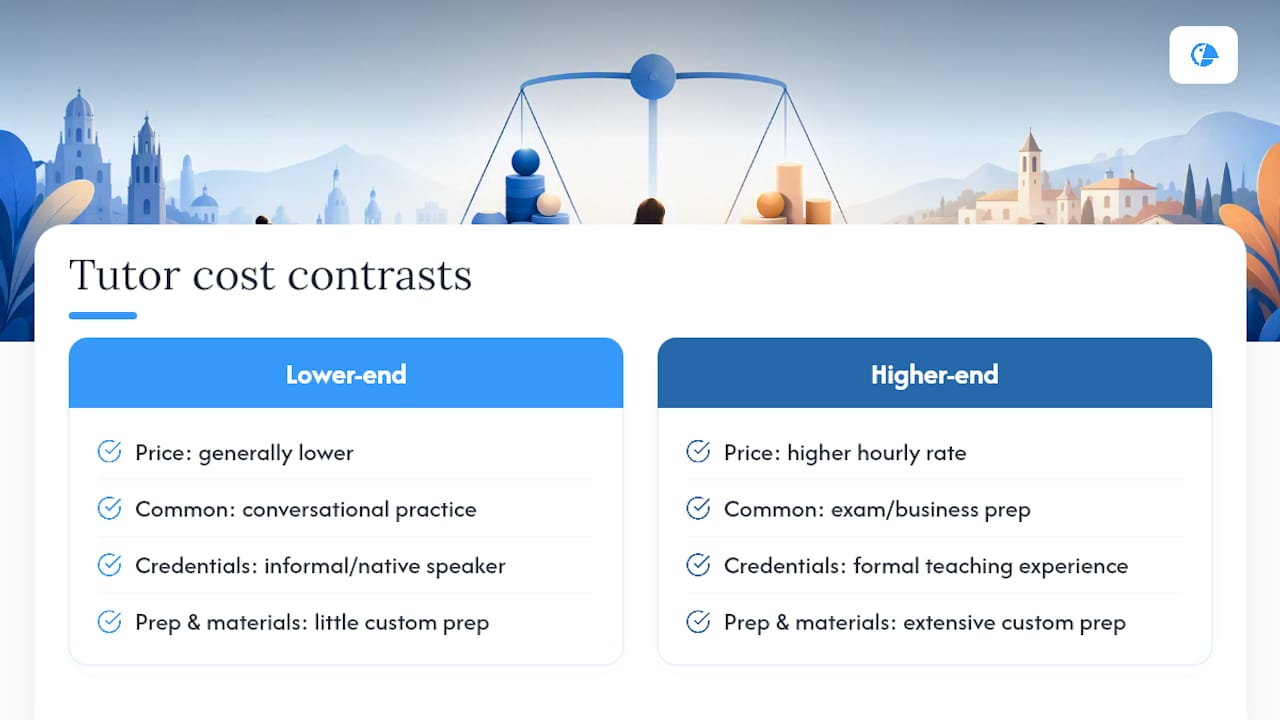
Private Spanish tutoring rates vary widely depending on tutor experience, specialization, and lesson format, reflecting differences in credentials and demand. Conversational practice with a native speaker generally sits at the lower end. Exam preparation, business Spanish, or tutors with formal teaching credentials and years of classroom experience command the higher end.
Statistic Callout: Full breakdowns of US pricing bands and what drives them show that lesson length, package size, and how much prep the tutor does between sessions all move the price beyond the base hourly rate.
Longer lessons and bundled packages usually bring the per-hour rate down slightly, but they also lock you into a commitment before you've confirmed fit. A tutor who spends real time preparing custom materials for your specific goal, rather than running a generic curriculum, will typically charge more, and that's often money well spent once you know the fit works.
The best budgeting approach is simple: pay for a trial session or a short initial block of three or four lessons before agreeing to anything larger. Value shows up in the plan a tutor proposes and the diagnostics they run early, not in the sticker price alone. A cheaper tutor who diagnoses your gaps accurately and follows up with structured tasks often delivers more progress than an expensive one who improvises every session.
What should the trial session actually look like?
A well-run trial follows a loose but recognisable script: a quick diagnostic to gauge your level, fifteen to twenty minutes of guided practice on something relevant to your goal, and a proposed plan for what comes next. Guides on hiring tutors consistently point to the trial as the moment to watch for this structure, rather than taking a polished sales pitch at face value.
Watch for whether the tutor checks your understanding as they go, rather than just talking through material and hoping it lands. Good tutors pause, ask you to repeat or paraphrase, and adjust when something clearly isn't working. They'll usually send a short follow-up note afterwards summarising what you covered and what's next.
A few things should end the search early:
- Evasive or vague answers when you ask how they'd structure your lessons.
- Pressure to prepay for a large package before you've even finished the trial.
- No diagnostic element at all, just straight into generic content.
- Poor tech setup (dropped calls, no shared materials, obvious lack of preparation).
Pro Tip: If a trial feels flat but the tutor's diagnostic and plan were genuinely sharp, don't write them off. Renegotiate the format (shorter sessions, different focus) before switching. A slightly awkward first session with strong structure often beats a charming one with none.
The decision rule is straightforward: continue if the tutor diagnosed accurately and proposed something specific, renegotiate if the substance was right but the delivery didn't click, and switch if there was no diagnostic and no plan at all.
What questions should I ask a potential tutor?
The questions that reveal the most aren't about qualifications. Ask how they'd structure your first three lessons based on what you've told them about your goal. Ask what a typical session looks like: how much is conversation, how much is grammar, how much is correction. Ask how they measure progress, whether that's informal check-ins or something more structured.
Ask about materials: do they bring their own, or expect you to find resources? Ask about homework or follow-up tasks between sessions, since a tutor with no plan for the gaps between lessons is relying entirely on session time to do all the work. Ask how they handle a student who's clearly stuck on something, since the answer tells you a lot about patience and teaching instinct.
Finally, ask what happens if the first lesson doesn't feel like a fit. A tutor who answers this comfortably, without getting defensive, is usually more confident in their own teaching than one who brushes the question aside. The goal isn't to interrogate anyone. It's to get enough concrete detail that you can compare answers across two or three candidates side by side.
How do tutor qualifications and certifications actually compare?
Formal certification carries real weight for some goals and almost none for others. DELE examiners, certified teachers with a TEFL or CELTA, and university-trained instructors bring documented expertise that matters enormously if you're preparing for a specific exam or need academic credit. They know the rubric, the common failure points, and the exact phrasing examiners expect.
For conversational Spanish or general fluency, a native speaker without formal teaching credentials can be just as effective, sometimes more so, because they teach the way the language is actually spoken rather than the textbook version. The trade-off is that they may have less structure and less experience diagnosing why a specific error keeps recurring.
The practical comparison isn't "credentialed versus uncredentialed." It's "does this person's background match what I actually need." A business Spanish learner preparing for client calls in Madrid needs someone who understands professional register and idiom, credentialed or not. A learner working toward DELE certification needs someone who's coached students through that exact exam before. Ask directly what their credentials or experience are for your specific goal, and weigh the answer against that goal, not against a generic idea of what makes a "good" tutor.
How do I evaluate teaching style against my own goals?
Teaching style only matters in relation to what you're trying to achieve, so the evaluation starts with being honest about your goal. A learner chasing conversational confidence needs a tutor who talks fast, corrects lightly, and keeps momentum going. A learner working through grammar gaps for an exam needs someone patient enough to explain the subjunctive four different ways until it clicks.
Watch how a tutor responds to a mistake during the trial. Do they correct immediately, interrupting flow, or do they let you finish and circle back? Neither approach is wrong, but one will suit you better depending on whether you learn best through immediate feedback or through completing a thought first.
Notice the balance of talking. If the tutor is doing most of the talking with heavy explanation, that can work well for grammar-heavy exam prep but will frustrate someone who just wants practice speaking.
The emotional response matters as much as the academic structure: learners who feel encouraged and genuinely look forward to sessions tend to stick with tutoring longer and progress further than those grinding through lessons they dread. If a tutor's style leaves you deflated rather than motivated, that's a legitimate reason to keep looking, even if their credentials check every box.
Tutoroo's take on choosing a tutor without the guesswork
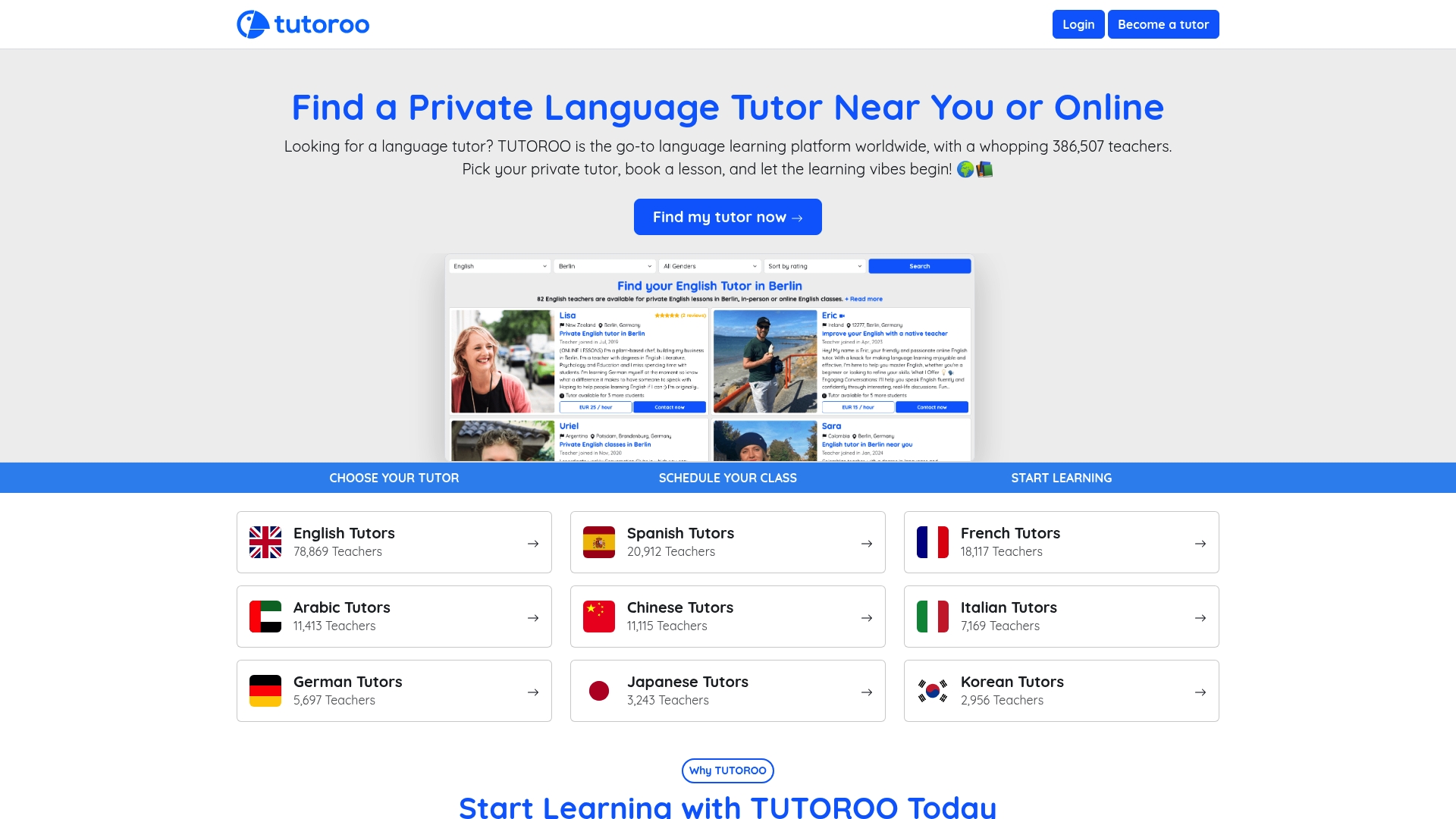
Most of the friction in finding a Spanish tutor isn't a shortage of good tutors. It's the time cost of finding them, messaging them, and figuring out who's actually good at teaching versus who just looks good on paper. Tutoroo works as a marketplace connecting students directly with private language tutors worldwide, with profiles, direct messaging, and flexible scheduling built to cut that search time down.
The platform does not require certification for native speakers; for conversational learners especially, teaching instinct and rapport often matter more than a formal qualification. Tutors on the platform set their own schedules and receive payments directly from students.
When a marketplace match works best is exactly the trial-first scenario covered above: message two or three tutors with a clear goal statement, compare how they reply, and book trials before committing further.
Get started with a Spanish tutor on Tutoroo
An online platform provides the direct route to a Spanish tutor without the back-and-forth of scanning dozens of directory sites or waiting on a referral. Instead of a generic enrolment process, you browse tutor profiles, message the ones whose teaching style and specialty match your goal, and book a trial directly with them.
At first contact, expect exactly what this guide recommends you look for: tutors who ask diagnostic questions, propose a short plan, and let you judge fit in a real session rather than a sales call. With a large community built around one-on-one lessons, you're not limited to whoever happens to be nearby. If your goal is exam prep, business Spanish, or just confident everyday conversation, that range of specialists is what makes the trial-first approach actually work.
Visit the Spanish tutor page on Tutoroo to browse profiles and send your first message today. If Spanish isn't the only language on your list, Tutoroo also connects learners with French, Japanese, and several other languages through the same trial-first model.
Sources
- How to choose a tutor: trials & red flags
- Care
- How to Choose the Right Tutor for Your Child (2026 Guide)
FAQ
What is the 80/20 rule for Spanish?
Applied to tutoring, the 80/20 idea suggests roughly 20% of Spanish vocabulary and grammar covers around 80% of everyday conversation, so a good tutor prioritises high-frequency words and common structures early rather than working through a textbook in strict order. Ask a prospective tutor how they sequence lessons. If they can't explain a rough priority order, that's worth noting.
How much do private Spanish tutors charge?
Private Spanish tutoring typically runs from around $15 to $60 an hour, with the exact rate depending on experience, specialisation, and lesson format. Conversational practice tends to sit at the lower end, while exam preparation or business Spanish with a highly credentialed tutor sits higher.
What is the best website for finding Spanish tutors?
The best option depends on whether you want direct messaging with individual tutors or a more structured institutional programme. Marketplaces with verified profiles, like Tutoroo's Spanish tutor listings, let you compare several tutors' teaching styles and message them directly before booking a trial.
Is $50 an hour too much for tutoring?
Not necessarily. It depends on what the price includes, since a tutor who runs a proper diagnostic, prepares custom materials, and follows up with structured tasks between sessions can deliver more value than a cheaper tutor improvising each lesson. Judge the rate against the plan and structure on offer, not against the number alone.