

Expect to pay about $15 to $60 per hour for business Spanish tutoring, with packages and corporate rates changing the effective cost once you commit to a schedule, according to pricing guidance from the tutoring industry. The simplest way to find the right fit at the right price is to book two trial lessons before committing to a package. A learner having two one hour lessons a week typically budgets a few hundred dollars a month, varying by the tutor's experience and specialty.
TL;DR:
- Business Spanish tutoring generally costs between $15 and $60 per hour, with higher rates for industry-specific expertise and certified tutors.
- Effective pricing can be reduced through packages and group lessons, with monthly costs ranging from $180 to over $840 depending on session frequency.
- Online lessons tend to be cheaper than in-person sessions, especially in high-cost cities, due to travel savings and broader tutor availability.
- Ask potential tutors about their experience with industry vocabulary and their assessment methods to ensure the match with your specific workplace needs.
- Combining self-study with occasional tutor sessions can optimize costs while maintaining industry-specific skills and confidence.
Table of Contents
- Typical hourly rates for business Spanish tutors: what to expect
- What affects a tutor's rate: experience, specialty and other drivers
- Pricing by format: private lessons, group classes, packages and corporate training
- Monthly budgeting examples and what you can expect to achieve
- Questions to ask tutors and pricing red flags to avoid
- How to find and book a business Spanish tutor
- Regional price variations in business Spanish tutoring
- Common additional fees and hidden costs to watch for
- Self-study versus hiring a tutor: comparing the real cost
- Our view on budgeting and outcomes for business learners
- Try TUTOROO for business Spanish tutoring
- FAQ
- Sources
Typical hourly rates for business Spanish tutors: what to expect
Business Spanish sits in a slightly different pricing tier to general conversation lessons, mostly because it demands specialist vocabulary, role play and materials built around your industry. Guidance for tutors entering the online market notes that business speciality lessons commonly command a premium over general conversation classes, since they require tailored preparation and workplace coaching skills that a casual conversation tutor may not offer.
Within the broader $15 to $60 hourly range, you'll find three practical bands:
- Entry level ($15 to $25 per hour): newer tutors, students or native speakers without formal teaching credentials, often fine for building confidence or practising everyday workplace phrases.
- Mid range ($25 to $40 per hour): qualified tutors with teaching experience and some business vocabulary grounding, the sweet spot for most professionals.
- Premium ($40 to $60 per hour): specialists with industry knowledge (legal, finance, sales, healthcare) and a track record coaching corporate clients.
Online lessons generally sit at the lower end of each band, as tutors save on travel time and can take more students, while in-person tutoring in major cities tends toward higher rates due to travel and local availability.
Session length changes your per hour cost less than you might expect, but it still matters for budgeting. A 30-minute session often carries a slightly higher effective hourly rate because setup and wrap up eat into a shorter lesson. A 45-minute session is a common middle ground for busy professionals who want substance without a full hour away from work. A 60-minute session is the standard unit most tutors price around, and 90 minute sessions suit intensive preparation before a trip, negotiation or presentation, usually at a modest discount to two separate 45 minute bookings.
A detailed breakdown of Spanish tutor pricing confirms the $15 to $60 hourly range and ties it to budgeting advice for learners choosing between casual and intensive study. Knowing where you sit in that range before you start shopping saves you from either overpaying for a generalist or underpaying for a specialist who can't actually help with your industry vocabulary.

What affects a tutor's rate: experience, specialty and other drivers
Price differences between tutors rarely come down to one factor. A handful of variables combine to set the number you see on a profile or quote.
- Experience and formal qualifications: a tutor with a TEFL or DELE certification, or several years teaching adults, typically charges more than a native speaker tutoring casually.
- Business speciality and industry knowledge: a tutor who understands legal, medical or sales vocabulary brings value that a general conversation tutor can't replicate, and prices accordingly.
- Lesson format and prep time: a tutor who builds custom materials, assigns homework and tracks your progress invests more time outside the session, which shows up in the rate.
- Market location and scheduling: tutors in higher cost cities, and tutors booked during peak evening or weekend hours, often charge more than those with flexible daytime availability.
Timezone overlap matters more than most learners expect. If you need a tutor available during your early morning before work, you're competing with other professionals for the same narrow windows, and that scarcity nudges prices up.
Pro Tip: Ask a prospective tutor directly whether they've taught business or industry specific Spanish before, rather than assuming a high rate automatically means specialised experience.
None of these factors work in isolation. A highly qualified tutor with no business background may charge less than a less credentialed tutor who has spent years coaching sales teams. The rate tells you about demand and positioning, not automatically about fit for your specific goals.
Pricing by format: private lessons, group classes, packages and corporate training
Your per hour rate changes depending on how you buy your lessons, and the headline number on a tutor's profile isn't always the number you'll actually pay once you commit.
- Private one-to-one lessons carry the full hourly rate, typically $15 to $60, with no sharing of the tutor's attention.
- Packages of multiple lessons often reduce the effective per hour rate, as tutors prefer the booking certainty over single sessions. Comparing package structures against single bookings is worth doing before you pay for a block of ten or twenty hours upfront.
- Group or semi-private lessons split the tutor's hourly rate among a few learners, lowering the cost per person, though at the expense of personalised attention.
- Corporate training arrangements typically have pricing models suited to training multiple employees, such as per-person fees, flat workshop rates or monthly retainers.
As a worked example: if a tutor charges $40 an hour privately but offers a ten lesson package for $360, your effective rate drops to $36 an hour. A group lesson at the same tutor's $40 rate split between three colleagues brings each person's cost down to roughly $13.30 an hour, a meaningful saving if your team can coordinate schedules.
Semi-private arrangements work particularly well for colleagues at a similar level who want to practise workplace scenarios together, and a structured trial checklist for semi-private lessons helps you confirm the format suits everyone before locking in a package.
Monthly budgeting examples and what you can expect to achieve
Turning an hourly rate into a monthly figure makes it far easier to plan, and your expected outcomes shift noticeably depending on how much time you commit.
- Low commitment (one hour a week): roughly $60 to $240 a month, enough to maintain existing skills or build basic confidence slowly.
- Steady progress (two to three hours a week): roughly $180 to $840 a month, the range most professionals land in for genuine improvement over a few months, matching typical online tutoring budgets.
- Accelerated learning (four or more hours a week, or intensive blocks): can exceed $840 a month, suited to tight timelines like an upcoming posting, negotiation or client visit.
Suggested monthly budgets for learners typically fall between $180 and $840 a month, depending on lesson frequency and hourly rate, based on internal budgeting guidance for online language tutoring. That range covers the vast majority of working professionals pursuing business Spanish alongside a full time job.
Returns diminish once you pass a certain point. Two or three focused hours a week with clear homework between sessions tends to outperform five scattered hours with no follow up. If you're preparing for something specific and time bound, an intensive block in the weeks beforehand is usually a better investment than stretching the same hours thinly over months.
Questions to ask tutors and pricing red flags to avoid
A short conversation before you book can save you from a package that doesn't fit your goals or budget.
- Ask about objectives and assessment: how will the tutor track progress toward your specific workplace goals, and will you get any kind of regular feedback?
- Ask about materials: are workplace scenarios, vocabulary lists and role plays included in the rate, or billed separately?
- Ask about cancellation and make-up policy: what happens if you need to reschedule, and do unused package lessons expire?
- Ask about reporting: if your employer is funding the lessons, can the tutor provide simple progress summaries?
Watch for a few warning signs. A tutor who refuses a trial lesson, who can't explain how they'll measure your progress, or who charges unexplained fees on top of the quoted rate is worth approaching cautiously. Vague promises about fluency timelines without any plan behind them are another sign to look elsewhere.
If you're booking a block of lessons or a corporate package for a team, it's reasonable to ask politely whether a discount applies for volume or a longer commitment. Most tutors expect this question and will often have a package rate ready.
How to find and book a business Spanish tutor
Once you know your budget, the process of finding the right tutor is straightforward if you follow it in order.
- Set your goal: decide whether you need conversational confidence, industry vocabulary, or preparation for a specific event.
- Set your budget: use the bands above to decide whether you're aiming for entry level, mid range or premium.
- Shortlist a few tutors: look for business specialisation and relevant industry experience in their profile.
- Book two trial lessons: comparing two tutors directly is the most reliable way to judge teaching style and fit, a strategy outlined in detail for choosing a Spanish tutor.
- Evaluate and commit: choose the tutor who communicates clearly, understands your goals and matches your schedule, then consider a package once you're confident.
Professional networks, corporate learning and development teams, and verified tutoring marketplaces are the three most common places to start a search. A marketplace with a large community of tutors, like TUTOROO, makes it easier to filter by language, specialty and availability without relying on word of mouth alone.
Regional price variations in business Spanish tutoring
Rates shift noticeably depending on where you and your tutor are based, even for identical lesson content. Tutors based in major Spanish speaking cities with a high cost of living, or in large English speaking cities with strong demand for professional tutoring, tend to sit toward the upper end of the hourly bands.
Online tutoring narrows this gap considerably, since a tutor based in a lower cost region can teach you from anywhere without the premium tied to local in-person demand. This is one of the main reasons online business Spanish lessons often land at the lower end of the pricing range compared to in-person sessions in expensive cities.
Timezone compatibility plays into regional pricing too. A tutor whose working hours overlap conveniently with yours, regardless of where they're physically based, can charge a premium simply because that overlap is in demand. If your schedule is flexible, you'll generally find more competitive rates by widening your search to tutors in different time zones rather than restricting yourself to your own region.
For most professionals, the practical takeaway is that location matters less online than it does in person, and the biggest price lever remains the tutor's specialisation and experience rather than their postcode.
Common additional fees and hidden costs to watch for
The hourly rate a tutor quotes isn't always the full picture. A few additional costs show up often enough that it's worth asking about them upfront.
Materials are the most common extra. Some tutors include custom worksheets, business vocabulary lists and role play scripts in their hourly rate, while others charge separately for prepared materials or textbooks. Clarify this before booking a package, since it can meaningfully change your effective cost.
Travel expenses apply mainly to in-person lessons. A tutor travelling to your office or home may add a small travel fee, particularly if you're outside their usual area, which is one more reason online lessons often work out cheaper overall.
Cancellation fees or lost lesson credits are another area to check. Some packages have an expiry date on unused lessons, or charge a fee for cancellations made with little notice. Reading the cancellation policy before paying for a block of lessons avoids an unpleasant surprise later.
Corporate training arrangements sometimes carry a setup or onboarding fee covering needs assessment and custom curriculum design, separate from the ongoing per-session or retainer cost. If you're budgeting for a team, ask whether this is a one-off charge or built into the regular rate.
Self-study versus hiring a tutor: comparing the real cost
Self-study tools, textbooks and apps carry a lower sticker price than hiring a tutor, which makes them tempting for a tight budget. But the comparison isn't just about the upfront cost.
A textbook or app subscription might cost a fraction of an hourly tutoring rate, but it offers no feedback on your pronunciation, no correction of workplace specific vocabulary, and no accountability to actually show up and practise. For general vocabulary building or grammar revision, self-study can be a genuinely efficient use of a limited budget.
For business Spanish specifically, the gap widens. Industry vocabulary, negotiation phrasing and the confidence to handle a live client call aren't skills that most apps are built to develop. A tutor who understands your industry can correct mistakes in real time and build lessons around scenarios you'll actually face at work, which is difficult to replicate with self-study alone.
A practical middle ground many professionals use is combining both: self-study for vocabulary and grammar maintenance between sessions, paired with regular tutor time focused on conversation, correction and workplace scenarios. This keeps your overall monthly cost lower than tutoring alone while still getting the human feedback that self-study can't provide.

Our view on budgeting and outcomes for business learners
Most professionals we see land comfortably in the $25 to $40 hourly range and budget $180 to $840 a month depending on how many hours they commit each week. Booking two trial lessons before choosing a tutor consistently produces better long term fit than picking based on price alone. Prioritise the tutor who understands your industry over the one who simply charges less.
Try TUTOROO for business Spanish tutoring
Finding a tutor who actually understands your industry shouldn't take weeks of searching. Our platform connects you with tutors from a large global community, filtered by language, specialty and availability, so you can compare business Spanish specialists side by side rather than guessing from a single listing.
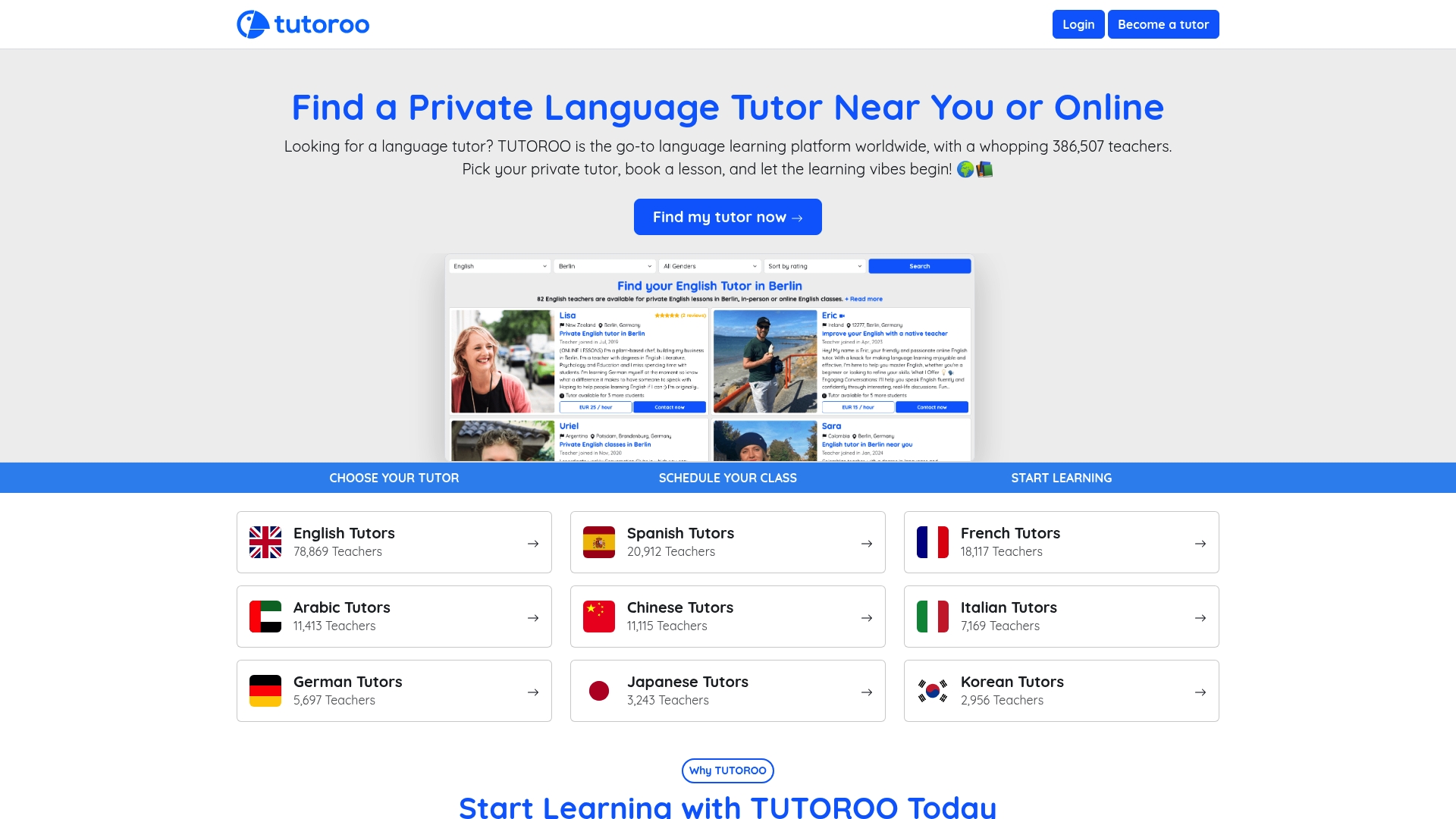
Browse Spanish tutors online and book your first two trial lessons to compare teaching style and fit before committing to a package. If you're budgeting for a team, comparing tutoring costs against other employee training expenses can help put the investment in perspective.
FAQ
How much do private Spanish tutors charge?
Private Spanish tutors typically charge between $15 and $60 per hour, with the exact rate depending on experience, specialisation and whether lessons are online or in person, according to industry pricing guidance. Business Spanish lessons tend to sit toward the middle or upper end of that range because of the specialist vocabulary involved.
Is $50 an hour too much for tutoring?
$40 to $60 an hour sits within the premium band for business Spanish tutoring, which generally runs up to $60 an hour for specialists with industry knowledge and teaching credentials. Whether it's reasonable depends on whether the tutor brings business specific expertise, so it's worth confirming their background before deciding.
Is hiring a Spanish tutor worth it?
For workplace goals like client calls, negotiations or presentations, a tutor offers real time correction and industry specific coaching that self-study tools generally can't replicate. Booking a couple of trial lessons is the simplest way to judge whether the value matches the cost for your specific goals.
How much does a tutoring business cost?
This typically refers to the cost of running a tutoring service rather than hiring a tutor, and pricing varies widely depending on scale and business model. For learners looking to hire a tutor rather than start one, the relevant figure is the $15 to $60 hourly range covered above.