

PET tutoring is worth it when you have a clear gap to close and a test date to work towards: weak speaking, shaky writing or no feedback at home. It matters less if you already study steadily and score well on practice papers. Here, PET means the Cambridge English B1 Preliminary exam, formerly the Preliminary English Test, not a pet-training course. This guide shows how to tell which group you belong to, what a good tutor does in the weeks before the exam, and how to spend your money sensibly.
TL;DR
- One-to-one PET tutoring pays off most for speaking and writing, the two skills where self-study gives you the least feedback.
- Research on English learners found that engagement was similar in group classes, private tutoring and online self-study, so task design counts as much as format.
- A short diagnostic lesson tells you whether you need weekly tutoring, a few targeted sessions or just a good practice routine.
- Choose a tutor on exam experience, a written plan and a willingness to mark your work, not on price alone.
- Check the fee and test dates with an authorised exam centre, since centres set what you pay.
Table of Contents
- What the PET exam is and who sits it
- When PET tutoring is worth the money
- When self-study may be enough
- Tutor, group class or self-study: how they compare
- What a tutor can do for your PET preparation
- How to choose a PET tutor
- Try one lesson first
- A simple eight-week plan with a tutor
- What it costs and how to keep it sensible
- Our view: why targeted tutoring pays off
- Find a PET tutor on Tutoroo
- FAQ
- Sources
What the PET exam is and who sits it
B1 Preliminary is a Cambridge English qualification for learners who have mastered the basics of English and have practical language skills for everyday use. Cambridge offers B1 Preliminary for adults and a version called B1 Preliminary for Schools for school-age learners. The two versions test the same level, so the choice usually depends on the candidate's age and what the exam centre offers.
The level is intermediate. Cambridge describes the certificate as accepted as evidence of spoken and written English for study, work and life. Students use it to support applications, parents use it to give a teenager a concrete milestone, and adults use it as proof of progress after years of casual study.
The exam tests four skills: reading, writing, listening and speaking. That detail drives the whole question of whether tutoring is worth it. Reading and listening can be practised alone with past papers. Writing and speaking need another person to tell you what is working and what is not.

When PET tutoring is worth the money
Tutoring tends to earn its cost in a handful of situations. If one of these describes you, lessons are likely to move your result more than another month of solo practice.
You have a test date and not much time
When the exam is a few months away, an experienced tutor can cut out guesswork. They know the task types, show you what examiners look for, and point your limited hours at the weakest paper. Self-study works well with unlimited time. With a deadline, a guide saves weeks.
Your speaking is behind your reading
Many learners can read a B1 text comfortably but freeze when asked to describe a photo or discuss a choice with a partner. Speaking improves through repetition with real-time correction. A tutor can run mock speaking tasks, time you, and tell you which habits to change.
You write, but no one corrects it
Writing practice without feedback often repeats the same errors. A tutor who marks your emails and stories, and returns them with a short list of patterns to fix, gives you something an answer key cannot.
You have stalled on practice papers
If your scores have sat in the same range for a month, you are probably repeating a weakness you cannot see. A tutor can analyse your mistakes, group them and set targeted tasks.
You study best with accountability
A booked lesson every week is a commitment that an app notification is not. For many learners, and for parents of teenagers, that structure is the real value.
When self-study may be enough
Tutoring is not essential for everyone. A learner who is comfortably above B1, who already speaks regularly with confident English speakers, and who scores well on timed practice papers may need only a mock exam or a couple of check-in sessions.
The research gives a useful reminder. A 2022 study by Andrew E. Sampson compared cognitive engagement in group classes, one-to-one private tutoring and online self-study and found that deep, elaborate engagement occurred to a similar extent in all three, with task design affecting how engaged learners were. The practical lesson: a format does not do the work by itself. A tutor is worth paying for when they design tasks that make you think and produce English, rather than when they simply sit beside you while you complete worksheets.
If you are weighing the options, tools to learn English faster can sit alongside lessons: they help with daily practice, while a tutor handles the feedback that practice tools cannot give.
Tutor, group class or self-study: how they compare
| Need | One-to-one tutor | Group class | Self-study |
|---|---|---|---|
| Personal feedback on writing | Detailed and tailored | Limited, shared with others | None unless you pay for marking |
| Speaking practice | Frequent, one-on-one | Shared time | Hard to arrange alone |
| Schedule | Flexible, agreed with you | Fixed by the class | Fully yours |
| Pace | Set around your gaps | Set for the group | Set by you |
| Accountability | Booked lessons | Class attendance | Self-discipline only |
| Best for | Targeted gaps and tight deadlines | Learners who enjoy peers | Confident, disciplined learners |
Most successful candidates mix the three: they self-study reading and listening, then use a tutor for the two productive skills. That mix also keeps cost down, because you pay for expert time only where it makes a difference.
What a tutor can do for your PET preparation
A good tutor does more than explain grammar. In practice, the most valuable work falls into five areas.
- Diagnosis. A first lesson with a practice paper or a short speaking task shows where you lose marks.
- Exam technique. Knowing how to approach each task type, manage time and avoid leaving blanks can lift a score without any new vocabulary.
- Speaking rehearsal. Mock interviews and picture description tasks build fluency and confidence, and a tutor can correct recurring pronunciation and phrasing habits as they happen.
- Writing feedback. Marked drafts, with your recurring errors named, are the fastest way to improve the writing paper.
- A study plan. Between lessons you should know exactly what to practise, for how long, and with which materials.
For wider reading on how personal instruction speeds up progress, our guides on the benefits of private tutoring and one-on-one tutoring and personalised learning gains go deeper. If you are comparing exam routes, we also cover when TOEFL tutoring pays off, and the same try-before-you-commit logic applies to PET.
How to choose a PET tutor
The label "English tutor" covers a wide range of experience. For an exam like PET, look for these signs.
- Exam familiarity. Ask how many learners they have prepared for Cambridge exams and which papers they find most difficult to teach.
- A clear plan. A good tutor can outline what the first four weeks will look like after one conversation.
- Willingness to mark work. Ask whether they correct your writing between lessons and how quickly they return it.
- Speaking time. In a one-hour lesson, you should be the one talking for much of it.
- A good fit. You will practise speaking with this person every week. A warm, patient style matters, especially for teenagers and nervous speakers.
- Practical terms. Confirm the lesson length, the cancellation policy and the rate before you begin.
On Tutoroo, you can browse profiles, read what each tutor offers, and message them before you decide. Our guide to private tutoring best practices explains how to get the most from each session once you have chosen.
Try one lesson first
The lowest-risk way to answer "is it worth it for me?" is a single trial lesson. Bring a recent practice paper and a clear goal, for example "I want to pass B1 Preliminary and I'm worried about speaking." At the end, ask yourself:
- Did I leave knowing what to practise?
- Did the tutor spot something I had not noticed?
- Did I speak or write for most of the lesson?
- Would I be comfortable doing this weekly?
If the answers are yes, continue. If not, try another tutor. Fit matters, and a mismatch does not mean tutoring itself has failed. We make the same case for other exams in our pieces on JLPT tutoring and HSK tutoring.
A simple eight-week plan with a tutor
This outline shows how a tutor can structure the time before the exam. Adapt it to your starting level and how many weeks you have.
- Week 1: diagnostic. Take a full practice paper, review the results together, and choose two priority skills.
- Weeks 2 to 3: foundations. Work on the weakest paper, with short homework tasks. Begin weekly speaking rehearsal.
- Weeks 4 to 5: skills in context. Practise timed writing and listening tasks. The tutor marks your writing and lists your three most common errors.
- Weeks 6 to 7: full practice. Sit complete timed papers, then run a mock speaking test with feedback.
- Week 8: polish. Revisit remaining weak spots, rehearse exam-day routines and rest.
The tutor's role changes over time: first diagnosing, then teaching, then testing. If your tutor is still only explaining grammar in week six, ask for more mock tasks.
What it costs and how to keep it sensible
Tutor rates differ by experience, subject focus and location, and each tutor sets their own rate. An exam specialist will often charge more than a general conversation partner, and that can be a fair trade if their experience is what you need. Our overview of online language tutor costs helps you plan a monthly budget.
You also pay Cambridge exam costs separately. Candidates register directly with an exam centre they find online, and the centre tells them the fee along with the exam date, time and address. Fees and dates depend on the centre, so ask before you budget.
To make each dollar work harder:
- Do reading and listening practice alone, and spend tutor time on writing and speaking.
- Send writing to your tutor before the lesson, so class time goes to discussion.
- Record your speaking practice and listen back between sessions.
- Book a few focused sessions instead of an open-ended course if your gap is narrow.
Our view: why targeted tutoring pays off
At Tutoroo, we see exam preparation as a question of fit and focus. A large worldwide network of tutors means a learner can search by language, availability and style, and speak to a tutor directly before committing. That matters for PET, because the learners who benefit most are those who find someone who understands their specific gap and who makes them speak and write in every session.

We believe the strongest case for private tutoring is the feedback loop: you attempt something, a person who knows the exam responds, and you try again straight away. Study guides and apps cannot replace that loop, and in the final weeks before an exam it is often what separates a nervous candidate from a prepared one. The best results come when a tutor builds lessons around your own errors, your own timeline and your own goals, and when you treat each session as practice for the real thing.
That is why we encourage learners to book a trial lesson, ask direct questions, and judge the tutor by what they leave with. Personalised tuition earns its place when it changes what you do between lessons.
— TUTOROO
Find a PET tutor on Tutoroo
If you are ready to compare tutors, you can browse English tutors on Tutoroo, message them to ask about Cambridge exam experience, and arrange a first lesson at a time that suits you, online or locally where available.
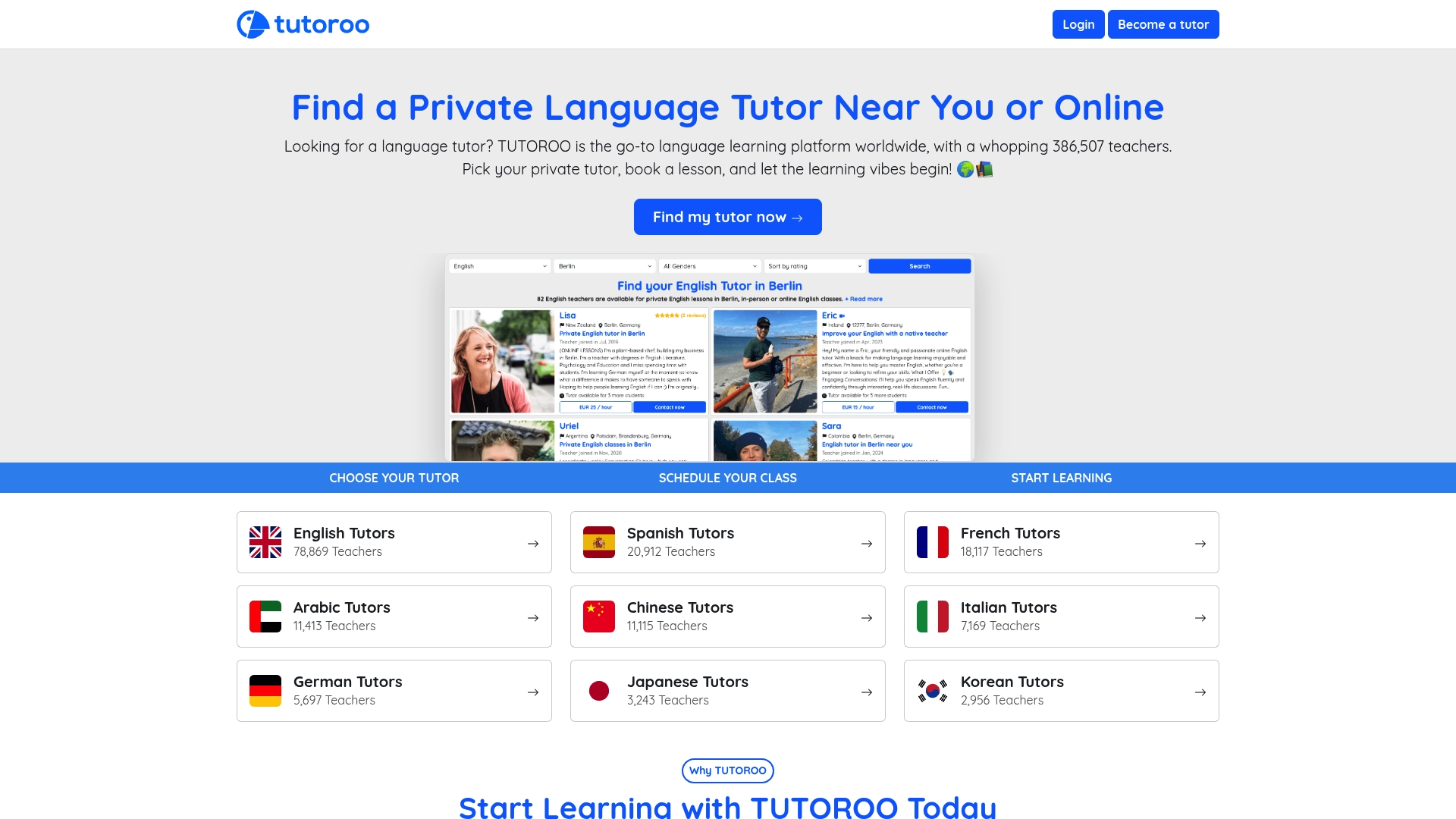
Tutors on the platform set their own schedules and agree lesson terms with you directly, so you can look for someone who fits your goals and timetable. You can also see all the languages we cover on our main page.
FAQ
Is the PET the same as a pet-training course?
No. In this article PET means the Cambridge English B1 Preliminary exam, previously called the Preliminary English Test. It is an intermediate English qualification aligned with level B1. If you searched for dog or cat training, you want a local animal trainer instead.
Can I pass the PET without a tutor?
Yes, many people do, especially if they practise all four skills regularly and can get feedback from somewhere. Reading and listening are easy to practise alone. Writing and speaking are harder without a second person, which is where most learners choose to add a few tutor sessions.
How many lessons do I need?
It depends on your starting point and your timeline. A learner close to B1 may need a handful of targeted sessions, while someone starting further back needs weekly lessons over several months. A diagnostic lesson gives you a realistic answer for your case.
How do I book the exam itself?
Independent candidates can look online for a centre that offers the exam and register directly with it. The centre tells you the fee and sends the exam date, time and address, so confirm these details before you plan your lessons around a date.
Is online tutoring as good as lessons in person?
For an exam like PET, online lessons work well because the key tasks are speaking, writing and feedback, all of which transfer easily to video. Choose whichever format you will attend consistently. A reliable weekly slot matters more than the location.
Sources
- B1 Preliminary for Schools and B1 Preliminary, Cambridge English
- B1 Preliminary information for candidates, Cambridge English
- Cognitive learner engagement compared between EFL course formats, Sampson, 2022
- 3 Tools That Will Help You Learn English Faster