
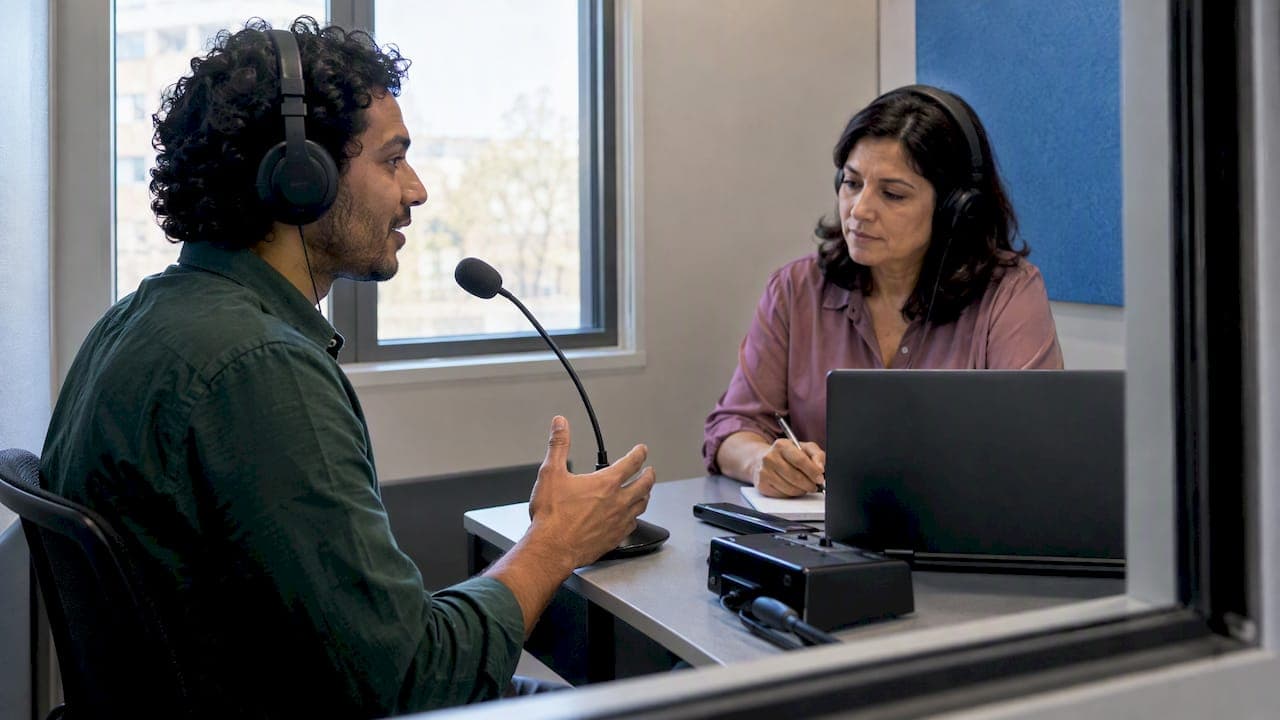
OPIc tutoring is worth it for a specific kind of learner: someone who already speaks the language reasonably well, has a target rating and a deadline, and needs feedback on how they answer rather than more vocabulary. It is poor value if you are hoping a few sessions will replace years of use. The test measures proficiency built over time, so a tutor can sharpen what you have, but cannot manufacture it overnight.
Below we explain what the test actually checks, what a tutor can and cannot do, what the evidence says, what it costs in the United States, and how to tell whether you are the right fit.
TL;DR
- Tutoring pays off when you are already conversational and need targeted feedback, timed practice and help organising answers.
- It does not pay off as a crash course: ACTFL says the test rewards proficiency developed over time, not memorised speech.
- A small 2013 pilot study found learners who finished recorded speaking assignments improved, while those who skipped them did not.
- Budget for the exam fee separately, because it varies a great deal by institution.
- Start with a short trial block of lessons, set a target rating, and stop paying when feedback stops teaching you something new.
Table of Contents
- What the OPIc actually tests
- Why cramming does not work here
- What the evidence says about practice and tutoring
- Who gets the most from OPIc tutoring
- What a good OPIc tutor does in a lesson
- What the exam and the lessons cost in the US
- A practical way to decide
- Our perspective
- Finding an OPIc-ready tutor
- Common mistakes that make tutoring a waste
- Frequently asked questions
- Sources
What the OPIc actually tests
The OPIc is the Oral Proficiency Interview by computer, run by ACTFL. It is an internet-delivered test of spontaneous speaking. A computer program and an avatar called Ava deliver the prompts, and the whole session takes 20 to 40 minutes on average.
Two steps happen before you speak. A Background Survey decides the pool of questions you will see, and a Self-Assessment decides which of five test forms you get. In other words, the test adapts to how you describe yourself, and your answers are then rated against the ACTFL proficiency scale.
That design matters for tutoring, for three reasons:
- There is no script to learn. Questions are drawn from your survey answers, so you can't predict them word for word.
- Your self-assessment shapes the form. Choosing a level that is too low or too high changes the difficulty you face.
- You are rated on sustained speech. Fluency, organisation, detail and control of time frames count, not isolated correct sentences.
The self-assessment is more reliable than people assume. In a study of 807 Spanish learners, self-assessment levels correlated with OPIc scores at .61, and higher OPIc ratings went with higher odds of passing self-assessment thresholds. A good tutor will help you pick a level honestly instead of guessing.
Why cramming does not work here
Most people who search this question are weighing a quick fix. ACTFL is blunt about it: the OPIc measures proficiency that develops over time, so short-term cramming or reliance on memorised speech is ineffective and can keep a rating at the Novice level. The test is not built to reward rehearsed answers. Raters look for evidence of spontaneous language, and prompts can be unpredictable on purpose.
This changes what you should buy. A tutor who hands you ten polished paragraphs to recite is selling you the very thing the test is designed to catch. A tutor who makes you speak, records you, and shows you where your answers collapse is selling something useful.
Some test-takers swear by a handful of habits shared on personal blogs, such as using natural fillers and anchoring each answer on one main point so speech keeps flowing. Those are sensible habits, and practising them with feedback is exactly where a tutor adds value. Treat them as technique, not as a substitute for language.

What the evidence says about practice and tutoring
The honest answer is that rigorous studies of OPIc tutoring specifically are thin. What exists points in a consistent direction.
Structured speaking practice helps, if you do it
In a 2013 pilot case study of an OPIc-oriented class, three of four learners who completed recording assignments improved by one or two OPIc levels. The learners who did not complete them showed no improvement. The sample is tiny, so it proves nothing about your odds. But it matches what teachers see: results track the amount of real speaking you do, not the hours you sit near a teacher.
Immersion beats everything else
Research from Brigham Young University points to a humbling fact. In a 2025 thesis on Spanish oral proficiency, nonlinguistic factors such as extended mission language experience, study abroad and dual immersion were strong predictors of OPIc scores. Sustained, lived use of a language outweighed short-term study.
The practical reading is this: tutoring works best as a supplement to real use. If you have lived, worked or studied in the language, a tutor helps you convert that experience into a rating. If you have not, a tutor is still valuable, but you should plan for months, not days, and add daily speaking outside lessons.
The test method itself is not a trap
Some learners fear that talking to a computer is harder than talking to a person. A study of 154 Spanish learners found OPIc scores were significantly higher than scores on the live interview, though the effect size was small. The format is not working against you. That frees a tutor to focus on your speaking, not on tricks for the software.
Who gets the most from OPIc tutoring
Tutoring tends to be worth the money for these learners:
- Intermediate speakers stuck on a plateau. You can get by in conversation but your answers stay short and list-like. A tutor pushes you to add detail, comparison and narration.
- People with a hard deadline and a target. Employers, graduate programs and teacher certification routes often ask for a minimum rating. A target turns lessons into a plan.
- Learners who freeze on monologues. Speaking for one to two minutes to a screen is unnatural. Timed practice with a human who reacts is the quickest way to get used to it.
- Heritage and immersion speakers who have never been rated. You may speak well but ramble or stay in one tense. Feedback on structure can lift a rating without new vocabulary.
It is usually not worth it for:
- Absolute beginners hoping for a high rating soon. Your time is better spent on foundation lessons and daily listening first.
- Learners who will not speak between lessons. The pilot evidence suggests that homework is where gains happen.
- Anyone already rated at their goal. If your practice rating matches the target and you feel calm, extra lessons add little.
If you want a broader view of how tutoring compares across speaking exams, our guide to whether OPI tutoring is worth it covers the live interview version, and the step by step speaking improvement guide lays out a routine you can follow between sessions.
What a good OPIc tutor does in a lesson
The difference between a useful tutor and an expensive conversation partner is method. Look for these elements.
A diagnostic first
The first session should produce a working estimate of your level, ideally using a sample OPIc-style prompt, plus a short conversation about your Background Survey choices. You should leave knowing your likely rating range and your two or three biggest weaknesses.
Timed, recorded answers
You answer a prompt, the tutor listens without interrupting, and you review the recording together. Many learners are shocked by how often they pause, restart, or repeat the same connector. Hearing it is half the fix.
Answer structure, not scripts
A tutor should teach a flexible frame: set the scene, give detail, add a complication or comparison, close. You practise the frame on new topics every time, which builds the spontaneity ACTFL asks for.

Time frames and connectors
Higher ratings need control of past, present and future, and the ability to link sentences into paragraphs. Tutors can target this precisely, such as asking you to retell the same event in three tenses.
Honest progress checks
Every few weeks, a tutor should rerun a practice prompt and compare it with your first recording. If nothing has changed, a good tutor says so and adjusts, or tells you that you have reached the limit of what lessons will do.
What the exam and the lessons cost in the US
Two separate costs matter: the test and the tutoring.
The exam fee
There is no single US price, because many people take the OPIc through a university, an employer or a program that sets its own arrangement. Two examples show the range. At the University of Tennessee, Knoxville, the test is free for the first two attempts, and from the third attempt the department is charged $80, or $105 with remote proctoring. At UTEP, the fee is non-refundable and non-transferable, and online payments carry a non-refundable $3.50 convenience fee.
Two lessons follow. First, ask your institution what it charges before you book anything. Second, since fees can be non-refundable, don't register until your practice results suggest you are ready.
The tutoring cost
Tutor rates depend on the language, the tutor's experience and the format. Our breakdown of online language tutor costs shows the monthly budget range for regular lessons, and our TOEIC comparison, tutor cost against course fees, is a useful model of how hourly tutoring stacks up against fixed courses for a speaking-heavy exam.
A quick way to judge value: add the tutoring budget to the exam fee, then ask what a retake would cost you in money and in missed deadlines. If a second attempt would be expensive or would delay a job or program, spending a modest amount on feedback up front is often cheaper than retesting.
A practical way to decide
Use this checklist before you commit.
- Do a free practice prompt. Record yourself answering for about two minutes. If you stall in the first thirty seconds, you likely need foundation work as well as test practice.
- Write down your target and your date. Name the rating you need and the latest date you can test.
- Estimate your weekly speaking time. If you can add three or four short speaking sessions a week alongside lessons, tutoring will be much more effective.
- Book a trial block. Four to six lessons is enough to see whether feedback changes your answers.
- Review at the midpoint. Compare a new recording with your first. Continue only if the gap is closing.
- Register for the exam last. Book the test once practice answers feel steady and you can manage a full set without long silences.
For general speaking habits to build in parallel, our list of six actions that improve speaking skills is a good companion.
Our perspective
We see OPIc preparation as a conversation problem more than a test problem. The learners who do best are the ones who talk, get honest feedback, and talk again. That is why we built TUTOROO around direct contact between students and private tutors, with a messaging system for agreeing goals and schedules before any lesson begins.
A few convictions guide how we think about this:
- Choose a tutor for the way they listen. Native speakers can be wonderful conversation partners, and we do not require qualifications from native-speaker tutors on the platform, so it is worth asking each tutor about their experience with speaking exams and how they give feedback.
- Ask about method before you pay. A tutor who describes recorded practice, timed answers and level-based feedback is describing work that suits this test.
- Use lessons to build habits. Authentic conversation, whether with a tutor or in your community, is what moves a rating over time.
- Be patient with the process. Cultural immersion and real-life use open doors that a short course cannot.
Tutors on TUTOROO set their own schedules and receive payment directly from students for ongoing lessons, so you can plan a block of sessions that matches your test date.
— TUTOROO
Finding an OPIc-ready tutor
If you decide tutoring fits your goal, TUTOROO lets you search private tutors by language, location and availability, then message them directly before you commit. You can look for tutors in languages such as English, Spanish, French, Japanese, Chinese, German, Italian and Portuguese, and ask each one how they would structure your preparation.
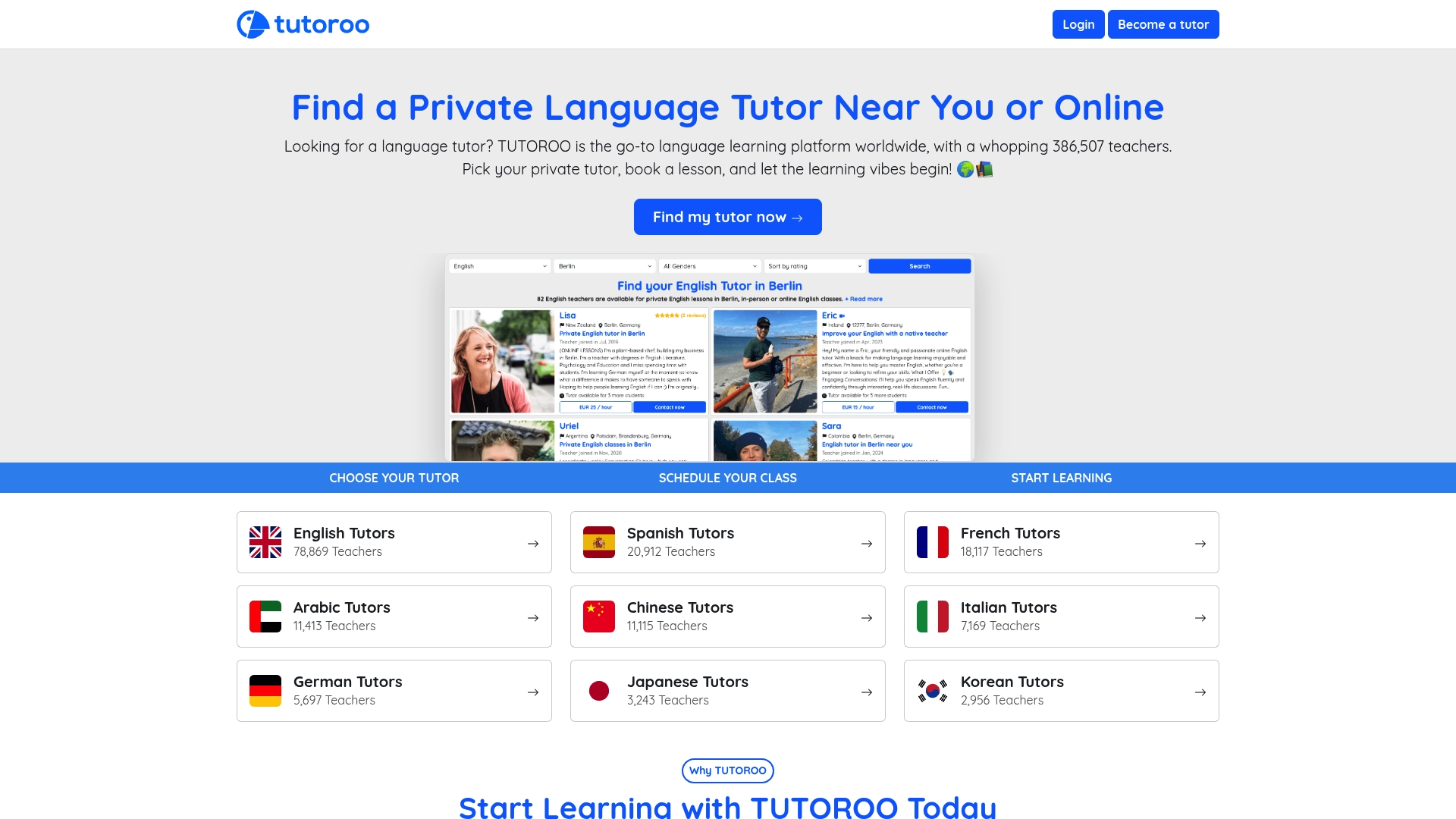
Start on the TUTOROO home page and browse tutors for your test language. If your goal is English speaking practice, you can also look at English tutors online and talk through your target rating with them. Share your deadline, your practice recording and your target level in your first message, so the tutor can plan from the start.
Common mistakes that make tutoring a waste
Most disappointing tutoring experiences come from a few avoidable errors.
- Memorising model answers. It feels productive, but ACTFL says the test looks for spontaneous language, and memorised speech can hold a rating down.
- Practising only your favourite topics. The survey sets the pool, but you still meet questions that push you out of your comfort zone. Rotate topics weekly.
- Skipping recordings. Without playback, you cannot hear your own hesitations. Make recording the default.
- Waiting until the last week. Because the test reflects built-up proficiency, late starts leave little room for change.
- Overlooking rest and routine. Short, frequent speaking sessions beat one long weekend push.
Frequently asked questions
Is OPIc tutoring worth it for beginners?
Usually not as a first step. Beginners gain more from general speaking lessons and daily listening, because the OPIc rewards proficiency built over time. Once you can hold a basic conversation, test-focused tutoring becomes much more efficient.
How many lessons do I need before the OPIc?
There is no number that guarantees a rating. A trial block of four to six lessons will show whether feedback is changing your answers. After that, continue only while you can hear measurable improvement in your recordings.
Can I pass the OPIc without a tutor?
Yes, many people do, especially those with substantial immersion experience. Research on Spanish learners found that experiences such as study abroad and dual immersion were strong predictors of scores. A tutor mainly helps if you lack that experience or need targeted feedback on structure.
How long does the test take, and when do I get results?
The session itself takes 20 to 40 minutes on average. Results timing depends on your provider and region, so check with your test administrator before you plan around a deadline.
Will a tutor tell me what questions will be asked?
No honest tutor can. Questions come from a pool set by your Background Survey, and the test may vary prompts to check that your speech is spontaneous. A tutor can show you question types and help you respond flexibly.
Sources
- ACTFL: Oral Proficiency Interview by Computer (OPIc)
- ACTFL: Tips for OPI and OPIc Test Takers
- A closer look at a marginalized test method: self-assessment as a measure of speaking proficiency
- The Nonlinguistic Factors that Predict Spanish Oral Proficiency (BYU, 2025)
- Comparing the OPI and the OPIc: The Effect of Test Method on Oral Proficiency Scores
- A Pilot Case Study of an OPIc Test Oriented Class
- University of Tennessee, Knoxville: ITA Testing Program
- UTEP: Student Testing