

TL;DR:
- Reviews offer valuable insights into a tutor’s teaching style, flexibility, and outcomes, helping learners match their goals. However, they can be biased or outdated, so pairing reviews with trial lessons and recent detailed feedback is essential for making informed decisions. To find the best fit, learners should clarify goals first, analyze patterns in reviews, and consider platform reputation and tutor availability.
Scrolling through pages of tutor profiles can feel like searching for a familiar face in a crowd. Prices, qualifications, and profile photos all blur together, leaving you no closer to understanding who will actually help you learn. Reviews are a primary filter for selecting tutors on platforms like Preply and iTalki, used alongside price, availability, and teaching videos to assess style and fit. Whether you are a beginner preparing for your first trip abroad, a parent searching for the right fit for your child, or a professional tackling a high-stakes language exam, this guide breaks down exactly how to read, interpret, and act on tutor reviews with confidence.
Table of Contents
- Why reviews matter when choosing a tutor
- What reviews reveal about tutors
- The limitations and pitfalls of tutor reviews
- How to use reviews: practical guide for learners and parents
- What most people miss when reading tutor reviews
- Find your ideal tutor with TUTOROO
- Frequently asked questions
Key Takeaways
| Point | Details |
|---|---|
| Reviews reveal tutor fit | Reading detailed reviews helps you gauge a tutor’s style and suitability for your specific language goals. |
| Use reviews smartly | Pair insights from reviews with trial lessons and tutor profiles to make confident choices. |
| Beware of review bias | Understand that star ratings have limits and look for thoughtful, goal-aligned feedback instead. |
| Parents need specifics | Top priorities for parents are child progress, safety, and engagement as reflected in user reviews. |
Why reviews matter when choosing a tutor
When you first land on a tutor's profile, the number that draws your eye is usually their star rating. That number is powerful, but it only tells part of the story. Reviews are where the real picture forms, and for good reason. They capture lived experience in a way that credentials simply cannot.
Consider what different learners bring to their tutor search. A traveller planning a move to Spain wants to know if a tutor can hold a relaxed, conversational lesson rather than deliver grammar drills. A parent enrolling their child in French lessons wants reassurance that the tutor is patient and engaging. An exam-taker sitting the IELTS wants evidence that their tutor knows the test format inside out. Reviews speak to all of these needs directly because they are written by people who have already lived those exact scenarios.
Here is what well-written reviews typically help you assess:
- Teaching style: Does this tutor explain concepts clearly or rely on textbook exercises alone?
- Lesson structure: Are sessions organised with a clear focus, or do they drift without direction?
- Progress and outcomes: Did the reviewer actually improve, or did they just enjoy the sessions?
- Communication style: Is the tutor warm and encouraging, or more formal and academic?
- Flexibility: Will they adapt when a student struggles or changes their learning goals?
Understanding tutor registration and quality processes on different platforms also shapes how much weight you should place on review volume. Platforms with rigorous vetting tend to attract tutors whose reviews are more consistently reliable.
"The best reviews don't just say 'great tutor.' They describe a moment when something clicked, a lesson that changed how you felt about speaking a new language."
Pro Tip: Look for reviews that mention successful outcomes similar to your own goals. If you want to pass a language exam, search for comments that specifically reference exam preparation, score improvements, or structured feedback. These reviews are gold.
Tutor availability for personalised learning is another key factor that reviewers often mention in passing. Comments like "always flexible when I needed to reschedule" or "consistently available on weekends" tell you something no profile bio can fully communicate.
Now that you know why reviews deserve your attention, let's unpack exactly what to look for in those comments and star ratings.
What reviews reveal about tutors
Reviews are a window into the classroom experience, and what they show varies significantly depending on who is writing them and why. Reviews provide insights into lesson structure, feedback quality, and outcomes, helping parents evaluate suitability for children, travel prep, or exams.
The most informative reviews go well beyond generic praise. They describe specific interactions, highlight teaching techniques, and explain how lessons evolved over time. A review that says "my daughter went from dreading Spanish class to requesting extra lessons" tells you far more than a five-star rating with no comment attached.

Different learner types look for very different signals in reviews. Reviews also boost accountability for learners, reinforcing goal-setting and progress tracking throughout a course of study.
For parents, the key details to watch for include:
- Evidence that the tutor adjusts to a child's attention span and energy level
- Comments about whether the child showed visible progress or grew in confidence
- Notes on safety, punctuality, and consistency across lessons
For beginners, reviews revealing a warm and patient teaching environment matter enormously. Starting a new language feels vulnerable. Reviewers who describe being gently corrected rather than criticised signal a tutor who understands that unlocking language potential requires trust as much as technique.
For exam-takers, look for reviews that reference measurable results. Comments like "helped me improve my writing score by two bands" or "prepared me for the speaking test with weekly mock interviews" are the kinds of outcomes that matter when you are working toward exam preparation with tutors.
The following table summarises what each learner type typically prioritises when reading tutor reviews:
| Learner type | Key review signals to look for |
|---|---|
| Parent | Child engagement, patience, visible progress, safety |
| Beginner | Encouragement, welcoming tone, confidence building |
| Exam-taker | Structured lessons, measurable results, test familiarity |
| Traveller | Conversational focus, cultural insight, flexibility |
| Advanced learner | Depth of knowledge, customised materials, real challenge |
With a clear grasp of what reviews can show, it's important to understand their limits and how to read between the lines.
The limitations and pitfalls of tutor reviews
No review system is perfect. Understanding the flaws in how reviews are generated helps you interpret them far more accurately. Teaching evaluations have limitations like bias from class size, voluntary response rates, and the frequency of instructor-student interaction, all of which shape the picture reviews paint.
The most common pitfalls you will encounter include:
- Positivity bias: Learners who feel neutral about a tutor rarely bother writing a review. Those who loved the experience, or occasionally hated it, are far more motivated. This skews ratings upward on most platforms.
- Selective participation: Not every student leaves a review after completing lessons. Those who do are often the most engaged or emotionally invested, which may not represent the broader experience.
- Emotional responses to single lessons: A student might leave a glowing five-star review after one exceptional class that happened to be perfectly timed. Similarly, a frustrated review might follow one off day.
- Context mismatch: A review written by a parent about their ten-year-old's experience may not be relevant to an adult preparing for a business English exam.
- Outdated information: A tutor who received strong reviews two years ago may have since changed their approach, availability, or the level they teach most confidently.
When exploring your options, it helps to look at alternatives to tutoring platforms to understand how different systems handle review quality and verification. Similarly, reviewing cambly alternatives illustrates how platforms vary in how they present and moderate learner feedback.
"While most praise reviews for informed choices, experts note methodological flaws including positivity bias and contextual influences akin to higher education evaluations. Platforms respond by offering trial lessons and smarter filtering tools."
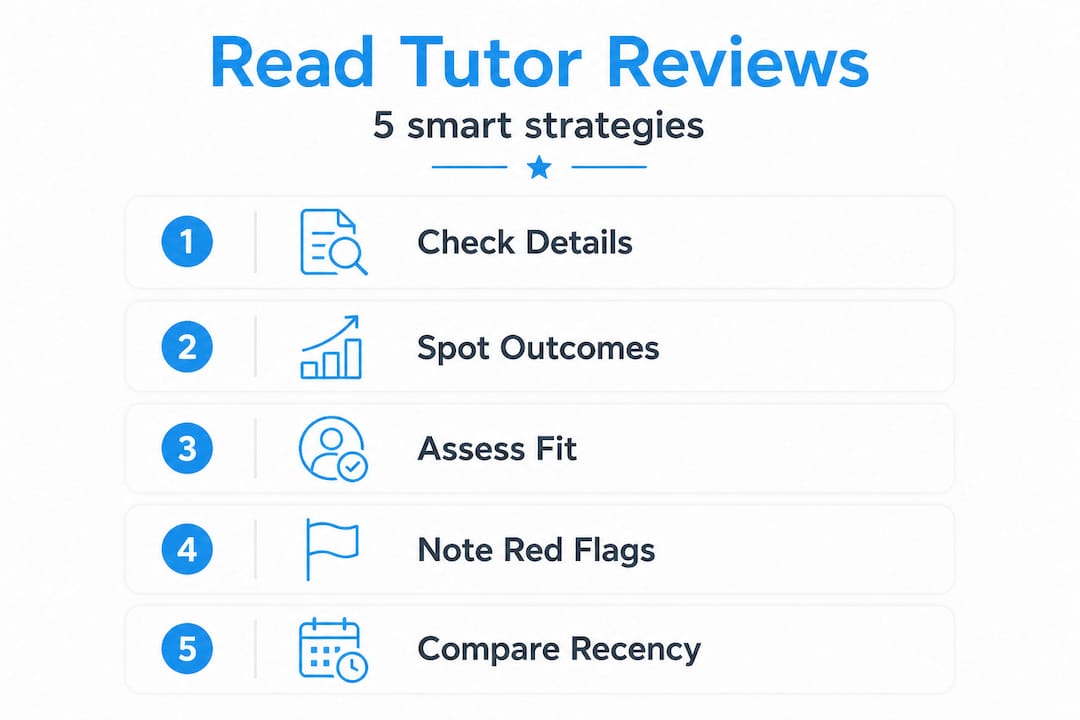
Pro Tip: Read the most recent and most detailed reviews first. A long, specific review written last month is worth far more than ten short, enthusiastic comments from three years ago. Recency and specificity are the two most reliable signals of review quality.
Rating averages can also obscure important detail. A tutor with 4.8 stars from 300 reviews is impressive, but if the five most recent detailed reviews all mention that lessons have become repetitive, that pattern tells a more honest story than the number alone.
Despite these challenges, reviews are still one of the most powerful tools at your disposal. Here's how to put them to practical use.
How to use reviews: practical guide for learners and parents
Now that you understand what reviews reveal and where they fall short, it is time to put that knowledge into action. The following steps will help you move from feeling overwhelmed to feeling genuinely confident in your choice.
- Set your goal clearly first. Before reading a single review, write down in one sentence what you need from a tutor. "I want conversational confidence for a trip to Italy in six months" is a goal. "I want to pass the DELF B2 exam by October" is a goal. Your goal acts as a filter for every review you read.
- Filter by language and specialty. On any platform, narrow your search by language, teaching specialty, and learner type before reading reviews. Reading reviews for a children's tutor when you need exam prep wastes your time.
- Read the lowest-rated reviews carefully. This sounds counterintuitive, but critical reviews often reveal the most useful details. A one-star review that says "too formal, not good for casual conversation" might be exactly what an exam-taker wants to hear.
- Look for review patterns, not outliers. If seven out of ten detailed reviews mention that a tutor explains grammar concepts unusually well, that is a genuine pattern. One glowing comment about pronunciation coaching is not.
- Combine reviews with a trial lesson. Reviews give you direction; a trial lesson gives you confirmation. Think of them as two parts of the same decision. Using review data for choices is most effective when paired with direct interaction.
- Check what happens with new tutors. When a tutor has no reviews, learners often choose based on price alone, with entry-level rates sometimes under £10. For parents especially, a new tutor with zero reviews requires extra attention to profile completeness, teaching credentials, and a face-to-face introduction lesson.
The table below summarises the most practical actions for each type of learner:
| Learner type | Key review actions | Additional filters to use |
|---|---|---|
| Parent | Check engagement and safety signals | Trial lesson, video introduction |
| Beginner | Look for patience and confidence building | Price, availability, tutor accent |
| Exam-taker | Find structured, result-focused reviews | Specialty, exam experience, recent reviews |
| Traveller | Prioritise conversational and cultural reviews | Location flexibility, lesson frequency |
For beginners especially, boosting language fluency often comes down to finding a tutor who makes early lessons feel achievable rather than overwhelming. Reviews from other beginners who made real early progress are a strong signal.
Through smart review analysis and combining these techniques with your goals, you can find tutors who genuinely fit your needs.
What most people miss when reading tutor reviews
Here is something worth saying plainly: most learners read reviews the wrong way. They glance at the star rating, skim two or three short comments, and make a decision based on overall popularity. That approach misses the most valuable layer of information available.
The real skill in reading tutor reviews lies in spotting small, specific details that align with your personal learning style. A comment buried in the fourth paragraph of a long review, mentioning that the tutor always starts each lesson with a warm-up conversation, might be exactly what a nervous beginner needs to hear. That detail would be invisible to someone scanning for five-star counts.
There is also a contrarian view worth considering. Highly-rated tutors are popular for good reasons, but popularity creates its own problems. Waitlists grow. Schedule flexibility shrinks. The lessons that earned those early glowing reviews may have been delivered with far more energy and attention than the hundredth session with a fully booked tutor. Sometimes a tutor with fewer but richer, more detailed reviews offers a better personal fit, and more genuine availability to invest in your progress.
Review system challenges in education remind us that positivity bias and contextual influences shape results in ways that mirror higher education evaluations. Smart platforms address this by offering trial lessons and better filtering tools, giving learners a chance to test before committing.
Understanding how tutor matching works on modern platforms also reveals that reviews are only one signal among many. The most successful learners treat reviews as a starting point for a conversation rather than a final verdict. They book trial lessons. They ask questions in the tutor's message system. They revisit reviews after their first session with fresh eyes.
The bottom line is this: a five-star rating tells you a tutor is well-liked. A detailed, specific review from someone with the same goals as you tells you whether that tutor is the right match for your journey.
Find your ideal tutor with TUTOROO
Now that you know exactly how reviews supercharge your tutor search, take the next practical step with TUTOROO.
TUTOROO connects language learners with over 386,000 private tutors worldwide, offering real, detailed reviews from learners across every language and experience level. Whether you are a parent seeking a patient tutor for your child, a beginner building early confidence, or an exam-taker chasing measurable results, you can explore tutors by language, specialty, and learner type with genuine community feedback to guide every step.
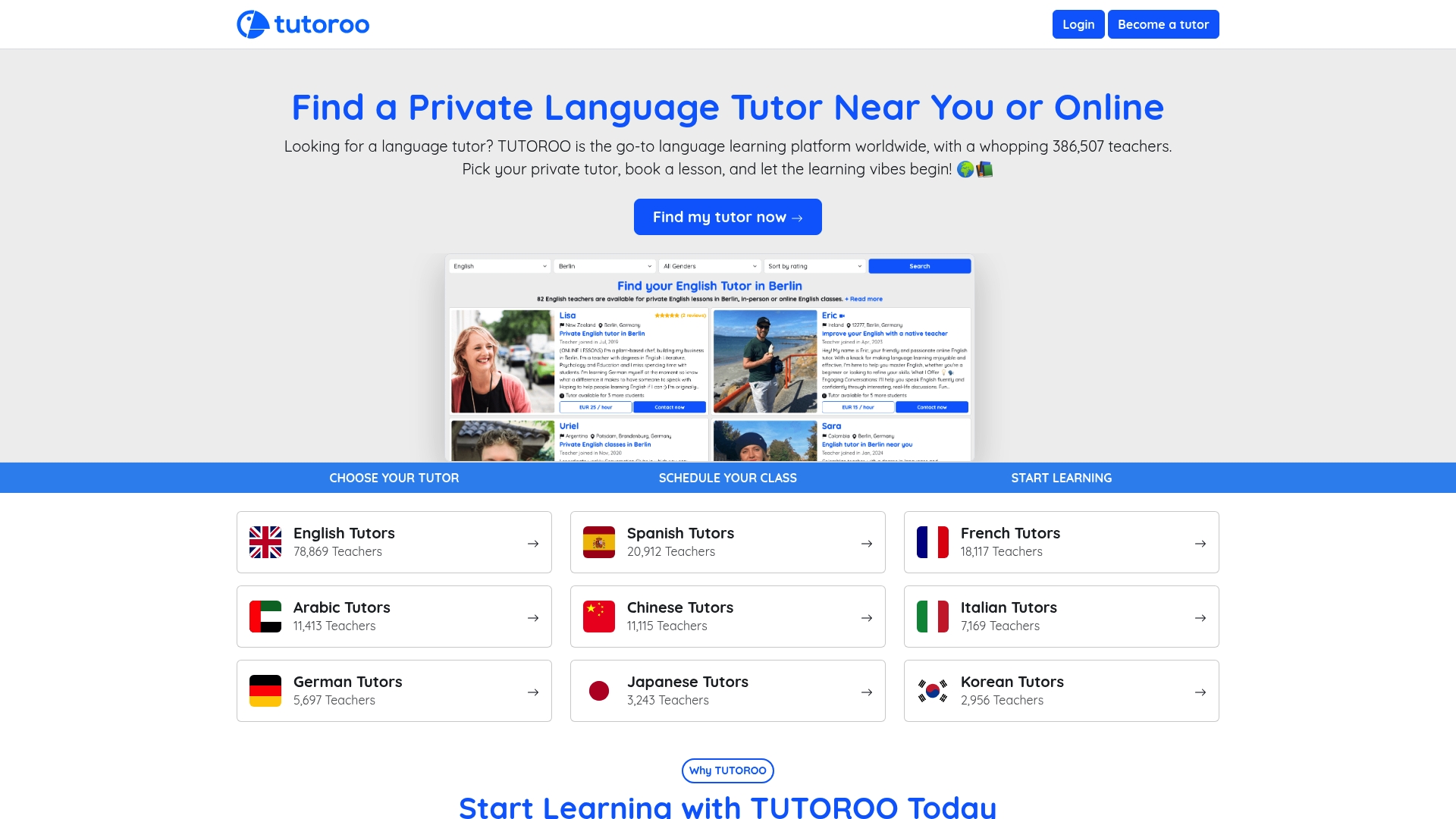
The platform makes it simple to compare tutors, read authentic reviews, and book a trial lesson before committing. Browse tutors at TUTOROO today, and let real learner experiences open the door to your next language milestone.
Frequently asked questions
How reliable are online tutor reviews for language learning?
Reviews are a valuable filter for assessing tutors but carry positivity bias and limitations, so always pair them with trial lessons or direct interaction before committing. Platforms like Preply and iTalki use reviews as a primary filter alongside price and availability, which strengthens their overall usefulness when read critically.
What should parents look for in tutor reviews?
Parents should focus on comments about child engagement, patience, visible progress, and lesson structure, as reviews provide insights into outcomes that are directly relevant to children's learning needs. Look for detailed mentions of how the tutor handled a child's energy level or adapted to their pace.
How can I choose a new tutor with no reviews?
When reviews are absent, learners choose based on price and profile details, so compare teaching credentials, availability, and lesson structure carefully before booking. A low-cost trial lesson is the best way to gather your own first-hand evidence before committing to a full course.
Do star ratings accurately reflect tutor quality?
High ratings are a useful starting point, but methodological flaws like positivity bias mean that reading detailed, recent reviews gives a far more accurate picture of teaching style and personal fit. Always look beyond the number to the story behind it.
Recommended
- Step-by-step guide to hiring the right language tutor
- How tutors unlock language potential: 1.11x faster results
- Local vs online language tutoring: which is right for you?
- Unlock language success with private tutoring benefits
- Taalcursus vergelijken: 5 tips om de beste keuze te maken - Bogaers Taleninstituut Tilburg