

TL;DR:
- Flexible teaching work allows educators to control when, where, and how they teach through various flexible arrangements. Tutoroo connects over 386,000 language tutors worldwide, enabling them to set their own schedules and teaching formats. Properly implemented, flexible teaching boosts educator wellbeing, enhances learning accessibility, and requires deliberate course design and ongoing professional development.
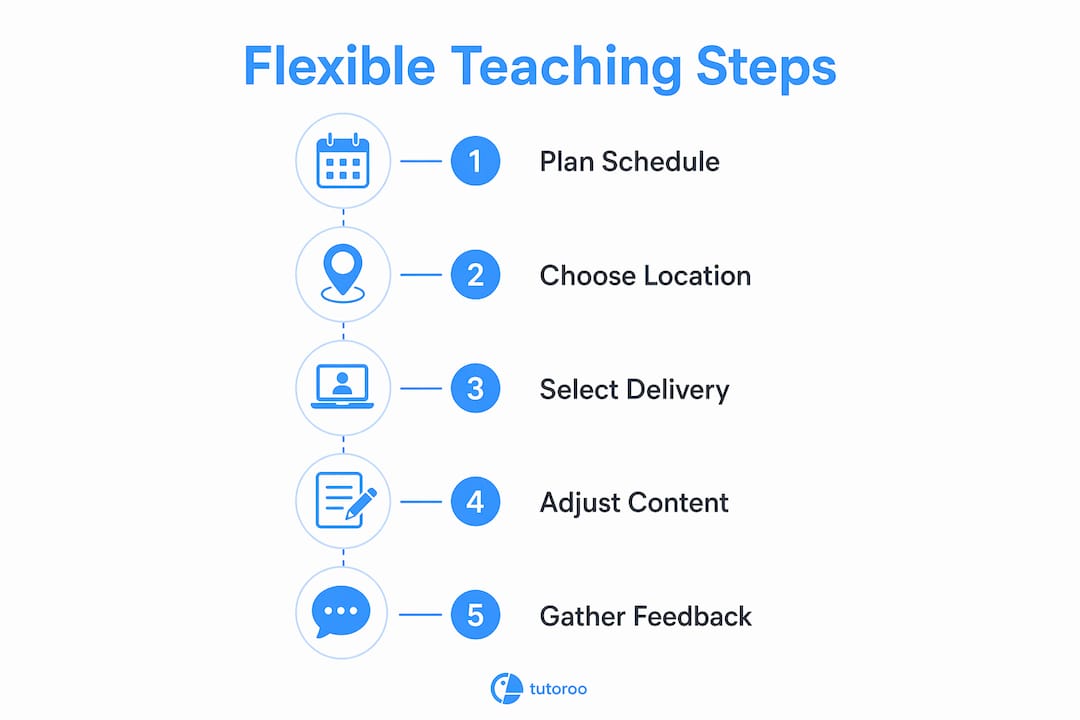
Flexible teaching work is the practice of adjusting when, where, and how teaching occurs so educators gain more control over their professional roles. This model covers a wide range of arrangements, from part-time hours and job-sharing to fully remote tutoring and blended classroom delivery. For educators and language tutors exploring alternatives to traditional fixed schedules, understanding flexible teaching work opens doors to more sustainable, rewarding careers. Platforms like Tutoroo, which connects over 386,000 language teachers with learners worldwide, are built on exactly this principle: that great teaching does not require a rigid timetable.
What does flexible teaching work look like in practice?
Flexible teaching work includes arrangements such as job-sharing, part-time hours, compressed hours, term-time working, remote work, and staggered schedule starts or finishes. Each model suits different life circumstances, and schools and trusts increasingly treat these options as a workforce retention strategy rather than a concession. That shift in thinking matters: flexibility is now a design feature of effective education systems, not an exception to them.

Part-time, job-share, and compressed hours
Part-time teaching means working fewer than the standard contracted hours, often across three or four days per week. Job-sharing splits one full-time role between two educators, each bringing complementary strengths to the same class. Compressed hours allow a teacher to work a full week's load across fewer days, freeing up a weekday without reducing pay or responsibility.
Remote and hybrid teaching
Remote teaching delivers lessons entirely online, while hybrid models combine face-to-face sessions with digital delivery. Blended and flexible learning models are designed to enhance, not replace, in-person interaction. For language tutors in particular, remote delivery opens access to learners across time zones, making a genuinely global teaching career possible.
Term-time and staggered schedules
Term-time working means a teacher is employed only during school terms, with unpaid leave during holidays. Staggered schedules shift start and finish times to reduce peak commute pressure or accommodate caring responsibilities. Annualised hours contracts set a total number of hours per year, giving educators freedom to distribute their workload across the calendar.
Common flexible arrangements educators use include:
- Part-time contracts (three or four days per week)
- Job-share arrangements with a co-teacher
- Compressed working weeks (five days' work in four)
- Term-time only contracts
- Remote or fully online teaching roles
- Hybrid delivery combining in-person and digital sessions
- Staggered start and finish times
Pro Tip: If you are negotiating a flexible arrangement with a school or institution, put the proposal in writing first. Outline how student outcomes will be maintained and how communication with colleagues will work. A written proposal signals professionalism and makes approval far more likely.
What are the benefits of flexible teaching work?
Flexible working arrangements are a strategic approach to building a resilient, high-performing education workforce. Teachers who work flexibly report better wellbeing and work-life balance, which directly reduces burnout and improves retention. For institutions, that means lower recruitment costs and more experienced educators staying in the profession longer.
Flexible arrangements also benefit learners. When educators are less stretched and more present, their teaching quality improves. A tutor who controls their own schedule can give each student their full attention rather than rushing between back-to-back obligations.
"Flexibility in education demands intentional design from the outset to maintain rigour while supporting equity and engagement for diverse students." This principle, drawn from accessible teaching research, captures why flexibility is not simply about convenience. It is about building fairer learning experiences for everyone.
The benefits extend to learner accessibility as well. Offering submission windows of several days rather than fixed deadlines improves accessibility and reduces student anxiety without lowering academic rigour. That finding applies equally to tutoring contexts: a tutor who accommodates a learner's schedule rather than imposing a rigid one creates a more welcoming, effective learning environment.
Key benefits of flexible teaching work include:
- Reduced educator burnout and improved mental health
- Higher retention rates within schools and tutoring platforms
- Greater accessibility for learners with diverse needs and schedules
- More personalised teaching, tailored to individual student progress
- Broader reach for tutors, including access to international learners
- Stronger alignment with adaptive teaching principles that respond to real student needs
What are the key flexible teaching methods and strategies?
Flexible teaching methods are the practical tools educators use to deliver responsive, accessible instruction. The industry term for the broader approach is "flexible pedagogy," which covers everything from varied assessment formats to blended learning environments. Understanding the distinction between flexible teaching and adaptive teaching is the starting point.
Adaptive teaching vs flexible teaching
Adaptive teaching is an ongoing process where teachers adjust instruction in real time based on student responses, rather than preparing multiple fixed lesson versions in advance. Flexible teaching is the wider framework: it includes scheduling, environment, and course design, as well as in-the-moment instructional adjustments. The two approaches are distinct but work best together.
Effective feedback and ongoing assessment are the engine of adaptive teaching. They allow educators to spot where a learner is struggling and shift their approach before the gap widens. For language tutors, this might mean switching from grammar drills to conversational practice mid-session because a student's confidence signals they are ready.
Practical strategies for flexible delivery
The anchor-stretch-pivot framework is one of the most practical tools available. Experienced teachers use this framework to anchor core content that all learners must grasp, stretch advanced learners with extension tasks, and pivot to support those who need more time or a different explanation. It replaces rigid lesson plans with contingency-ready structures that still deliver consistent outcomes.
Technology-enhanced flexible teaching methods support diverse learners through blended learning, varied formats, and adaptive assessment techniques. Practitioners emphasise reusing learning materials across multiple delivery modes to manage cognitive load. A recorded explanation, for instance, can serve both a student who missed a live session and one who needs to revisit the concept.
Four core flexible teaching strategies worth adopting:
- Anchor-stretch-pivot planning. Set a non-negotiable core lesson goal, prepare extension tasks for advanced learners, and have a simpler re-explanation ready for those who need it.
- Multi-day submission windows. Offer 3–5 day windows for assignments rather than single fixed deadlines to reduce pressure and improve completion rates.
- Blended content delivery. Combine live sessions with recorded materials so learners can revisit explanations at their own pace.
- Ongoing formative assessment. Use short checks during each session to inform what comes next, rather than waiting for end-of-unit tests.
| Strategy | Primary benefit | Best suited to |
|---|---|---|
| Anchor-stretch-pivot | Consistent outcomes for all learners | Mixed-ability classes and tutoring |
| Multi-day submission windows | Reduced anxiety, higher completion | Online and hybrid courses |
| Blended content delivery | Learner autonomy and review access | Remote and self-paced learning |
| Ongoing formative assessment | Real-time instructional adjustment | All flexible teaching contexts |
Pro Tip: Reuse your teaching materials across formats. A lesson you deliver live can become a recorded resource, a written summary, and a discussion prompt. That approach cuts preparation time and gives learners multiple ways to engage with the same content.
What challenges come with flexible teaching work?
Flexible teaching is not without real difficulties. Successful flexible pedagogy relies on critical teacher reflection and institutional support, not just logistical arrangements. Without both, flexibility can slide into inconsistency or increased workload rather than genuine professional freedom.
Teachers commonly show high competence in course communication and time management but need further development in course design and technical skills for flexible teaching. That gap matters because poor course design in a flexible environment creates confusion for learners and extra work for educators trying to patch gaps mid-delivery.
Common challenges educators face include:
- Workload creep. Flexible arrangements can blur the boundary between work and personal time, particularly for remote tutors managing their own schedules.
- Equity concerns. Not all learners have equal access to technology or quiet study spaces, which affects how well flexible delivery works for them.
- Technical skill gaps. Creating interactive online content and managing blended course elements requires technological and pedagogical competence that many educators are still building.
- Institutional resistance. Some schools and organisations lack clear policies for flexible roles, leaving educators to negotiate arrangements without formal support.
- Maintaining academic rigour. Flexibility demands intentional design from the outset. Poorly structured flexible courses can reduce learning quality even when they improve accessibility.
Addressing these challenges starts with honest self-assessment. Tutors and teachers who identify their weakest competency, whether that is course design, technology use, or boundary-setting, and then seek targeted professional development, make faster progress than those who try to improve everything at once. Flexible work arrangements available in education, including those offered through platforms like Tutoroo, also provide a natural testing ground for building these skills gradually.
Tutoroo's perspective on flexible teaching work
Flexible teaching work is one of those concepts that sounds straightforward until you actually try to live it. At Tutoroo, we have worked with over 386,000 language tutors across the world, and the pattern is consistent: the educators who thrive in flexible roles are not the ones with the loosest schedules. They are the ones who treat flexibility as a deliberate practice rather than a passive arrangement.
The relational dimension of flexible teaching is underrated. Flexibility is not just about when you teach. It is about how you read a learner's needs and respond in the moment, how you negotiate expectations with students, and how you build enough structure into your sessions that learners feel safe even when the format shifts. That balance between responsiveness and reliability is what separates effective flexible teaching from simply winging it.
The educators we see grow fastest are those who invest in their own professional development alongside their flexible arrangements. They explore hybrid teaching methods, refine their feedback practices, and treat each session as data about what their learner needs next. Flexibility, done well, is one of the most demanding and most rewarding ways to teach.
— Tutoroo
Tutoroo: flexible teaching work for language tutors
Tutoroo connects language tutors with learners across the globe, offering genuine control over schedules, lesson formats, and teaching scope. Whether you prefer online sessions, in-person lessons, or a mix of both, the platform is built around your availability, not the other way around.
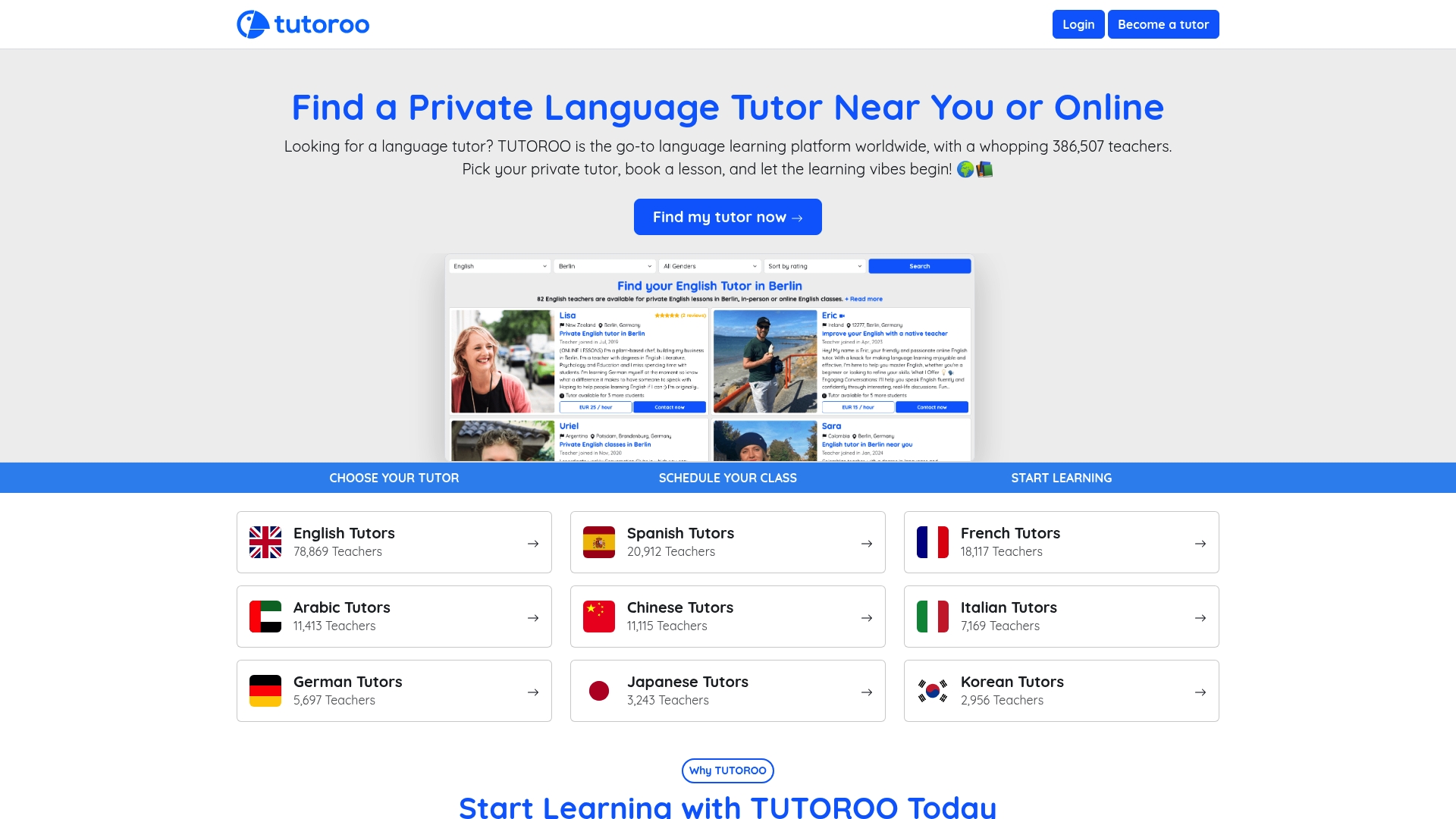
Tutoroo's community of over 386,000 tutors teaches languages including English, Spanish, French, Arabic, and Chinese, among many others. Tutors set their own rates, choose their hours, and receive direct payments from students. For educators seeking a flexible tutoring role that fits around their life rather than the reverse, Tutoroo offers a practical, well-supported starting point. Explore the platform and register as a tutor to connect with learners who are ready to start.
FAQ
What is flexible teaching work?
Flexible teaching work is the practice of adjusting when, where, and how teaching occurs to give educators more control over their professional roles. It includes arrangements such as part-time hours, remote teaching, job-sharing, and blended delivery.
What is the difference between flexible teaching and adaptive teaching?
Flexible teaching covers scheduling, environment, and course design, while adaptive teaching refers specifically to adjusting instruction in real time based on ongoing student responses. The two approaches are complementary and work best when used together.
What are the main benefits of flexible teaching for educators?
Flexible teaching improves educator wellbeing, reduces burnout, and supports better work-life balance. It also increases retention in the profession and enables more personalised, accessible learning experiences for students.
How do I implement flexible teaching strategies in my lessons?
Start with the anchor-stretch-pivot framework: set a core lesson goal, prepare extension tasks for advanced learners, and have an alternative explanation ready for those who need more support. Add multi-day submission windows and blended content to build further flexibility.
Can language tutors work flexibly through online platforms?
Language tutors can set their own schedules, choose online or in-person delivery, and manage their own student relationships through platforms like Tutoroo. This model gives tutors full control over their working hours and teaching scope.
Key takeaways
Flexible teaching work is most effective when it combines deliberate course design, adaptive instructional responses, and clear institutional or platform support.
| Point | Details |
|---|---|
| Flexible work covers many models | Arrangements include part-time, job-share, remote, hybrid, and term-time teaching options. |
| Adaptive teaching is a core skill | Adjusting instruction in real time based on student signals is central to effective flexible delivery. |
| Benefits reach teachers and learners | Flexibility improves educator wellbeing and makes learning more accessible for diverse students. |
| Course design must be intentional | Poorly structured flexible courses reduce quality; rigour requires planning from the outset. |
| Tutoroo supports flexible tutoring | Over 386,000 tutors on Tutoroo set their own schedules, rates, and lesson formats globally. |