

TL;DR:
- Flexible language learning allows individuals to adapt their methods, schedule, and content to fit personal goals and circumstances.
- It promotes better results by reducing stress, increasing motivation, and improving cognitive flexibility through short, consistent practice sessions.
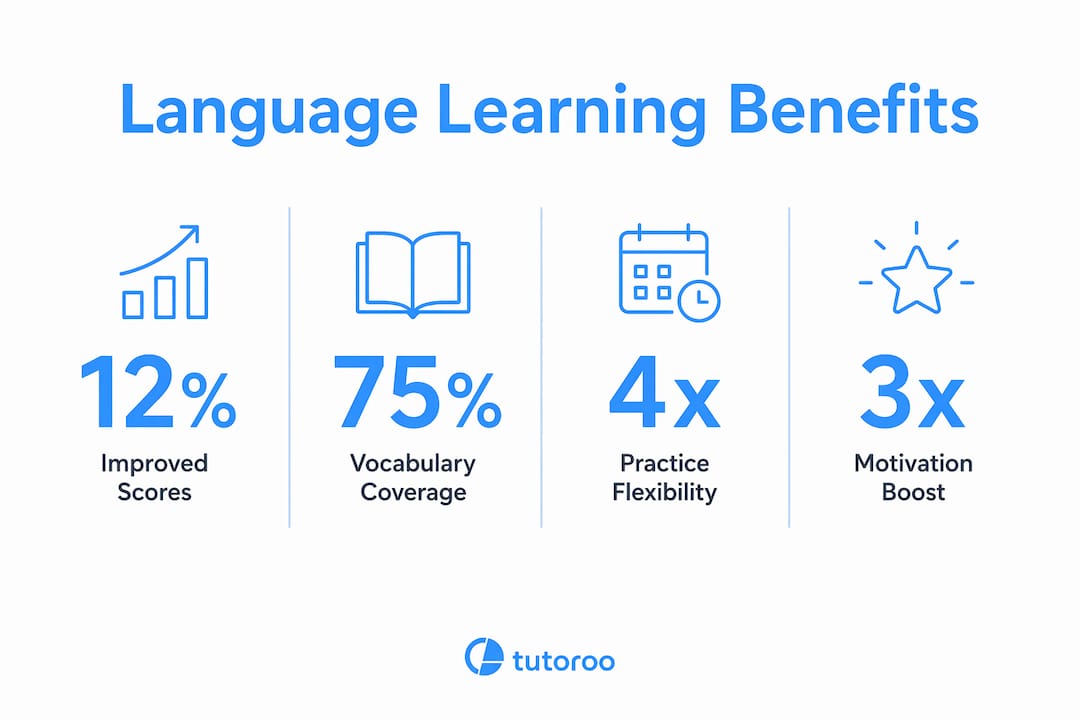
Language learning flexibility is a learner's ability to adapt their methods, schedule, and content to fit personal circumstances and goals. This adaptability is not a shortcut. It is the single most effective way to sustain progress over the long term. Flexible language tutoring improves test scores by 12% and improves grades in 8 out of 10 learners compared to rigid classroom structures. That gap exists because rigid systems ignore the reality of busy lives, varied learning styles, and the emotional weight of acquiring a new language. Tutoroo connects learners with over 386,000 private tutors worldwide, built on the understanding that personalised, adaptable learning is not optional. It is the foundation of real progress.
Why does language learning flexibility matter so much?
Flexibility in language acquisition means more than choosing when to study. It means adjusting the pace, the content, the format, and the goals to match where you are right now, not where a fixed syllabus expects you to be. The industry term for this approach is adaptive learning, and it sits at the heart of modern language education research.
Rigid learning structures create unnecessary pressure. When learners miss a session or fall behind a fixed schedule, many abandon their studies entirely. Flexible learning reduces stress by removing rigid deadlines and allowing alternative mindsets, which keeps engagement alive. That reduction in pressure is not just psychological comfort. It directly lowers dropout rates and keeps learners in the game long enough to reach fluency.
The benefits of language flexibility also show up in cognitive performance. Learning a language exercises cognitive flexibility, task-switching, and real-time problem-solving, which keeps the brain resilient and adaptable. Flexibility in how you learn amplifies this effect, because you are constantly adjusting your approach rather than following a fixed script.
Learners who value their relationship with the language over perfect execution of a rigid plan are the ones who sustain progress through life's inevitable interruptions.
Pro Tip: Set a weekly intention rather than a daily obligation. Decide you will practise four times this week, then choose which four days as the week unfolds. This removes the guilt of a missed Tuesday without sacrificing consistency.
What flexible language learning techniques fit busy schedules?
Time is the most common barrier for adult learners. The good news is that the most effective language learning techniques are also the most time-efficient.

A balanced daily study routine of 30 minutes comprehensible input, 15 minutes spaced repetition flashcards, and 15 minutes speaking or shadowing produces fast and measurable progress. That is 60 minutes total, which most learners can split across a commute, a lunch break, and an evening wind-down. The key is that each block serves a different cognitive function, so no single session feels like a grind.
Vocabulary selection matters just as much as scheduling. The 1,000 most frequent words cover approximately 75% of everyday speech. Focusing on these first means you reach conversational competence far sooner than a traditional curriculum allows. That early win builds the motivation to keep going.
Microlearning takes this further. The concept, well established in educational technology, involves breaking study into sessions as short as 5–10 minutes. Research on microlearning in structured study programmes shows it removes barriers to motivation and engagement by making each session feel achievable. A learner who completes five short sessions feels far more capable than one who skips a planned two-hour block.
Here is a practical weekly structure for a learner with a busy schedule:
| Day | Activity | Duration |
|---|---|---|
| Monday | Comprehensible input (podcast, video) | 30 minutes |
| Tuesday | Spaced repetition flashcards | 15 minutes |
| Wednesday | Speaking practice or shadowing | 15 minutes |
| Thursday | High-frequency vocabulary review | 20 minutes |
| Friday | Free choice: conversation, reading, or listening | 20 minutes |
- Focus the first month entirely on the 1,000 most frequent words.
- Use spaced repetition tools like Anki to automate vocabulary scheduling.
- Treat shadowing (repeating audio in real time) as both pronunciation and listening practice.
- Swap any session for a real conversation with a tutor when motivation dips.
Pro Tip: Build micro-pathways into your week. Identify three five-minute windows, such as waiting for coffee or riding the lift, and assign one micro-task to each. These small, consistent interactions compound into significant progress over months.
How can learners balance flexibility with needed structure?
Flexibility does not mean the absence of structure. This is the most common misconception that derails learners who try to "go with the flow" and find themselves making no progress after three months.
Flexible structure means clear goals with adaptable methods. You decide what you want to achieve and by when, but you leave the how and when each day open to circumstance. A learner aiming to hold a basic conversation in Spanish within six months has a clear destination. Whether they practise on the train or at the kitchen table on any given day is irrelevant.
Effective flexibility requires intentional micro-pathways that allow re-entry after interruptions. Life will disrupt your schedule. A flexible plan accounts for this by including built-in catch-up windows and milestone reviews every four to six weeks. These checkpoints let you adjust the plan without abandoning it.
The all-or-nothing mindset is the biggest pitfall. Frequent short practice sessions produce better long-term retention than infrequent long sessions. Three 20-minute sessions per week outperform one two-hour session every time. Frequency embeds knowledge; duration alone does not.
| Rigid learning habit | Flexible learning habit |
|---|---|
| Fixed daily time slot, non-negotiable | Preferred time slot, with two backup windows |
| Miss a session, fall behind permanently | Miss a session, resume at next available window |
| One long weekly study block | Three or more short sessions spread across the week |
| Linear curriculum, no deviation | Goal-based roadmap with adaptable weekly tasks |
| Progress measured by lessons completed | Progress measured by communication milestones |
Pro Tip: Create a "minimum viable session" for tough weeks. Decide in advance that your absolute minimum is ten minutes of flashcards. On hard days, that ten minutes keeps the habit alive and prevents the all-or-nothing spiral.
What are the cognitive and motivational benefits of flexibility in language learning?
The advantages of adaptable language learning extend well beyond convenience. Flexibility changes the psychological relationship a learner has with the language itself.
Flexible learning environments adapted to individual circumstances increase adult learners' motivation and completion rates. Personalised guidance and adaptable deadlines reduce the fear of failure that stops many adults from even starting. When the learning environment bends to fit your life rather than demanding your life bend to fit it, participation becomes sustainable.
Flexibility also supports what psychologists call a flow state, the experience of being fully absorbed in a task without anxiety. Rigid structures interrupt flow by imposing external pressure. Removing that pressure, through flexible scheduling and self-directed pacing, allows learners to enter flow more often. More time in flow means deeper processing and stronger retention.
The cognitive benefits compound over time. Language switching and real-time problem-solving during conversation enhance executive function, including working memory and attention control. A flexible approach that keeps learners practising consistently delivers these cognitive gains far more reliably than a rigid system that leads to burnout and dropout.
Flexibility removes unnecessary barriers, such as strict deadlines and inflexible assessment dates, while maintaining academic rigour. This enables diverse learners to succeed on their own terms.
For adult learners balancing work, family, and study, the emotional dimension is just as important as the cognitive one. Self-compassion, the ability to acknowledge a missed week without catastrophising, is a skill that flexible learning actively builds. Learners who practise this approach find personalised lessons far more engaging because the tutor adapts to their current state rather than enforcing a fixed lesson plan.
- Flexibility reduces the fear of failure that stops adults from starting.
- Adaptable pacing supports flow states and deeper cognitive processing.
- Language switching enhances executive function and working memory.
- Self-directed learning builds emotional resilience alongside language skills.
- Personalised feedback from a tutor accelerates progress at every stage.
Key takeaways
Flexible language learning, built on adaptable methods and consistent short practice, produces better outcomes than rigid structures for every type of learner.
| Point | Details |
|---|---|
| Flexibility improves results | Flexible tutoring improves test scores by 12% and boosts grades in 8 out of 10 learners. |
| Short sessions beat long ones | Three 20-minute sessions per week outperform a single two-hour block for long-term retention. |
| Structure still matters | Clear goals with adaptable methods prevent the all-or-nothing mindset that derails progress. |
| Vocabulary focus accelerates progress | The 1,000 most frequent words cover 75% of daily speech, making early fluency achievable. |
| Flexibility supports motivation | Adaptable environments increase adult learner completion rates and reduce fear of failure. |
Tutoroo's perspective: what we've learned about flexibility and real progress
At Tutoroo, we have worked with learners across dozens of languages and life situations, and the pattern is consistent. The learners who make the most progress are rarely the ones with the most time. They are the ones who have stopped waiting for the perfect conditions and started working with the conditions they have.
The most common mistake we see is treating flexibility as permission to be inconsistent. It is not. Flexibility is permission to be human. It means you can miss a Thursday session without abandoning your goals. It means you can spend a week on pronunciation because that is what feels alive right now, then return to grammar next week. The language does not go anywhere. Your relationship with it deepens every time you show up, even imperfectly.
We have also noticed that learners who work with a private tutor adapt far more quickly than those studying alone. A good tutor reads the room. They notice when you are tired and shift to lighter conversational practice. They notice when you are energised and push into harder grammar. That responsiveness is the human version of adaptive learning, and no app replicates it fully.
The advice we give every learner is this: value progress over perfection, and value the relationship with the language over the rigidity of the plan. A flexible learner who shows up four times a week for a year will always outperform a perfectionist who waits for the ideal schedule that never arrives.
— Tutoroo
Flexible tutoring with Tutoroo: find your fit
Tutoroo connects learners with over 386,000 private language tutors worldwide, each offering personalised lesson plans built around your schedule, goals, and learning style. Whether you have 20 minutes on a weekday morning or a longer session on weekends, Tutoroo's tutors adapt to you.
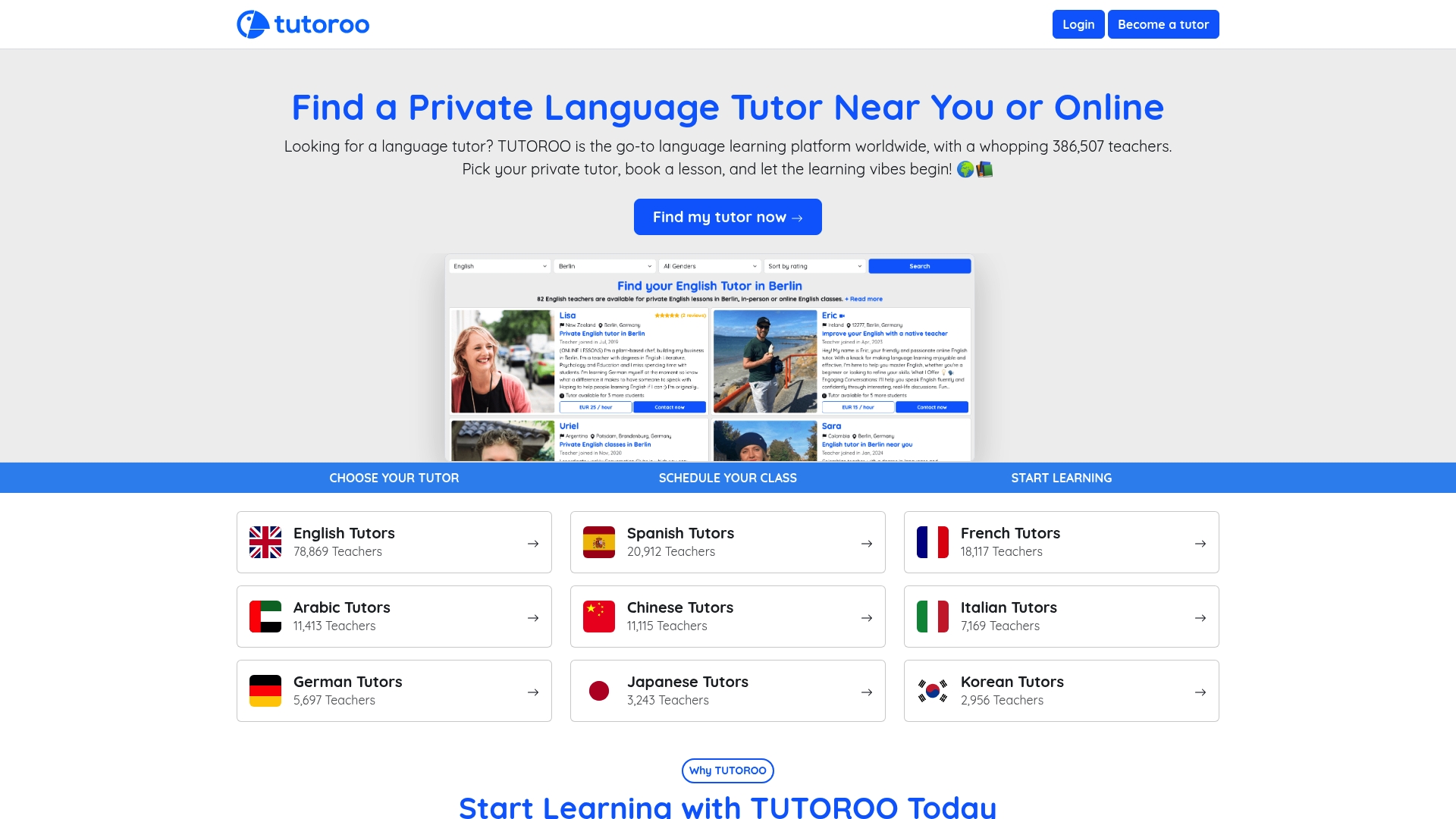
The data backs it up. Flexible tutoring through a private tutor improves test scores by 12% and lifts grades for the vast majority of learners. Tutoroo makes it straightforward to find a tutor who matches your language, location preference, and availability. Search by language, read tutor profiles, and message directly to arrange your first session. Progress starts with one flexible, well-matched lesson.
FAQ
What is language learning flexibility?
Language learning flexibility is the ability to adapt your study methods, schedule, and content to fit your personal circumstances and goals. It is the foundation of adaptive learning, the approach that research consistently links to higher completion rates and better outcomes.
How does flexibility improve language learning outcomes?
Flexible tutoring improves test scores by 12% and boosts grades in 8 out of 10 learners compared to rigid classroom structures. Adaptable environments reduce stress, support motivation, and allow learners to practise consistently rather than burning out.
What is the best daily routine for a busy language learner?
A 60-minute daily split of 30 minutes comprehensible input, 15 minutes spaced repetition flashcards, and 15 minutes speaking or shadowing produces fast, measurable progress. This routine can be broken across multiple short windows throughout the day.
Is flexibility in language learning the same as having no structure?
No. Flexible learning means clear goals with adaptable methods, not the absence of a plan. Learners who set communication milestones and use flexible roadmaps progress far more consistently than those with either rigid schedules or no structure at all.
Why do short practice sessions work better than long ones?
Frequent short sessions embed knowledge more effectively because spaced repetition strengthens memory consolidation over time. Three 20-minute sessions per week outperform a single two-hour block for long-term retention and vocabulary recall.