
TL;DR:
- Hybrid language teaching combines in-person and remote instruction within the same course, offering flexibility for diverse learners. Evidence shows it enhances vocabulary, listening skills, and student satisfaction, but requires careful course redesign and intentional parity. Successful implementation depends on thorough technology testing, pedagogical shifts, systematic feedback, and continuous adaptation.
Hybrid language teaching is defined as an instructional model that combines scheduled face-to-face sessions with structured online learning, giving students the choice to attend either in person or remotely within the same course. This model has moved well beyond experimental status. Gen Z students now dominate enrolment, making up 55% of college enrolments, and 61% of them value the flexibility that hybrid learning provides. For language educators, this shift is not simply about technology adoption. It is a fundamental rethinking of how, where, and when language acquisition happens. Platforms like Tutoroo, tools like Zoom and Google Meet, and software like Sanako have all become part of the modern language educator's toolkit, reflecting how deeply this model has taken hold across institutions worldwide.
What is hybrid language teaching and how does it work?
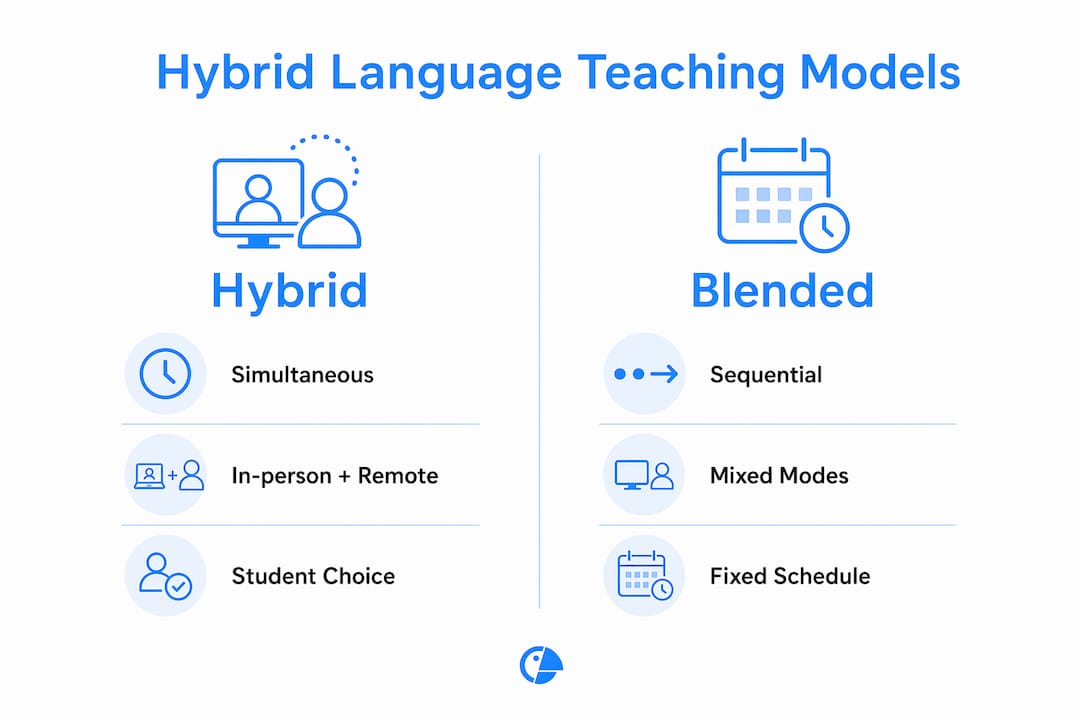
Hybrid language teaching is the practice of delivering language instruction simultaneously or alternately to in-person and remote learners, using a combination of synchronous and asynchronous methods. The industry also refers to this as "hybrid-flexible" or "HyFlex" instruction, a term coined by Brian Beatty at San Francisco State University that has become the recognised standard in higher education literature. Understanding this distinction matters because it separates hybrid teaching from the broader category of blended learning.

Hybrid learning is not synonymous with blended learning. Blended learning simply mixes online and offline materials within a course, often with all students following the same path. Hybrid teaching, by contrast, solves a scheduling and location challenge by redesigning the course so that students can choose their mode of participation. Computer-Assisted Language Learning (CALL), another related term, refers specifically to the use of technology to support language acquisition and sits within hybrid teaching as a component rather than a synonym.
In practice, a hybrid language course might look like this:
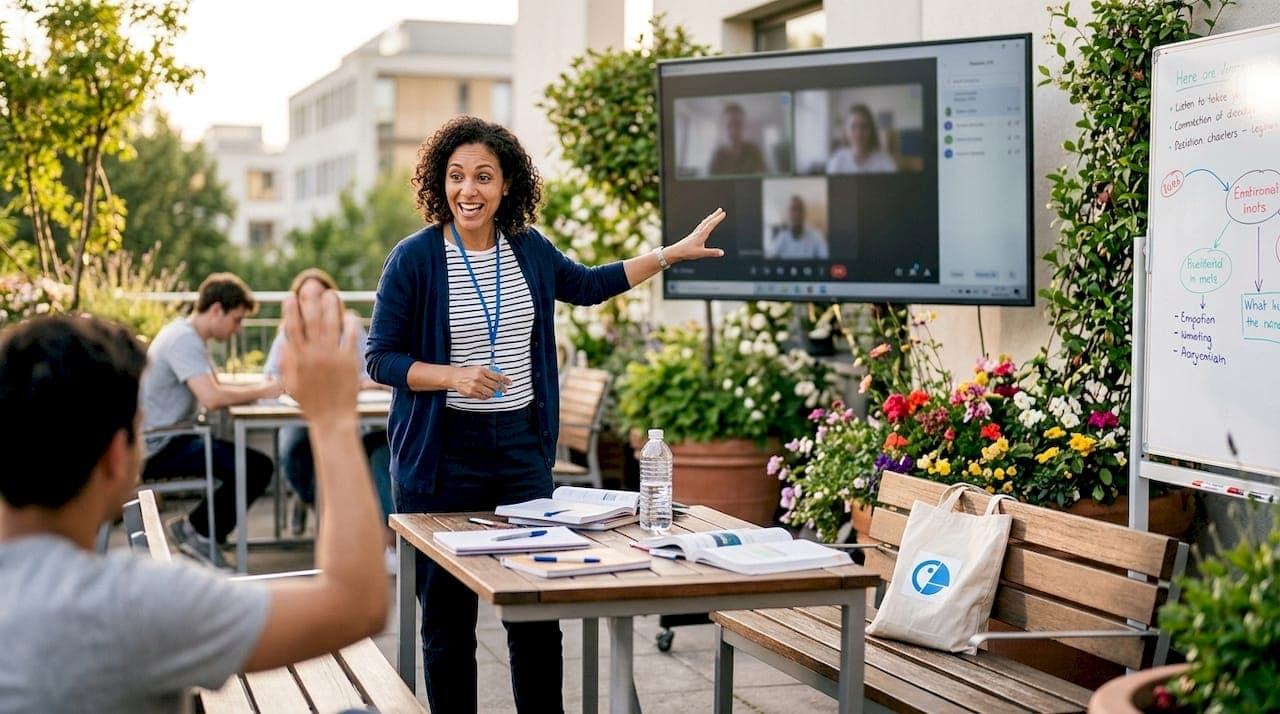
- Synchronous in-person sessions where students practise speaking and listening together in a classroom, while remote students join via video conferencing tools like Zoom or Microsoft Teams
- Asynchronous online components such as recorded lectures, discussion boards, or self-paced grammar modules delivered through learning management systems like Canvas or Moodle
- Collaborative digital activities using tools like Padlet, Flipgrid, or Google Docs that allow both cohorts to contribute equally
- Assessment and feedback loops conducted through platforms that support audio and video submission, enabling authentic communicative evaluation
Remote language teaching technologies include interactive audio and video platforms, collaborative tools, and assessment software designed to maintain communicative interaction and engagement across both groups. Explore asynchronous learning components to understand how the online side of hybrid teaching can be structured effectively.
Is hybrid teaching effective for language learning?
The evidence is clear and growing. A study with 42 undergraduates demonstrated that hybrid language teaching improved vocabulary retention, listening comprehension, and task-based communication compared to traditional classroom methods. This finding is significant because vocabulary and listening are two of the most difficult skills to develop outside an immersive environment, and hybrid design appears to replicate some of that immersive quality through consistent digital exposure.
"Hybrid instruction fosters student autonomy, active learning, and can serve diverse learner needs effectively with pedagogical redesign." — TESL-EJ Research
Student satisfaction data reinforces this picture. 61% of Gen Z learners value flexibility in their study arrangements, and 50% specifically appreciate the increased accessibility that hybrid formats provide. For language educators, this means students are more likely to attend consistently, participate actively, and complete courses when they are not constrained by geography or fixed schedules.
AI and cloud-based platforms have accelerated these outcomes further. Cloud-based course design, as demonstrated in the 42-student study, allows learners to access materials at any time, revisit recorded interactions, and practise at their own pace between live sessions. International platforms accelerating language acquisition show that digital access, when paired with structured instruction, produces measurably faster progress than traditional methods alone. Research also shows that language games boost cognitive and social growth, which aligns well with the interactive digital components common in hybrid courses.
Best practices for hybrid teaching: what educators need to know
Implementing hybrid language teaching well requires more than setting up a camera and opening a Zoom link. Moving to hybrid teaching requires a fundamental pedagogical shift beyond tool adoption. Educators who treat hybrid as a digitised version of their existing class almost always struggle. The ones who succeed redesign their courses from the ground up with both cohorts in mind from the first lesson plan.
Here are the most critical practices to build into your hybrid language programme:
-
Test all technology before every session. The most common hybrid classroom mistake is failing to test technology before class, causing disruptions that break learning continuity. A five-minute pre-class check of audio, video, and screen sharing prevents the kind of technical failure that erodes student trust over time.
-
Design for intentional parity. Successful hybrid delivery requires intentional parity, meaning remote students must have equal visibility and engagement through technology like 360-degree cameras and clear communication protocols. Without this, in-room students dominate discussion and remote learners disengage within weeks.
-
Redesign activities, not just delivery. Hybrid learning demands careful pedagogical redesign beyond simply digitising existing courses. Pair work and group discussions need to be structured so that one remote and one in-person student can collaborate naturally, not as an afterthought.
-
Collect systematic feedback from both cohorts. Instructors who collect systematic feedback during the transition to hybrid teaching identify problems early and adjust before they become entrenched habits. A short weekly survey of three questions is enough to surface the most pressing issues.
-
Use assessment formats that work for both groups. Oral assessments via video submission, peer review through shared documents, and portfolio-based evaluation all translate cleanly across in-person and remote contexts.
Pro Tip: Set up a dedicated "remote student monitor" role in each session, rotating among in-person students. This keeps the class aware of remote participants and naturally distributes attention across both cohorts without the educator having to manage it alone.
Explore innovative online teaching methods for additional strategies that translate well into hybrid language contexts.
How does hybrid teaching compare to other instructional models?
Educators often conflate hybrid teaching with blended learning or fully online instruction. The distinctions are meaningful and affect how you plan, resource, and assess your course.
| Model | Mode of delivery | Student choice | Primary purpose |
|---|---|---|---|
| Hybrid (HyFlex) | Simultaneous in-person and remote | Yes, per session | Solve location and scheduling constraints |
| Blended learning | Sequential mix of online and offline | No | Enrich content delivery |
| Fully online (CALL) | Remote only | Partial (pace/time) | Remove geographic barriers entirely |
| Traditional classroom | In-person only | No | Structured face-to-face interaction |
Hybrid teaching is most suitable when your learner cohort is geographically dispersed, when students have variable schedules due to work or family commitments, or when your institution needs to serve both local and international students within the same course. It is not the right model for every context. Intensive conversation courses that depend on spontaneous interpersonal chemistry, for example, can lose something when half the group is on a screen. Recognising this honestly is part of what separates thoughtful hybrid design from a one-size-fits-all approach.
The advantages of hybrid teaching are most pronounced for diverse learner groups. Hybrid instruction supports learner-centred approaches and flexibility, making it particularly effective for adult learners, working professionals, and students in regional or remote locations who would otherwise have no access to quality language instruction.
Key takeaways
Hybrid language teaching succeeds when educators redesign courses intentionally for both cohorts, invest in the right technology, and commit to collecting ongoing feedback rather than treating the model as a set-and-forget solution.
| Point | Details |
|---|---|
| Core definition | Hybrid language teaching combines face-to-face and remote instruction within the same course, giving students choice of participation mode. |
| Evidence of effectiveness | Research shows hybrid design improves vocabulary retention, listening comprehension, and communication skills compared to traditional methods. |
| Intentional parity | Remote and in-person students need equal visibility and engagement, requiring specific hardware like 360-degree cameras and clear protocols. |
| Pedagogical shift required | Hybrid teaching demands course redesign from the ground up, not simply adding a camera to an existing classroom setup. |
| Feedback is non-negotiable | Systematic feedback collection from both cohorts is the most reliable way to identify and fix problems early in hybrid implementation. |
Tutoroo's perspective on hybrid language teaching
After working with thousands of language learners and tutors across the globe, we have seen one pattern repeat itself: the educators who thrive in hybrid environments are not necessarily the most tech-savvy. They are the ones who stay genuinely curious about their students' experience on both sides of the screen.
The pedagogical mindset shift is real, and it is harder than most training programmes acknowledge. Redesigning a Spanish conversation class so that a student in Melbourne and a student joining from regional Queensland both feel equally present and equally challenged requires a level of intentionality that goes well beyond choosing the right video platform. We have seen tutors who are exceptional in person struggle to replicate that warmth and responsiveness in a split-cohort setting, not because they lack skill, but because they have not yet recalibrated their instincts for a divided room.
What actually works, in our experience, is starting small. Choose one activity per session to redesign specifically for hybrid delivery. Test it. Collect feedback. Adjust. The educators who try to overhaul everything at once tend to burn out or revert to treating remote students as secondary participants. The ones who iterate steadily build something genuinely effective over a semester.
The other honest observation is this: hybrid teaching is not a replacement for the depth of connection that comes from a skilled private tutor working one-on-one with a learner. It is a powerful model for institutions managing scale and access. But for learners who want to accelerate their progress or fill the gaps that a hybrid classroom cannot address, personalised tutoring remains the most direct path to fluency.
— Tutoroo
Find the right support for hybrid language learning
Hybrid classrooms open doors to culture, connection, and opportunity for learners who might otherwise miss out. But even the best-designed hybrid course leaves room for personalised support that addresses individual gaps in pronunciation, grammar, or conversational confidence.
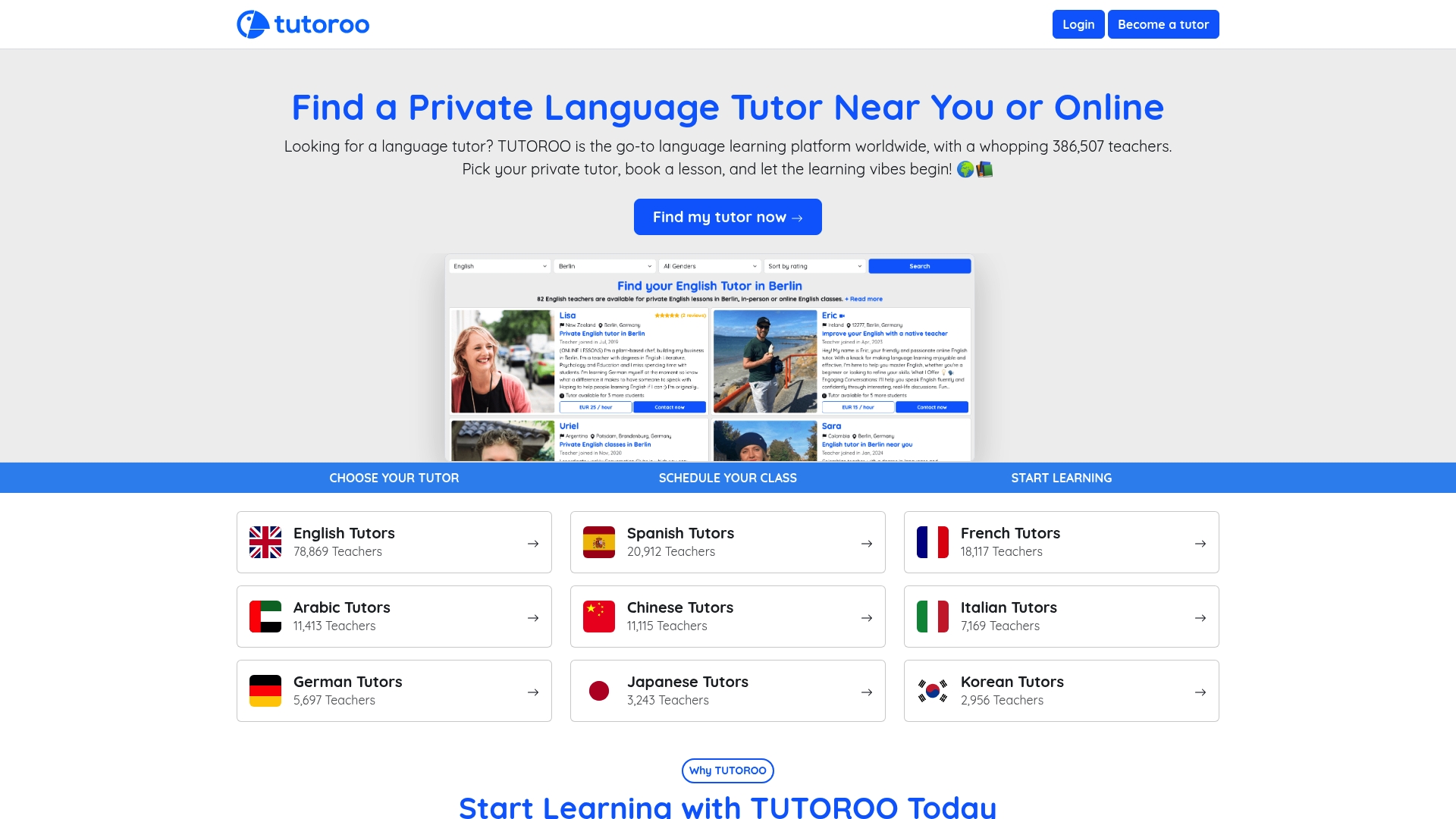
Tutoroo connects learners with over 386,000 private language tutors worldwide, offering sessions that can be conducted online or in person to complement any hybrid learning programme. Whether you are an educator looking to recommend additional support for your students, or a learner wanting to accelerate your progress alongside a hybrid course, find your language tutor on Tutoroo and experience the difference that one-on-one instruction makes. For learners focused on English, English tutors online are available across a wide range of schedules and proficiency levels, making it straightforward to find a match that fits your hybrid study routine.
FAQ
What is hybrid language teaching?
Hybrid language teaching is an instructional model that delivers language courses to in-person and remote students simultaneously, using a combination of synchronous and asynchronous methods. It is also known as HyFlex instruction and is distinct from blended learning in that students can choose their mode of participation each session.
Is hybrid teaching effective for language learning?
Yes. Research with 42 undergraduates found that hybrid language teaching improved vocabulary retention, listening comprehension, and task-based communication compared to traditional classroom methods. Student satisfaction is also high, with 61% of Gen Z learners valuing the flexibility hybrid formats provide.
What is the difference between hybrid and blended learning?
Hybrid teaching allows students to choose between in-person and remote attendance within the same course, solving scheduling and location challenges. Blended learning mixes online and offline materials but typically requires all students to follow the same delivery path without a choice of mode.
What technology is needed for hybrid language teaching?
Effective hybrid language teaching requires video conferencing tools such as Zoom or Microsoft Teams, learning management systems like Canvas or Moodle, and classroom hardware including 360-degree cameras and quality microphones to achieve intentional parity between remote and in-person learners.
What are the biggest challenges in hybrid language teaching?
The most common challenge is failing to test technology before class, which disrupts learning continuity. A deeper challenge is the pedagogical shift required: hybrid teaching demands full course redesign rather than simply digitising existing lessons, and ongoing feedback collection from both cohorts is necessary for continuous improvement.