

TL;DR:
- Integrating messaging into learning platforms enhances communication, providing context and reducing fragmentation for students, tutors, and parents. Effective messaging supports language learning success by enabling quick doubt resolution, personalized feedback, and consistent engagement outside sessions. Choosing the right communication norms and tools, like dedicated channels, significantly improves learning outcomes and relationship building.
Staying connected with your tutor should feel natural, not like navigating a maze of apps, emails, and unanswered texts. Yet for many language learners, parents, and tutors, the reality of communication is exactly that fragmented. Understanding what is student-tutor messaging, and how to use it well, can change the entire quality of your learning experience. This guide breaks down how these tools work, why they matter, and how you can use them to get more from every lesson, whether you are preparing for an exam, planning to travel, or simply want a stronger grasp of a new language.
Table of Contents
- What is student-tutor messaging and how does it work?
- Why embed messaging in the learning experience matters
- Comparing student-tutor messaging methods and tools
- How to make the most of student-tutor messaging for language learning
- The impact of effective student-tutor messaging on language learning success
- Why many language learners underestimate the power of integrated messaging
- Find your ideal language tutor and communicate with ease on Tutoroo
- Frequently asked questions
What is student-tutor messaging and how does it work?
Student-tutor messaging is a communication tool built directly into education and tutoring platforms. It allows learners, tutors, and often parents or guardians to exchange messages within a single, secure environment, rather than scattering conversations across personal email, social media, or text threads.
The concept is straightforward. Rather than hunting for a tutor's phone number or sending a message into the void via WhatsApp, you log into your learning platform and communicate through a dedicated channel. Two-way messaging allows educators, students, and parents to communicate directly, with messages sent in context and responses managed through secure platform logins.
This kind of messaging is particularly useful for:
- Students who need to clarify homework, ask about vocabulary, or confirm lesson times
- Parents who want to stay informed about their child's progress without chasing separate email threads
- Tutors who need to share resources, reschedule sessions, or follow up after lessons
- Exam and travel learners who benefit from quick answers when preparing under time pressure
Access permissions play an important role here. Depending on how the platform is configured, different users may have different abilities to send, receive, or view messages. A parent, for example, might receive a notification via email with a direct link back to the platform to reply, reducing the need to download yet another app. Understanding tutor availability alongside messaging systems helps learners plan ahead and keep communication timely.
With a clear understanding of what student-tutor messaging entails, let's explore why integrating messaging with learning benefits everyone involved.
Why embed messaging in the learning experience matters
Think about the last time a message got lost between your inbox, a group chat, and a parent portal. That kind of fragmentation does not just cause inconvenience. It actively disrupts the learning relationship. When students miss an update about a changed lesson, or when parents cannot find the feedback their tutor left, momentum breaks down.
Embedding messaging directly within a learning platform changes this entirely. Conversations sit alongside the lesson content, assignments, and resources they relate to, so context is never lost.
"Eliminating fragmentation between learning and communication keeps educators, students, and families aligned without the noise of disconnected tools."
The benefits are significant for all parties involved:
- Students can message their tutor directly after reviewing a lesson, keeping the topic fresh in their minds
- Parents receive contextualised updates rather than generic check-ins, which makes it easier to support learning at home
- Tutors spend less time managing separate tools and more time focused on personalised instruction
- Education platforms that embed conversations within assignments and learning materials reduce missed messages and educator workload
This matters especially in language learning, where the relationship between tutor and student is deeply personal. Regular, contextual communication reinforces lessons, builds trust, and keeps learners engaged between sessions. Meaningful student-tutor interaction does not only happen during formal lessons. It grows through every small exchange.
Understanding this integration sets the stage to compare common messaging methods and features in language tutoring.

Comparing student-tutor messaging methods and tools
Not all messaging approaches are equal, and choosing the right method depends on your tutoring model, your comfort with technology, and the needs of each learner. Here is a side-by-side look at the most common options.
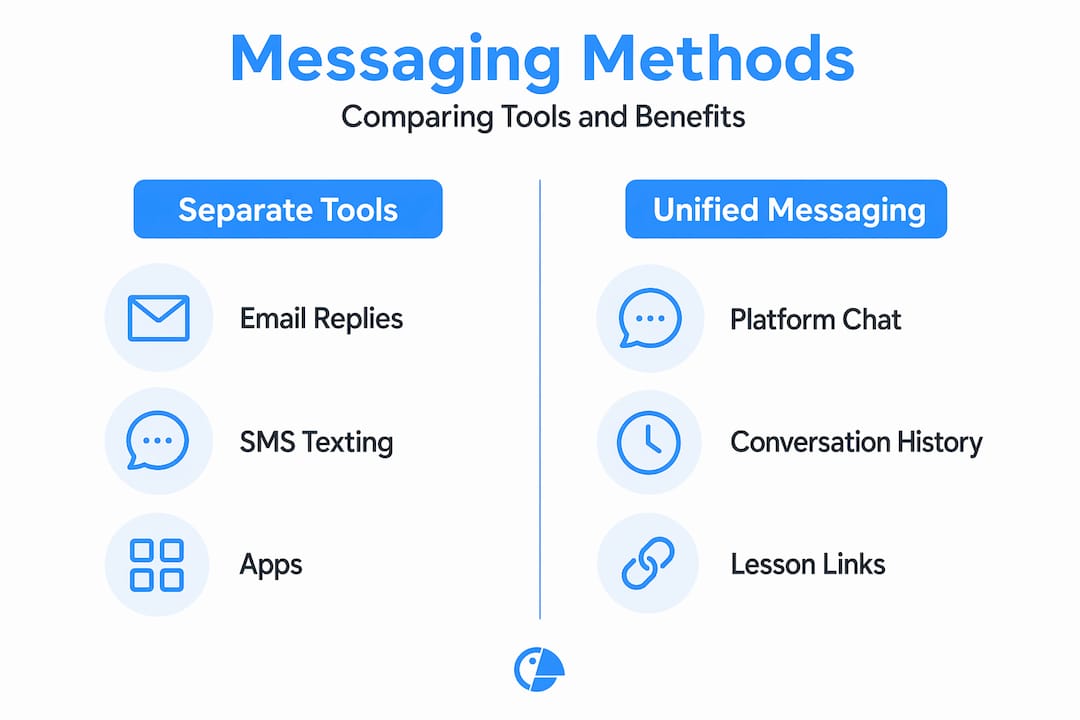
| Messaging method | Best for | Advantages | Limitations |
|---|---|---|---|
| Email link replies | Parents with low app appetite | Simple, no extra login needed | Slower, prone to inbox clutter |
| SMS business texting | Quick scheduling and reminders | Immediate, familiar format | No lesson context, hard to track |
| Unified tutoring platforms | Full learning management | Context-rich, payments, tracking | Requires platform commitment |
| General chat apps | Informal communication | Widely used, easy setup | Unprofessional, fragmented, insecure |
Tutoring businesses use SMS business texting to improve scheduling and communication with parents, centralising conversations and increasing student enrolments. It works well for confirmations and reminders, but it lacks the depth needed for genuine learning dialogue.
Unified platforms go further. Replacing disconnected tools is one of the clearest advantages, and Tutarr replaces fragmented tools like WhatsApp and Excel with a free professional workspace integrating messaging, payment verification, and student management. For a tutor managing multiple students, this is a significant shift.
Pro Tip: When choosing a messaging method, ask yourself whether the tool keeps your conversation history visible alongside your lesson goals. If you cannot look back at a message thread and see what topic it was about, the tool is probably working against you.
For learners exploring different formats, reviewing online tutoring examples can help clarify which communication styles suit different learning goals.
Now that you know the advantages and differences of messaging tools, let's see how to make student-tutor messaging work best for you.
How to make the most of student-tutor messaging for language learning
Good messaging habits are just as important as the tool you choose. A well-designed platform will still fall short if communication norms are unclear from the start. Here is how to build a messaging practice that genuinely supports your language learning.
-
Agree on communication expectations early. Before lessons begin, discuss preferred messaging times with your tutor. Knowing when they are available and how quickly they typically respond removes the anxiety of unanswered messages.
-
Keep messages specific and lesson-linked. Vague messages like "I don't understand" are harder to respond to than "I'm confused about using the subjunctive in the exercise from Tuesday." Specificity helps your tutor give you real answers faster.
-
Check your notifications regularly. Many platforms send message alerts via email or push notifications. Turning these on means you will not miss a time-sensitive update about a rescheduled lesson or new resource.
-
Activate the right settings. Messaging permissions may need to be enabled in your platform account. If you are a parent, check whether your account is linked correctly so you receive the right notifications.
-
Maintain a respectful, positive tone. Even in a casual message, professionalism matters. A warm, clear tone builds a strong relationship with your tutor and makes them more likely to go the extra mile for you.
Pro Tip: Treat your tutor-student chat like a learning journal. Screenshot useful vocabulary explanations, corrections, or encouragement your tutor shares via message. These small exchanges can be remarkably valuable when reviewing for an exam.
Finding ways to accelerate language learning often comes down to consistency, and messaging supports that consistency between sessions. Tutors who teach languages online will confirm that students who communicate regularly between lessons tend to progress more noticeably than those who only engage during scheduled sessions.
Armed with these strategies, let's explore how embracing student-tutor messaging can transform your language learning journey.
The impact of effective student-tutor messaging on language learning success
The difference between a learner who plateaus and one who keeps growing often comes down to how supported they feel outside the formal lesson. Messaging opens that door. It removes the long gaps between sessions where doubts go unanswered and motivation quietly fades.
Here is what research and real learning experience both point to:
- Faster doubt resolution. A student preparing for a DELF French exam can message their tutor the morning of the test with a quick grammar question and receive a confident answer within minutes. That kind of support builds momentum.
- Stronger parental involvement. Parents who receive clear, contextualised updates about their child's progress can reinforce lesson content at home, ask better questions, and identify when extra support is needed.
- More personalised instruction. When tutors can follow an ongoing conversation thread, they notice patterns. A student who repeatedly asks about the same grammar concept reveals a gap the tutor can address in the next session.
- Better preparation for exams and travel. Learners preparing to use a language in real-world settings, whether booking accommodation in Paris or navigating a business meeting in Tokyo, benefit enormously from quick, targeted messaging exchanges that simulate realistic communication.
Integrated messaging platforms result in stronger family engagement and measurable gains in educator efficiency and student outcomes. For private language tutoring, the same logic applies. The channel of communication is not a footnote to the learning relationship. It is part of it.
Exploring the benefits of local vs online tutoring also reveals how messaging bridges the gap when face-to-face time is limited, making online learning just as personal and responsive.
Having seen the benefits, we now share a unique perspective on student-tutor messaging many overlook.
Why many language learners underestimate the power of integrated messaging
Most learners think of messaging as a way to confirm lesson times. That is underselling it significantly. From our experience working with thousands of language learners and tutors around the world, the students who make the fastest progress treat messaging as an active part of their learning, not a scheduling sideline.
Here is the uncomfortable reality. When learners rely on three or four disconnected tools, something always gets lost. A message arrives in the wrong inbox. A tutor's detailed feedback disappears inside a social chat app. A parent misses a lesson update because it arrived as a push notification they swiped away. These are not edge cases. They are everyday occurrences that quietly drain the learning relationship.
What most guides will not tell you is that setting communication norms matters more than choosing the perfect platform. A tutor and student who agree to message within a single dedicated channel, respond within 24 hours, and keep messages linked to specific lesson content will outperform every technically superior tool that lacks those boundaries.
The most effective tutors we have encountered model the behaviour they want to see. They reply clearly, they reference the relevant lesson, and they use messaging to build confidence rather than just convey information. A message that says "You handled the past tense perfectly in today's exercise, here is something to practise before our next session" does more for a learner's motivation than any amount of passive review.
Strengthening student-tutor interaction through consistent, purposeful messaging is one of the most underused tools in language education. It costs nothing extra. It simply requires intention.
Find your ideal language tutor and communicate with ease on Tutoroo
Clear, direct communication is at the heart of every successful language learning journey. When messaging just works, learners feel supported, parents stay informed, and tutors can deliver genuinely personalised instruction.
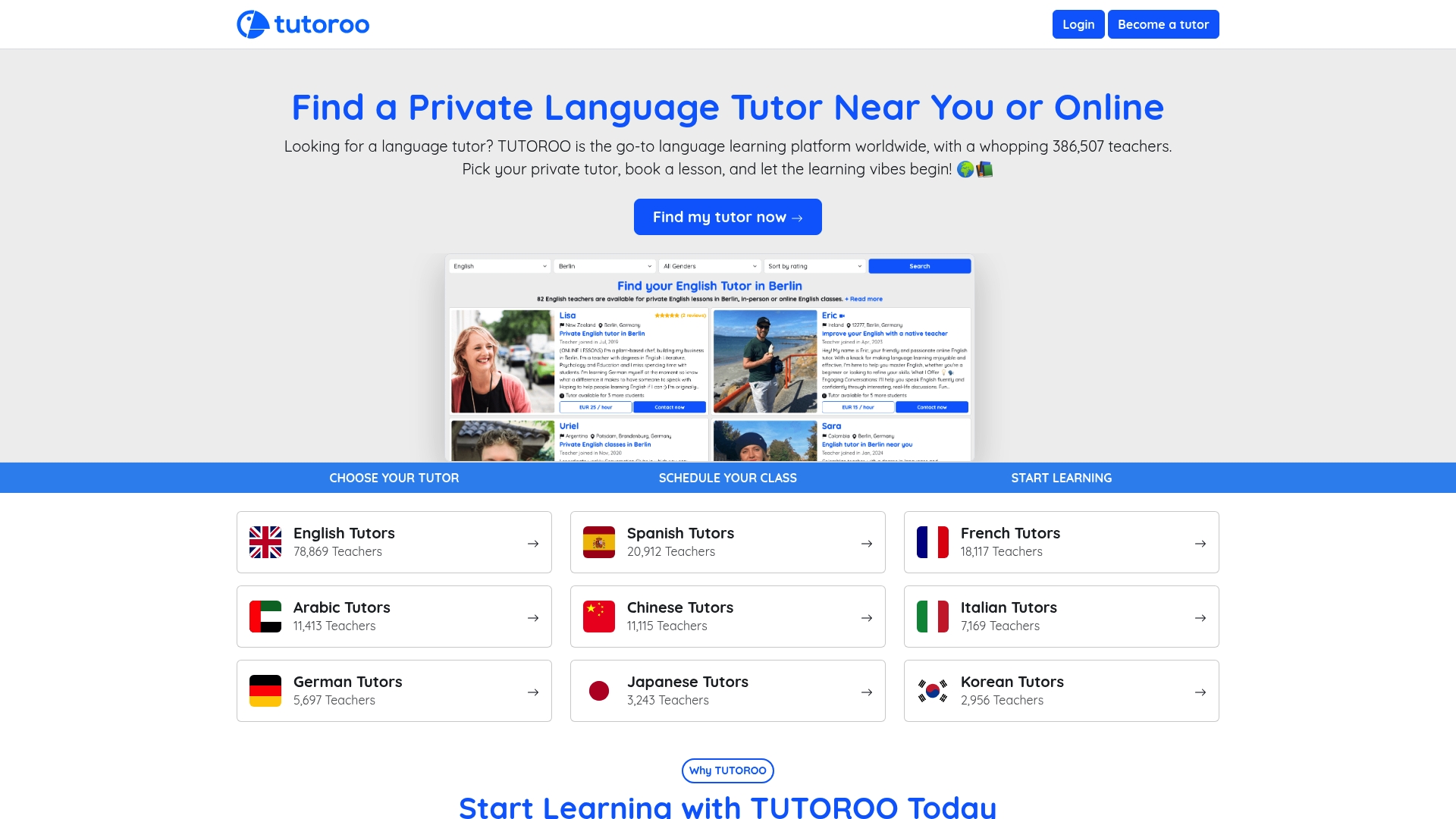
Tutoroo connects you with over 386,000 private language tutors around the world, with built-in messaging that makes it easy to ask questions, schedule lessons, and stay aligned with your goals. Whether you are looking for English tutors online to prepare for an important exam, or Lebanese tutors to connect with your heritage or prepare for travel, the platform supports flexible online and in-person learning. Start your language journey today and experience what it feels like when communication and learning finally work together.
Frequently asked questions
How do parents usually receive and respond to student-tutor messages?
Parents receive an email containing the message plus a link to log in and reply directly within the platform, eliminating the need to manage separate apps or accounts.
What is the benefit of embedding messaging directly within learning materials?
Embedding messaging within lessons keeps communication tied to specific content, reducing missed messages and helping students and parents understand the purpose of each exchange. Zedbud embeds conversations within the learning experience to reduce fragmentation and educator workload.
Can messaging platforms help with scheduling tutoring lessons?
Yes, business texting improves communication, scheduling, and session reminders for tutoring centres, allowing quick confirmations and easy rescheduling that keeps lessons running consistently.
Are there free tools that replace fragmented messaging methods for tutors?
Yes, Tutarr replaces WhatsApp groups, spreadsheets, and screenshots with one clean workspace that includes messaging, payment tracking, and student management at no cost.