

Pause if a tutor avoids questions about their methods, asks you to pay outside the platform, has no plan for lessons, or corrects nothing while criticising everything. The single most important step is to stop, verify credentials and references, and insist on a traceable, platform-based payment before any recurring arrangement begins.
TL;DR:
- Verify tutor identity, qualifications, and references on the platform before booking, and avoid tutors who request payment outside the platform or pressure for prepayment.
- Look out for vague claims, no assessment or lesson plan, lack of error correction, and boundary issues such as messages at odd hours or inappropriate comments.
- Conduct a brief interview and trial lesson to assess teaching style, clarity, engagement, and how progress is tracked, documenting agreed terms beforehand.
- Be cautious of fake-check payment scams that involve overpayment and requests for refunds through wire transfers or gift cards, and report any suspicious activity immediately.
- Rely on reputable platforms with verified profiles and in-platform messaging to reduce risk, and use these tools to compare tutors before making a commitment.
Table of Contents
- 1. The warning signs that show up in profiles and messages
- 2. How to vet a tutor before you book
- 3. Safety and payment red flags: common scams and safe alternatives
- 4. Teaching-quality red flags backed by evidence, not opinion
- 5. What a trustworthy tutor does in the first 4 to 8 lessons
- 6. How a reputable marketplace reduces risk
- 7. A parent's short script for spotting trouble early
- 8. Find a verified tutor without the guesswork
- FAQ
- Sources
1. The warning signs that show up in profiles and messages
Most problems announce themselves early, in the very first messages or the profile itself, if you know what to look for. The trick is separating a confident, experienced tutor from one who is simply good at sounding confident.
Vague or inflated claims. A tutor who promises fluency in a set number of weeks or guarantees exam results without knowing your current level is selling a story, not a plan. Ask for specifics: what did a recent student achieve, and over what timeframe?
Fuzzy answers about experience. When you ask how they structure a beginner's first month, a trustworthy tutor gives a concrete answer. Evasive or generic replies, "I just go with the flow", suggest limited real teaching behind the marketing.
No assessment, no plan. Good teaching starts with knowing where a learner stands. A tutor who jumps straight into random exercises without ever assessing your child's level is building lessons on guesswork.
Teaching habits that undermine progress. Watch for tutors who never correct mistakes, interrupt constantly, or make a learner feel small for getting something wrong. Shame has no place in a lesson plan, and silence on errors quietly reinforces them.
Boundary problems. Messages at odd hours, pressure to move the conversation to a personal phone number or app, or comments that feel inappropriate for a student-tutor relationship are not quirks. They are signals to end contact.
Money pressure. Requests to pay outside the platform, unclear fee structures, or pressure to prepay for a block of lessons without a receipt all point the same direction: away from accountability.
Here is the shortlist to keep in mind when scanning a profile or a first conversation:
- Promises of guaranteed fluency or exam results with no assessment first.
- Vague, rehearsed answers about teaching methods or past students.
- No mention of a lesson plan, goals or how progress will be tracked.
- Zero error correction, or correction delivered as criticism rather than guidance.
- Requests to pay off-platform, in cash, or through untraceable methods.
- Pressure to commit to multiple lessons before a single trial session.
- Rushed sign-up tactics ("book today or lose this time slot") rarely match how a considered, professional tutor operates.
- Ambiguous cancellation or refund terms left until after you have paid are a sign of a loosely run arrangement, not an oversight.
2. How to vet a tutor before you book
A short, structured check before the first lesson saves far more time than it costs. Treat it like a quick interview, because that is exactly what it is.
Start with identity and background. Confirm the tutor's identity through the platform's verification tools where available, ask for one or two references from recent students, and check that their stated qualifications and experience match your learner's age and level. A tutor who teaches adult business Spanish may not be the right fit for a nervous eight-year-old starting French.
Then move to a short set of interview questions:
- How do you assess a new student's level before planning lessons?
- What does a typical lesson structure look like, and how much speaking time does the student get?
- How will you track progress, and how often will you share updates?
- What kind of homework or practice do you expect between sessions?
Ask for a short trial lesson, paid or free, and judge it against a simple rubric: was the explanation clear, did they correct mistakes without discouraging the learner, and did the student stay engaged throughout? A single lesson tells you something, but a short run of three to six sessions tells you far more about fit and consistency.
Pro Tip: Write down the agreed price, lesson length, cancellation notice and refund terms before the first paid lesson, even if it is just in a message thread you can refer back to.
Put payment and cancellation terms in writing before anything becomes a recurring booking. It does not need to be formal, but it needs to exist somewhere both of you can see it later.

3. Safety and payment red flags: common scams and safe alternatives
Payment scams targeting tutors and parents follow a familiar pattern. Someone sends a cheque or transfer for more than the agreed amount, then asks you to send back the difference by wire transfer, gift card or payment app. By the time the original payment is reversed or found to be fake, the money you returned is gone. The Federal Trade Commission warns that this exact fake-check pattern has been used to target childcare and other service providers, and that any request to return part of an overpayment is a strong signal of fraud.
Wire transfers, gift cards and cryptocurrency share one feature that makes them dangerous for a first-time hire: once sent, they are essentially impossible to trace or reverse. A traceable card payment or an escrow-style system built into a tutoring platform gives you a record and a way to dispute charges if something goes wrong, something our payment systems guide covers in more detail.
Any request to repay an overpayment through a wire transfer or gift card should be treated as a confirmed scam attempt, not a misunderstanding, based on the FTC's consumer alert on this exact pattern.
If you encounter this:
- Stop all communication with the sender immediately.
- Keep screenshots of every message, payment request and transaction.
- Contact your bank or card provider to flag the transaction before funds settle.
- Report the attempt to your local consumer protection authority.
4. Teaching-quality red flags backed by evidence, not opinion
Some warning signs are about style, not substance, and it helps to know the difference. A tutor who teaches differently from what you expected is not automatically a bad tutor. One who ignores how learning actually works is.
Feedback timing matters more than most parents realise. Guidance from the University of Waterloo on corrective feedback points to immediate, focused correction, limited to one or two areas per session, as the approach that supports retention without overwhelming the learner. A tutor who never corrects anything is not being kind, they are letting mistakes set in. Our own piece on how feedback shapes tutoring success walks through what this looks like in practice.
On the assessment side, frameworks like ACTFL's AAPPL use holistic markers, function, accuracy, content and organisation, to track genuine progress rather than vague impressions. A tutor who cannot describe how they are measuring your progress against anything concrete is flying blind.
- Expect regular, specific updates on progress, not just "going well".
- A tutor should be able to explain grammar clearly, not just use it fluently.
- Native-speaker status alone does not guarantee strong teaching; research comparing native and non-native English teachers found non-native teachers often bring pedagogical strengths that matter just as much as accent or origin.
5. What a trustworthy tutor does in the first 4 to 8 lessons
The trial period is where good habits either show up or they do not. Within the first month, a reliable tutor should tick every one of these boxes.
- Runs an initial assessment and sets goals you both understand.
- Shares a short-term plan, written or spoken, with clear homework between sessions.
- Gives focused, specific feedback without shaming the learner for mistakes.
- Uses transparent payment and scheduling, with receipts or confirmations for every session.
- Keeps communication respectful and within sensible hours.
| What to check | What good looks like |
|---|---|
| Assessment | Level checked before lessons begin |
| Planning | Clear short-term goals and homework |
| Feedback | Specific, focused, delivered kindly |
| Payment | Transparent, receipted, on-platform |
| Boundaries | Respectful hours, professional tone |
Our guide on signs of effective language education expands on what measurable progress should actually look like across a full term.
6. How a reputable marketplace reduces risk
A well-run tutoring platform does a lot of the vetting groundwork for you before a lesson is ever booked. Searchable profiles, visible messaging histories and a structured matching process let you compare tutors and check compatibility without guesswork.
A reputable tutoring marketplace connects learners with a worldwide pool of tutors, supports all communication through on-platform messaging, and publishes resources to help parents ask sharper questions before committing. Combine these features with the checklist above: request references through the platform, use platform payment wherever it is offered, and keep every conversation in-platform so there is a clear record if a dispute ever arises.
7. A parent's short script for spotting trouble early
One parent noticed a tutor asking to be paid through a personal account rather than the platform, a quiet signal something was off. They paused the booking and asked directly: "Can we keep payments on the platform, and could we start with a trial lesson first?" The tutor's response settled the question immediately.
**
8. Find a verified tutor without the guesswork
Every check in this checklist maps directly onto how a reputable tutoring platform works: searchable, verified tutor profiles, built-in messaging you can refer back to, and a matching process that lets you compare before you commit. Instead of chasing references through personal phone numbers or hoping a cash payment goes smoothly, you get a paper trail and a very large pool of tutors to choose from.
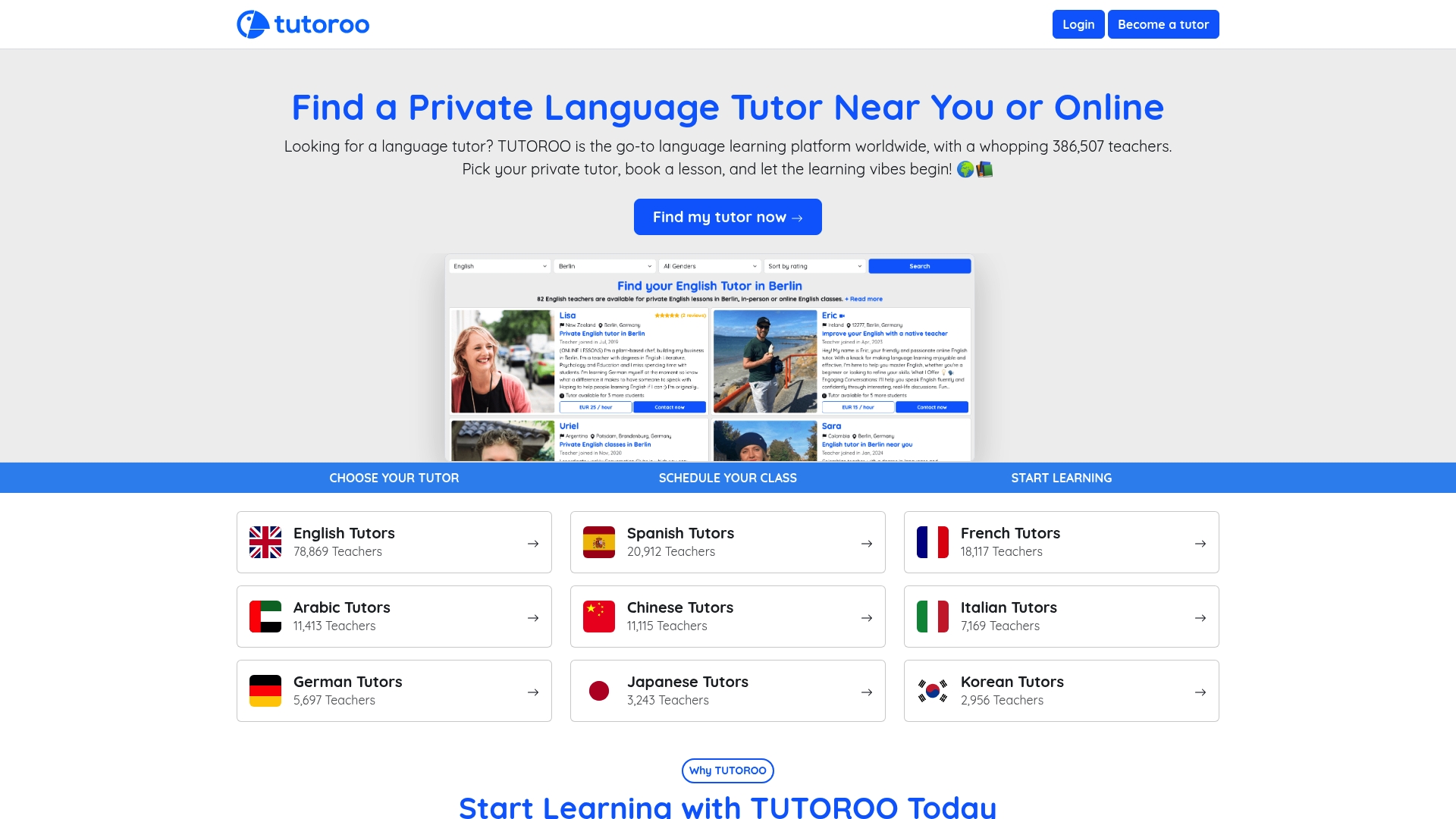
- Browse English tutors, Spanish tutors or French tutors to see verified profiles and message candidates directly.
- Start your search on our main tutor marketplace and apply the checklist above to the first few conversations you have.
FAQ
What is the 70/30 rule in teaching?
A tutor who talks for most of the lesson, leaving little room for you or your child to actually speak the language, is not following this balance.
Is it worth getting a language tutor?
A private tutor can offer a pace and focus that group classes often cannot, particularly for specific goals like exam preparation or conversational fluency. Whether it is worth it depends on finding someone who assesses your level, sets clear goals and gives focused feedback rather than simply running through generic exercises.
What are the 5 C's of language teaching?
The 5 C's, Communication, Culture, Connections, Comparisons and Communities, are a widely referenced framework describing the goals of language education, drawn from ACTFL's world-readiness standards. A tutor does not need to name them explicitly, but their lessons should touch on real communication and cultural context, not just vocabulary drills.
What are your top 3 red flags?
The three to watch most closely are vague or guaranteed-results claims with no assessment behind them, any request to pay outside the platform or through untraceable methods, and teaching that includes no corrective feedback or makes a learner feel ashamed of mistakes. Any one of these is reason enough to pause and verify before booking further lessons.
How do I know if a tutor's qualifications are real?
Ask for specific examples of past lessons, verify identity through the platform where that feature exists, and request a short trial lesson to see their teaching style firsthand. School or directory tutor lists are often self-submitted, so as Reading Rockets notes, appearing on a list is not the same as being independently verified.
Sources
- ACTFL — AAPPL
- Federal Trade Commission — Consumer Alert: Fake-check scam targets childcare providers