

The clearest signs of effective one-to-one language tutoring show up in three places: how the lesson is structured, how feedback is delivered, and whether you can point to measurable progress after a handful of sessions. A tutor who opens with a warm-up retrieval activity, targets one or two specific language gaps, pushes you into unscripted conversation, and closes with a concrete next step is demonstrating every characteristic of quality language instruction in a single hour.
Before booking, take three immediate actions on any marketplace profile:
- Check that the profile states a clear teaching methodology and lists past learner outcomes or milestones.
- Look for sample materials or a described lesson format, not just a biography.
- Confirm a trial or taster lesson is available before committing to a package.
Two quick verification steps before the trial itself: message the tutor and ask for a micro-plan (a three-point outline of what the 20–30 minute taster will cover), then request that the session include at least one unscripted speaking task so you can experience their feedback style firsthand.
Table of Contents
- What do tutor profiles and early lessons actually reveal?
- How do you recognise feedback that actually improves your learning?
- What lesson design actually builds fluency?
- How long does progress take, and what does it cost in Australia?
- Why does psychological safety matter in a language lesson?
- How to run a trial lesson that tells you everything you need to know
- How to verify these signs on Tutoroo before you book
- Key takeaways
- Why these signs matter, from Tutoroo
- Find a tutor who shows every sign of effectiveness
- Useful sources and further reading
What do tutor profiles and early lessons actually reveal?
Scanning a marketplace profile takes two minutes. Knowing what to look for takes experience. Here is what genuinely matters.
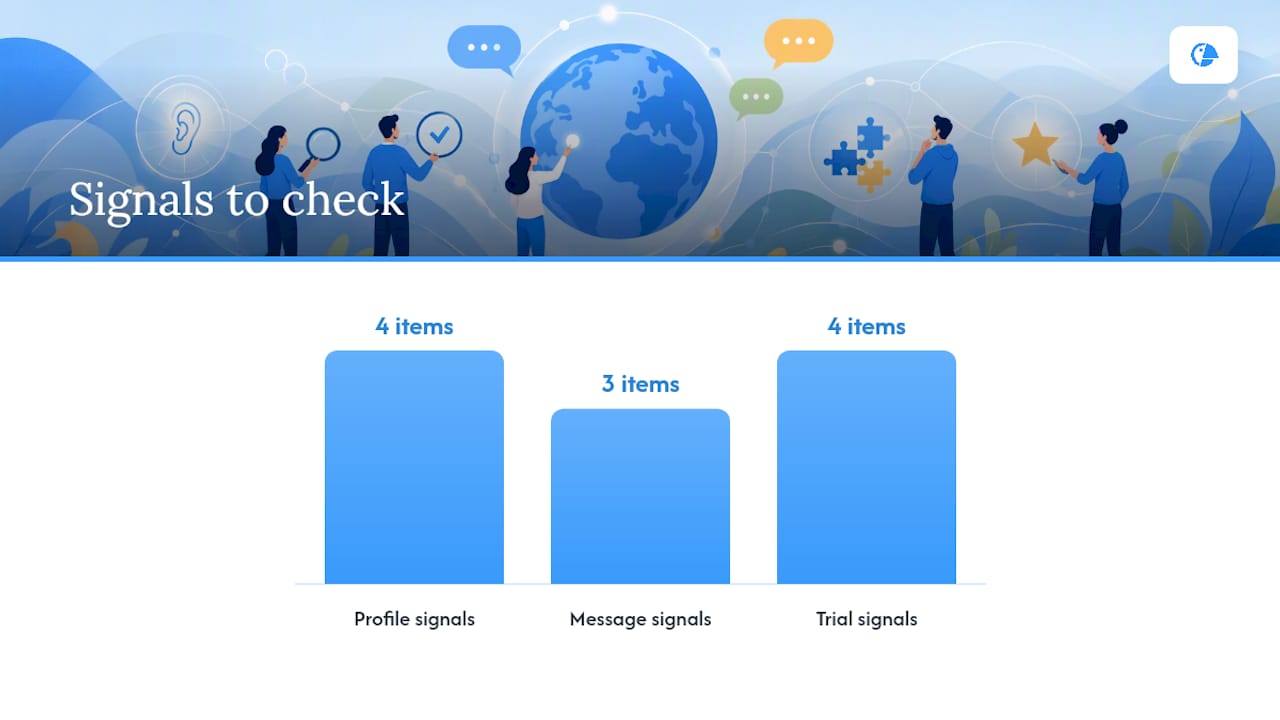
Profile signals:
- A stated teaching methodology (communicative, task-based, exam-focused) rather than a vague "I love languages" opener.
- Relevant qualifications or certifications such as CELTA, TESOL, or a language-specific teaching credential.
- Concrete examples of past learner outcomes: "helped three students pass IELTS Band 7" carries more weight than "experienced with all levels."
- Languages taught listed with proficiency levels, not just "fluent."
Message signals:
- A personalised reply that references your stated goals, not a copy-paste template.
- A proposed micro-plan for the first session within the first exchange.
- Willingness to run a short trial without pressure to commit upfront.
What to watch for in the trial itself:
- A starter retrieval activity (recalling vocabulary or a grammar point from your stated level) that diagnoses where you actually are.
- A single, focused target for the session rather than a scatter of topics.
- Immediate corrective feedback that names the error and models the correct form.
- At least one task that pushes slightly past your comfort zone, such as describing an image without preparation time.
Pro Tip: Ask the tutor before the trial: "What will you do if I make a mistake mid-sentence?" A confident answer that describes a specific correction technique is a strong indicator of quality instruction.
How do you recognise feedback that actually improves your learning?
Effective feedback in one-to-one tutoring is specific, timely, and proportional. A tutor who pauses after every error floods you with corrections and slows fluency; one who lets every mistake pass teaches you nothing. The sweet spot is one to two focused correction areas per session, delivered immediately after the error with a clear model of the correct form.
Feedback literacy is the learner's side of this equation: your ability to seek, interpret, and apply corrections between sessions. Learners who actively apply a small number of specific corrections after each session consistently outperform those who receive many vague comments but never act on them.
Good feedback vs. poor feedback in practice:
Poor: "You made a few grammar mistakes there — just watch your tenses." Good: "You used simple past when you needed present perfect. Try that sentence again: 'I have lived here for three years.'"
The second example names the error, explains the rule briefly, and asks for immediate application. That is formative feedback working as it should.
Pro Tip: During your trial, ask: "Can you correct me in real time and then ask me to repeat the sentence correctly?" A tutor who does this naturally, without breaking the conversational flow, is demonstrating one of the strongest indicators of language learning success.
A practical test: after the trial, can you name the two specific things the tutor corrected? If not, the feedback was not targeted enough to stick.
What lesson design actually builds fluency?
A well-structured tutoring session follows four phases: a warm-up retrieval activity, targeted instruction on a specific gap, guided practice with support, and independent practice where you produce language without a script. Each phase serves a purpose. The warm-up activates prior knowledge; the targeted instruction closes a specific gap; guided practice builds confidence; independent practice forces retrieval under pressure, which is where retention actually happens.

High target-language use throughout the session is important. A tutor who spends too much time explaining grammar in English may limit speaking practice. Pushed output — tasks that require you to produce language slightly beyond your current level — builds fluency faster than any passive drill.
Sample activities that signal good practice:
- Role-plays with an unpredictable element (the tutor introduces a surprise turn mid-scenario).
- Information-gap tasks where you must ask questions to complete a picture.
- Short, unscripted presentations on a topic given thirty seconds before you speak.
- Immediate error modelling: the tutor demonstrates the correct form in context, not in isolation.
Pro Tip: Before the trial, ask: "Will you push me into speaking even when I'm not sure of the answer?" A tutor who says yes and explains how they scaffold that discomfort productively is showing you a key characteristic of effective language teaching.
How long does progress take, and what does it cost in Australia?
Measurable progress in one-to-one tutoring becomes visible after a consistent period of sessions when goals are well defined. The most practical framework is CEFR can-do statements: small, observable milestones such as "I can order food and handle unexpected questions in a restaurant" rather than "I want to be fluent." Ask your tutor to set several micro-goals per review cycle.
A practical decision point: if you cannot demonstrate sub-goal progress after roughly 20 sessions, reassess the tutor match rather than assuming the problem is yours. Spaced repetition and structured micro-goals make progress visible; without them, sessions can feel busy without moving forward.
Cost factors for private tutoring in Australia:
- Tutor qualifications and certifications (CELTA-certified tutors typically charge more than native speakers without formal training).
- Lesson frequency and length (twice-weekly 60-minute sessions accelerate progress more than one weekly session).
- Specialisation: exam preparation (IELTS, OET) and business language coaching command higher rates than general conversation practice.
- Delivery mode: in-person sessions in major cities such as Sydney or Melbourne may carry a travel premium over online lessons.
| Session frequency | Typical outcomes over consistent sessions |
|---|---|
| Regular weekly sessions | Consolidation of current level; gradual vocabulary gains |
| More frequent sessions per week | Noticeable progress with grammar and fluency |
| High-frequency shorter sessions | Greater fluency improvements and micro-goal achievements |
Why does psychological safety matter in a language lesson?
Attempting unscripted language requires a willingness to fail in front of another person. Tutors who create a safe-to-fail environment accelerate fluency precisely because learners attempt harder tasks when they are not afraid of embarrassment. This is not a soft skill — it is a measurable condition for progress.
Observable behaviours that indicate a tutor creates this environment:
- Explicit encouragement after an error: "Good attempt — you got the structure right, just the ending needs adjusting."
- Targeted scaffolding: breaking a complex task into smaller steps rather than repeating the same instruction louder.
- Normalising mistakes as part of the process, not exceptions to it.
- Adjusting pace when a learner's tone or body language signals frustration.
Research on conversational micro-signals shows that expert tutors pick up on small cues — a hesitation, a particular phrasing, an "oh" before a response — and adapt their instruction in real time. That responsiveness is what separates a skilled tutor from someone who simply follows a script.
During a trial, watch for whether the tutor turns your errors into learning moments without any trace of impatience. That behaviour, more than any qualification on a profile, predicts whether you will keep showing up.
How to run a trial lesson that tells you everything you need to know
Before the lesson — your message template:
During the trial — timed checkpoints:
- Minutes 1–5: Warm-up diagnostic. The tutor asks two or three questions to gauge your actual level. Are the questions targeted, or generic?
- Minutes 6–15: Focused task. One specific language point is introduced and practised. Is the instruction clear? Is feedback immediate?
- Minutes 16–25: Unscripted conversation. You speak without preparation. Does the tutor correct in real time and ask you to self-repair?
- Minutes 26–30: Feedback and next steps. Does the tutor summarise what you worked on and suggest a specific homework task?
Decision criteria after the trial:
- Did you receive at least two specific, named corrections?
- Was at least 60% of the session your output rather than the tutor talking?
- Did the tutor suggest a clear next step or homework task?
- Did you feel comfortable attempting language you were not sure about?
Pro Tip: Score the trial on those four criteria. Three or four out of four is a strong match. Two or fewer means the tutor may not be the right fit, regardless of how friendly the session felt.
How to verify these signs on Tutoroo before you book
Translating this checklist into marketplace actions takes less time than you might expect. On Tutoroo, the profile fields that carry the most signal are: teaching experience (years and context), certifications listed, languages taught with levels, and any description of lesson structure or past learner outcomes.
Profile field checklist:
- Teaching experience stated with context (not just years, but what type of learners).
- At least one certification or formal qualification listed.
- A description of how lessons are structured, even a single sentence.
- Reviews that mention specific progress, not just "great tutor."
How to use platform features:
- Filter reviews for comments about measurable progress or exam results.
- Ask for references from learners with similar goals via the messaging system.
- Confirm scheduling flexibility and payment terms before the trial.
Two message templates:
Initial enquiry: Follow-up after the trial: A tutor who responds to that second message with a concrete plan is demonstrating every indicator of quality language instruction discussed in this article. One who replies with "we'll see how it goes" is not.
Key takeaways
Effective one-to-one language tutoring is identifiable before you commit: structured lessons, targeted feedback, measurable milestones, and a safe-to-fail environment are observable in a single trial session.
| Point | Details |
|---|---|
| Structured lesson phases | Look for warm-up, targeted instruction, guided practice, and a clear close in every session. |
| Specific, timely feedback | Effective tutors name the error, model the correction, and ask for immediate application. |
| Measurable micro-goals | Request CEFR can-do milestones and a four to six week review cycle from the start. |
| Learner output over tutor talk | At least 60% of session time should be your speaking, not the tutor's explaining. |
| Tutoroo trial feature | Use Tutoroo's trial lesson option and review filters to verify these signs before committing. |
Why these signs matter, from Tutoroo
The checklist in this article reflects what Tutoroo has observed across a community of over 386,000 language tutors worldwide. Structured lessons, proportional feedback, and measurable milestones are not ideals — they are the observable behaviours that separate tutors who produce real progress from those who simply fill an hour pleasantly.
Tutoroo's platform surfaces these signals through profile fields, verified reviews, and direct messaging, so you can assess a tutor's approach before spending a cent on a full lesson. Use the trial feature, apply the decision criteria above, and let the evidence guide your choice.
Find a tutor who shows every sign of effectiveness
Knowing what to look for is only half the work. The other half is finding a tutor who actually demonstrates it. Tutoroo connects you with private language tutors across dozens of languages, with profile fields designed to surface the signals that matter: teaching experience, certifications, lesson structure descriptions, and progress-focused reviews.
- Browse tutor profiles and filter by language, location, and availability.
- Request a trial lesson directly through the platform's messaging system.
- Check reviews for specific progress mentions before committing.
- Confirm flexible scheduling and direct payment terms with your tutor.
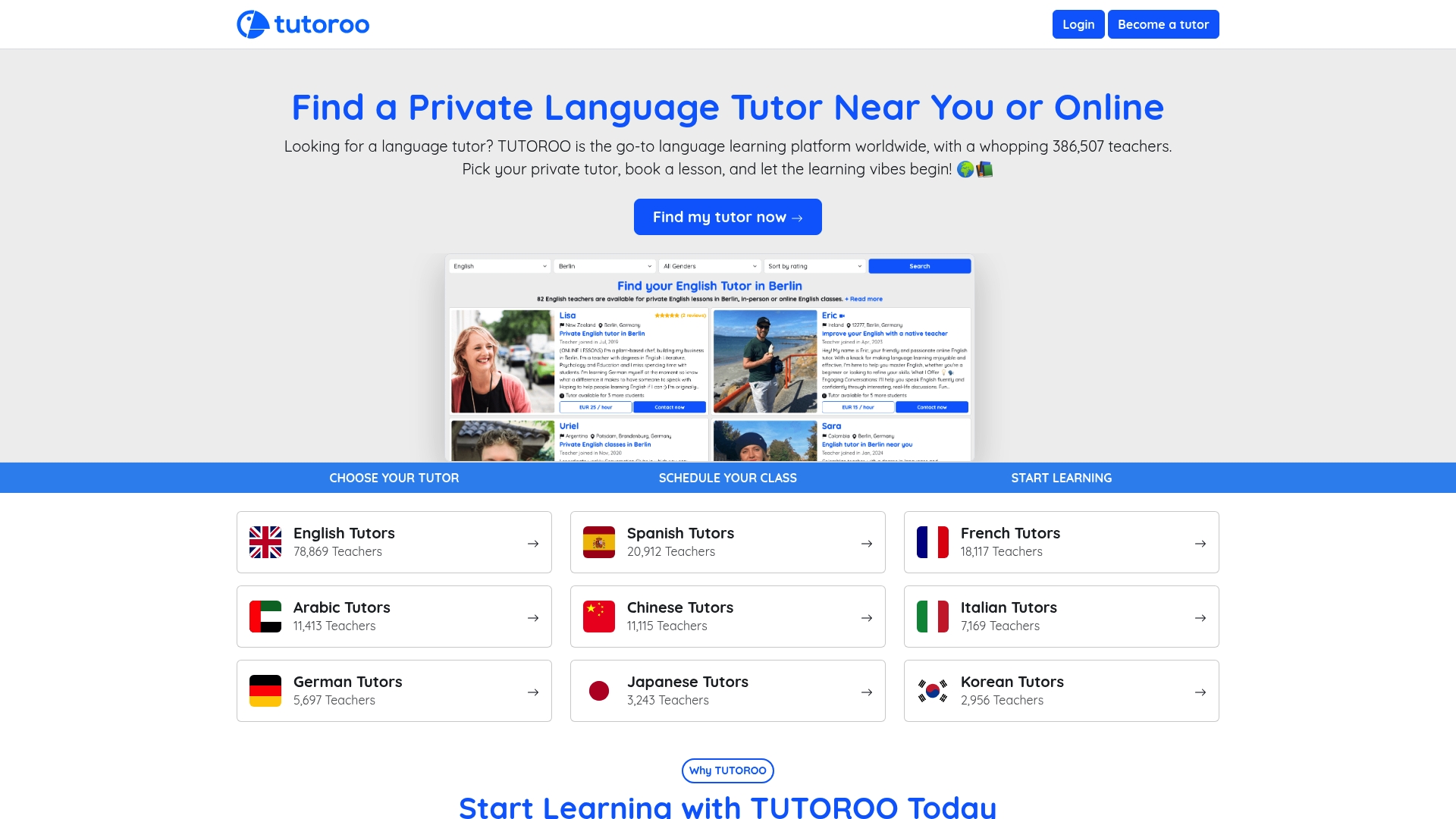
Whether you are preparing for an exam, building conversational confidence, or learning a language for cultural connection, the right tutor makes every session count. Search for your tutor on Tutoroo today, request a short trial, and use the checklist above to make a confident, evidence-backed choice.
Useful sources and further reading
These resources support the checklist and next steps covered in this article.
- How feedback shapes success in language tutoring
- Private tutoring best practices for faster language success
- Language tutoring process: Step-by-step to faster fluency
- How to Choose a Language Tutor: Complete Guide | NLLB
- Language lessons that build real speaking skills
- Conversation Analysis article (2024) on micro-signals and tutoring