

The fastest way to keep an in-home tutoring arrangement safe is to vet the tutor properly, hold the first sessions in a shared family space with an adult present, and keep all scheduling and communication routed through a parent, never the child. No single check guarantees safety on its own, which is why agencies such as the FBI, the Department of Justice and NCMEC all recommend layering these habits rather than relying on one background check.
TL;DR:
- Proper vetting includes verifying identity, credentials, and conducting fingerprint or FBI background checks if the tutor will be alone with a child regularly.
- Interview questions should explore the tutor's experience with children, boundary policies, and comfort with parental presence to detect red flags.
- All lessons must occur in shared family spaces with clear rules, in writing, and all communication routed through the parent to prevent secrecy.
- Parents should monitor sessions, ask for summaries, keep logs, and practice bodily boundary conversations with their children for ongoing oversight.
- Immediate termination and recordkeeping are crucial if any grooming or suspicious behavior is suspected, with contact to law enforcement and support organizations.
Table of Contents
- How to vet and verify a prospective in-person tutor
- Interview questions that reveal how a tutor handles boundaries
- Session logistics and firm boundaries to set before lesson one
- Communication, monitoring and staying involved without hovering
- Warning signs and what to do if something feels wrong
- Publisher perspective: what to expect from a reputable platform
- Find a vetted tutor through TUTOROO
- Sources
- FAQ
How to vet and verify a prospective in-person tutor
A background check tells you what's on record. It doesn't tell you how someone behaves behind a closed door, which is why the Stanford background check guidance frames screening as one layer among several, not a stand-alone guarantee. Treat vetting as a short, repeatable process rather than a box to tick.

Start with identity. Ask for a government-issued photo ID and confirm the name matches the profile and any qualifications claimed. Request proof of relevant experience or credentials, such as a teaching certificate or transcripts, and verify at least one independently (a quick call to the issuing institution is usually enough).
Criminal-history checks come in different strengths. A basic online search is a starting point, a state-level check goes further, and a fingerprint-based or FBI-level check is the most thorough option, worth requesting when a tutor will be alone with a young child regularly. References matter just as much: call two referees directly rather than emailing, and ask specific questions rather than "were they good?"
- Ask how long the referee has known the tutor and in what capacity.
- Ask if the tutor ever cancelled, changed plans, or pushed boundaries around supervision.
- Ask whether they'd hire the tutor again for their own child.
A partner resource on reference checks explains why references and criminal-history checks answer different questions and why skipping either one leaves a gap. When requesting documents, simple wording works best: "Could you send a photo of your ID and the contact details of two people who've seen you teach?" For more detail on what a thorough screening actually covers, TUTOROO's guide on what a proper tutor background check must include is a useful companion to this section.
Interview questions that reveal how a tutor handles boundaries
A short, structured interview tells you more than a resume ever will. Ask these in order and listen for hesitation, not just the words.
- How much experience do you have teaching a child this age, and what does a typical session look like?
- Have you had any first-aid, safeguarding, or child-protection training?
- Where do you expect sessions to happen, and are you comfortable with a parent nearby or a door left open?
- What's your policy on transport, if any, and how do you prefer to handle after-hours contact?
- If a child refused a hug or physical greeting, how would you respond?
Vague or defensive answers to the boundary questions are the clearest red flag. A tutor who insists on privacy, resists a parent's presence during early sessions, or brushes off the scenario question deserves a follow-up conversation, not a booking. TUTOROO's guide on evaluating private language teachers has more sample questions if you want to go deeper before the interview.
Session logistics and firm boundaries to set before lesson one
Where the lesson happens matters more than most parents expect. A Department of Justice case involving an in-home tutor underscores why sessions belong in shared family spaces, with the door open and another adult within earshot, never in a bedroom or closed study. The same case is a reminder that a tutor should never transport a child without both parents' explicit, separate agreement.
Put the rules in writing before the first lesson, even if it's a one-page note both sides sign:
- Sessions happen in a shared space, door open, adult within earshot.
- No off-platform payments and no direct, student-only messaging.
- All scheduling changes go through the parent, not the child.
- Parents retain drop-in rights at any point during a session.
- A brief note or log is kept after each session summarising what was covered.
Pro Tip: Sit in on the first session yourself. It's not just supervision, it's your best chance to watch how the tutor talks to your child and reacts when a boundary is raised.
Communication, monitoring and staying involved without hovering
Keeping oversight doesn't mean sitting in on every lesson forever. It means building habits that make isolation and secrecy unlikely from the start. Route all scheduling and messages through yourself rather than letting the tutor and child arrange things directly, and avoid any private, student-only channel entirely.
- Drop in occasionally and unannounced, even after the arrangement feels settled.
- Ask for a short end-of-session summary, written or spoken, covering what was taught.
- Keep a simple log of dates, topics and any concerns, however minor.
Talk to your child about bodily boundaries in plain terms and help them identify at least three trusted adults they could go to if something felt wrong, a step the FBI specifically recommends for exactly this kind of situation. Practising a simple "what would you do if…" conversation makes it far easier for a child to speak up later. TUTOROO's piece on the role of parental involvement in tutoring expands on these habits if you want a longer read.
Warning signs and what to do if something feels wrong
Grooming typically starts with rapport-building, and a tutor who seems unusually charming or eager to connect isn't automatically safe just because they're likeable, a pattern the Department of Justice has flagged in prevention guidance for schools and youth organisations. Watch for requests for secrecy, a preference for closed doors, or pressure to communicate directly with your child outside agreed channels.
- Stop the sessions immediately if something feels off, before you've worked out exactly why.
- Preserve every message, receipt and session note as a record.
- Contact the tutoring platform's support team to report the concern.
- Call local law enforcement straight away if there's any immediate danger.
- Use NCMEC's tipline for exploitation concerns and seek legal or counselling support as needed.
Write down dates, who was present, and exactly what was said or seen. That record matters if you need to report the concern formally later.
Publisher perspective: what to expect from a reputable platform
TUTOROO connects students with a global community of more than 386,000 language tutors, and we built messaging, profiles and direct payments so parents can enforce their own document checks and communication rules rather than take anyone's word for it. A platform can make vetting easier to organise, but it never replaces the interview, the shared-space rule, or the parent sitting in on that first lesson. Our guides on background checks and online tutoring safety go further into how these protections work in practice.
— TUTOROO
Find a vetted tutor through TUTOROO
Once your checklist is in place, finding the right person shouldn't add more stress to the process. TUTOROO lets you search tutors by location or by online availability, message candidates directly, and review profiles before you ever agree to a first session, all of which makes it easier to apply the checks in this guide.
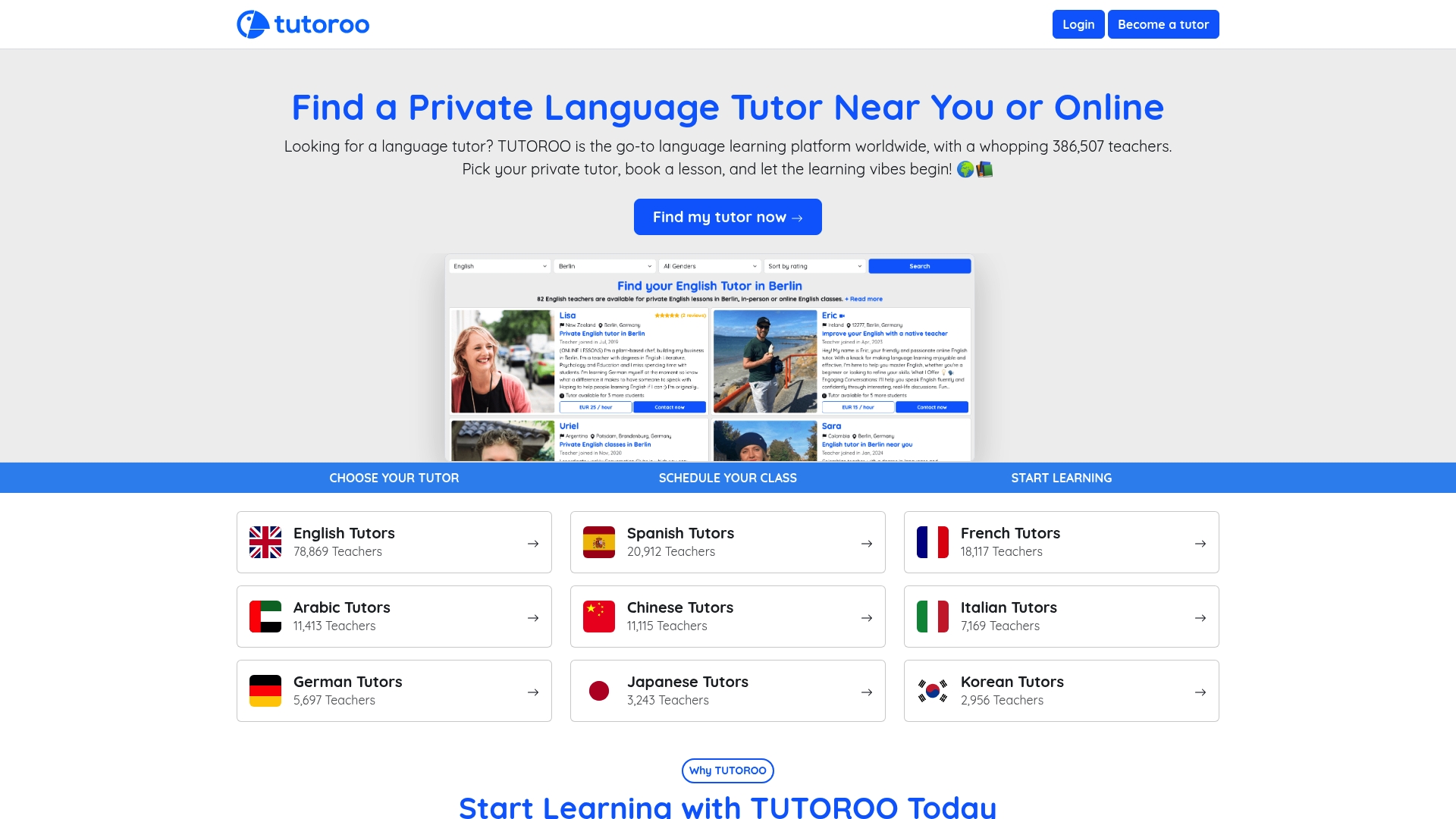
Browse profiles on Tutoroo or start with English tutors if that's the language you're after. This is one option among many, so run every candidate through the same vetting steps regardless of where you find them.
Sources
For deeper reading beyond this guide, the OJJDP report on crimes against children by babysitters covers patterns in caregiver-related offences. The FBI's page for parents and caregivers explains the trusted-adult approach in full, and the Stanford background check guidance sets out what a formal screening policy should include. The Department of Justice case summary is the source behind this guide's session-location rules.
- Parents and caregivers: protecting your kids — FBI
- Tuckahoe tutor charged — U.S. Department of Justice
- Tutor background check guidance — Stanford / NSSA
FAQ
Whether an hourly tutoring rate is too high depends on many factors.
Tutoring rates vary widely by subject, location and tutor experience, so there's no fixed benchmark for what counts as too high. Tutor rates vary widely; it is best to check individual tutors' rates directly on their profiles or websites for current pricing information.
What roles should you not take on as a tutor?
A tutor shouldn't act as an unsupervised caregiver, transport a child without both parents' explicit agreement, or communicate with a child directly outside parent-approved channels. Sticking to the teaching role, and leaving supervision and logistics to the parent, keeps the arrangement clear for everyone.
Is it better to tutor online or in-person?
Each format carries its own safety considerations rather than one being universally safer. In-person sessions need clear rules on location and supervision, as covered throughout this guide, while online sessions need their own platform and communication safeguards.
Whether a tutoring rate is considered good varies depending on subject, tutor experience, and local market conditions.
Whether a rate is good depends on the subject, the tutor's experience and the local market rather than any single standard figure. Comparing several tutor profiles for the same language or subject is the most reliable way to judge whether a rate is reasonable.