

Shortlist tutors by matching their experience to your specific goal, then book one or two short trial lessons using a diagnostic brief rather than judging profiles alone. Real interaction with a tutor, even for 25 minutes, tells you more about fit than any bio ever will. A network of tutors gives you a practical place to start that search today.
TL;DR:
- Focus on tutors with recent, relevant experience and a teaching approach that emphasizes diagnostic questions and adaptability, not just credentials or star ratings.
- Conduct a short, structured trial lesson where you speak mostly, and evaluate if the tutor explains corrections clearly, matches your pace, and offers a lesson plan.
- Look out for vague responses, repeated cancellations, and generic reviews; genuine progress in reviews and a solid lesson count are strong signals of quality.
- Book only one trial lesson initially, and give the tutor four to eight lessons to assess if they effectively help you reach your specific language goal.
Table of Contents
- What should you look for when you choose a language tutor?
- How do you run a trial lesson that actually reveals fit?
- What should you budget for a language tutor?
- What are the red flags when choosing a tutor?
- How do you put this checklist into action on Tutoroo?
- When should you switch tutors instead of persisting?
- Start with one trial lesson, not a big commitment
- Sources
- FAQ
What should you look for when you choose a language tutor?
Speed through profiles with a short checklist before you message anyone. This is where most learners waste time, either overthinking every bio or picking the first friendly-looking photo.
- Goal match: A tutor who specialises in conversational fluency isn't necessarily the right pick for exam prep or business vocabulary. Say exactly what you want in your first message.
- Recent, relevant experience: Ask for examples of students at your level, not just years of teaching overall.
- Teaching approach: Good tutors ask diagnostic questions and adapt on the fly rather than running a fixed script. Penn GSE's guide to what makes a strong tutor points out that empathy, patience, and a goal-oriented approach often predict success better than a prestigious qualification alone.
- Logistics: Confirm availability, lesson length options, and that their tech setup (camera, audio, screen-share) actually works before you commit to a series.
- Trust signals: Lesson counts and specific, detailed reviews matter more than star ratings alone. Our guide to reading tutor reviews breaks down what a genuinely useful review looks like versus generic praise.
- Native vs non-native: Beginners often do better with a tutor who learned the language themselves, since they can translate tricky concepts and anticipate common mistakes, according to Penn GSE. Advanced learners chasing accent and idiom tend to benefit more from native speakers.
- Payment terms: Expect clear cancellation windows and the option to pay per lesson rather than in bulk.
Pro Tip: Write down your goal in one sentence before you browse a single profile. "I want to hold a 10 minute work call in Spanish by June" filters out mismatched tutors faster than any search filter.
How do you run a trial lesson that actually reveals fit?
A trial lesson only works if you go in with a plan. Winging it wastes both your time and the tutor's.
Start with your first message. Keep it short and specific:
- State your current level honestly (beginner, intermediate, or a rough sense of what you can already do).
- Name your goal and timeline ("conversational Portuguese for a trip in October").
- Ask for a sample of how they'd structure a first lesson.
- Include one diagnostic question, such as "How would you correct a student who mixes up past tenses?"
That last step matters more than it sounds. TutorPerch's guide to trials and red flags notes that a strong first reply asks its own diagnostic questions and proposes a structure, while a weak reply jumps straight to price and availability. Where possible, ask for a short recorded explanation or a "how-to" style video before you book. Penn GSE recommends exactly this as a low-cost way to check teaching clarity before you spend anything.
During the trial itself, watch for:
- You speaking more than half the lesson, not the tutor lecturing.
- Corrections that explain the "why," not just the "what."
- A clear pace that matches your level rather than racing ahead or dragging.
- A rough homework or next-lesson plan by the end.
Reading Rockets recommends meeting several candidates this way, since trials reveal rapport and teaching style far better than any written profile. If a tutor talks over you for the full session or can't explain their method when asked, end the trial early and move on.
What should you budget for a language tutor?
Rates vary widely by language, tutor experience, and format. Entry-level conversational practice tends to sit at the lower end, mid-range tutors with structured lesson plans and tailored materials cost more, and specialist exam coaches or intensive-block tutors command the highest rates. Our breakdowns on Spanish tutor pricing and English tutoring costs give a sense of real-world ranges.
- Judge value by prep time and tailored materials, not just the hourly rate.
- Book a single trial or a small block first. TutorPerch warns that large upfront deposits before a trial are a common source of learner complaints.
- Higher rates are usually justified for exam coaching or intensive short-term blocks where the tutor does extra prep between sessions.
What are the red flags when choosing a tutor?
Some warning signs show up before you've even booked a trial. A tutor who replies with a vague "sure, when works for you?" and immediately pushes a ten-lesson package hasn't engaged with what you actually need. TutorPerch is blunt about this: strong tutors ask follow-up questions, weak ones talk price first.
- No diagnostic questions in the first reply, or reluctance to explain their teaching method when asked directly.
- Repeated cancellations, patchy audio or video, or no clear cancellation policy in writing.
- Reviews that read generically ("great tutor, highly recommend") with no specific outcome mentioned.
On the positive side, look for reviews citing real progress ("helped me pass my B2 oral exam"), a visible lesson count in the hundreds rather than single digits, and a tutor willing to sketch a lesson plan before you've even paid. How to get fluent's tutor-selection guide treats lesson totals and specific review quotes as far stronger signals than generic star ratings.
Pro Tip: If a tutor's first reply reads like a copy-paste template with your name swapped in, that's often how every future lesson will feel too.

How do you put this checklist into action on Tutoroo?
A platform connects students with tutors across a network of language teachers, covering online and local lessons in various languages. Use the platform's filters and messaging to run the exact process above, without switching between five different tools.
- Filter by language, availability, and format (online or in-person) before you message anyone.
- Send your diagnostic first-message template directly through Tutoroo's built-in messaging.
- Ask each candidate for their qualifications and recent teaching examples before booking a trial.
- Book a single trial lesson first. It's a far lower-risk commitment than a bulk package, and it mirrors exactly what Reading Rockets recommends for finding the right fit.
When should you switch tutors instead of persisting?
Give a tutor four to eight lessons before deciding, longer for exam prep, shorter if you're just testing conversational fit. If you're still not speaking more than the tutor by lesson four, or corrections still feel vague, that's your signal. Document specific issues, ask for changes once, then trial someone new rather than drifting along out of politeness.
— TUTOROO
Start with one trial lesson, not a big commitment
The fastest way to test everything in this guide is to book a single trial lesson on a platform rather than committing to a package upfront. Such platforms offer scale and choice: with tutors across dozens of languages and both online and local formats, you can run the same diagnostic message template with two or three candidates in the same week and compare real responses side by side.
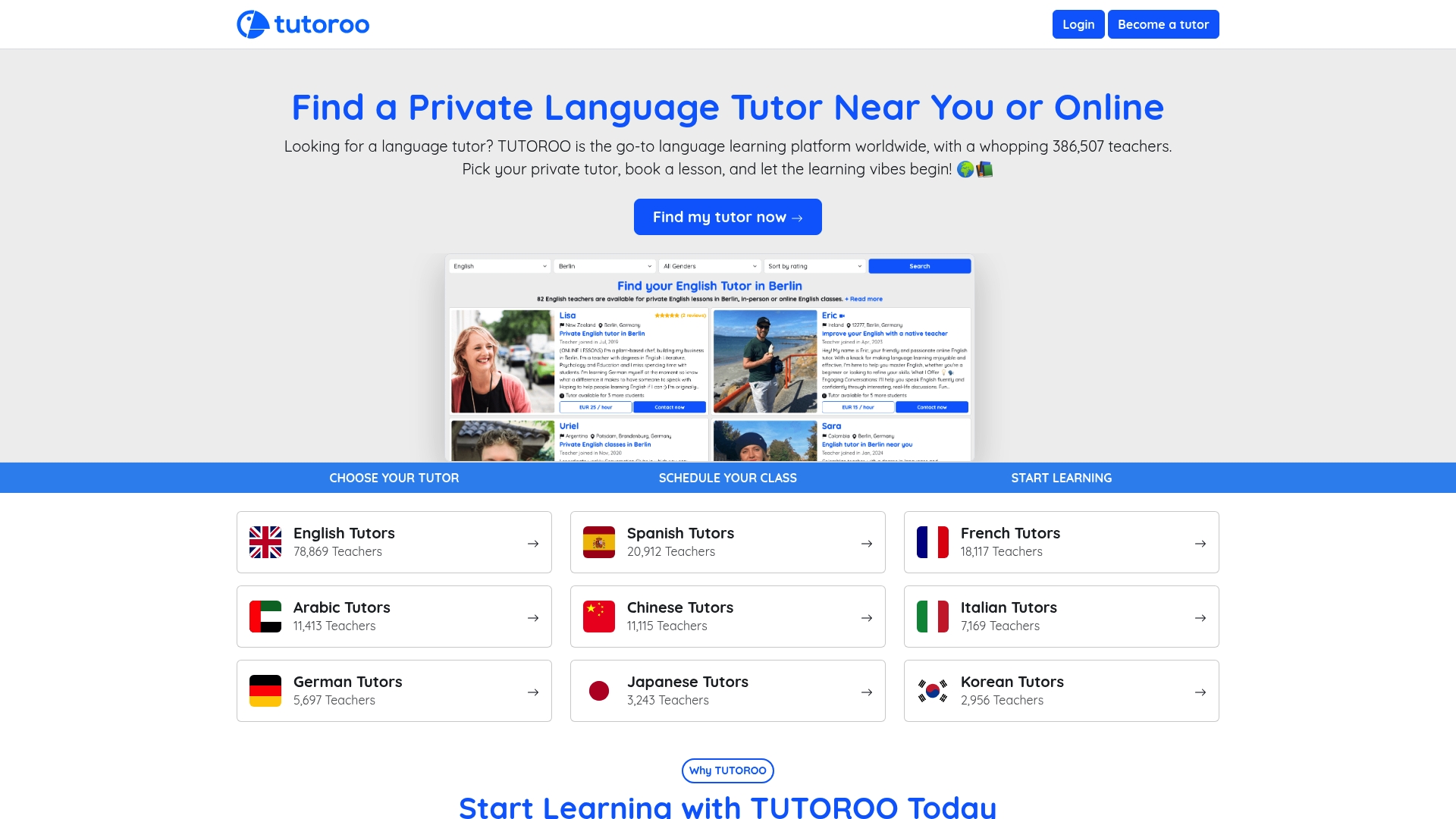
Start by browsing English, Spanish, or French tutors, or head to the main tutor directory to filter by any of the languages on the platform. Send your goal, your level, and one diagnostic question in your first message, then ask specifically for a single trial lesson rather than a package. If the trial goes well, you'll know within 25 minutes, and you can book your next session with the same tutor directly through the platform's messaging.
Sources
- What to look for in a tutor | Penn GSE
- Four steps to finding an excellent tutor for your child | Reading Rockets
- How to choose a tutor: trials & red flags | TutorPerch
- How to choose an online language tutor | How to get fluent
FAQ
Is hiring a language tutor worth it?
For most learners with a specific goal, timeline, or exam ahead, yes. A tutor gives you speaking practice and correction that self-study apps can't replicate, and a single trial lesson costs little to test whether it suits you.
How does the FBI learn languages quickly?
Government language programs typically rely on intensive, immersive schedules with many hours of daily practice over weeks or months, not a special trick available to casual learners. The closest equivalent for a self-directed learner is frequent short lessons with a tutor plus daily independent practice between sessions.
Is $40 an hour good for tutoring?
That rate sits in the middle range for many languages and tutor experience levels, though it varies by language and format. Compare it against detailed Spanish or English pricing benchmarks before deciding if it's high or low for your situation.
What is the best website for finding language tutors?
Tutoroo connects learners with a wide network of tutors across dozens of languages, with built-in messaging and trial-lesson booking. The right platform for you ultimately depends on whether you want online lessons, local in-person sessions, or both.