
TL;DR:
- Parental involvement in tutoring involves logistical support, emotional encouragement, and open communication without replacing the tutor's instruction. Effective support focuses on creating a consistent environment, celebrating effort, and fostering student independence across different ages. Building trust and maintaining respectful, regular communication with tutors enhances learning outcomes and strengthens the parent-child relationship.
Parental involvement in tutoring is defined as the active, supportive engagement parents provide around tutoring sessions, including setting up the learning environment, communicating with tutors, and reinforcing motivation at home. Research confirms that family-school partnerships improve attendance, academic achievement, graduation rates, and social-emotional development. The benefits are not incidental. A meta-analysis of 26 studies found parental involvement has the strongest positive association with early childhood school readiness compared to socioeconomic factors or the home learning environment alone. When parents understand their role clearly, tutoring becomes far more than an hour of extra help. It becomes a connected, consistent experience that builds confidence and capability.
What does effective parental involvement in tutoring look like?
Effective parental involvement in tutoring is supportive rather than instructional. The distinction matters enormously. A parent who sits beside a child and re-explains concepts the tutor just covered is not helping. They are introducing competing methods, which confuses the child about who is responsible for their learning. K12 Tutoring guidance is direct on this point: parents should avoid reteaching or overriding tutors during sessions, as it reduces tutor effectiveness and undermines student independence.

The most productive parental role sits in the background, not the foreground. Parents who facilitate logistics, create a quiet and consistent study space, and celebrate effort rather than only results give their children a genuine advantage. Communicating openly with the tutor about what is working and what is not, without micromanaging the session itself, keeps everyone aligned.
Here is what supportive involvement looks like in practice:
- Setting up the environment. A dedicated, distraction-free space signals to the child that tutoring time is serious and valued.
- Managing logistics. Reliable scheduling, punctuality, and ensuring the child arrives prepared (with materials, notes, and questions ready) removes friction from the learning process.
- Celebrating effort, not just results. Praising persistence and curiosity builds the intrinsic motivation that carries children through difficult material.
- Communicating with the tutor. Sharing observations about mood, stress, or recent classroom struggles gives the tutor context that transforms a generic session into a targeted one.
- Staying out of the session itself. Hovering or interrupting disrupts the tutor-student relationship and signals to the child that the parent does not fully trust the process.
Pro Tip: Before tutoring begins, agree on a simple communication protocol with the tutor. A brief message after each session noting one win and one area to watch takes five minutes and keeps the whole support team working from the same page.
How does parental involvement impact motivation and academic outcomes?
Parental support shapes academic outcomes through a specific psychological pathway called motivational self-regulation. This is the process by which students manage their own effort, mindset, and persistence around learning tasks. A 2026 MDPI study found that family-perceived support, characterised by warmth, structure, and caring, relates directly to better academic achievement through these motivational self-regulation pathways. The implication for parents is clear: how you show up emotionally around learning matters as much as the practical help you provide.
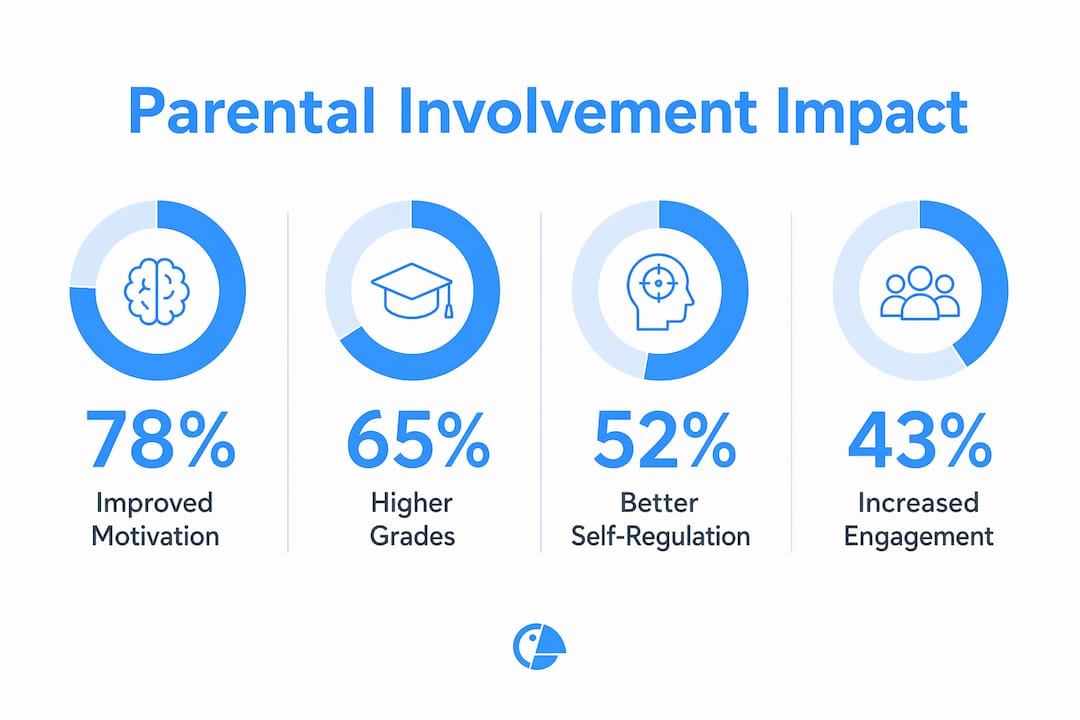
The evidence on maths learning is particularly instructive. A Springer Nature longitudinal study found that parental practices promoting interest and building competence are the most effective for improving children's maths motivation and achievement. Simply helping with problems is less powerful than encouraging curiosity and a sense of capability. Parents who ask "What did you find interesting about that?" rather than "Did you get the right answer?" are doing something measurably different.
There is also a nuance worth understanding. A 2026 meta-analytic review of 46 studies involving 109,270 participants found a moderate positive correlation (r=0.248) between parent-child relationship quality and learning engagement, regardless of gender or developmental stage. That correlation holds across every age group studied, which means the quality of the relationship between parent and child is a consistent predictor of how engaged a child is with learning. A warm, trusting relationship is not just nice to have. It is a measurable academic asset.
One important nuance: longitudinal research shows parents tend to increase support reactively when children struggle. This explains why some studies appear to show a negative correlation between parental help and achievement. The help is not causing the struggle. The struggle is prompting the help. Understanding this bidirectional relationship prevents parents from misreading their own impact.
How does parental involvement change as children grow older?
Parental involvement in tutoring does not look the same at age seven as it does at age fifteen. In the early years, active, hands-on support, reading together, reviewing flashcards, sitting nearby during sessions, is genuinely beneficial. As children move through primary school and into secondary school, that same level of involvement can become counterproductive.
Parental support in maths often declines as curriculum difficulty rises, simply because parents feel less confident with the content. This is not a failure. It is an opportunity to shift focus from content knowledge to engagement scaffolding: checking in on understanding, encouraging effort, and asking reflective questions about strategies rather than answers.
For teenagers, the research points firmly toward autonomy-supportive parenting. Penn State research summarises the evidence clearly: autonomy-supportive parenting during adolescence, which balances awareness and boundaries without over-control, is linked to better mental health and school performance. Tight control, by contrast, tends to produce anxiety and disengagement.
Here is how the parental role can evolve across school stages:
- Early primary (ages 5-8). Active involvement is appropriate. Sit nearby, review work together, and build positive associations with learning through encouragement and routine.
- Upper primary (ages 9-12). Shift toward facilitation. Ask about what was covered in tutoring rather than checking every answer. Let the tutor lead the content.
- Secondary school (ages 13-18). Move into a monitoring and mentoring role. Stay informed about progress through tutor communication, but give the student ownership of their sessions and study habits.
- Throughout all stages. Keep the emotional connection strong. Curiosity, warmth, and genuine interest in your child's learning are effective at every age.
The risk of over-control is particularly relevant for parents of teenagers, where academic pressure is highest and the temptation to intervene is strongest. Balanced monitoring, staying aware without hovering, produces better outcomes than either complete disengagement or constant oversight.
What are effective strategies for parents to collaborate with tutors?
Strong parent-tutor collaboration is built on communication, trust, and clearly defined roles. The goal is not to manage the tutor but to create the conditions in which the tutor can do their best work. Private tutoring best practices consistently point to the parent-tutor relationship as one of the most underutilised levers for improving outcomes.
Here are practical strategies to build that collaboration effectively:
- Establish communication channels early. Agree with the tutor on how and when you will communicate. A brief weekly message or a shared progress note keeps everyone aligned without interrupting the tutor's workflow.
- Share relevant context. Let the tutor know about upcoming exams, recent classroom struggles, or changes at home that might affect your child's focus. Tutors cannot tailor sessions to information they do not have.
- Use feedback constructively. When a tutor flags a concern, treat it as useful data rather than criticism. Feedback in tutoring is most effective when parents and tutors treat it as a shared tool for progress, not a report card.
- Prepare your child for sessions. Encourage them to arrive with questions from class or topics they found confusing. A student who comes prepared gets significantly more from each session.
- Encourage student ownership. Ask your child what they worked on and what they want to focus on next. This builds metacognitive habits and signals that you trust them to take responsibility for their learning.
Pro Tip: After each tutoring session, ask your child one open question: "What was the most useful thing you practised today?" This simple habit reinforces retention, builds self-reflection, and gives you insight into progress without interrogating the session.
Tutor-client communication is a skill that improves with intention. Parents who treat the tutor as a professional partner, rather than a service provider to be directed, consistently report better outcomes for their children.
Key takeaways
Parental involvement in tutoring works best when it combines emotional support, clear communication with tutors, and a gradual shift toward student autonomy as children mature.
| Point | Details |
|---|---|
| Supportive, not instructional | Parents should facilitate logistics and motivation, not reteach content or override tutor methods. |
| Relationship quality matters | A warm parent-child relationship correlates directly with stronger learning engagement across all age groups. |
| Motivational self-regulation | Parental warmth and structure help children manage their own effort and mindset around learning tasks. |
| Evolve with the child | Active support suits early primary; autonomy-supportive monitoring is more effective for teenagers. |
| Communication is the foundation | Regular, respectful communication with tutors, without micromanaging, keeps the whole support team aligned. |
Tutoroo's perspective on parental involvement
The most common mistake we see is not a lack of effort. It is effort applied in the wrong direction. Parents who care deeply about their child's progress sometimes channel that care into hovering over sessions, re-explaining concepts, or pushing for more hours rather than better quality engagement. The research, and our experience connecting families with tutors across dozens of languages and countries, points consistently in the same direction: trust the process, trust the tutor, and focus your energy on the relationship.
What actually moves the needle is the conversation at the dinner table. It is the parent who asks "What are you curious about this week?" instead of "Did you finish your homework?" It is the parent who tells the tutor about the classroom test coming up on Friday, or mentions that their child has been anxious lately. These small acts of connection and communication create the conditions in which a skilled tutor can do genuinely transformative work.
We have also observed that parents who struggle most are often those whose own school experiences were difficult. There is sometimes an unconscious pressure to fix what felt broken in their own education, and that pressure lands on the child. The most effective parents we see are those who approach tutoring with curiosity and openness, who see the tutor as a partner rather than a proxy for their own involvement, and who give their child room to own the experience.
Parental involvement is not about doing more. It is about doing the right things at the right stage, with the right people alongside you.
— Tutoroo
Find the right tutor for your child with Tutoroo
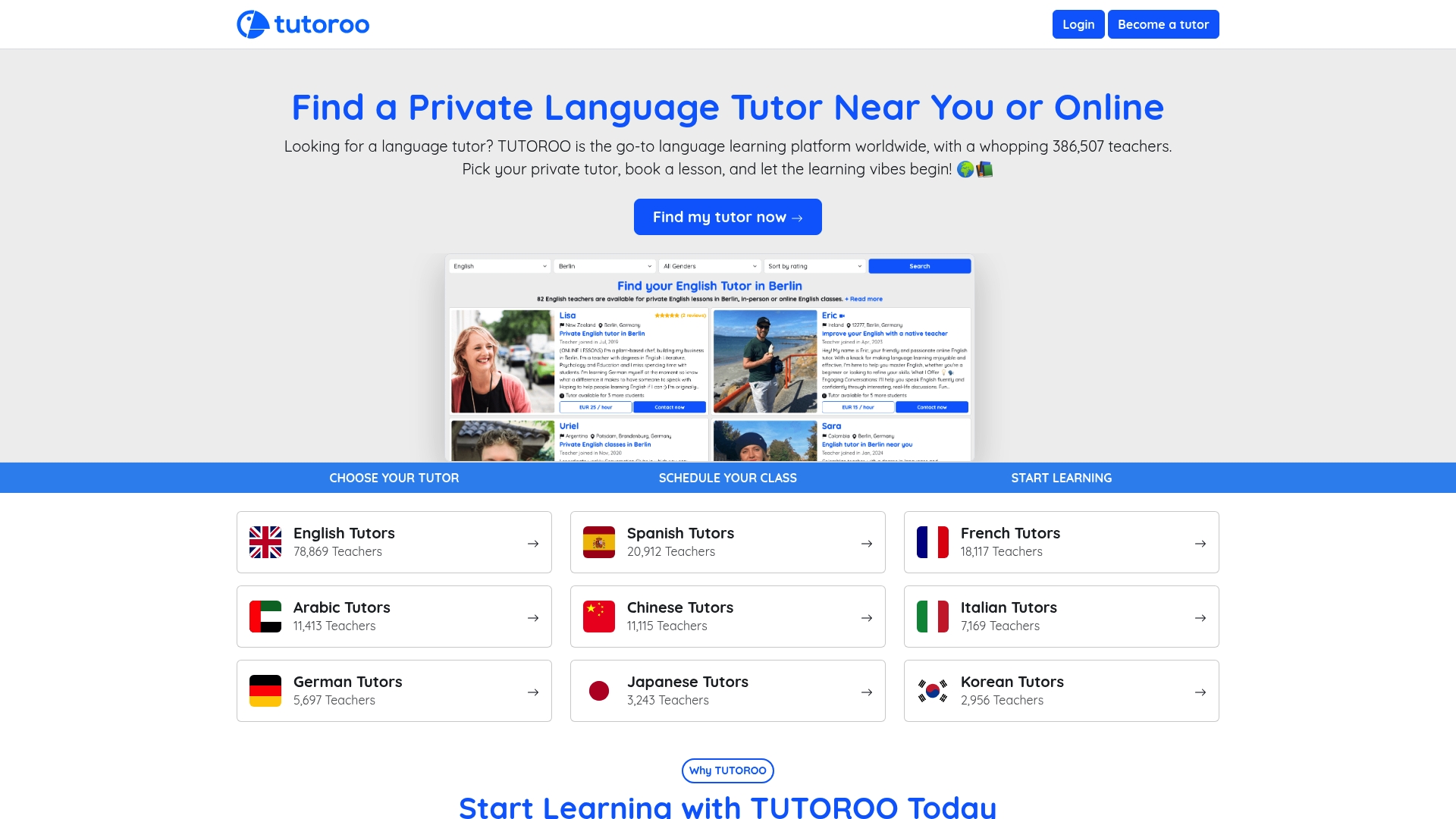
Tutoroo connects families with over 386,000 qualified private tutors across the world, offering personalised, one-on-one sessions in languages including English, Spanish, French, Arabic, and Chinese. Whether your child needs support building language confidence or strengthening core academic skills, Tutoroo makes it straightforward to find a tutor who fits your schedule, learning goals, and budget. Parents can search by language, location, and availability, then communicate directly with tutors through the platform. If you are ready to put the strategies in this article into practice, find a private tutor on Tutoroo and take the first step toward a more connected, effective tutoring experience for your child.
FAQ
What is the role of parental involvement in tutoring?
Parental involvement in tutoring means providing logistical support, emotional encouragement, and open communication with tutors, without substituting for the tutor's instructional role. Research from the California Department of Education confirms that family-school collaboration improves academic outcomes, attendance, and social-emotional development.
How can parents support tutoring without interfering?
Parents support tutoring most effectively by setting up a consistent study environment, sharing relevant context with the tutor, and celebrating effort rather than only results. K12 Tutoring guidance is clear that reteaching or overriding the tutor's methods confuses students and reduces session effectiveness.
Does parental involvement matter more at certain ages?
Active, hands-on involvement is most beneficial in early primary school, while autonomy-supportive monitoring, staying aware without over-controlling, produces better outcomes for teenagers. Penn State research links balanced parental monitoring during adolescence to stronger mental health and school performance.
How does parental support affect a child's motivation to learn?
Parental warmth, structure, and caring support motivational self-regulation, the process by which students manage their own effort and persistence. A 2026 MDPI study found that family-perceived support connects directly to better academic achievement through these motivational pathways.
How often should parents communicate with their child's tutor?
A brief weekly check-in is sufficient for most families, covering one area of progress and one area to watch. Consistent, respectful communication keeps the tutor informed without micromanaging, and tutor-client communication improves measurably when parents treat it as an ongoing professional dialogue rather than an occasional report.