

Here, "semi-private language lessons" means one student and one tutor, booked through an online marketplace rather than a school or franchise. Some sites use the phrase loosely for 2-to-1 group formats, but that's not what this guide covers. This one-on-one format suits beginners who need constant correction, learners racing toward an exam or a job interview, and parents after tailored lessons for their kids. Marketplaces such as Tutoroo make finding private tutors accessible with search filters.
TL;DR:
- Private one-to-one lessons provide significantly more speaking time, with up to 42 minutes per hour compared to about 5 minutes in group classes.
- Costs typically range from $15 to $35 per hour, with prices reflecting the tutor's qualifications, specialization, and market; packages generally offer better value.
- A trial lesson helps evaluate a tutor's correction style, pacing, and compatibility with your goals, reducing the risk of mismatched expectations.
- Favor tutors with verified credentials, a clear specialization, recent reviews, and responsive communication; avoid profiles without videos or up-to-date feedback.
- Lesson frequency matters more than length, with multiple shorter sessions each week being more effective for fluency than fewer long lessons.
Table of Contents
- What semi-private language lessons actually look like
- Who benefits most from private one-to-one tutoring
- How do you evaluate a tutor on a marketplace?
- What do private lessons cost, and how should you schedule them?
- Book your first trial lesson: a starter checklist
- Publisher perspective: why we recommend trial-led booking
- Getting started with Tutoroo
- Sources
- FAQ
What semi-private language lessons actually look like
A private one-to-one lesson puts one learner and one tutor in a session, live, with the tutor's full attention for the whole hour. On a marketplace, that looks like a tutor profile with a bio, a video introduction, listed specialisms, and an open calendar you book directly. Messaging happens through the platform, so questions about homework or scheduling do not depend on swapping personal phone numbers.
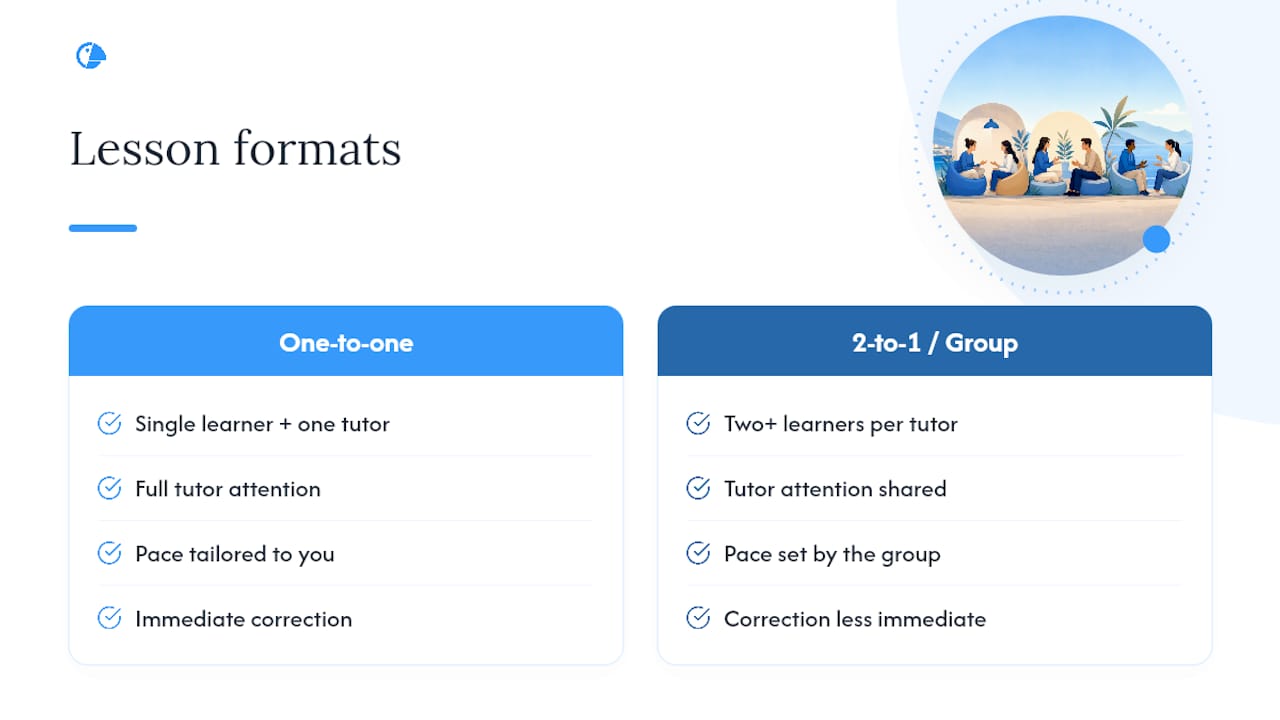
This is worth separating clearly from 2-to-1 or small-group classes, where two or more students share a tutor's time and the lesson pace bends to suit the slowest or fastest learner in the room. Group formats are a legitimate product, but they're a different one. Nobody splits attention here.
What you get from a genuine one-to-one lesson: correction the moment you make a mistake, a syllabus that bends around your actual weak points (that tricky subjunctive, the vocabulary specific to your industry), and pronunciation feedback that a group tutor simply doesn't have time to give six students in a row.
Who benefits most from private one-to-one tutoring
The clearest advantage is speaking time. In a 60-minute one-to-one lesson, a learner might speak for up to 42 minutes; in an eight-student group class covering the same hour, each person might average around 5.25 minutes each. That gap is the entire argument for paying more per hour for less shared time.
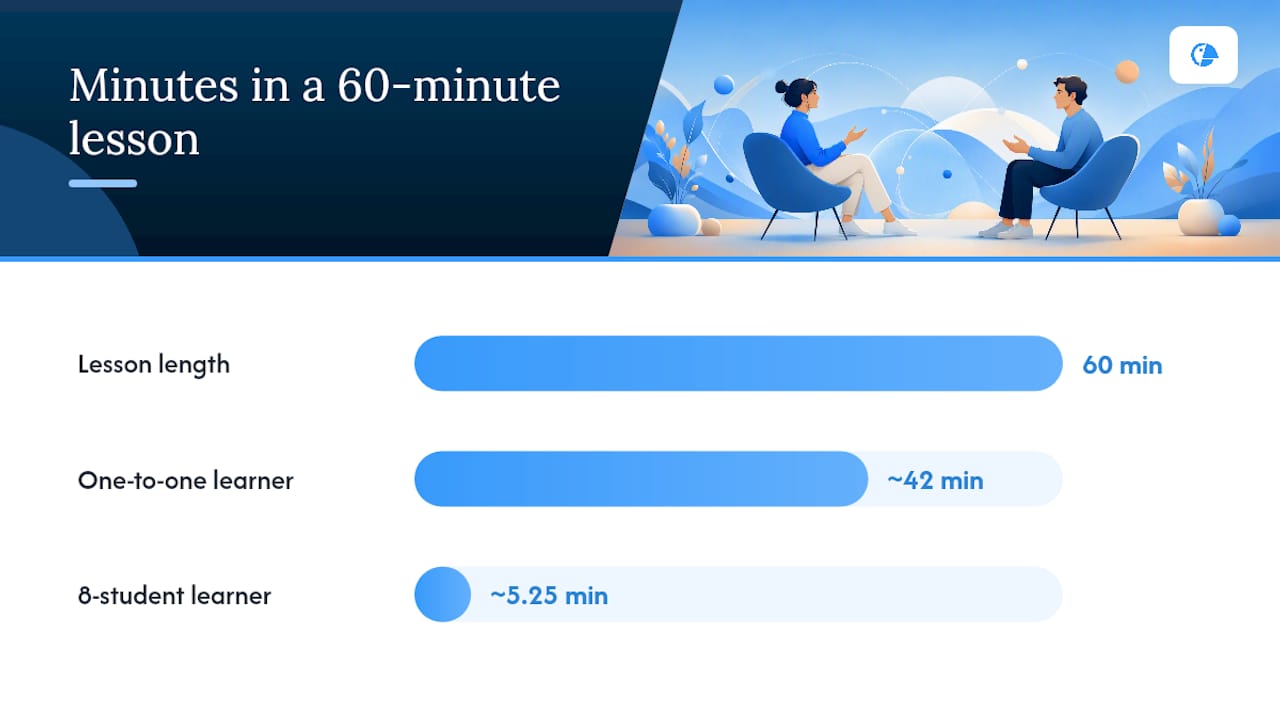
Quick stat: an eightfold difference in speaking minutes, in the same 60 minutes, is the practical reason focused learners choose one-to-one over group classes.
Private lessons suit several situations especially well:
- Learners with a hard deadline: an exam, a visa interview, or a relocation date, where a tutor can tailor vocabulary and tasks to that specific timeline.
- Parents wanting a tutor who adjusts pace and materials to a child's schoolwork rather than a fixed curriculum.
- Professionals needing job-specific language (medical, legal, technical) that a generic classroom never touches.
- Anyone who has tried group classes and found the pace either too slow or too fast.
A hybrid model, group classes for routine practice with occasional private lessons for targeted correction, often gives the best balance when budget is tight or when a learner values the social side of group study. If your goal is pure speaking fluency on a deadline, though, the maths on speaking minutes tends to favour going private from day one, and our guide to what actually builds real speaking skills covers why that ratio matters more than the hourly rate.
How do you evaluate a tutor on a marketplace?
A tutor's profile tells you almost everything you need before you book. Check the basics first, then dig into the details that separate an average tutor from a genuinely good fit.
Start with the profile signals: verified qualifications, a clear teaching specialism (conversational fluency, exam prep, grammar foundations), an introduction video you can actually watch, and confirmation they teach the dialect or variety you need. Then check the operational side, availability, lesson length options, which video platform they use, and their cancellation and trial policy, before you check quality evidence: recent written reviews (not just a star rating), a sample lesson plan if they offer one, and a fast response rate to your first message.
Five questions worth sending before you book anything:
- "Can I book a trial lesson before committing to a package?"
- "What happens if I need to cancel or reschedule with short notice?"
- "Can you tailor lessons to [your specific goal, e.g. a job interview]?"
- "Which video platform do you use, and do I need any software?"
- "How do you usually structure a first lesson?"
A tutor who answers clearly and quickly is already showing you how they'll run the relationship. Vague or slow answers are a red flag on their own.
Pro Tip: If you're an early-stage learner, a tutor who learned the language themselves can often explain grammar more systematically than a native speaker who never had to study the rules. Save the native-speaker preference for once you're past intermediate level and chasing accent and cultural nuance.
Steer clear of any profile with no video, no visible cancellation policy, or reviews that stopped appearing months ago. A stale profile usually means a tutor who has moved on.
What do private lessons cost, and how should you schedule them?
Marketplace pricing swings widely by tutor experience and language, but roughly US$15 to US$35 per hour covers the range most learners land in, with community tutors sitting at the lower end and specialised or exam-focused tutors at the top.
A few things worth weighing before you commit to a package:
- Compare tutors by cost per minute of actual speaking practice, not just the sticker price. A cheaper tutor who talks over you for half the lesson isn't cheaper.
- Packages usually beat single lessons on price per hour, but only book one after a trial confirms the fit.
- Cancellation policies and platform-mediated payments give you buyer protection that you lose the moment you move payments off the marketplace to save a few dollars.
- Intensive goals (an exam in six weeks) call for two or three shorter sessions weekly; maintenance goals do fine with one longer session.
Frequency matters more than lesson length for most learners chasing fluency. Three 30-minute lessons a week beat one 90-minute marathon for building habit and retention.
Book your first trial lesson: a starter checklist
Getting from "I should learn this language" to your first real lesson takes less time than most people expect.
- Write down three specific goals for the next month (not "improve Spanish", but "order confidently in restaurants" or "pass my B1 speaking exam").
- Gather any materials you already have, an exam syllabus, a work email thread, a school report, so your tutor can see exactly what you're working towards.
- Search the marketplace using filters for language, availability, and specialism tags matching your goals.
- Message two or three tutors before booking, confirming their trial policy, tech setup, and whether they can work with your materials.
- In the trial lesson itself, spend the first ten minutes stating your goals aloud and asking the tutor how they'd structure your lessons.
- Ask directly for correction during the trial. A tutor who corrects you gently but consistently is showing you their real teaching style.
- Afterwards, decide: continue with that tutor, try another trial, or ask about a package once you're confident in the fit.
Trying two or three tutors before settling is common practice, not a sign you're doing something wrong.
Publisher perspective: why we recommend trial-led booking
Booking blind is the biggest unforced error learners make. An online marketplace connects students with a large community of language teachers worldwide, filtered by location, language, and availability, and that scale only helps if learners actually use the filters and messaging tools to compare before committing.
A trial lesson does more work than any review score. It shows you correction style, pacing, and whether the tutor listens to your actual goals in real time. We'd rather see a learner run three short trials than sign a ten-lesson package on a hunch. That habit alone prevents most of the mismatched-tutor stories we hear about. Judge fit on the first ten minutes, not the profile photo.
— TUTOROO
Getting started with Tutoroo
An online platform is a starting point for private, one-to-one lessons booked directly with a tutor, not a shared classroom seat. With a network of tutors across dozens of languages, you filter by language, location, and availability, message a shortlist directly, and book a trial before you spend a cent on a package.
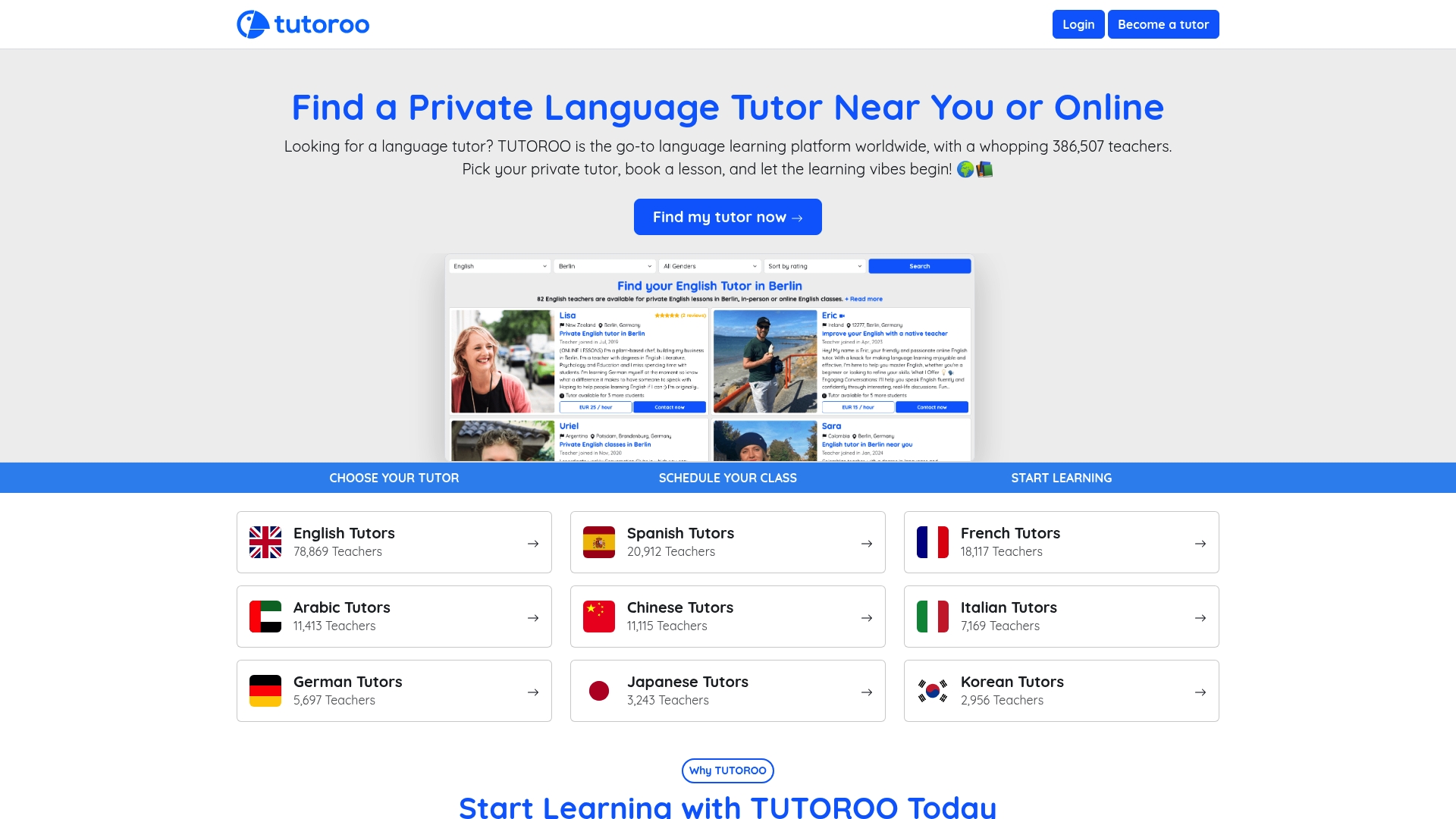
Getting started takes three steps. Head to the Tutoroo homepage, search for tutors in your target language and time zone, and message a couple of candidates about their trial lesson policy before booking. If you're after a specific language landing page, options like the Malay tutor search show how the filtering works for a single language market. From there, the first trial lesson is yours to book whenever your schedule allows.
Sources
- Private Chinese Lessons vs Group Classes | Best for Beginners
- How to choose an online language tutor
- How to Choose a Language Tutor: Complete Guide | NLLB
FAQ
What Are Semi-Private Language Lessons?
In this guide, they're private one-to-one lessons between a single student and a single tutor, booked through an online marketplace such as Tutoroo, rather than a shared classroom format.
How Much Do Private One-to-One Lessons Cost?
Most learners find tutors in the US$15 to US$35 per hour range, with the price depending on the tutor's credentials, specialism, and market.
Should I Choose Group Classes or a Private Tutor?
Private tutoring wins for exam deadlines, job-specific language, and fast progress since one-to-one lessons offer far more speaking time per session; group classes work better for social practice or lower budgets.
Do Marketplaces Offer Trial Lessons?
Most reputable marketplaces, including Tutoroo, let you book a trial lesson before committing to a package, and checking this policy before booking is one of the simplest ways to avoid a poor tutor match.
How Many Tutors Should I Try Before Committing?
Trying two or three tutors through separate trial lessons is common practice and usually the fastest way to find a tutor whose teaching style actually fits how you learn.