

TL;DR:
- Language diversity preserves cultural knowledge and offers extensive cognitive, social, and economic benefits.
- Supporting heritage language learning through personalized tutoring helps close global education gaps and strengthens communities.
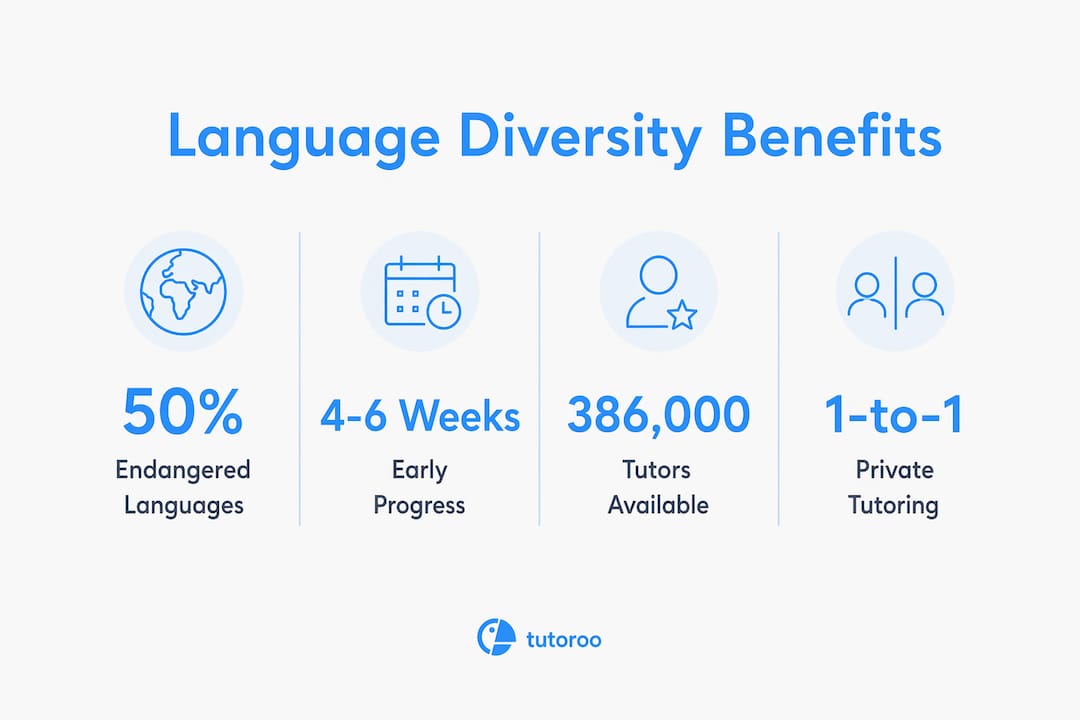
Language diversity matters because it preserves cultural knowledge, strengthens learning outcomes, and delivers measurable cognitive, social, and economic benefits across a lifetime. Nearly half of the world's roughly 7,000 identified languages are currently endangered, making the case for active support more urgent than ever. If you are searching for a private tutor to support heritage language maintenance, bilingual schooling, or structured multilingual learning, a one-to-one lesson with a culturally aware tutor is one of the most direct steps you can take. Tutoroo connects learners across Australia with over 386,000 tutors worldwide, many of whom specialise in exactly this kind of personalised, heritage-aware instruction.
Table of Contents
- Why language diversity matters: the core reasons
- What UNESCO and peer-reviewed research say
- Why these findings should shape how you choose a private tutor
- Tutoring approaches that protect and grow language diversity
- How learners and families can strengthen language diversity between lessons
- Common concerns about multilingualism and evidence-based responses
- Key takeaways
- How Tutoroo sees language diversity
- Find a private tutor who supports language diversity
- Useful sources and further reading
Why language diversity matters: the core reasons
The benefits of language variety reach well beyond communication. Here is what the research consistently shows.
- Cognitive gains. Peer-reviewed reviews report improvements in problem-solving, working memory, and executive function in bilingual and multilingual speakers, with evidence suggesting multilingualism may delay symptoms of neurodegenerative disease.
- Educational outcomes. UNESCO data shows that roughly 40% of the global population lacks access to education in a language they speak at home. Mother-tongue instruction improves literacy, learner confidence, and classroom engagement.
- Cultural preservation. When a language disappears, unique ancestral knowledge and entire worldviews vanish with it. Languages carry scientific and ecological knowledge embedded over generations.
- Social inclusion. The United Nations links linguistic diversity directly to peace, intercultural understanding, and more effective public institutions.
- Economic opportunity. Multilingual workers access broader job markets, and multilingual workplaces tend to generate more creative, inclusive solutions.
- Australia-specific context. Australia is home to hundreds of Indigenous language communities and a richly multilingual migrant population. Community language schools, Indigenous language revival projects, and migrant family language maintenance programmes all reflect how deeply the importance of language diversity runs here.
Key figure: A significant proportion of people globally cannot access education in their home language, according to UNESCO — a gap that private, mother-tongue-aware tutoring can help close for individual learners.
What UNESCO and peer-reviewed research say
The evidence base for linguistic diversity is strong and growing.
UNESCO's work on the International Decade of Indigenous Languages (2022–2032) frames language loss as a human rights issue. Of the roughly 7,000 languages spoken worldwide, nearly half are endangered, and most of those are Indigenous languages. The UN's position is unambiguous: when an Indigenous language is lost, the ancestral knowledge of a culture is lost forever.
On the cognitive side, longitudinal and cross-sectional studies consistently find that bilingual experience reshapes brain networks, producing advantages in attentional control and task-switching that persist across the lifespan. Scholarly frameworks such as Cognitive Reserve Theory and Executive Control Theory, discussed in recent academic work, help explain why multilingualism supports both resilience and creativity.
"Languages are vehicles of our cultures, collective memory and values. They are an essential component of our identities." — United Nations Policy Brief on Indigenous Languages
Mother-tongue-based multilingual education sits at the intersection of these findings. UNESCO's reporting makes clear that learners taught in a language they already speak at home show stronger literacy gains and greater confidence, yet access to this kind of instruction remains limited for millions of families.
Why these findings should shape how you choose a private tutor
Research on the impact of linguistic diversity has direct, practical implications for tutor selection. A tutor who understands multilingual pedagogy will approach lessons very differently from one who treats language learning as a purely academic exercise.
When evaluating tutors, consider these priorities:
- Match goals to tutor strengths. Heritage maintenance, bilingual schooling support, exam preparation, and conversational fluency each call for different skills. Be specific about which goal matters most.
- Ask about experience with multilingual learners. A tutor who has worked with heritage speakers understands code-switching, mixed-language households, and the emotional dimensions of language identity.
- Check for cultural competence. The cultural significance of language goes beyond vocabulary. Tutors who share or deeply understand a learner's cultural background can make lessons feel authentic rather than clinical.
- Ask how they measure progress. Look for tutors who track both linguistic accuracy and learner confidence, not just test scores.
- Weigh online versus local. Local tutors can reinforce community connection; online tutors expand access to native speakers of less common languages. Both formats have genuine value depending on your goals.
Tutoring approaches that protect and grow language diversity
The methods a tutor uses in one-to-one lessons can actively strengthen multilingual development, not just maintain it.
- Dual-language scaffolding uses the learner's stronger language to build understanding in the target language, reducing anxiety and accelerating comprehension.
- Translanguaging encourages learners to draw on their full linguistic repertoire, treating all languages as resources rather than separating them artificially.
- Story-based heritage lessons connect language to family history and cultural memory, which deepens motivation and retention.
- Role-play and cultural simulation link vocabulary to lived experience, making language feel purposeful.
- Structured literacy approaches for mother-tongue education build reading confidence systematically, particularly for learners whose home language has limited written resources.
Emotional safety matters as much as method. Tutors who practise what researchers call "positive second language being" create space for learners to make mistakes, explore identity, and build genuine confidence. For teaching strategies that work in one-to-one settings, the emphasis is always on the whole learner, not just the language.
Pro Tip: Ask your tutor to record a short family story or cultural anecdote in the heritage language at the end of each lesson. Over months, these recordings become a meaningful archive and a powerful motivation tool.

Expect early progress in listening comprehension and basic conversational phrases within the first four to six weeks of regular lessons. Reading and writing fluency in a heritage language typically develops over several months of consistent practice.
How learners and families can strengthen language diversity between lessons
Private tutoring works best when it connects to daily life. These steps make home practice sustainable.
A simple weekly framework:
- Daily (5–10 minutes): Label objects around the home in the heritage language. Sing one song or recite one short rhyme.
- Three times a week: Watch a short video clip, cartoon, or news segment in the target language together.
- Weekly: Share one family story or memory in the heritage language, ideally with an elder or relative.
- Each lesson: Bring one real-world item, phrase, or question from home life to discuss with the tutor.
A family language agreement — a simple, informal commitment to use the heritage language at certain times — removes the daily negotiation and makes practice feel natural. For expert tips on boosting language skills between lessons, connecting practice to hobbies and interests keeps motivation high. Pairing language learning with inclusive books that reflect the learner's cultural background adds another layer of authentic engagement.
Common concerns about multilingualism and evidence-based responses
| Concern | Evidence-based response |
|---|---|
| "Bilingual exposure confuses young children." | Research consistently shows early bilingual exposure produces lifelong cognitive advantages, including stronger attentional control. Temporary mixing of languages is normal and resolves naturally. |
| "My child will fall behind at school." | Mother-tongue instruction improves overall literacy. Bilingual learners often outperform monolingual peers in problem-solving and reading comprehension over time. |
| "We don't have time for two languages." | Micro-habits of 5–10 minutes daily are sufficient to maintain a heritage language alongside school commitments. A tutor can structure lessons to complement, not compete with, school work. |
| "There aren't enough resources in our language." | Online tutors give access to native speakers globally. Tutoroo's platform connects learners with tutors in dozens of languages, including less commonly taught ones. |
Pro Tip: If your child resists heritage language practice, try connecting it to something they already love — cooking a family recipe, playing a game, or watching a favourite show in that language. Tutors can build lessons around these interests.
Key takeaways
Language diversity matters for cognitive, cultural, social, and economic reasons, and private one-to-one tutoring is one of the most effective ways to support it.
| Point | Details |
|---|---|
| Nearly half of languages are endangered | Of roughly 7,000 languages worldwide, nearly half are endangered, making active support urgent. |
| A notable education gap exists for home languages | UNESCO reports 40% of people globally cannot access education in their home language — tutoring can help close this gap. |
| Cognitive benefits are well-documented | Peer-reviewed research links multilingualism to stronger memory, executive function, and resilience against cognitive decline. |
| Tutor selection criteria matter | Prioritise cultural competence, experience with heritage learners, and mother-tongue pedagogy when choosing a tutor. |
| Tutoroo connects you to the right tutor | With over 386,000 tutors worldwide, Tutoroo matches learners in Australia with heritage-aware, one-to-one language tutors online or locally. |
How Tutoroo sees language diversity
The conversation around language diversity often focuses on what is being lost. That framing is important, but it can obscure something equally significant: the active, daily choices that families and learners make to keep languages alive. A child who attends a weekly heritage language lesson is not just learning vocabulary. They are maintaining a connection to a worldview, a community, and a body of knowledge that no textbook can replicate.
Private tutoring sits at the heart of this effort in a way that classroom instruction rarely can. One-to-one lessons create space for the kind of culturally specific, emotionally attuned teaching that heritage language maintenance genuinely requires. The research on mother-tongue education, cognitive reserve, and positive second language being all point in the same direction: personalised, culturally aware instruction produces outcomes that generic language classes simply cannot match.
The families who see the strongest results are those who treat language diversity not as an extra subject but as a living part of home life, supported by a tutor who understands that role. That is the standard worth holding.
Find a private tutor who supports language diversity
Knowing why linguistic diversity matters is the first step. Finding a tutor who actively supports it is the next.
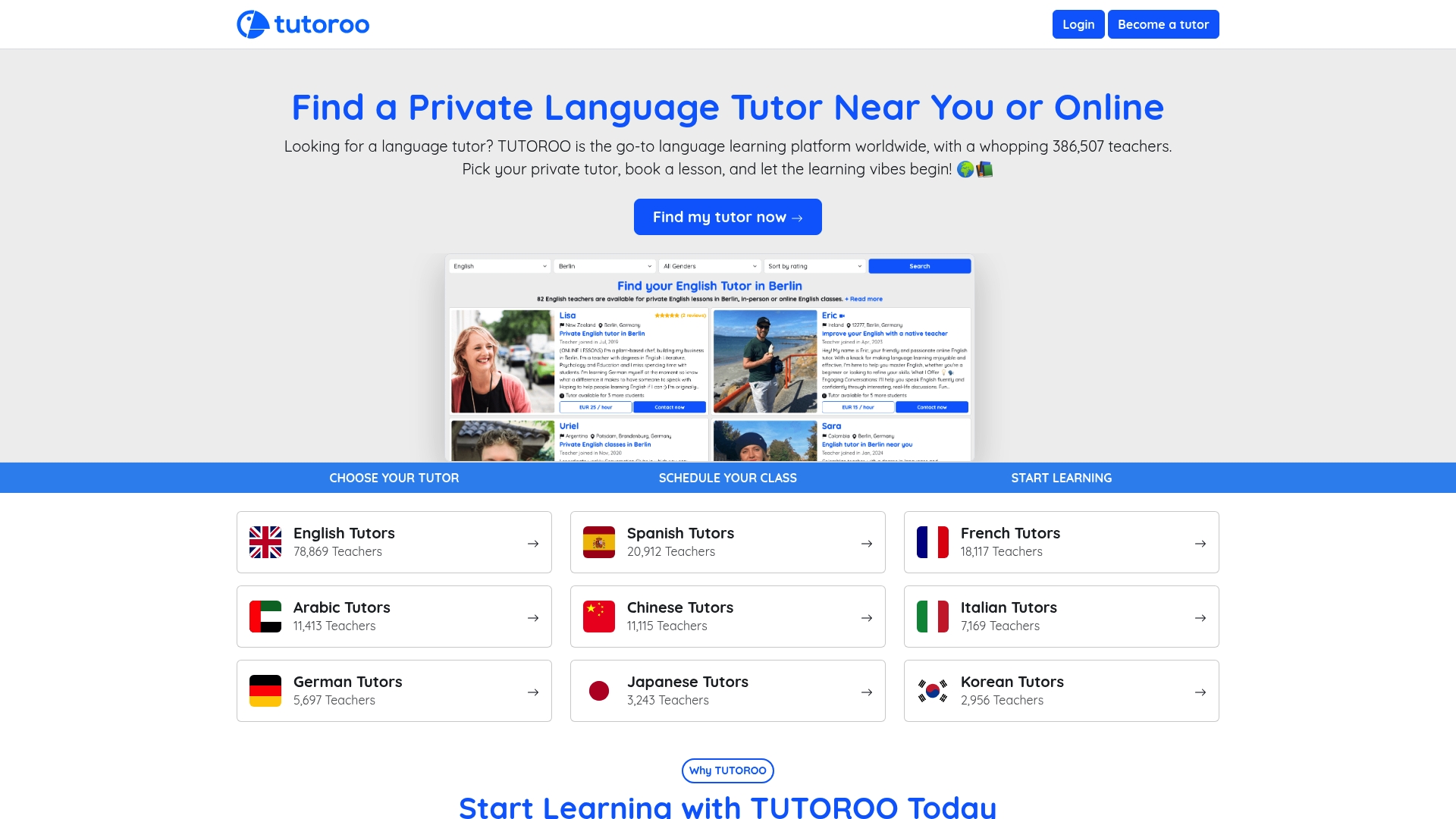
Tutoroo gives learners across Australia direct access to over 386,000 private language tutors, available for one-to-one lessons online or in person. Tutor profiles highlight languages taught, cultural background, and teaching experience, so you can find someone who genuinely understands heritage language maintenance, bilingual schooling support, or adult conversational goals. There are no long-term commitments: connect with a tutor, message them directly, and book a trial lesson at a time that suits you. For learners seeking support in less commonly taught languages, online private tutoring opens access to native speakers anywhere in the world. Start your search on Tutoroo today and book a trial lesson with a tutor who shares your language goals.
Useful sources and further reading
| Source | Why it matters |
|---|---|
| UNESCO — Multilingualism and linguistic diversity | Primary UNESCO resource on mother-tongue education, the 40% access gap, and language policy. |
| UN — Linguistic diversity: An imperative for the United Nations | UN commentary linking language diversity to peace, inclusion, and institutional effectiveness. |
| UN Policy Brief — International Decade of Indigenous Languages | Detailed evidence on Indigenous language endangerment and the case for revitalisation. |
| PMC — Benefits of multilingualism (review article) | Peer-reviewed review of cognitive benefits including attentional control and task-switching. |
| European Journal of Linguistics — Cognitive benefits of speaking multiple languages | Peer-reviewed evidence on memory, problem-solving, and executive function gains. |
| Springer — Benefits of bilingualism and multilingualism | Academic chapter covering Cognitive Reserve Theory and positive second language being. |
| Tutoroo — Advantages of multilingual education: 2026 guide | Practical strategies and templates for multilingual education, tailored for Tutoroo users. |