

TL;DR:
- Effective multilingual teaching centers on structured lesson design, deliberate translanguaging, and ongoing assessment across all skill areas and languages.
- Planning short, consistent practice sessions and leveraging learners’ home languages as assets enhances engagement, mastery, and motivation.
Teaching multiple languages effectively is defined by three interlocking practices: structured lesson design, strategic use of learners' full linguistic repertoires, and adaptive assessment across skill domains. This guide to teaching multiple languages gives language educators and tutors a clear framework for working with diverse learner groups, from beginners encountering their first foreign script to advanced students refining academic writing in a third language. You will find practical techniques drawn from translanguaging research, phonics integration, and short-burst session design, alongside tools for profiling learners and troubleshooting the challenges that arise when proficiency levels vary widely within a single group. The goal is to move your practice from improvisation to genuine expertise.
What do you need before teaching multiple languages?
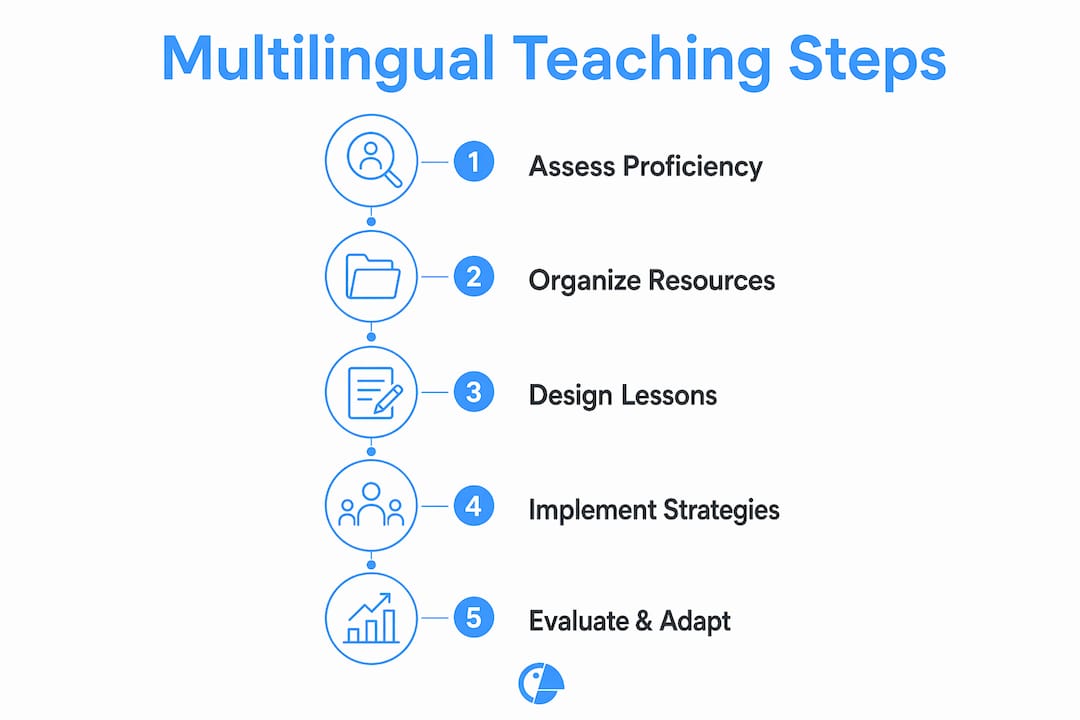
Before designing a single lesson, you need an accurate picture of each learner's starting point. Proficiency levels differ across speaking, reading, listening, and writing, so a student who converses fluently in Spanish may struggle to write a formal paragraph in the same language. Treating these four domains as one composite score leads to mismatched instruction and learner frustration.
Start with a brief diagnostic that covers all four skill areas. A short spoken task, a reading comprehension passage, a listening activity, and a written prompt together give you a learner profile you can actually use. Tools like Google Forms for self-assessment surveys, Flipgrid for spoken samples, and printed cloze tests work well across age groups and require minimal preparation time.
Once you have profiles, organise your resources to match them. The table below maps common resource types to learner age and proficiency level.
| Resource type | Best for | Proficiency level |
|---|---|---|
| Multilingual picture books | Children aged 4 to 10 | Beginner |
| Audio-visual stories with subtitles | Teens and adults | Beginner to intermediate |
| Dual-language academic texts | Secondary and tertiary learners | Intermediate to advanced |
| Authentic podcasts and news audio | Adults | Upper intermediate to advanced |
| Language learning apps (Anki, Quizlet) | All ages | All levels |
The environment you create matters as much as the materials you select. Label classroom objects in all target languages, display student-created multilingual word walls, and make it clear from the first session that every language a learner brings to the room is a resource, not a distraction. Culturally sustaining instruction that builds on linguistic and cultural assets improves both engagement and achievement, so the physical and emotional climate of your sessions is part of your pedagogical toolkit.
Pro Tip: Set aside ten minutes in your first session to ask learners which languages they use at home, with friends, and for entertainment. This informal audit reveals linguistic strengths that formal assessments often miss.
How do you design lessons for mixed-proficiency multilingual groups?
Effective multilingual lesson design rests on four principles: comprehensible input, phonics instruction, retrieval practice, and purposeful translanguaging. Phonics integrated with implicit input such as reading and listening, combined with retrieval practice, produces stronger language acquisition than any single method alone. This means your lessons should move between explicit sound-symbol instruction and rich exposure to authentic language in the same session.

Short, frequent, predictable routines outperform ambitious but irregular plans. Consistency is the mechanism that builds automaticity, and automaticity is what separates a learner who can recall vocabulary under pressure from one who freezes. Aim for 15 minutes per day of focused, structured practice as a minimum, even when longer sessions are available.
Here is a step-by-step process for building an adaptable multilingual lesson plan.
- Define the language objective. State what learners will be able to do in each target language by the end of the session. "Students will identify and pronounce five new vocabulary items in French and use them in a sentence" is specific enough to assess.
- Warm up with retrieval. Open with a low-stakes quiz, a vocabulary matching task, or a spoken recall activity covering the previous session's content. This activates prior knowledge and reduces cognitive load for new input.
- Introduce new input with phonics support. Present new vocabulary or grammar through audio, text, or video. For languages with non-Latin scripts such as Arabic or Mandarin, include explicit phonics instruction alongside meaning-focused tasks.
- Apply translanguaging as a scaffold. Allow learners to use their stronger language to clarify concepts in the target language. Translanguaging is a deliberate scaffold, not ad hoc code-switching. Plan specific moments where learners compare a concept across languages rather than simply defaulting to their first language when stuck.
- Practise with output tasks. Give learners a speaking or writing task that requires them to use the new language in context. Pair stronger and weaker learners across proficiency levels to create natural peer scaffolding.
- Close with a reflection prompt. Ask learners to write or say one thing they learned and one thing they are still unsure about. This metacognitive step builds learner autonomy and gives you real-time data for the next session.
A sample weekly routine for a group learning French and Mandarin simultaneously might look like this: Monday and Wednesday focus on French phonics and vocabulary; Tuesday and Thursday focus on Mandarin character recognition and spoken tones; Friday is a cross-language comparison session where learners explore how concepts like time or family are expressed differently across both languages. This structure keeps sessions predictable while building genuine bilingual competence.
Pro Tip: When planning for mixed-proficiency groups, prepare one core task and two extension variations. Beginners complete the core task; intermediate learners add a written component; advanced learners produce an output in both target languages.
For more ideas on structuring engaging practice, the language practice activities guide from Tutoroo offers a range of fast, adaptable formats suited to multilingual contexts.
What challenges arise in multilingual teaching and how do you solve them?
The most common pitfall in multilingual teaching is applying translanguaging tacitly rather than as a planned strategy. Teachers who use translanguaging informally rather than explicitly produce inconsistent support for learners, because the moments of cross-language comparison are random rather than purposeful. The fix is straightforward: write translanguaging moments into your lesson plan the same way you write in vocabulary tasks.
Learner anxiety is the second major obstacle. Students who feel their home language is unwelcome or inferior to the target language disengage quickly. Assets-based teaching that leverages students' entire linguistic repertoires accelerates mastery compared to deficit-focused approaches. In practice, this means celebrating a learner's ability to explain a concept in Tagalog as evidence of cognitive strength, not as a failure to use English.
Here are the most frequent challenges educators report, with direct solutions for each.
- Uneven pacing across languages. When one target language advances faster than another, learners lose confidence in the slower language. Rotate which language receives the most instructional time each fortnight to maintain balance.
- Resource gaps for less-taught languages. Finding quality materials in languages like Welsh, Swahili, or Malay can be difficult. Authentic materials such as YouTube channels, community radio, and social media content in the target language fill gaps that published textbooks leave.
- Learner resistance to mixing languages. Some learners believe that using their home language during lessons is "cheating." Address this directly by explaining the research behind translanguaging and showing learners that alternating between languages based on task demands is a professional linguistic skill.
- Teacher fatigue across multiple language preparations. Preparing materials in two or more languages is demanding. Batch your resource creation by theme rather than by lesson, so one set of materials on "food vocabulary" covers multiple sessions across both languages.
"Learners do not arrive in our classrooms as blank slates. They arrive as speakers, listeners, readers, and thinkers in languages that already open doors to culture, connection, and opportunity. Our job is to build on what is already there."
Sustaining your own motivation as an educator matters too. Connect with professional communities such as TESOL International Association or the Modern Language Association to access peer support, shared resources, and current research without having to locate everything independently.
How do you evaluate and adapt your multilingual teaching approach?
Formative assessment is the engine of continuous improvement in multilingual teaching. Unlike summative tests, formative assessment gives you feedback during the learning process, when you can still act on it. The key is to assess across all four skill domains and across all target languages, not just the one that is easiest to test in a written format.
Learner portfolios are one of the most effective tools available. Ask students to collect written samples, voice recordings, and self-reflections in each target language over a term. Reviewing a portfolio at the six-week mark reveals patterns that weekly quizzes miss, such as a learner who writes confidently in Spanish but consistently avoids complex sentence structures in French. Home language support deepens conceptual understanding and reduces cognitive load, so portfolios that include home-language reflections give you richer insight into what a learner actually understands versus what they can perform under test conditions.
The table below compares common assessment types and their suitability for multilingual teaching contexts.
| Assessment type | Multilingual suitability | Best use case |
|---|---|---|
| Oral interview | High | Assessing speaking and listening across languages |
| Written portfolio | High | Tracking progress over time in multiple languages |
| Cloze test | Moderate | Vocabulary and grammar in a single language |
| Standardised proficiency test | Low to moderate | Benchmarking against external frameworks |
| Peer feedback task | High | Building metalinguistic awareness and confidence |
Collaborating with learners' families adds a dimension that classroom assessment cannot capture. A parent who reports that their child has started using French phrases at the dinner table is giving you evidence of transfer beyond the lesson. Invite families to contribute observations through a simple monthly check-in message, and use that information to adjust the cultural content of your sessions.
Pro Tip: Use language journals where learners write three sentences per week in each target language: one thing they learned, one question they still have, and one connection to their own life. These journals double as formative assessment data and learner motivation tools.
For a structured approach to preparing multilingual lessons that incorporates ongoing assessment, Tutoroo's planning guide offers practical templates suited to diverse learner groups.
Tutoroo's perspective on teaching multiple languages well
The single most important shift a multilingual educator can make is treating a learner's first language as the foundation of all subsequent language learning, not as interference to be suppressed. At Tutoroo, we have seen this play out across thousands of tutoring relationships: learners who are encouraged to draw on their home language to clarify new concepts progress faster and sustain motivation longer than those who are told to leave it at the door.
The second insight we would share is that explicit professional development in multilingual pedagogies is not optional. Most educators apply translanguaging instinctively, but instinct is not a system. Formalising your approach, through reading, peer observation, or structured training, transforms good intentions into consistent outcomes.
Finally, we would push back gently on the idea that multilingual teaching requires elaborate resources. The most effective sessions we have observed are built on clear objectives, predictable routines, and genuine curiosity about the learner's linguistic world. The complexity is in the thinking, not the materials.
— TUTOROO
Find the right multilingual tutor through Tutoroo
Teaching multiple languages opens doors to culture, connection, and opportunity, and having the right support makes that process faster and more rewarding for everyone involved.
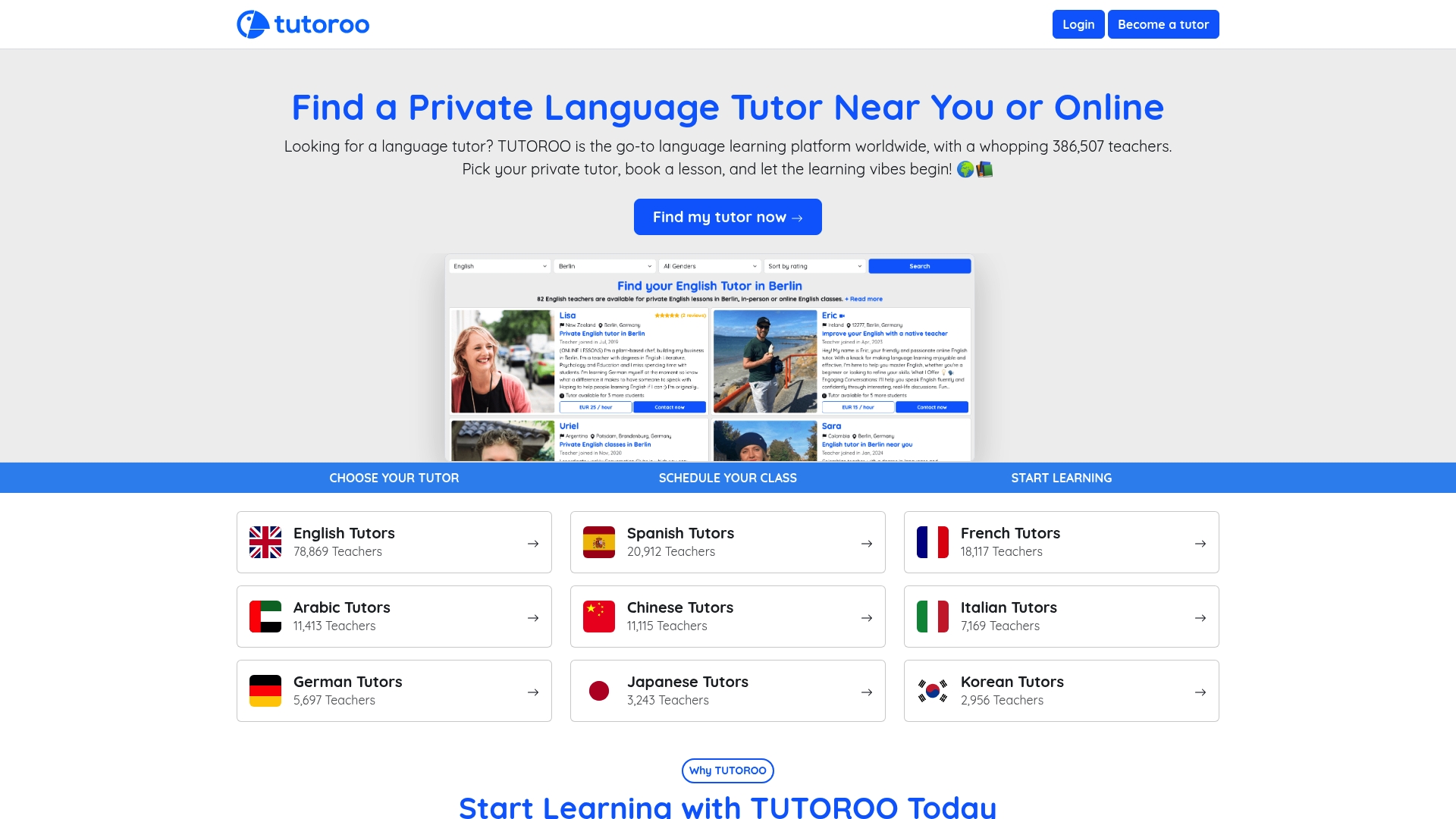
Tutoroo connects learners and educators with private language tutors across more than 386,000 tutors worldwide, covering languages from French and Mandarin to Arabic, Spanish, and beyond. Whether you need a tutor who can work across two languages simultaneously or a specialist for a single session, Tutoroo's platform matches you based on language, availability, and learning goals. Sessions run online or in person, and tutors design lessons around your learner's specific proficiency profile. If you are exploring options for less commonly taught languages, Tutoroo's Malay tutors are a strong example of the depth of specialist expertise available on the platform.
FAQ
What is translanguaging in multilingual teaching?
Translanguaging is a deliberate pedagogical strategy where learners use all their languages to support understanding, not random code-switching. It is planned into lessons to scaffold comprehension and build confidence across target languages.
How long should multilingual lessons be for beginners?
15 minutes of focused daily practice is an effective starting point for building foundational vocabulary and literacy. Short, consistent sessions outperform longer but irregular ones for beginner learners.
How do you assess learners across multiple languages?
Oral interviews, learner portfolios, and peer feedback tasks offer the highest suitability for multilingual assessment. Assess across all four skill domains, speaking, listening, reading, and writing, in each target language separately.
Should learners' home languages be used during lessons?
Yes. Leveraging home language supports deeper conceptual understanding and reduces cognitive load, particularly during challenging content. Suppressing it removes a powerful learning resource.
How do you manage mixed-proficiency groups in multilingual classes?
Design one core task with two extension variations to address different levels within the same session. Pair learners across proficiency levels for output tasks to create natural peer scaffolding without requiring separate lesson plans.
Key takeaways
Effective multilingual teaching requires structured lesson design, explicit translanguaging strategies, and formative assessment across all four skill domains and every target language.
| Point | Details |
|---|---|
| Profile learners across all skill domains | Assess speaking, listening, reading, and writing separately to avoid mismatched instruction. |
| Use short, consistent sessions | 15 minutes of daily focused practice builds automaticity more reliably than irregular longer sessions. |
| Plan translanguaging deliberately | Write cross-language comparison moments into lesson plans rather than allowing them to happen by chance. |
| Apply assets-based teaching | Treat learners' home languages as strengths that accelerate mastery, not obstacles to overcome. |
| Use portfolios for ongoing assessment | Learner portfolios reveal progress patterns across languages that weekly tests consistently miss. |