

A trial lesson evaluation checks three things at once: your current skill level, where the specific gaps sit, and whether the teaching style suits you. The clearest sign a trial worked is simple. The tutor hands you one genuine strength, one fixable gap, and a next step you can act on within days, not a string of pleasant but empty compliments.
TL;DR:
- Most trials last 30 to 45 minutes: expect a brief goals chat, a 10 to 25 minute diagnostic task, a teaching demonstration, and specific closing feedback.
- Look for probing questions, adjusted task difficulty, and corrections that explain errors; vague praise, no tested skill, or no next step are warning signs.
- Before committing, assess pace, communication, homework, and timeline; if the session felt rushed or missed your level, request a second trial or short starter package.
- Record each tutor’s strength, gap, next step, and timeline using the same template; confirm whether the trial is free or paid before booking.
Table of Contents
- What trial lessons typically assess
- What happens during a trial lesson: typical activities and timings
- How tutors evaluate you during and after the trial
- How to interpret the evaluation and decide what's next
- Practical checklist for the student or parent
- Why you can trust this guidance and how we help you book and prepare
- Balancing warmth and rigour in a trial lesson
- Find and prepare for your own trial lesson
- FAQ
- Sources
What trial lessons typically assess
A good trial lesson is a quick audit of where you stand and where you're headed. Tutors look at your technical baseline first: reading fluency, grammar accuracy, pronunciation, or whatever the subject's core mechanics happen to be. From there, they watch how you handle mistakes and whether you can explain your own reasoning, because that tells them more about your learning style than a correct answer ever could.
Engagement matters just as much as accuracy. A tutor pays attention to how you respond to their explanations, whether you ask questions, and how you communicate when something isn't clicking. Finally, everything gets measured against your stated goals and timeline. A student aiming for conversational fluency in six months needs a different plan to one preparing for a proficiency exam next year.
What tutors typically check during a trial:
- Your baseline skill level across the core mechanics of the subject.
- Patterns in the mistakes you make and whether you can reason through them.
- How you engage, communicate, and respond to correction.
- Whether your goals and timeline match a realistic lesson plan.
What happens during a trial lesson: typical activities and timings
Most trial lessons follow a loose but recognisable shape, usually inside a 30- to 45-minute window.
- The tutor opens with a short rapport-building chat and confirms your goals, usually taking 2 to 5 minutes.
- They run a diagnostic task, such as a reading passage, a problem to solve, or a listening and speaking prompt, for roughly 10 to 25 minutes.
- They model a technique or explain a concept to show you their teaching style in action, typically for 5 to 10 minutes.
- They close with specific feedback and a suggested next step, usually in the final 5 to 10 minutes.
That closing stretch is where the real evaluation shows up. Anyone can run a pleasant diagnostic task, but the feedback at the end is where you learn whether the tutor actually paid attention.
How tutors evaluate you during and after the trial
The most credible evaluation approach follows a diagnostic method: observe how you perform a task, probe your reasoning when something goes wrong, adapt the difficulty on the fly, and deliver feedback aimed squarely at your specific gap. This structured approach, outlined by Indiana University's Center for Innovative Teaching and Learning, is the difference between a tutor who's genuinely assessing you and one who's just filling the hour.
Watch for a few observable signals during the session itself:
- The tutor asks probing follow-up questions instead of accepting your first answer at face value.
- They adjust the difficulty of a task mid-session based on how you're tracking.
- Corrections come with a specific direction, not just a mark of right or wrong.
- The moment you make an error, they ask why, rather than simply fixing it and moving on. This instant where a tutor investigates the root of a mistake is one of the more telling signs of real teaching skill, according to research from the University of Wisconsin School of Medicine and Public Health.
A credible piece of feedback might read: "Strength: you built sentences confidently with the vocabulary you had. Gap: your past-tense verb endings slipped consistently. Next step: practise ten past-tense sentences twice a week and we'll check progress in three lessons."
Pro Tip: If a tutor's feedback could apply to almost any student, it's not assessment, it's small talk.
Red flags are just as easy to spot once you know what to look for: vague praise with no specifics, no concrete next step, or a session that was entertaining but never actually tested anything.
How to interpret the evaluation and decide what's next
Once the trial wraps up, run the feedback through a simple filter before deciding anything.
- Apply the "one strength plus one fixable gap" test as your baseline for credibility. If that's missing, the evaluation probably wasn't thorough.
- Check the fit factors beyond skill: did the pace suit you, was communication comfortable, and did the suggested homework and timeline feel realistic?
- If the trial felt rushed or only partially covered your level, it's reasonable to ask for a short starter package or a second trial before committing.
- When comparing multiple tutors, use the same short template for each one so you're judging them on equal footing rather than vibes.
This approach matters more than it sounds. Targeted, structured feedback tends to correlate with better long-term progress, which makes it a reasonable proxy for how seriously a tutor takes assessment generally, not just during the trial.
Practical checklist for the student or parent

A little preparation turns a trial from a guessing game into a genuine evaluation. Before the session, gather a sample of prior work if you have it, write down your goals in one sentence, and check how much time has been allocated.
During or right after the trial, ask:
- How did you assess my level today?
- What are the most important gaps you noticed?
- What will you set for homework?
- How will we measure progress over the next few lessons?
Afterwards, jot down a one-line record using this template: Strength / Gap / Next step / Suggested timeline. It takes thirty seconds and makes comparing tutors far easier later. Most trials run a quarter of an hour to slightly less than an hour, and whether they're free or paid varies by tutor, so it's worth confirming that detail before you book.
Why you can trust this guidance and how we help you book and prepare
We've built our platform around matching students with tutors quickly, and we support that with practical resources that map directly onto the checklist above. We give you enough choice to compare trial approaches across several tutors rather than settling for the first one you find.
A few ways we support preparation specifically:
- Detailed tutor profiles let you check teaching style, languages, and availability before you book, which you can read more about in how to read a tutor profile before a trial.
- Our guidance on trial lesson etiquette covers what to do before, during, and after the session.
- Direct messaging means you can clarify goals with a tutor before the trial even starts.
Balancing warmth and rigour in a trial lesson
A trial that's all warmth and no measurable check tells you nothing useful, and one that's all rigour and no rapport won't hold a student's attention long enough to matter. The best trials do both: build genuine comfort while still producing one real, actionable observation. Treat the session as a small experiment. Collect the evidence, then act on it.
— TUTOROO
Find and prepare for your own trial lesson
Finding a tutor who can both engage you and diagnose you properly shouldn't take hours of searching. Our platform lets you filter by language and location, read detailed profiles, and message tutors directly before you commit to a trial, which cuts down the guesswork considerably.
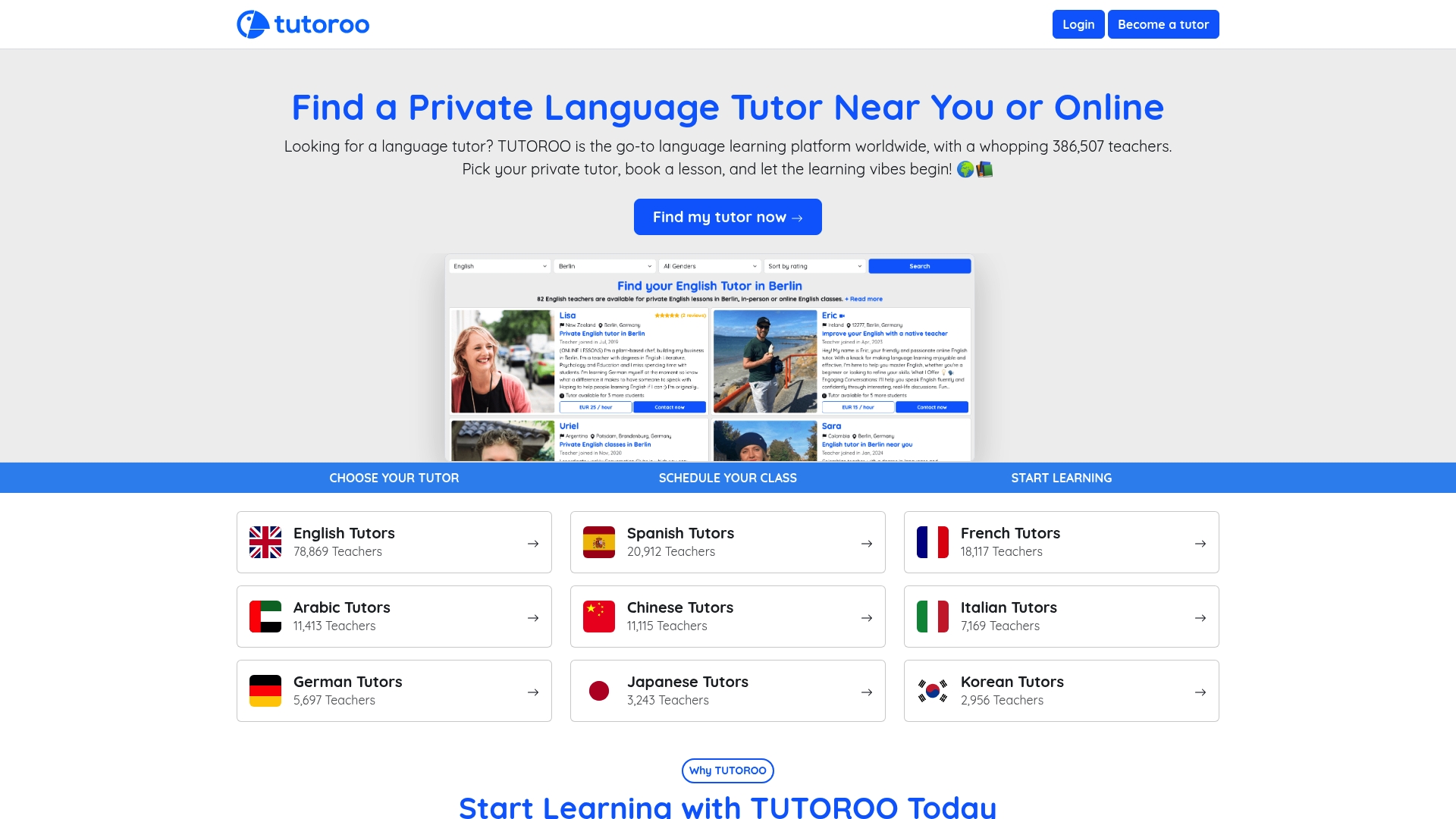
Browse our full list of language tutors to get started, or head straight to our English tutors or Spanish tutors pages if you already know which language you're after.
FAQ
What does a trial lesson mean?
A trial lesson is a short, introductory session, usually 25 to 45 minutes, where a tutor assesses your current skill level and you both decide whether the teaching style is a good fit. It typically ends with specific feedback and a suggestion for what lessons should focus on next.
How to write an evaluation for a lesson plan?
A strong evaluation names one specific strength, one concrete and fixable gap, and a clear next step tied to the student's goals. Structured feedback like this, built on observing performance and probing reasoning, tends to be far more useful than general comments about how the session felt.
What are some examples of evaluation in teaching?
Common examples include diagnostic tasks that reveal error patterns, short formative check-ins during a lesson, and brief written feedback summarising a strength and a gap. Early, structured feedback tends to produce more actionable results than waiting until the end of a course.
Can you provide an example of teacher evaluation in a lesson plan?
A practical example looks like this: "Strength: confident use of vocabulary. Gap: inconsistent verb conjugation. Next step: ten minutes of targeted practice twice weekly, reviewed in three lessons." This kind of plan ties feedback directly to the student's stated goals rather than offering vague encouragement.
Sources
- Targeted feedback (Center for Innovative Teaching and Learning, Indiana University)
- Instructor-led early course feedback: a step-by-step guide (Eberly Center, Carnegie Mellon University)
- Tips for providing personalised feedback (UNT Digital Strategy)