

Show up on time, with working tech and one or two clear goals. Treat the trial as what it actually is: a needs analysis paired with a short sample lesson, not a full class. That combination lets both you and the tutor judge fit fast.
Three things to do right now:
- Confirm the time (and time zone) in writing, ideally the night before.
- Test your tech — camera, mic, and internet, at least 15 minutes early.
- State your goals in one sentence so the tutor can plan around them.
Platforms like Tutoroo build the booking and messaging tools around exactly this structure, which is why students who follow it tend to get more out of a 25-minute session than others get out of a full hour.
Key Takeaways
A successful trial lesson comes down to preparation, honest communication of goals, and active participation, not passive observation.
| Point | Details |
|---|---|
| Prepare tech and goals early | Test your camera, mic, and internet, and write one or two clear goals before the session starts. |
| Expect a needs analysis and mini-lesson | Most trials run 20 to 40 minutes and combine a level check with a short diagnostic teaching sample. |
| Talk more than you listen | Aim to do over half the speaking so the tutor can properly assess your level and needs. |
| Parents step back after intro | Share context beforehand, then let the child and tutor work directly during the lesson. |
| Evaluate before you decide | Check for error correction, a clear plan, and rapport before booking further lessons or trying another tutor. |
| Book through a vetted platform | Tutoroo connects students with over 386,000 tutors and structures scheduling, messaging, and payment in one place. |
Table of Contents
- What happens during a typical trial language lesson?
- How should you prepare before the trial lesson?
- What should you do and avoid during the lesson?
- Should parents sit in on a child's trial lesson?
- How do you decide whether to book more lessons?
- What questions and messages actually work?
- Why trial lesson etiquette actually speeds up learning
- Book a vetted trial lesson without the back-and-forth
- Frequently asked questions
- Sources
What happens during a typical trial language lesson?
A trial lesson runs on a fairly predictable rhythm, even though the tutor and language change every time. It opens with brief introductions, moves into a needs analysis where the tutor asks about your level and goals, then shifts into a short diagnostic or mini-lesson so you can see the teaching style in action. It usually closes with feedback and a proposed plan for future lessons.
Sessions commonly run for a short duration, though this varies by tutor and platform. Some trials are free; others are charged at a reduced rate. Neither arrangement is universal, so check the specific tutor's policy before you book rather than assuming.
What separates a useful trial from a wasted one is what the tutor does inside that window. A good session assesses your level, demonstrates the tutor's teaching approach, explains a proposed plan, and corrects your errors while asking about your goals. If none of that happens, and the 40 minutes is mostly small talk, that is a signal worth noting.
- Introductions and rapport building (2 to 5 minutes)
- Needs analysis: level check and goal discussion
- Mini-lesson or diagnostic exercise
- Feedback and a proposed plan for ongoing lessons
Pro Tip: If the tutor hasn't mentioned error correction or a lesson plan by the halfway mark, ask directly: "How would you structure my first few weeks?" Their answer tells you more than the small talk does.
How should you prepare before the trial lesson?
The 24 to 48 hours before your trial matter more than most students think. Preparation turns a passive introduction into a focused assessment, and completing a short pre-lesson form or bringing specific work changes the entire tone of the session.
Work through this before the lesson starts:
- Confirm logistics. Check the time zone conversion twice, note which platform you're using (Zoom, Google Meet, or the tutor's own tool), and save the tutor's contact details.
- Test your tech. Run a speed test, check your camera and microphone, update your browser, and confirm you can share a file or screen if needed.
- Write your goals. One or two sentences is enough. "I want to hold a basic conversation for my trip in June" gives a tutor far more to work with than "I want to learn Spanish."
- Bring evidence. A recent piece of writing, a homework sheet, or a voice note of yourself speaking gives the tutor something concrete to assess.
- Fill in any pre-lesson form honestly. Tutors who ask for this information beforehand are usually the ones who use it, according to Tutoroo's own student onboarding guidance.
A short confirmation message the night before covers most of the logistics risk: "Hi [Name], confirming our trial lesson tomorrow at 4pm AEST via Zoom. Looking forward to it!"
Pro Tip: If you need to reschedule, do it as early as possible and offer two alternative times in the same message: "Something's come up for our 4pm session, could we move to Thursday 10am or Friday 2pm instead?" That single line saves a tutor from chasing you for a new slot.
- Time zone and platform confirmed in writing
- Tech tested at least 15 minutes beforehand
- One or two goals written down
- Sample work or notes ready to share
What should you do and avoid during the lesson?
Once the trial starts, your job is to talk, not to observe. Aim to do more than half the speaking. It's your chance to be assessed and to hear how the tutor corrects you in real time.
Do this:
- Arrive on time, camera on if it's a video call.
- Answer the needs-analysis questions honestly, including the awkward ones about what you're bad at.
- Accept correction, and ask for an example when something isn't clear.
- Ask what a realistic first month of lessons would look like.
Avoid this:
- Filling the whole session with small talk about hobbies or holidays.
- Expecting a full curriculum in 25 minutes; it's a snapshot, not a course.
- Brushing off corrections just to keep the conversation moving.
- Letting a dodgy connection derail the session without saying anything. Flag it immediately and ask to switch to audio-only or reschedule.
If the tutor starts late through no fault of yours, it's reasonable to ask for the missed minutes back or a short follow-up call, depending on the platform's policy.
Pro Tip: With five minutes left, ask: "Based on what you've seen, what would you focus on first?" A tutor who can answer that instantly, specifically, has already shown you how they plan.

Should parents sit in on a child's trial lesson?
Presence matters, but only briefly. The best approach is to join for the introduction, hand over context, then step back and let the tutor and child work directly. Hovering through the whole session changes how a child answers questions and makes it harder for the tutor to see the child's real level.
Before stepping back, share anything genuinely useful: how your child learns best, whether they get anxious about mistakes, or any medical or emotional notes the tutor should know. A calm study environment and honest context about the child does more for the trial's success than parental presence during the actual teaching.
- Brief you-and-tutor intro, then leave the room or mute your camera.
- Share learning style and any relevant background in writing beforehand.
- Debrief with your child after, not during, the lesson.
- Book a short check-in with the tutor after two or three real lessons, not just the trial.
Pro Tip: Send a two-line briefing before the trial rather than explaining everything live on the call. It's clearer for the tutor and it saves lesson time for actual teaching.
How do you decide whether to book more lessons?
Once the trial ends, run through a short mental checklist while the session is still fresh. Was the teaching clear? Did the tutor correct errors and explain why? Did they propose a plan for what comes next, and did the rapport feel right for the price?
Absence of error correction, no clear structure, and no plan for measuring progress are the three signals that reliably predict a poor long-term fit, even when the tutor is friendly.
Three sample messages cover most follow-ups:
- To book more lessons: "That was great, thank you! I'd like to book a regular slot, does Tuesdays at 6pm work going forward?"
- To ask a clarifying question: "Quick question before I commit, how do you usually measure progress over the first month?"
- To decline politely: "Thanks for the session, I've decided to try a different teaching style, but I appreciate your time."
Comparing a tutor's reviews and testimonials against what you just experienced firsthand is one of the fastest ways to confirm whether the trial was representative or a one-off good day.
What questions and messages actually work?
Certain lines do a lot of work in very few words. Save these and adapt them as needed.
Booking confirmation: "Confirming our trial for [day] at [time], via [platform] — see you then!"
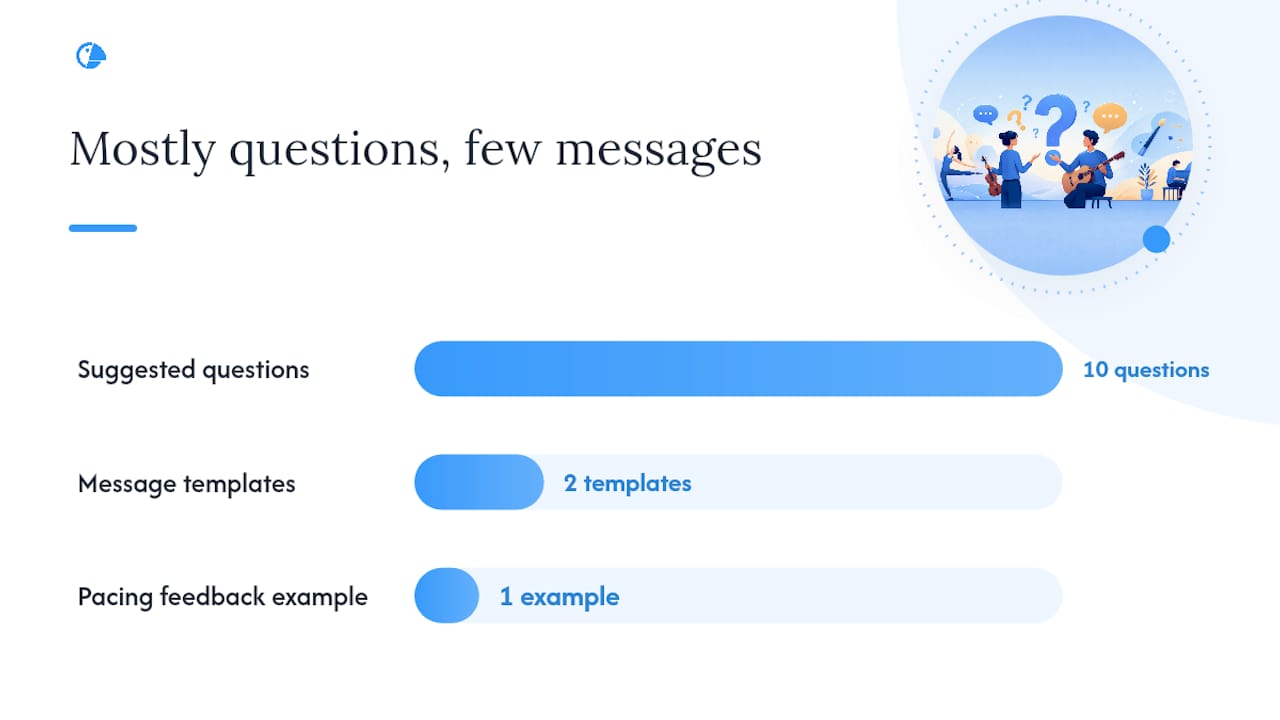
Polite reschedule: "Something's come up, could we move to [alternative time]? Sorry for the short notice."
The ten questions worth asking during or right after the trial:
- How will you measure my progress over the first month?
- What does a typical lesson plan look like for someone at my level?
- How do you handle correction, in the moment or after?
- What homework or practice would you expect between sessions?
- Can lessons be adjusted if my schedule changes?
- What materials do you use, and are they customised?
- How do you decide when to move to the next topic?
- What's realistic to expect after ten lessons?
- Do you record sessions or share notes afterward?
- What would you focus on first, based on today?
If pacing felt off, say so directly rather than letting it slide: "Could we slow down on grammar and spend more time on speaking practice next time?" Most tutors adjust readily. Those who resist feedback in week one rarely improve by week ten.
Why trial lesson etiquette actually speeds up learning
Good etiquette in a trial isn't about politeness for its own sake. It's about giving the tutor enough real material, honest goals, a piece of writing, a specific weak point, to make an accurate read on your level in a short window. Skip that preparation and the trial becomes a pleasant chat that tells nobody anything.
The students who progress fastest are usually the ones who treated their very first session like a diagnostic, not a warm-up. Booking through a platform with vetted tutors and structured onboarding, like Tutoroo, removes a lot of the guesswork around who you're trialling in the first place.
Book a vetted trial lesson without the back-and-forth
Finding a tutor you can trust for a first trial shouldn't mean scrolling through unverified profiles or chasing someone for a time that suits. Tutoroo connects students with tutors across more than 386,000 profiles worldwide, with scheduling, messaging, and payments built into one place so the logistics never get in the way of the lesson itself.
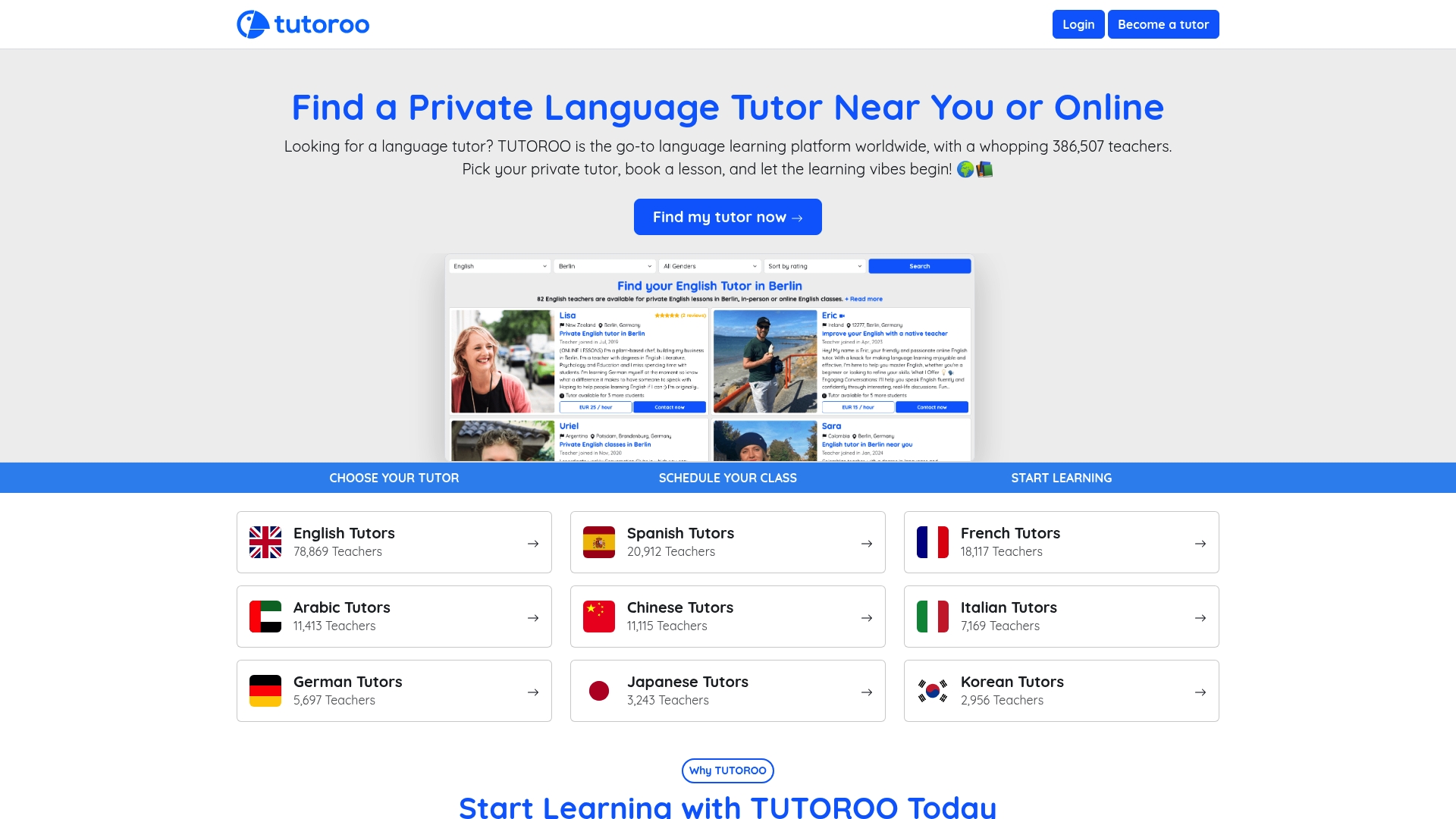
Every step this guide covers, confirming a time, testing your tech, stating your goals, is easier when the platform is built around it. Tutoroo's onboarding resources walk new students through exactly what to prepare before that first session, and tutor profiles make it simple to compare teaching approaches before you commit to a booking. If you're ready to put this guide into practice, browse tutors and book your trial lesson on Tutoroo today.
Frequently asked questions
How long does a typical trial language lesson last? Most trial lessons run between 20 and 40 minutes, combining a brief needs analysis with a short mini-lesson or diagnostic exercise.
Are trial lessons usually free? It varies by tutor. Some offer free trials, others charge a reduced rate. Always check the specific tutor's policy before booking.
What should I bring to a trial lesson? Bring one or two clear goals, a recent piece of writing or homework if relevant, and honest answers to any pre-lesson form the tutor sends.
Is it rude to decline a tutor after the trial? No. A short, polite message explaining you've chosen a different approach is standard practice and appreciated by most tutors.
Should parents stay for the whole trial lesson? Briefly for introductions, then it's usually better to step back so the tutor can assess the child directly without the parent present.