

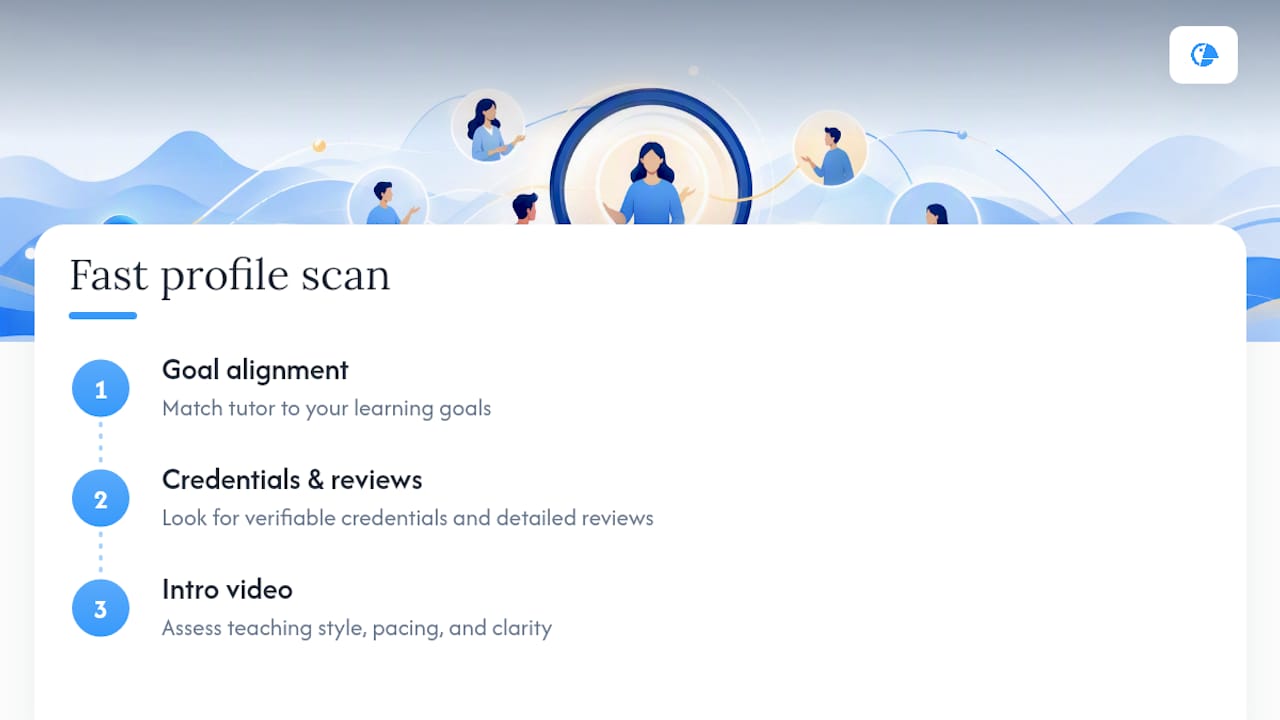
Three checks tell you whether a tutor profile is worth trialling: does it match your specific learning goal, does it show verifiable credentials or a consistent pattern of reviews, and does it include an intro video or sample teaching clip. If all three are present, book a 30-minute trial lesson and let the lesson itself confirm the fit.
- Goal alignment — the tutor's specialisation matches what you actually need (exam prep, conversation, business English).
- Verifiable trust signals — real credentials, genuine reviews, or both, not just claims.
- Teaching evidence — an intro video or sample material that shows how the tutor actually teaches.
These three signals sit front and centre on most TUTOROO profiles, which makes scanning for them fast rather than forensic.
Key Takeaways
The fastest way to choose a language tutor is to filter profiles by goal fit, verify credentials against reviews, and confirm teaching style through an intro video before booking a trial lesson.
| Point | Details |
|---|---|
| Define your goal first | Know your target skill, timeline, and CEFR level before browsing any profiles. |
| Pair credentials with reviews | Certifications like CELTA or DELTA matter most when backed by detailed, consistent student feedback. |
| Watch the intro video | Use it to judge pacing, clarity, and teaching style before committing to a trial. |
| Score your trial lesson | Check assessment, adaptation, error correction, and a clear next step, then compare candidates. |
| Use TUTOROO's built-in signals | TUTOROO profiles surface intro videos, reviews, and specialisation filters to speed up this whole process. |
Table of Contents
- Start with your goals: match your objectives to profile signals
- Credentials and verifiable experience: what to trust and how to check it
- What does a tutor's intro video actually tell you?
- Reviews and social proof: extracting real signal from feedback
- Practical logistics visible on profiles: schedule, rates, format and policies
- Red flags on a profile that justify moving on
- How to run a short trial lesson: step-by-step checklist
- Decision checklist: book and start with confidence
- Why these checks matter
- Try the checklist on TUTOROO before your next lesson
- Frequently asked questions
- Sources
Start with your goals: match your objectives to profile signals
Before you open a single profile, write down three things: your target skill, your timeline, and your rough CEFR level (A2, B1, and so on). A tutor who's brilliant at IELTS coaching isn't automatically the right pick for someone who just wants to order coffee confidently in Lisbon. Defining your goal first changes which profile details actually matter to you.
Once you know your goal, scan profiles in this order:
- Does the headline or bio mention your specific goal (exam, conversation, business, kids)?
- Do they list relevant experience, such as years coaching a particular exam board?
- Does the "focus" or "specialisation" tag match what you need this month, not just broadly?
- Is their stated level range (beginner to advanced) compatible with where you are now?
Pro Tip: Save two or three profiles that match your goal exactly before comparing anything else. Comparing tutors with different specialisations against each other wastes time.
Credentials and verifiable experience: what to trust and how to check it

Certifications like CELTA, DELTA, and TEFL/TESOL signal that a tutor has studied lesson structure, error correction, and pacing rather than just speaking the language fluently. A degree in linguistics or literature adds context but matters less for conversational coaching than it does for exam prep. Verified qualifications reduce risk, though they don't guarantee a good match on their own.
Credentials work best paired with something else: years of experience, a specific number of students taught, or reviews that echo the same strengths repeatedly.
- Ask directly: "Can you tell me which certification body issued your TEFL and roughly when?"
- Look for a mention of how many years they've taught your specific level or goal.
- Cross-check any claimed exam-board experience against detail in their reviews.
Interestingly, native speaker status often matters less than people assume. A trained non-native tutor can outperform an untrained native speaker for structured, goal-driven learning, because training shapes how errors get corrected and lessons get sequenced.
What does a tutor's intro video actually tell you?
A useful intro video usually shows a short teaching moment, not just a scripted introduction. Watch for how clearly they explain a concept, how they pace their speech, and whether they sound like someone you'd want to listen to for an hour a week. Intro videos let you assess pronunciation and teaching style before you spend any money on a trial.
Methodology labels matter too. "Communicative approach" usually means more conversation and less rote grammar drilling, while "grammar-first" suits learners preparing for structured exams.
- Red flag: audio that's muffled or a video that's clearly years out of date.
- Red flag: a video that only talks about the tutor, with no teaching demonstration at all.
- Green flag: a short clip showing an actual correction or explanation in action.
Reviews and social proof: extracting real signal from feedback
Star ratings alone tell you almost nothing. What matters is the substance underneath them: mentions of specific progress ("I went from struggling with past tense to using it naturally in six weeks"), repeat students leaving second or third reviews, and consistent praise for the same trait across different people.
- Look for detail, not just enthusiasm: "patient and structured" beats "great tutor!"
- Watch for identical, short, generic reviews posted close together. That's a red flag.
- Notice any repeated mentions of cancellations or late starts. One complaint is normal, three is a pattern.
Written reviews reveal reliability and progress signals that a star average simply can't capture. Combine what you read with a trial lesson before deciding, since reviews describe someone else's experience, not necessarily yours.
Practical logistics visible on profiles: schedule, rates, format and policies
Price differences of a few dollars per hour rarely matter as much as whether a tutor's availability actually fits your week. A perfect tutor in the wrong time zone becomes a scheduling headache within a fortnight.
- Check listed availability against your own routine before you fall in love with a bio.
- Confirm lesson length (30, 45, or 60 minutes) matches what the stated rate covers.
- Read the cancellation and rescheduling policy. Some tutors require 24 hours' notice, others less.
- Note whether lessons run online, face-to-face, or both, and whether that matches your preference.
Red flags on a profile that justify moving on
Some warning signs are consistent across almost every guide to picking a tutor, and they're worth memorising. Vague bios, missing credentials, and unrealistic fluency promises are the most common ones.
- A bio with no specifics: no years, no method, no focus area.
- Guarantees like "fluent in three months" with no context on your starting level.
- Teaching five or six languages with no explanation of how or where they learned each one.
- No intro video, and vague or evasive answers when you ask about qualifications directly.
Pro Tip: If a tutor dodges a direct question about their certification twice, treat that as your answer.
How to run a short trial lesson: step-by-step checklist
A trial lesson is where theory meets reality. Prepare properly and you'll get far more signal out of 30 minutes.
Before the lesson:
- State your goal and current level in your first message.
- Prepare one short task or topic you want covered (a sentence to translate, a scenario to role-play).
- Confirm timing and format in advance so there's no confusion.
During the lesson, watch for:
- Did they assess your level early, rather than guessing?
- Did they adapt when something was too easy or too hard?
- Did they correct errors clearly, without derailing the conversation?
- Did they end with a concrete next step or plan?
Score each trial out of four points, one per item above, and compare candidates side by side. Trial lessons that test assessment, adaptation, and correction give you the clearest read on whether a tutor's teaching style suits you.
Decision checklist: book and start with confidence
- Compare goal fit, verified credentials plus reviews, and your trial lesson score across shortlisted tutors.
- If two tutors tie, pick the one who tracks progress clearly and gave you a concrete next step.
- Confirm logistics (schedule, price, format) one final time before committing.
- Book an initial block of four to six lessons and set a CEFR check-in date to measure progress.
Two to three lessons a week tends to produce steadier progress than sporadic, intense sessions, so build your booking around consistency rather than convenience alone.
Why these checks matter
We've watched thousands of students shortlist tutors, and the pattern holds: no single signal decides a good match. Credentials, reviews, and a trial lesson together do. That's why we surface all three directly on every profile.
Try the checklist on TUTOROO before your next lesson
Every check in this guide, from intro videos to verified reviews to lesson focus tags, is built into how TUTOROO profiles are structured. You're not digging through scattered social media accounts or unverifiable claims. You filter by language, goal, and availability, watch a tutor's intro clip, read genuine student feedback, and message them directly to confirm fit before you spend a cent.
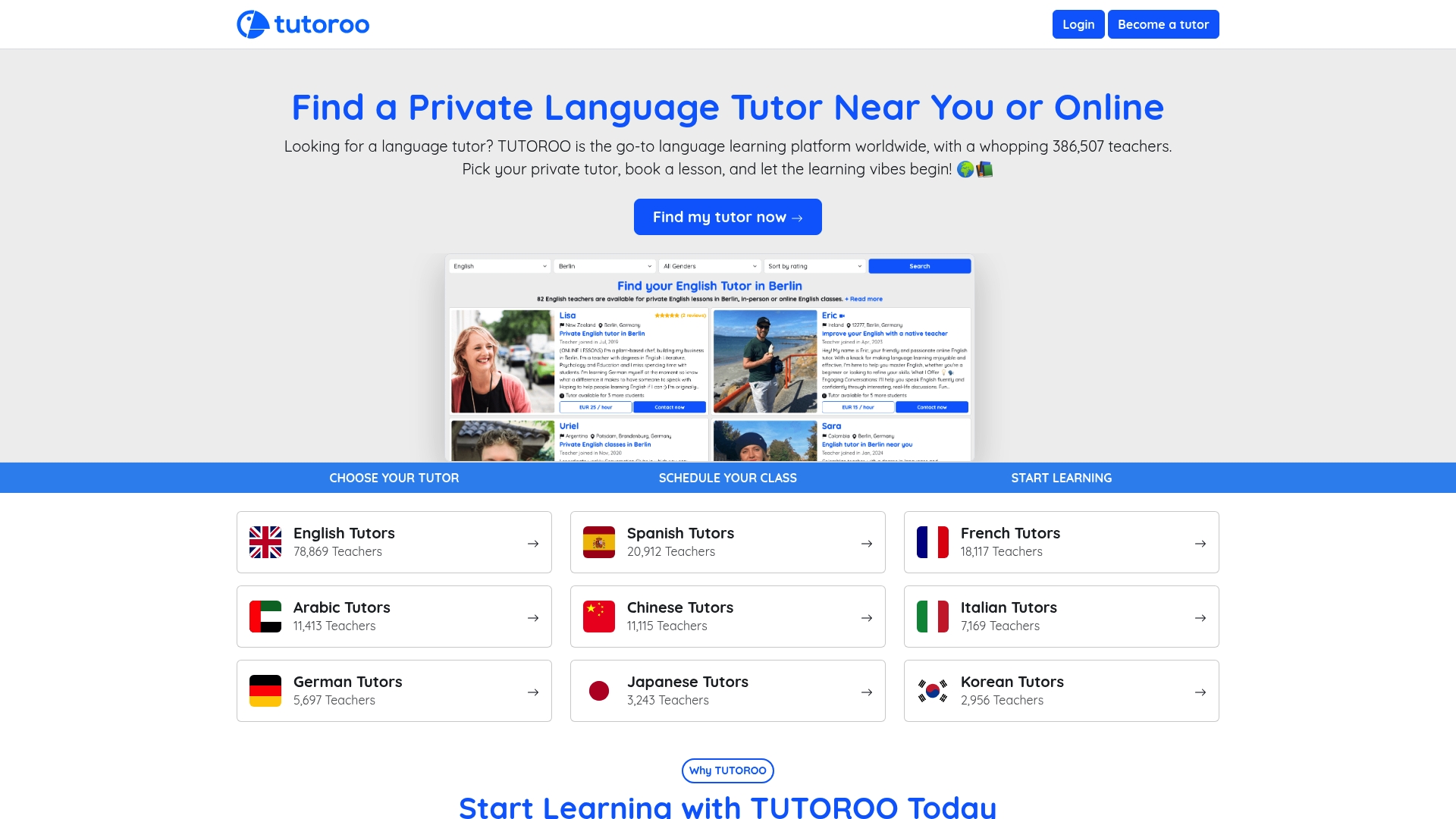
If you're after English specifically, the English tutor category page lets you filter by specialisation straight away. Otherwise, head to the main search, shortlist two or three profiles using the checklist above, and book a trial lesson today. Thirty minutes is usually enough to know if you've found the right fit.
Frequently asked questions
What's the fastest way to read a tutor profile? Scan for goal alignment, verifiable credentials or reviews, and an intro video, in that order. If all three check out, book a trial lesson.
How important is a tutor's intro video? It's one of the most useful profile items you have. It shows real teaching style, pacing, and clarity, which a written bio can't convey.
Should I trust reviews with only star ratings and no text? Treat them cautiously. Detailed, specific reviews describing actual progress are far more reliable than a bare star average.
Does a tutor need to be a native speaker? Not necessarily. A trained non-native tutor with strong credentials and experience often delivers better structured lessons than an untrained native speaker.
How many trial lessons should I book before deciding? Two or three trials with different shortlisted tutors give you enough comparison to score and choose confidently.
Sources
Explore the step-by-step hiring guide, effective teaching signals, and IB tutor selection tips.
- How to choose a language tutor: complete guide | NLLB
- How to find your perfect online language tutor in 2026 - Heklin